Air pressure on Earth is the force exerted by the weight of the atmosphere's air molecules pressing down on a surface. Measured typically at sea level as 1013.25 hectopascals (hPa), it fluctuates based on altitude, temperature, and humidity, serving as a primary driver for global weather patterns and biological respiration.
The Fundamental Nature of Atmospheric Pressure
To understand air pressure, one must first view the atmosphere not as an empty void, but as a fluid body composed of nitrogen, oxygen, argon, and trace gases. Although air appears weightless in our daily experience, the sheer volume of the atmosphere—extending hundreds of kilometers above the surface—possesses significant mass. Gravity pulls these gas molecules toward the Earth's center, creating a column of air that exerts pressure on everything it touches.
At the molecular level, air pressure is the result of countless collisions between gas molecules and surfaces. According to the Kinetic Theory of Gases, as molecules move and bounce off objects, they transfer momentum, which manifests as pressure. This pressure acts in all directions equally. For instance, the air inside your body exerts an outward pressure that balances the inward pressure of the atmosphere, which is why we are not crushed by the several tons of air weight resting on our shoulders.
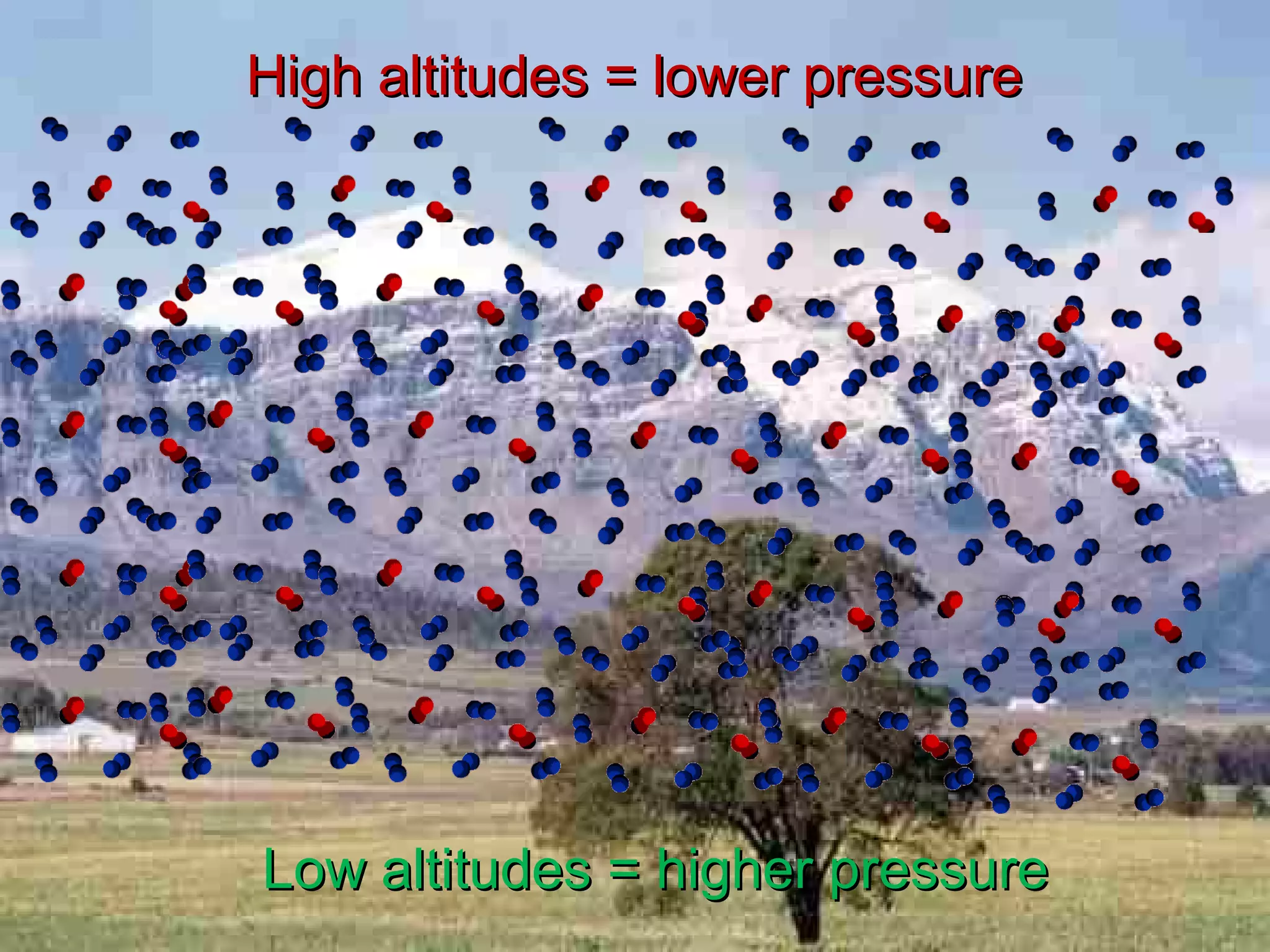
As of 2026, our understanding of atmospheric density highlights that the atmosphere is "compressible." This means that the air closest to the Earth's surface is much denser than the air higher up. The weight of the overlying air compresses the layers beneath it, packing more molecules into a smaller space and increasing the number of molecular collisions, thereby raising the pressure.
Essential Instruments for Measuring Air Pressure
The measurement of air pressure is a cornerstone of modern meteorology and aviation. The history of these measurements traces back to the 17th century, but the technology has evolved significantly into the precision digital systems used today.
The Evolution of the Barometer
The first instrument to measure air pressure was the mercury barometer, invented by Evangelista Torricelli in 1643. This device used a column of mercury in a vacuum-sealed glass tube; as atmospheric pressure increased, it pushed the mercury higher into the tube. While mercury barometers are still used for scientific calibration due to their high accuracy, they have largely been phased out of general use due to the toxicity of mercury.
The aneroid barometer became the standard for portable use. It utilizes a small, flexible metal box called an aneroid cell. This cell is partially evacuated of air, and as the external air pressure changes, the cell expands or contracts. A series of levers and springs translates this movement into a needle on a dial.
Modern Digital Sensors and Satellite Data
In 2026, most pressure data is collected via Micro-Electro-Mechanical Systems (MEMS). These are tiny, silicon-based sensors found in smartphones, smartwatches, and automated weather stations. They offer rapid response times and high durability, allowing for real-hearted tracking of pressure changes during rapid elevation gains or localized weather events. Furthermore, satellite-based sounders now measure atmospheric pressure profiles by analyzing how light and radio waves refract through different layers of the atmosphere, providing a global view of pressure gradients that ground stations cannot achieve alone.
| Unit of Measurement | Abbreviation | Sea Level Standard | Primary Use Case |
|---|---|---|---|
| Hectopascal | hPa | 1013.25 | International meteorology and weather maps |
| Millibar | mb | 1013.25 | Older meteorological records and some US charts |
| Inches of Mercury | inHg | 29.92 | Aviation (Altimeter settings) and US consumer barometers |
| Pounds per Square Inch | psi | 14.7 | Industrial engineering and tire pressure |
| Atmospheres | atm | 1.0 | Chemistry and deep-sea diving calculations |
Key Drivers of Pressure Fluctuations
Air pressure is never static. It is influenced by a complex interplay of physical factors that cause it to vary from hour to hour and from one location to another.
The Relationship Between Altitude and Density
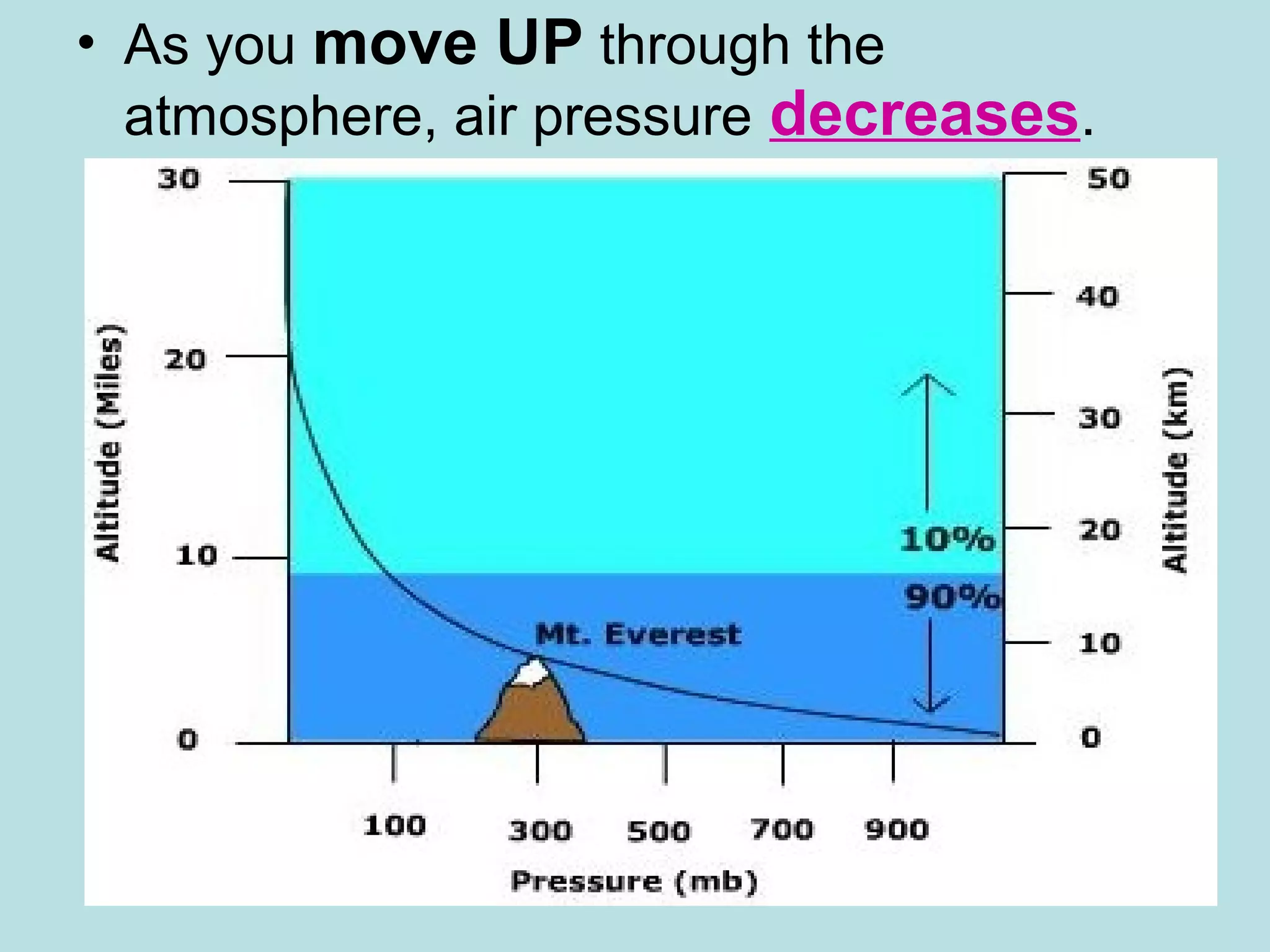
The most significant factor affecting air pressure is altitude. As you move higher into the atmosphere, there are fewer air molecules above you, meaning there is less weight pressing down. This relationship is non-linear; pressure drops most rapidly near the surface and more slowly at higher altitudes. For example, at the summit of Mount Everest (approximately 8,848 meters), the air pressure is only about one-third of the pressure at sea level. This thinning of the air is why high-altitude regions require specialized engineering for aircraft and supplemental oxygen for human survival.
Thermal Influences: The Role of Temperature
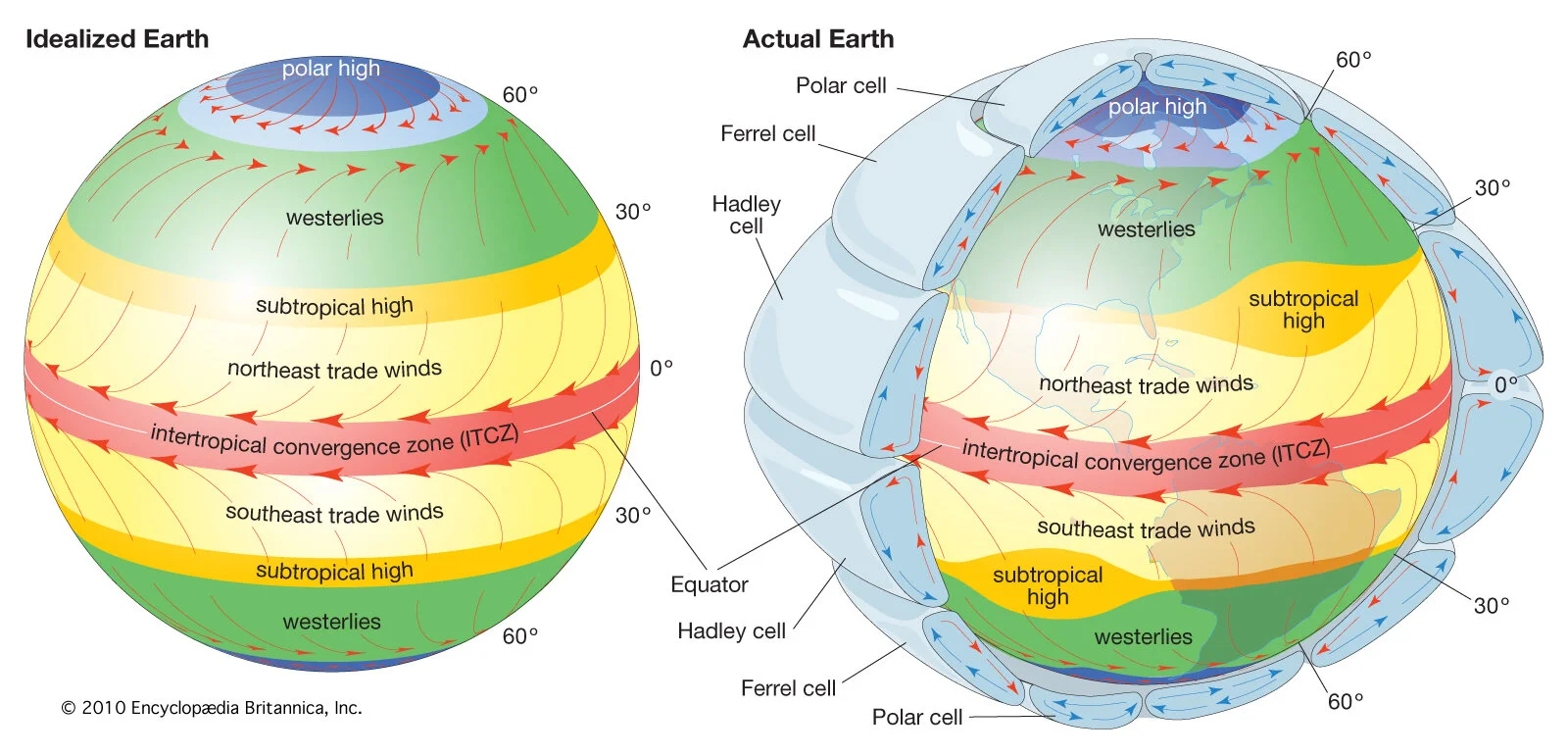
Temperature and pressure are inextricably linked through the Ideal Gas Law. When air is heated, the molecules move more vigorously and spread apart, making the air less dense. Because less dense air is lighter, it rises, resulting in lower pressure at the surface. Conversely, cold air is more compact and dense, leading to higher surface pressure. This thermal forcing is the primary engine behind the global circulation of the atmosphere, creating the massive "cells" of moving air that define Earth's climate zones.
Humidity: The Unexpected Density Factor
A common misconception is that "heavy, humid air" has higher pressure. In reality, moist air is actually less dense than dry air. A water molecule ($H_2O$) has a lower molecular weight than the nitrogen ($N_2$) or oxygen ($O_2$) molecules it replaces in a given volume of air. Therefore, as humidity increases, the air becomes lighter, often leading to a drop in barometric pressure. This is one reason why a falling barometer is frequently a precursor to rain or storms.
Air Pressure and Global Weather Dynamics
Meteorologists use pressure readings to identify the two most critical features on a weather map: Highs and Lows. These systems are the architects of our daily weather.
Low-Pressure Systems (Cyclones)
A low-pressure system, or cyclone, occurs where the atmospheric pressure at the surface is lower than that of the surrounding environment. In these regions, air converges and is forced upward. As the air rises, it cools, and the water vapor within it condenses to form clouds and precipitation. In the Northern Hemisphere, the Coriolis effect causes this air to spiral inward in a counter-clockwise direction. Low pressure is almost universally associated with "unsettled" weather, ranging from light rain to intense hurricanes.
High-Pressure Systems (Anticyclones)
In a high-pressure system, or anticyclone, air sinks from higher in the atmosphere toward the surface. This sinking air warms and dries out, which generally inhibits the formation of clouds. Consequently, high pressure is typically associated with clear skies and calm, stable weather. In the Northern Hemisphere, the air in a high-pressure system flows outward in a clockwise direction.
The Pressure Gradient Force and Wind
Wind is simply the movement of air from areas of high pressure to areas of low pressure. The difference in pressure between two points is known as the pressure gradient. The steeper the gradient (i.e., the greater the difference over a shorter distance), the stronger the resulting wind. By monitoring pressure changes in real-time, 2026 weather models can predict wind gusts and storm tracks with unprecedented accuracy, allowing for better disaster preparedness and renewable energy management.
Biological and Physical Consequences of Pressure Variation
The human body and our mechanical environment are finely tuned to the standard pressure of the lower atmosphere. Deviations from this norm can have profound effects.
Human Physiology and "Ear Popping"
The most common experience of pressure change occurs during takeoff in an airplane or driving up a steep mountain. The air trapped in the inner ear is initially at the pressure of the lower altitude. As external pressure drops, that trapped air expands, pushing on the eardrum. "Popping" the ears through yawning or swallowing opens the Eustachian tubes, equalizing the internal and external pressure.
At much higher altitudes, the reduced partial pressure of oxygen leads to hypoxia. Because there is less pressure to "push" oxygen across the membranes in the lungs into the bloodstream, the body struggles to function. Chronic exposure to low pressure requires physiological adaptation, such as an increase in red blood cell production, a process utilized by elite athletes in "altitude training."
Engineering and Boiling Points
Air pressure also dictates the physical properties of substances. For instance, the boiling point of water is dependent on atmospheric pressure. At sea level, water boils at $100^{\circ}C$ ($212^{\circ}F$). However, in Denver, Colorado (the "Mile High City"), water boils at approximately $95^{\circ}C$ ($203^{\circ}F$) because there is less atmospheric pressure holding the liquid molecules together. This necessitates longer cooking times for certain foods and affects industrial chemical processing.
Practical Troubleshooting and Data Interpretation
When monitoring local air pressure, whether for gardening, drone flight, or personal health, it is essential to distinguish between station pressure and sea-level pressure.
- Station Pressure: The actual pressure measured by a sensor at its current location and elevation.
- Sea-Level Pressure (SLP): A calculated value that adjusts station pressure to what it would be if the station were at sea level.
Meteorologists use SLP to compare data from different cities at different elevations. If you are setting up a home weather station in 2026, ensure you calibrate the device to your specific altitude; otherwise, your readings will not match official weather reports. If your barometer readings seem "stuck," it is often due to a lack of ventilation (aneroid types) or a digital sensor that has become clogged with dust or moisture. Regular software updates for MEMS-based sensors are also required to maintain accuracy against changing environmental baselines.
Frequently Asked Questions
What is the "Standard Atmosphere"?
The International Standard Atmosphere (ISA) is a model used by aviation and engineering to represent how pressure, temperature, and density change with altitude. It defines the standard sea-level pressure as 1013.25 hPa and a temperature of $15^{\circ}C$. This provides a common baseline for calibrating instruments worldwide, ensuring that an altimeter in Tokyo reads the same as one in London under identical conditions.
Why does air pressure change before a storm?
A storm is essentially a localized area of low pressure. As a storm system approaches, the "weight" of the air column above you decreases because the system is pulling air upward. This drop in pressure is often the first physical sign of an approaching cold front or tropical disturbance, often occurring hours before the first clouds appear.
Does air pressure affect joint pain?
Many individuals with arthritis or previous injuries report increased pain when air pressure drops. While scientific consensus is still developing, the prevailing theory is that lower external pressure allows body tissues to expand slightly, which can put increased pressure on sensitive nerves and joints. This "barometric sensitivity" is a well-documented, albeit subjective, phenomenon.
How does air pressure affect flight?
Airplanes rely on air pressure to generate lift. High pressure (dense air) provides more molecules for the wings to interact with, improving takeoff performance. Conversely, "hot and high" conditions—high altitude combined with high temperatures—result in low air density (low pressure), which requires longer runways for takeoff because the wings and engines are less efficient.
Can humans survive at zero air pressure?
No. In a vacuum (zero pressure), the boiling point of liquids drops to the point where body fluids, including saliva and tears, would begin to vaporize at normal body temperature. This is known as the Armstrong Limit (approximately 18,000–19,000 meters). Survival without a pressurized suit or cabin is impossible beyond this point, regardless of oxygen supply.
Recommendations for Monitoring Local Pressure
To accurately track air pressure for personal or professional use, follow these steps:
- Use Calibrated Equipment: If using an analog barometer, "tap" the glass gently to see if the needle moves, as friction can cause it to stick. For digital sensors, compare your reading with the nearest National Weather Service or official meteorological station.
- Account for Diurnal Tides: Be aware that air pressure undergoes a natural "tide" or rhythm, peaking around 10:00 AM and 10:00 PM and hitting lows around 4:00 AM and 4:00 PM. Do not mistake these minor daily fluctuations for major weather shifts.
- Cross-Reference with Wind: For the most accurate local forecasting, watch the relationship between pressure and wind direction. A falling barometer accompanied by a shift to southerly winds in the Northern Hemisphere typically signals an approaching low-pressure system and potential precipitation.
Understanding the invisible weight of the atmosphere is essential for navigating everything from global travel to local gardening. By monitoring these subtle changes in the air, we gain a deeper insight into the dynamic forces that shape the Earth's environment.