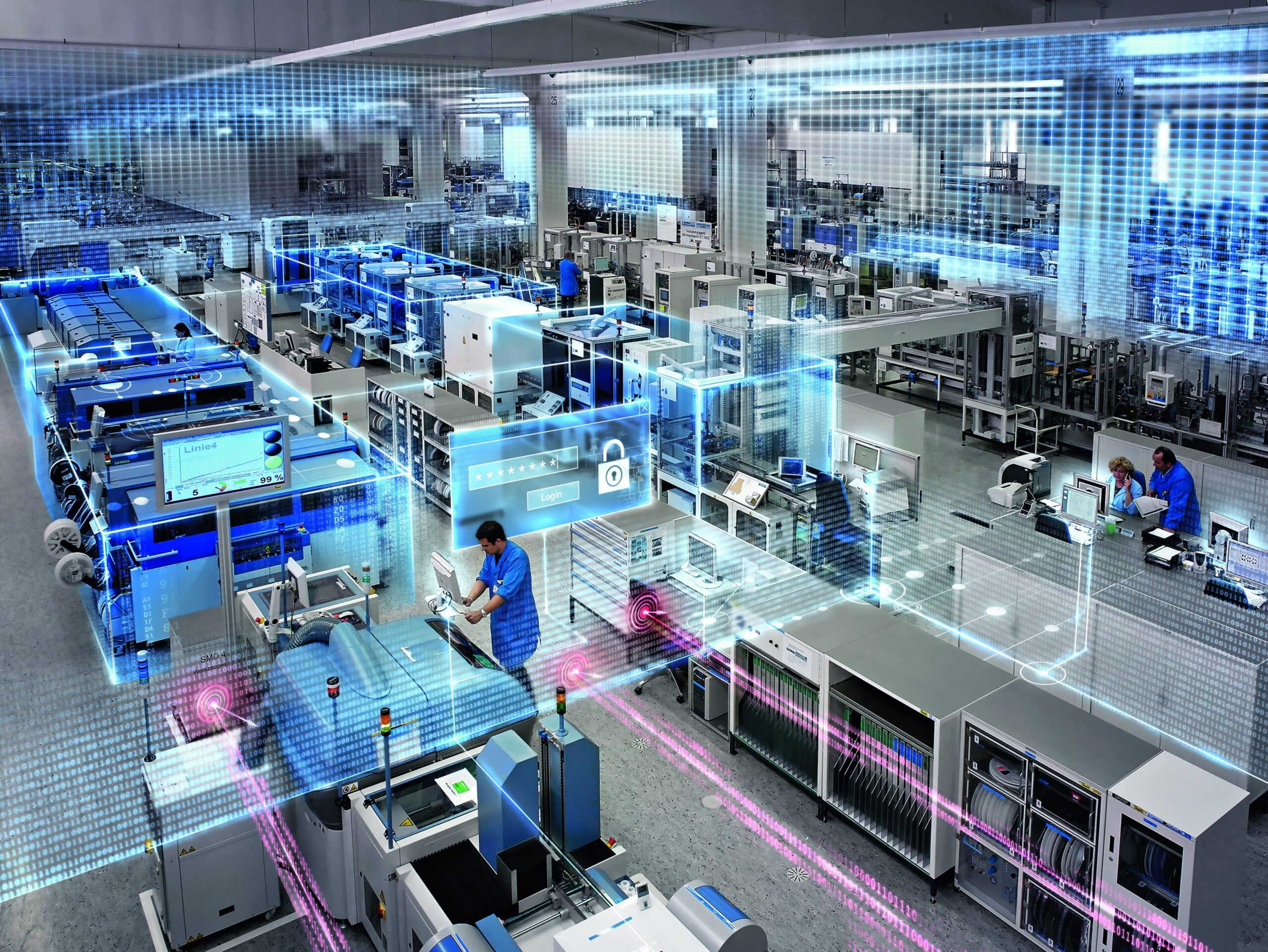
Advanced industrial automation transforms traditional manufacturing and processing environments by integrating cyber-physical systems, advanced robotics, machine learning, and industrial internet of things (IIOT) devices to achieve autonomous decision-making and unprecedented operational efficiency.
The journey toward advanced industrial automation represents a paradigm shift from traditional, rigid production lines to highly flexible, interconnected, and intelligent manufacturing ecosystems. As global supply chains face mounting pressures for personalization, speed, and sustainability, industrial organizations must move beyond basic mechanization. They need to adopt sophisticated automation frameworks that combine hardware dexterity with advanced digital intelligence. This comprehensive guide explores the core components, underlying technologies, implementation strategies, operational challenges, and future outlook of modern industrial automation systems.
The Evolution from Mechanization to Autonomous Systems
To understand advanced industrial automation, it is essential to trace how industrial systems have matured. The first industrial revolution introduced mechanical production equipment driven by water and steam. The second brought mass production enabled by electric power and assembly lines. The third introduced computers, electronics, and early programmable logic controllers (PLCs) to automate specific, repetitive tasks.
Advanced industrial automation corresponds to the broader conceptual framework of Industry 4.0 and the emerging contours of Industry 5.0. While traditional automation executed pre-programmed sequences with minimal deviation, advanced systems process real-time data to adapt to changing conditions. They bridge the gap between operational technology (OT) and information technology (IT).
Operational Technology Meets Information Technology
Historically, factory floor equipment operated in isolated silos. PLCs, sensors, and actuators communicated via proprietary fieldbuses without visibility into enterprise resource planning (ERP) systems or supply chain networks. Advanced industrial automation breaks down these barriers. By leveraging standardized industrial Ethernet protocols, edge computing devices, and secure cloud architectures, data flows seamlessly from the factory sensor all the way to the executive dashboard.
This convergence allows plant managers to monitor Overall Equipment Effectiveness (OEE) in real time, correlate environmental variables with product quality defects, and update production schedules dynamically based on live inventory levels.
Core Technologies Powering Advanced Automation
The modern automation stack relies on several foundational technologies working in concert. Each layer plays a distinct role in capturing physical data, processing it, and executing physical work.
1. Industrial Internet of Things (IIoT) and Smart Sensors
Smart sensors do more than measure physical properties like temperature, pressure, vibration, or flow; they pre-process data, perform self-diagnostics, and communicate bidirectionally using protocols such as MQTT or OPC UA. IIoT deployment transforms dumb assets into smart nodes on a network, providing the granular data streams required for advanced analytics and machine learning models.
2. Advanced Robotics and Collaborative Robots (Cobots)
Traditional industrial robots require safety cages to protect human workers from high-speed, high-payload hazards. Advanced automation introduces collaborative robots designed to work safely alongside humans in shared workspaces. Equipped with advanced force-torque sensors, vision systems, and soft-tissue collision detection, cobots can handle delicate assembly tasks, quality inspections, and material handling alongside human operators.
3. Artificial Intelligence and Machine Learning
AI algorithms analyze massive datasets generated by factory equipment to uncover hidden patterns. In quality control, computer vision models trained on deep learning networks can detect micro-defects in products moving at high speeds on a conveyor belt. In maintenance, machine learning models evaluate acoustic and vibration signatures to predict equipment failures weeks before they occur.
4. Digital Twins
A digital twin is a virtual replica of a physical asset, process, or entire manufacturing plant. Built using CAD models, IoT sensor feeds, and physics engines, a digital twin allows engineers to simulate changes to production lines, test control logic, and optimize workflows in a risk-free virtual environment before deploying them to the physical factory floor.
Comparative Overview of Automation Paradigms
| Feature / Dimension | Traditional Automation | Advanced Industrial Automation |
|---|---|---|
| System Flexibility | Rigid; designed for high-volume, single-product manufacturing. | High; easily reconfigured for mixed-batch and customized production. |
| Data Connectivity | Isolated fieldbuses; limited visibility beyond the local controller. | Fully integrated OT/IT convergence with cloud and edge analytics. |
| Maintenance Strategy | Reactive or scheduled calendar-based maintenance. | Predictive and prescriptive maintenance driven by real-time health data. |
| Human-Robot Interaction | Segregated; robots operate inside physical safety enclosures. | Collaborative; humans and cobots share workspaces safely. |
| Decision-Making | Rule-based logic programmed manually by engineers. | Autonomous, adaptive optimization driven by artificial intelligence. |
Strategic Implementation Framework
Deploying advanced industrial automation requires a methodical approach that balances technological ambition with operational realities. Organizations that rush into digital transformation without a clear roadmap often face integration bottlenecks, data overload, and low return on investment.
Step 1: Readiness Assessment and Use Case Definition
Before purchasing hardware or software, leadership teams must identify specific operational bottlenecks. Is the primary challenge frequent unplanned downtime, high scrap rates, or an inability to scale product customization? Defining clear, measurable key performance indicators (KPIs)—such as reducing changeover time by 30% or achieving zero unplanned stoppages on a critical bottleneck machine—ensures every automation dollar is tied to business value.
Step 2: Infrastructure Audit and Network Modernization
Legacy networks cannot support the high bandwidth and low latency required by modern IIoT devices and video-based machine vision systems. Organizations must upgrade their industrial networks to support gigabit Ethernet, implement robust industrial cybersecurity measures (following standards such as IEC 62443), and establish reliable edge computing nodes to filter and process data locally.
Step 3: Pilot Projects and Scalable Architecture
Rather than attempting a massive "big bang" transformation across an entire manufacturing plant, successful implementations begin with a targeted pilot project on a single line or cell. This allows engineering teams to validate network security, test data pipelines, and train operators. Once the pilot proves its value against the initial KPIs, the architecture can be replicated across other lines and facilities.
Operational Challenges and Risk Mitigation
While the benefits of advanced industrial automation are profound, engineering and management teams must navigate several significant hurdles during deployment.
Cybersecurity Vulnerabilities
Opening the factory floor to enterprise networks and cloud platforms exposes industrial control systems (ICS) to cyber threats. Ransomware attacks, unauthorized remote access, and data tampering can halt production or cause physical damage. Mitigation requires a defense-in-depth strategy, including network segmentation, hardware-based security modules, regular vulnerability assessments, and strict enforcement of the principle of least privilege.
Workforce Skills Gap
Advanced automation does not eliminate the need for human workers; it shifts the required skill set. Technicians must now understand networking, data analysis, robot programming, and basic troubleshooting of software-defined hardware. Organizations must invest in comprehensive upskilling programs, partnering with local technical institutions to train existing staff on modern automation platforms.
Integration Legacy Systems
Many manufacturing facilities rely on legacy machinery that has been running reliably for decades. Replacing these assets is cost-prohibitive. Instead, automation engineers use retrofitting strategies, attaching non-invasive external sensors, protocol converters, and edge gateways to legacy machines to extract operational data without disrupting core mechanical operations.
Frequently Asked Questions
What is the difference between traditional automation and advanced industrial automation?
Traditional automation relies on fixed, rule-based logic executed by PLCs to perform repetitive physical tasks within isolated systems. Advanced industrial automation incorporates IIoT connectivity, artificial intelligence, machine learning, digital twins, and collaborative robotics to enable real-time data sharing, adaptive decision-making, and flexible manufacturing processes.
How does predictive maintenance reduce operational costs?
Predictive maintenance uses continuous monitoring of equipment parameters—such as vibration, temperature, and current draw—combined with machine learning models to identify early signs of wear and tear. By catching failing components before catastrophic breakdown occurs, plants eliminate unplanned downtime, reduce emergency spare parts inventory, and extend the lifespan of critical machinery.
What are the main cybersecurity risks in automated factories?
As operational technology integrates with enterprise networks and cloud platforms, factories become vulnerable to malware, ransomware, unauthorized external access, and denial-of-service attacks. Securing these environments requires strict network segmentation, encrypted communications, regular software patching, and adherence to established industrial cybersecurity standards like IEC 62443.
Can legacy manufacturing equipment be integrated into an advanced automation system?
Yes. Organizations rarely replace all legacy machinery at once. Engineers use retrofitting techniques, attaching external IoT sensors, protocol gateways, and edge computing nodes to older machines. This extracts valuable operational data and integrates legacy assets into modern supervisory control and data acquisition (SCADA) and enterprise systems without requiring expensive equipment replacement.
What skill sets are most important for workers in automated manufacturing environments?
Workers need a blend of traditional mechanical aptitude and modern digital literacy. Critical skills include understanding industrial networking, programming collaborative robots, interpreting data dashboards, troubleshooting software-hardware interfaces, and applying basic cybersecurity hygiene on the plant floor.
Conclusion and Next Actions
Advanced industrial automation is no longer a futuristic concept reserved for automotive giants; it is an accessible, necessary strategy for manufacturers seeking to remain competitive in a volatile global market. Success requires aligning technological investments with clear business objectives, modernizing network infrastructure, prioritizing cybersecurity, and fostering a culture of continuous upskilling.
To begin your organization's transition, conduct a comprehensive audit of your current plant floor assets and network architecture. Identify a single high-impact bottleneck where real-time data visibility or flexible robotics can deliver measurable improvements, and design a targeted pilot project to validate your automation strategy.