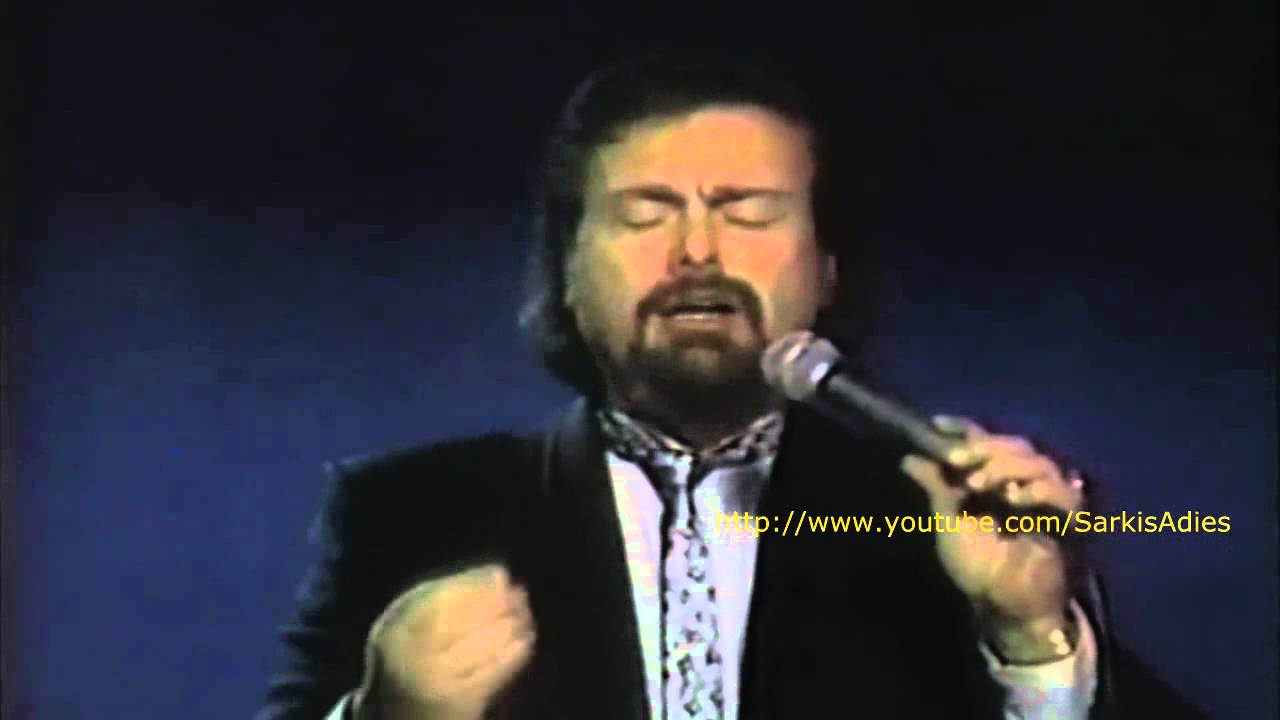
Adiss Harmandian was a seminal figure in the development of contemporary Armenian pop music, credited with pioneering a unique sound that bridged traditional Armenian folk sensibilities with Western pop arrangements. Throughout his prolific career, he became a cultural symbol for the Armenian diaspora, using his music to preserve language and identity while influencing generations of artists across the globe.
Early Life and Cultural Foundations
Born on January 14, 1945, in Beirut, Lebanon, Adiss Harmandian grew up in a community that served as a critical hub for Armenian survivors of the 1915 Genocide. This environment was deeply rooted in the preservation of Armenian culture, language, and collective memory. His formative years were spent amidst the vibrant, multicultural atmosphere of mid-20th-century Beirut, which allowed him to absorb diverse musical influences—from Middle Eastern melodic scales to the emerging sounds of European and American rock and pop.
Harmandian’s interest in music manifested early. He did not simply aim to replicate the folk songs of his ancestors; instead, he sought to create a modern medium that would appeal to the youth of the diaspora. By integrating the electric guitar, bass, and drums into arrangements that maintained the distinct emotional resonance of Armenian folk poetry, he began to define a new genre that would eventually be characterized simply as "Armenian Pop."
The Rise of a Musical Pioneer in the 1960s
The 1960s represented a pivotal era for Harmandian. As he began recording, he recognized that the younger generation of Armenians in Lebanon, France, the United States, and elsewhere were losing touch with their native tongue. His music became a primary vehicle for language retention.
His breakout success occurred with songs that were characterized by catchy, upbeat rhythms contrasted with nostalgic, often romantic, lyrics. He famously recorded tracks such as "Nouné" and "Karoun Karoun," which became anthems in Armenian households worldwide. These songs were not merely tracks on a record; they were cultural markers. During an era before the internet, Harmandian’s records circulated through physical tape copies and vinyl, creating a global reach that was unprecedented for an artist singing primarily in Armenian.
Musical Style and Technical Innovation
Harmandian’s contribution to music was marked by a synthesis of styles. While his vocal delivery remained loyal to the emotive, melismatic traditions of Armenian singing, his backing instrumentation was revolutionary for the time. He moved away from the exclusive use of traditional instruments like the duduk or zurna, opting instead for a "Westernized" pop ensemble.
This approach was not universally praised at its inception; purists sometimes criticized the modernization of traditional sounds. However, Harmandian understood the necessity of evolution. By professionalizing the production of Armenian pop, he ensured that the genre could compete for airtime on the same platforms as international pop stars. His studio techniques focused on clear, melodic hooks and standard verse-chorus structures, which made his music accessible to both non-Armenians and the widespread, geographically dispersed Armenian diaspora.
Global Tours and Diaspora Connection
Harmandian’s career reached its zenith as he began extensive touring. He recognized that his primary audience lived in the diaspora—the communities formed after the diaspora following the events of 1915 and the subsequent political shifts in the Middle East. He performed in cities with large Armenian populations, including Los Angeles, Buenos Aires, Paris, and Sydney.
These concerts were more than musical events; they were community gatherings. For many in the audience, Harmandian represented a living link to a culture they were struggling to maintain in foreign environments. His ability to connect with these communities through live performance solidified his status as an icon. He was often referred to as the "King of Armenian Pop," a title that reflected both his commercial success and his role as a unifying figure for the Armenian people.
Influence on Later Generations
The impact of Adiss Harmandian on the Armenian music industry is immeasurable. By the 1980s and 1990s, the path he had paved—using Western instrumentation to deliver Armenian lyrics—became the standard for nearly all contemporary Armenian musicians. Artists who later emerged in the Republic of Armenia after its independence in 1991, as well as those in the diaspora, cite Harmandian as a primary influence.
He normalized the idea that one could be modern, trendy, and international while simultaneously being fiercely proud of one’s ethnic heritage. The "Harmandian sound"—that blend of optimism, danceable rhythms, and cultural pride—set a template that countless artists follow to this day, whether they are producing synth-pop, rock-infused ballads, or traditional dance music.
Table: Key Aspects of Adiss Harmandian’s Career
| Feature | Description |
|---|---|
| Primary Genre | Armenian Pop / Modern Folk |
| Active Years | 1960s – 2019 |
| Cultural Significance | Pioneer of modernizing Armenian music for the diaspora |
| Signature Sound | Western pop arrangements fused with Armenian melodies |
| Notable Regions | Middle East, Europe, North America, South America |
| Primary Legacy | Instrumental in the preservation of Armenian language through song |
Later Life and Legacy
In the later stages of his career, Harmandian slowed his public performances but remained a respected elder statesman of the Armenian musical community. He was the recipient of numerous awards and accolades from Armenian organizations globally, recognizing his lifelong service to the culture. He eventually settled in the United States, specifically within the large Armenian enclave of Southern California, where he continued to be involved in the cultural life of the community.
Adiss Harmandian passed away on September 1, 2019, at the age of 74. His death was marked by extensive tributes across the Armenian media, with many outlets noting that the passing of the "King of Armenian Pop" signaled the end of a golden era. However, his catalog remains as relevant in 2026 as it was in his heyday. His music is frequently covered by modern artists, and his original recordings continue to be staple tracks at weddings, community celebrations, and festivals.
Frequently Asked Questions
1. Was Adiss Harmandian the first person to sing Armenian pop music? While Armenian music has a long history, Harmandian is credited as the first artist to successfully adapt the genre for a global, modern, and youth-oriented pop format. He institutionalized the "Armenian Pop" sound that is recognized today.
2. Why was his music so important to the Armenian diaspora? His music provided a sense of belonging for individuals living in foreign countries. By singing in Armenian and utilizing upbeat, contemporary production, he allowed younger generations to engage with their heritage in a way that felt modern and relevant rather than solely historical.
3. Did he only sing in Armenian? While the vast majority of his discography is in Armenian, his musical compositions were influenced by international trends, including Western rock and Middle Eastern rhythms. His focus was consistently on the Armenian audience, but his appeal crossed over into broader Middle Eastern musical circles due to shared melodic sensibilities.
4. Where can I listen to his music today? As of 2026, most of his major works are available on major digital streaming platforms. Many independent archives and Armenian cultural websites also host digitized versions of his rarer, older vinyl recordings, preserving the sound quality for future generations.
5. How did the industry perceive his "modernization" of traditional music? Initially, some cultural purists viewed the introduction of synthesizers and electric guitars with skepticism. However, this eventually subsided as his massive popularity demonstrated that modernization was an effective tool for cultural preservation, ensuring the music stayed alive among the youth.
Recommended Next Action
To truly understand the depth of Harmandian's work, listeners should compare his early 1960s recordings, which lean heavily on traditional melodic structures, with his late 1970s and 1980s work, which showcases the full evolution of his signature pop-inflected sound. Exploring his discography in chronological order provides the most accurate view of his technical and stylistic progression.