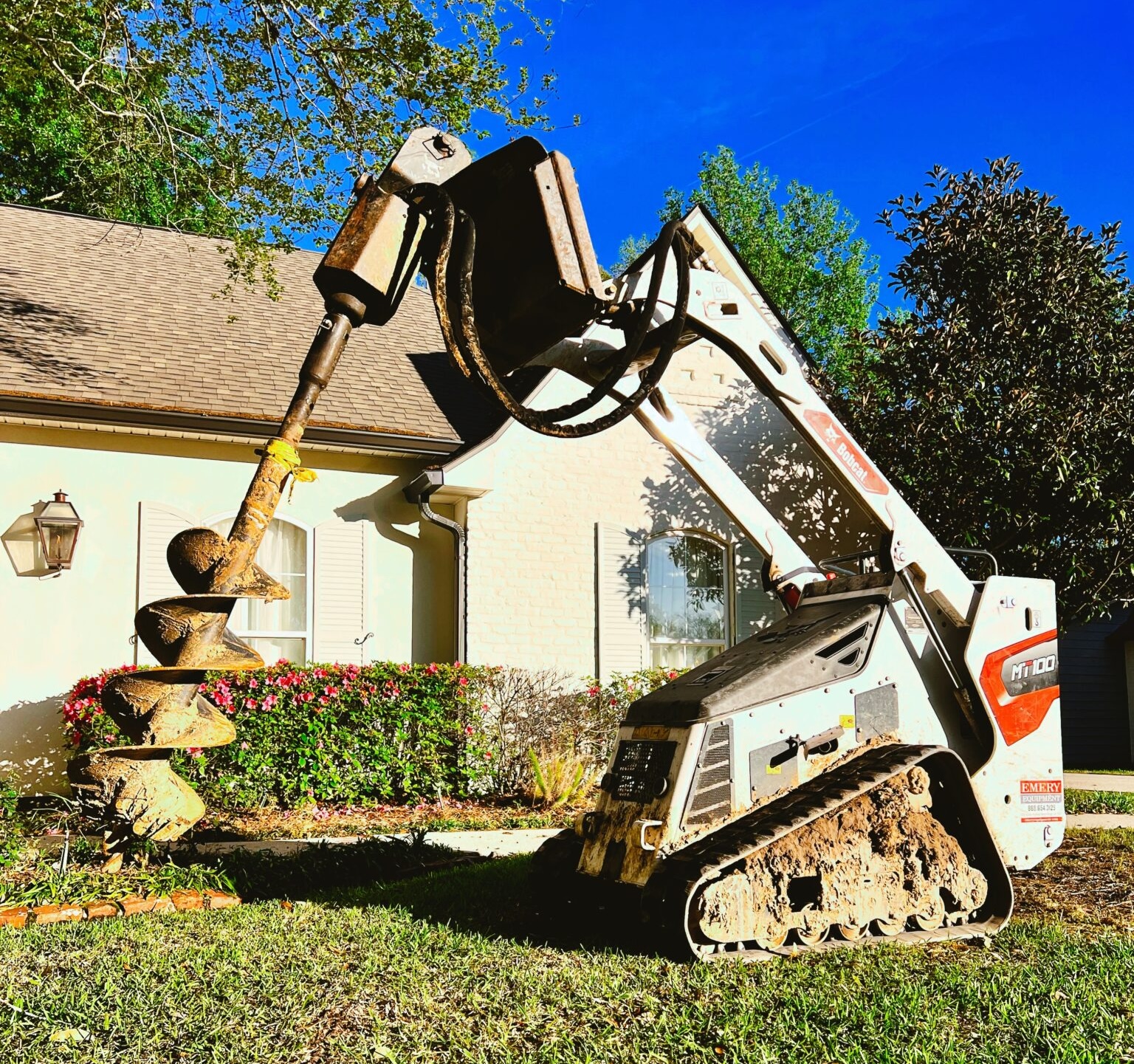
Action Foundation Repair in Baton Rouge provides specialized structural remediation services designed to address the unique geological challenges of South Louisiana. By utilizing deep-driven piering systems and hydraulic leveling, these services stabilize residential and commercial slabs that have shifted due to expansive clay soils, fluctuating water tables, and the region's intense humidity.
The Unique Geological Challenges of Baton Rouge
Baton Rouge sits on a complex landscape dominated by alluvial deposits and expansive clay, often referred to locally as "Yazoo clay" or similar high-plasticity variants. These soils are characterized by their "shrink-swell" capacity. In 2026, homeowners continue to face the reality that the ground beneath their feet is never truly static. When the region experiences the heavy rainfall typical of a Louisiana spring, the clay particles absorb water and expand with immense force, often pushing upward on concrete slabs (heaving). Conversely, during the hot, dry summers, the soil loses moisture and shrinks, leaving voids that cause the foundation to sink (settlement).
The proximity to the Mississippi River and the city’s complex network of bayous further complicates the subterranean environment. The water table in East Baton Rouge Parish is notoriously high and variable. This constant oscillation between saturation and desiccation places repetitive stress on a home's foundation. Over years or decades, even the most robustly poured slab can develop structural fractures. Understanding this regional context is the first step in addressing why "action" is required to prevent total structural failure.
Identifying Signs of Foundation Distress
Homeowners often overlook the early warning signs of foundation movement, attributing them to the "house settling." While minor settling is normal in the first few years of a new build, persistent or widening issues indicate a need for professional intervention.
Interior Indicators
Inside the home, the most common sign is the "sticking" door or window. When a foundation shifts, the rectangular frames of doors and windows become parallelograms. This misalignment causes doors to rub against the jamb or prevents locks from clicking into place. You may also notice diagonal cracks extending from the corners of door frames, particularly in drywall or plaster.
Floors that feel "spongy" or show a visible slope are critical indicators. In Baton Rouge homes with tile flooring, look for long, continuous cracks that traverse multiple tiles in a straight line; this often mirrors a crack in the underlying concrete slab.
Exterior Indicators
On the exterior, "stair-step" cracks in the brick mortar are the primary red flag. These cracks follow the lines of the mortar and indicate that one section of the wall is sinking faster than the one adjacent to it. You should also inspect the "freeze board"—the trim board at the top of the brick wall. If there is a widening gap between the brick and the trim, the wall is likely rotating outward due to foundation failure.
Specialized Techniques Used by Action Foundation Repair
In 2026, the industry standard for foundation repair in the Gulf South remains deep-driven piering. Surface-level "patches" or shallow supports are generally ineffective in Louisiana because they do not reach beyond the "active zone" of the soil—the top 7 to 10 feet where moisture changes occur.
Pressed Concrete Pilings
This is the most common method utilized by Action Foundation Repair for residential slabs. The process involves excavating small "access holes" (approximately 2x2 feet) around the perimeter of the home. Using the weight of the house itself as resistance, a hydraulic ram drives pre-cast concrete cylinders (usually 6 inches in diameter and 12 inches long) deep into the ground. These cylinders are driven until they hit "refusal"—the point at which the soil is dense enough to support the weight of the structure, often 15 to 30 feet deep.
Steel Pier Systems
For heavier structures or areas with particularly unstable deep-soil profiles, steel piers are employed. These involve high-strength steel pipe segments that are driven to much greater depths than concrete, sometimes reaching the bedrock or load-bearing strata. Steel piers have a smaller surface area, allowing them to bypass friction in the upper clay layers more effectively.
Mudjacking and Polyjacking
While piering addresses the structural support, mudjacking or "polyjacking" (polyurethane foam injection) is used to fill the voids created by soil shrinkage or erosion. In 2026, high-density expanding foam is the preferred choice for many Baton Rouge projects because it is lightweight, waterproof, and cures within minutes. It is particularly effective for leveling driveways, sidewalks, and interior garage slabs that do not require deep-pier support.
The Repair Process: What to Expect in 2026
Engaging a professional for foundation repair is a multi-step engineering project. It is not a simple "quick fix," but rather a systematic stabilization of your largest asset.
- The Professional Evaluation: A technician or structural engineer will measure the "elevation profile" of your home using a Ziplevel or similar altimeter. This creates a map showing exactly which corners are low and by how many inches.
- Permitting and Utilities: Before digging, the contractor must coordinate with Louisiana 811 to mark underground gas, water, and electrical lines. In the City-Parish of Baton Rouge, specific permits are required to ensure the work meets local building codes.
- Excavation and Pier Placement: The team digs at the predetermined pier locations. If interior piers are needed, this may involve cutting through the floor inside the home, though "perpendicular tunneling" from the exterior is often used to minimize interior disruption.
- The Lift: This is the most critical phase. Using a series of hydraulic jacks placed on the newly installed piers, the crew carefully raises the low sections of the house. This is done slowly to allow the structure to adjust, minimizing further damage to the drywall and brick.
- Securing and Backfilling: Once the house is level (or as close to level as the structure safely allows), the piers are capped and locked in place. The access holes are backfilled, and any displaced landscaping is returned.
Cost Factors for Foundation Repair in Baton Rouge
Pricing for foundation repair is generally calculated "per pier." In 2026, several factors influence the final quote, including the depth of the drive, the accessibility of the site, and the material used.
| Factor | Description | Estimated Range (2026) |
|---|---|---|
| Concrete Pressed Piers | Most common for residential slabs; includes labor and materials. | $450 – $650 per pier |
| Steel Piers | Required for deep stability or heavy loads. | $800 – $1,200 per pier |
| Polyurethane Injection | Used for void filling or leveling smaller slabs. | $2,500 – $5,000 (average job) |
| Engineering Report | Independent third-party assessment (recommended). | $500 – $900 |
| Plumbing Testing | Hydrostatic test to check for leaks after the lift. | $400 – $700 |
Total project costs in the Baton Rouge area typically range from $6,000 to $20,000 for a standard residential home, depending on the severity of the perimeter failure.
The Importance of Post-Repair Plumbing Tests
One of the most overlooked aspects of foundation repair is the impact on plumbing. In Baton Rouge, most homes are built on "slab-on-grade" foundations with plumbing lines buried beneath the concrete. When a foundation sinks, the pipes sink with it. When the foundation is lifted back to its original position, the rigid pipes (especially older cast iron or clay pipes) can snap or pull apart at the joints.
It is a standard industry recommendation—and often a requirement for warranty validation—to perform a hydrostatic plumbing test after the leveling is complete. This involves plugging the sewer lines and filling the system with water to ensure there are no leaks. A hidden leak beneath a newly repaired slab will saturate the soil, leading to rapid foundation movement and potentially voiding any structural warranties.
Maintenance and Prevention Strategies
Once a foundation has been stabilized, the goal is to keep the soil moisture levels as consistent as possible. Action Foundation Repair often recommends several preventative measures to protect the investment.
- Gutters and Downspouts: Ensure that water from the roof is discharged at least 5 to 10 feet away from the foundation. In the high-rainfall climate of Louisiana, overflowing gutters are the leading cause of soil erosion near the slab.
- Root Barriers: Large trees, such as Live Oaks or Water Oaks, have massive root systems that can pull hundreds of gallons of water from the soil daily. If a tree is too close to the house, it can "dry out" the soil under one corner, causing it to sink. Root barriers can help mitigate this.
- Grading: The ground around the home should slope away from the foundation. If water "pools" against the brick during a storm, it will inevitably find its way under the slab.
- Soaker Hoses: During the intense heat of a Louisiana August, it may be necessary to use soaker hoses around the perimeter to prevent the clay from shrinking too drastically. The goal is not to "water the house" but to maintain a stable moisture equilibrium.
Selecting a Contractor: Verification and Standards
In Louisiana, foundation repair contractors should be licensed by the Louisiana State Licensing Board for Contractors (LSLBC). When evaluating a service provider like Action Foundation Repair, verify their standing and ensure they carry both general liability and workers' compensation insurance.
A reputable firm should provide a Lifetime Transferable Warranty. This is a vital document when it comes time to sell your home. In the Baton Rouge real estate market, a foundation repair with a transferable warranty and an engineer’s "passed" report is often viewed as a "corrected issue" rather than a "problem property."
Frequently Asked Questions
How long does a typical foundation repair take? Most residential projects in Baton Rouge can be completed in 2 to 4 days. This includes excavation, pier installation, the lift, and the final cleanup. Larger projects requiring interior piers or extensive tunneling may take up to a week.
Will my homeowners insurance cover foundation repair? Generally, no. Most standard homeowners insurance policies in Louisiana exclude "earth movement" or "settlement." Coverage is typically only available if the foundation damage was caused by a specific covered peril, such as a major plumbing burst or a fire.
Can I live in the house during the repair? Yes. Unlike major renovations, foundation repair is almost entirely an exterior process. You will not need to move out, though you may hear significant noise during the hydraulic driving of the piers. You will also be asked to clear furniture from the walls if interior work is required.
How do I know if a crack is serious? A general rule of thumb is the "quarter test." If a crack is wide enough to insert a quarter, it is likely more than a cosmetic issue. If the crack is diagonal, wider at the top than the bottom, or visible on both the interior and exterior of the same wall, it requires professional inspection.
Does foundation repair affect the resale value of my home? Initially, foundation issues can decrease value. However, a home that has been professionally stabilized with a transferable warranty and an engineer's certification often regains its full market value. In many cases, it provides peace of mind to buyers that the "settling" issue has been permanently addressed.
Recommended Next Steps
If you suspect foundation movement, your first action should be a visual audit of your home’s perimeter. Document any cracks with photos and dates to track if they are growing. The next step is to schedule a professional evaluation. Ensure the inspector uses a digital level to provide you with a detailed elevation map. In Baton Rouge, getting a second opinion from an independent structural engineer—who does not sell repair services—is often a wise investment to confirm the contractor's recommendations.