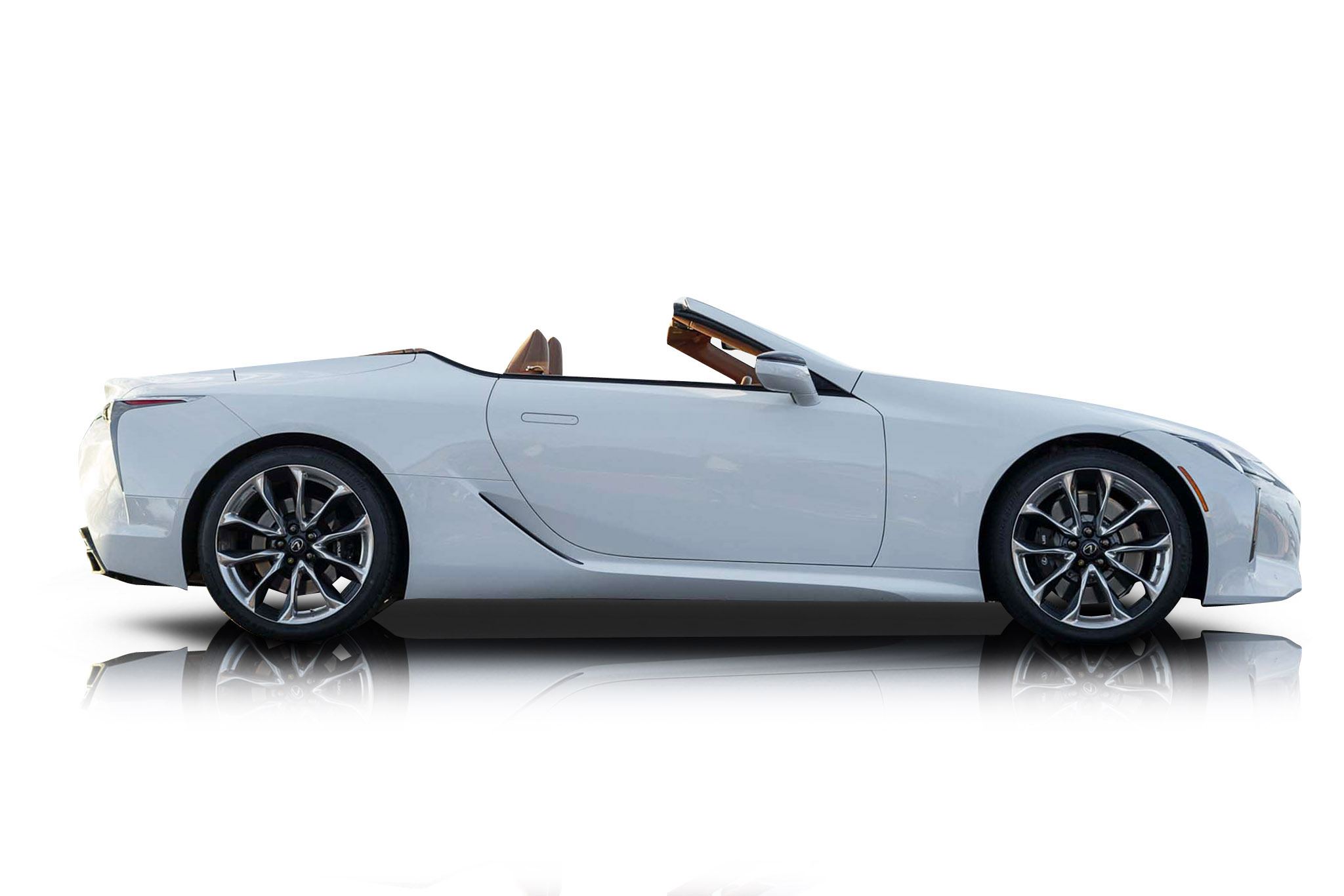
The Lexus LC 500 features an overall length of 4,770 mm (187.8 inches), a width of 1,920 mm (75.6 inches) without mirrors, and a height of 1,345 mm (53.0 inches) for the Coupé, all resting on a 2,870 mm (113.0-inch) wheelbase, making it a low-slung, grand touring sports car engineered for high-speed stability and striking proportions.
When evaluating a high-performance grand tourer like the Lexus LC 500, understanding its physical footprint is just as important as examining its naturally aspirated 5.0-liter V8 engine. The vehicle's exterior measurements, interior ergonomics, weight distribution, and cargo capacity dictate how it handles on twisty backroads, fits inside a standard garage, and accommodates driver and passenger on long-distance journeys. This comprehensive guide breaks down every dimension of the Lexus LC 500 Coupé and Convertible, offering clear insights for prospective owners, automotive enthusiasts, and engineering purists.
Exterior Dimensions and Stance
The visual drama of the Lexus LC 500 is directly tied to its proportions. Chief engineers and designers prioritized a wide track and minimal overhangs to achieve an athletic, aggressive stance that closely mimics the original LF-LC concept car.
Overall Length, Width, and Height
- Length: 4,770 mm (187.8 inches)
- Width (excluding mirrors): 1,920 mm (75.6 inches)
- Width (including mirrors): Approximately 2,139 mm (84.2 inches)
- Height (Coupé): 1,345 mm (53.0 inches)
- Height (Convertible): 1,350 mm (53.1 inches)
- Wheelbase: 2,870 mm (113.0 inches)
The long 2,870 mm wheelbase pushes the wheels out toward the extreme corners of the vehicle. This design choice minimizes pitch and roll during heavy braking and acceleration while providing a stable platform for high-speed tracking. However, the generous width of over 1.9 meters requires extra attention when navigating narrow European-style streets, tight multi-story parking structures, or narrow residential garage doors.
Ground Clearance and Overhangs
The LC 500 sits exceptionally low to the ground.
- Minimum Ground Clearance: 133 mm (5.2 inches)
This modest ground clearance enhances high-speed aerodynamic stability by reducing the volume of air trapped underneath the vehicle. It also lowers the center of gravity, aiding cornering agility. Nevertheless, owners must exercise caution when approaching steep driveways, speed bumps, or concrete parking stops to avoid scraping the front bumper fascia or the underbody aerodynamic trays.
Weight Distribution and Curb Weight
Vehicle mass and how it is distributed across the chassis play a massive role in dynamic performance. The LC 500 utilizes a front-midship engine layout, positioning the heavy 5.0-liter V8 power plant behind the front axle line to optimize weight balance.
| Model Variant | Curb Weight (Approximate) | Weight Distribution (Front / Rear) |
|---|---|---|
| LC 500 Coupé (V8) | 1,935 kg (4,266 lbs) | 52% / 48% |
| LC 500h (Hybrid) | 1,985 kg (4,376 lbs) | 51% / 49% |
| LC 500 Convertible | 2,040 kg (4,497 lbs) | ~50% / ~50% |
The high curb weight—ranging from roughly 1,935 kg to over 2,040 kg—is a byproduct of the ultra-rigid GA-L (Global Architecture-Luxury) platform. This platform incorporates high-strength steel, aluminum, and carbon fiber-reinforced plastic (CFRP) to maintain structural integrity, particularly in the Convertible variant, which requires additional structural bracing to compensate for the missing fixed roof.
Interior Cabin Dimensions
While the exterior commands attention with its sweeping lines, the interior packaging tells a different story regarding space prioritization. The LC 500 is structured as a 2+2 grand tourer, though the interior dimensions reveal distinct compromises for rear passengers in exchange for driver-focused ergonomics.
Front Cabin Space
- Headroom (without glass roof): 940 mm (37.0 inches)
- Headroom (with glass roof): 937 mm (36.9 inches)
- Legroom: 1,064 mm (41.9 inches)
- Shoulder Room: 1,400 mm (55.1 inches)
- Hip Room: 1,372 mm (54.0 inches)
The front cockpit wraps tightly around the driver and front passenger. The low seating position reinforces the sports car identity, while adjustable power seats and a power-adjustable steering column ensure that drivers of varying statures can find a comfortable driving position. Headroom is adequate for individuals up to approximately 6 feet 2 inches, though helmet clearance for track days can be tight for taller drivers.
Rear Cabin Space
- Headroom: 810 mm (31.9 inches)
- Legroom: 820 mm (32.3 inches) (nominal, highly dependent on front seat placement)
- Shoulder Room: 1,220 mm (48.0 inches)
The rear seats in both the Coupé and Convertible are best classified as emergency seats or supplemental storage areas. With the front seats pushed back for a normal-sized adult, rear legroom is effectively reduced to zero. Adults over 5 feet 5 inches will find their heads brushing the rear window glass or roof liner. Consequently, most owners utilize the rear seats for luggage, jackets, or small pet transport rather than human passengers.
Cargo and Trunk Capacity
Grand touring requires luggage space for weekend getaways, making trunk capacity an essential metric for potential buyers.
- LC 500 Coupé Trunk Volume: 153 liters (5.4 cubic feet)
- LC 500h Hybrid Trunk Volume: 132 liters (4.7 cubic feet)
- LC 500 Convertible Trunk Volume: 149 liters (5.3 cubic feet)
The trunk opening is relatively narrow, and the floor layout is shallow due to the complex multi-link rear suspension geometry and the housing for the electronics or hybrid battery pack. Owners cannot fit large, bulky hard-sided suitcases. Instead, the vehicle benefits significantly from custom-tailored soft luggage sets designed specifically to maximize the irregular dimensions of the cargo bay. In the Convertible model, trunk space remains remarkably consistent whether the soft top is raised or lowered, as the folding top mechanism is housed in a dedicated compartment separate from the primary cargo area.
Aerodynamic Dimensions and Coefficient of Drag
Beyond static measurements, the aerodynamic profile dictates how the LC 500 cuts through the air at highway speeds.
- Drag Coefficient ($C_d$): Approximately 0.33 (Coupé)
Strategically placed air curtains in the front bumper, active rear wings (on certain performance-package trims), and flush underbody covers manage airflow effectively. These aerodynamic dimensions reduce high-speed lift, improve directional stability, and optimize fuel economy during long-distance cruising.
Frequently Asked Questions
Can adults comfortably sit in the back seats of a Lexus LC 500?
No. While the LC 500 is officially classified as a 2+2 sports car, the rear legroom and headroom are extremely limited. Adults will find the rear quarters suitable only for very short trips or children. For most owners, the rear seats serve as an extension of the trunk for storing extra bags.
Does the Lexus LC 500 Convertible have less trunk space than the Coupé?
No, the cargo capacity remains very similar. The LC 500 Convertible offers approximately 149 liters (5.3 cubic feet) of trunk space, which is nearly identical to the Coupé's 153 liters (5.4 cubic feet). The soft-top mechanism is engineered to fold into its own dedicated well, preserving the primary cargo floor space regardless of roof position.
Is the Lexus LC 500 too wide for standard garage parking?
With a width of 1,920 mm (75.6 inches) excluding mirrors and over 2.1 meters including mirrors, the LC 500 is wider than many compact sedans. It fits into standard American single-car garages (which are typically 9 to 10 feet wide), but drivers must exercise caution and fold the power mirrors in narrow residential or commercial parking structures.
What is the ground clearance of the LC 500, and does it scrape easily?
The LC 500 features a low minimum ground clearance of 133 mm (5.2 inches). This low stance provides aerodynamic stability and a low center of gravity, but it requires drivers to approach steep ramps, sloped driveways, and concrete parking barriers at an angle to avoid scraping the front bumper chin spoiler.
How does the wheelbase affect the driving dynamics of the LC 500?
The 2,870 mm (113.0-inch) wheelbase is exceptionally long for a two-door sports car. This dimension creates a stable platform that excels at high-speed grand touring and straight-line composure, though it requires a wider turning radius during low-speed U-turns and tight cornering maneuvers.
Next Actions for Prospective Buyers
If you are considering purchasing or leasing a Lexus LC 500, verify that the physical dimensions align with your practical requirements. Test-drive the vehicle in your local environment to evaluate forward visibility, parking garage clearance, and ease of entry and exit given its low-slung stance. Bringing your preferred luggage to the dealership to test fitment in the trunk is also a recommended step to ensure the cargo space meets your travel needs.