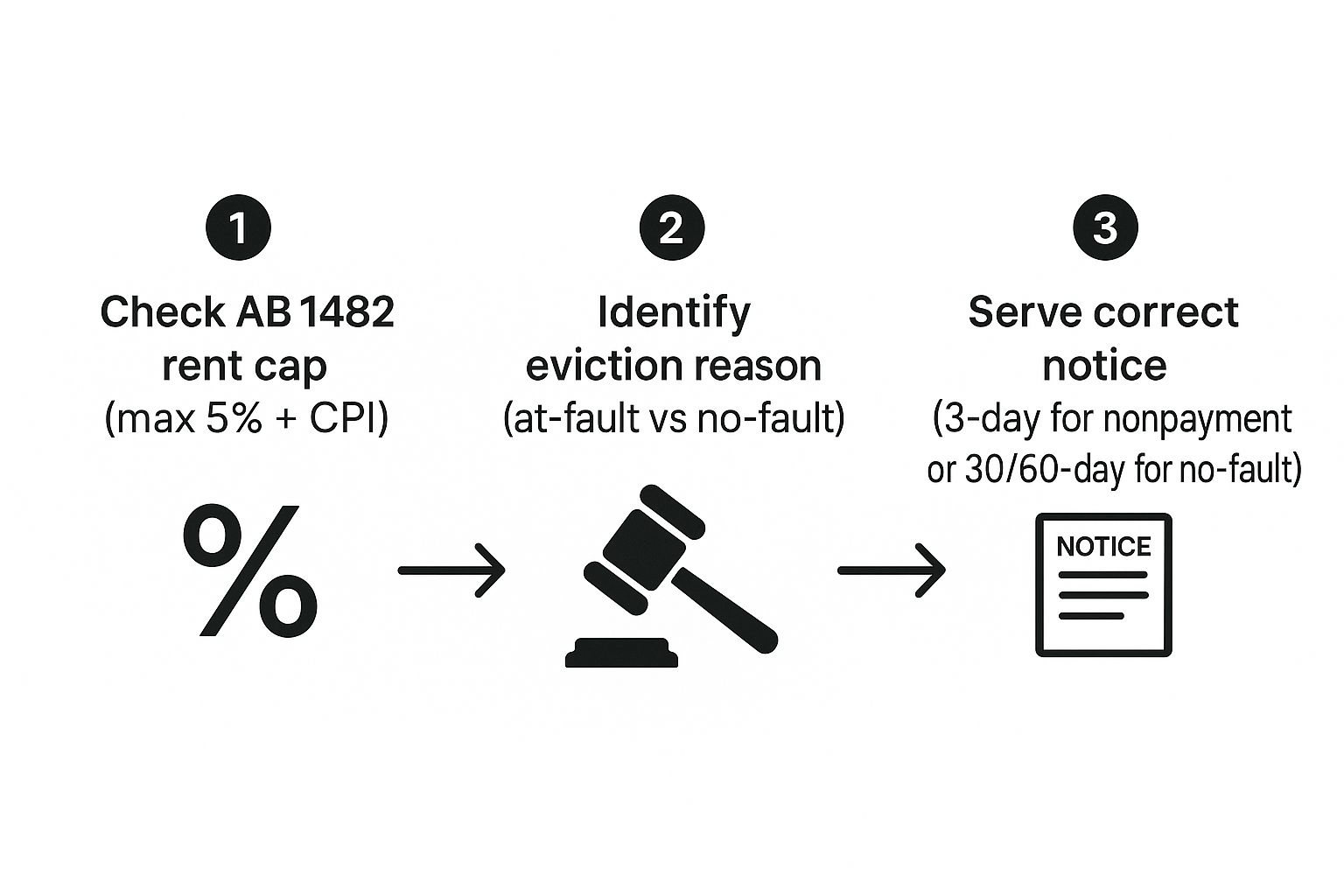
California tenants operate under some of the most robust residential leasing frameworks in the United States, shaped by comprehensive state statutes, local ordinances, and evolving legal interpretations. Understanding these protections requires looking closely at how core statutory pillars function in practice, particularly regarding rent stabilization, termination rules, habitability standards, security deposit limits, and privacy protections.
Introduction to California Residential Tenancies
The landscape of California residential tenancy law balances the contractual freedom of property owners with the fundamental need for housing stability for renters. Statutory protections have expanded significantly over recent years, establishing state-wide baselines that local municipalities can further strengthen through local rent control and tenant protection ordinances. Navigating this legal environment requires a careful review of the lease agreement, applicable municipal codes, and state-level mandates enforced by regulatory bodies such as the California Department of Real Estate.
While property owners retain the right to manage their investments and collect fair market value, tenants are shielded by mandatory rules governing how rent can be increased, under what circumstances a lease may be terminated, and what conditions must be maintained within the rental unit. This comprehensive overview examines five essential rights that every California renter must understand to protect their housing stability, financial security, and personal privacy.
1. Rent Stabilization and Annual Increase Caps
Rent regulation in California underwent a historic transformation with the passage of the Tenant Protection Act of 2019 (AB 1482), which established state-level caps on annual rent increases and instituted broad eviction controls. This framework applies to many multi-family residential properties across the state, though significant exemptions exist based on the age of the building, property type, and ownership structure.
Understanding the AB 1482 Formula
Under the Tenant Protection Act, covered landlords cannot raise rent by more than 5% plus the local Consumer Price Index (CPI), or a maximum of 10% total, whichever is lower, over any 12-month period. This calculation is anchored to the inflation rate published by the Bureau of Labor Statistics for the specific region.
- Covered Properties: Generally, apartments and multi-family complexes constructed more than 15 years ago, as well as corporate-owned single-family homes and condominiums.
- Exempt Properties: Single-family homes and condominiums owned by private individuals (not corporations or real estate investment trusts), newer construction built within the last 15 years, and properties subject to stricter local rent control ordinances.
Notice Requirements for Rent Increases
Landlords must provide formal written notice before any rent increase can take effect. For rent increases of 10% or less, landlords must deliver a 30-day advance written notice to month-to-month tenants. If the rent increase exceeds 10% (where permitted by law), a 90-day advance written notice is mandatory. Failure to provide proper notice invalidates the increase, and tenants are legally entitled to withhold the unauthorized portion of the rent increase while demanding a corrected notice.
2. Just-Cause Eviction Protections
Before the Tenant Protection Act, landlords in many California jurisdictions could terminate a month-to-month tenancy without providing a reason, subject only to standard notice periods. AB 1482 fundamentally altered this dynamic by establishing statewide "just cause" eviction protections for qualifying tenants who have resided in a rental unit for 12 continuous months or longer.
At-Fault vs. No-Fault Evictions
Just-cause protections categorize lease terminations into two distinct legal buckets: at-fault and no-fault justifications. Landlords must explicitly state the legal reason for termination in the written notice served to the tenant.
| Eviction Category | Sub-Types and Legal Justifications | Mandatory Landlord Actions / Relocation Assistance |
|---|---|---|
| At-Fault Just Cause | Nonpayment of rent, material breach of lease terms, nuisance, criminal activity, or refusal to execute a lawful lease renewal. | Must provide a 3-day notice to cure or quit for remediable violations, or a 3-day notice to quit for un-remediable breaches. |
| No-Fault Just Cause | Intent to demolish or substantially remodel the property, owner or family member move-in, or withdrawal of the unit from the rental market. | Must provide a 60-day notice and pay relocation assistance equal to one month's rent or waive the final month's rent. |
Exemptions from State Just-Cause Rules
Properties exempt from AB 1482 just-cause provisions include transient and tourist hotels, dormitories, housing accommodations where the tenant shares a bathroom or kitchen with the owner, and single-family homes not owned by corporations, provided the tenant was given explicit written notice of the exemption at the inception of the tenancy.
3. The Implied Warranty of Habitability
Every residential lease in California includes an "implied warranty of habitability." This legal doctrine dictates that a landlord promises that the rental unit is fit for human habitation and will remain in compliance with state and local housing codes throughout the duration of the tenancy. Tenants cannot sign away this right, and any lease clause purporting to waive habitability standards is legally void.
Core Habitability Requirements
To satisfy the warranty of habitability, a rental property must maintain essential structural, mechanical, and sanitary integrity. According to the California Department of Consumer Affairs, a unit must possess:
- Effective waterproofing and weather protection of roof and exterior walls, including unbroken windows and doors.
- Plumbing and gas facilities maintained in good working order.
- A hot and cold running water supply connected to a sewage disposal system.
- Heating facilities maintained in good working order.
- Electrical lighting, wiring, and equipment maintained in safe condition.
- Clean and sanitary grounds, free from rodents, vermin, and accumulation of debris.
- Adequate trash receptacles in clean condition.
Tenant Remedies for Uninhabitable Conditions
When a landlord fails to make necessary repairs after receiving reasonable notice, California tenants have access to several distinct legal remedies:
- Repair and Deduct: Tenants can pay for the repairs themselves and deduct the cost from their subsequent month's rent, up to an amount equal to one month's rent, twice in any 12-month period.
- Withholding Rent: Tenants may withhold rent if the uninhabitable conditions are severe enough to constitute a "constructive eviction," though this carries legal risks and requires proper documentation.
- Abandonment: Tenants can vacate the premises without penalty, treating the landlord's failure as a termination of the lease agreement.
- Lawsuit for Damages: Tenants can sue the landlord in small claims or civil court for damages, rent refunds, and statutory penalties.
4. Security Deposit Limits and Return Deadlines
Financial security deposits represent a significant upfront cost for renters. California law strictly regulates how much landlords can collect, how those funds must be handled, and the strict timelines for returning the money after a tenancy concludes.
Statewide Deposit Caps
Assembly Bill 12 (AB 12) established a strict statewide cap on residential security deposits. For all lease agreements entered into or renewed, landlords are prohibited from charging a security deposit that exceeds one month's rent, regardless of whether the property is furnished or unfurnished.
- Small Landlord Exception: Private individual landlords who own no more than two residential properties containing a total of no more than four residential units may charge up to two months' rent as a security deposit, provided they do not use a property management company.
Deductions and the 21-Day Return Deadline
Within 21 calendar days after a tenant vacates the premises, the landlord must return the full security deposit or provide an itemized statement detailing lawful deductions alongside the remaining balance. Permissible deductions include:
- Unpaid rent.
- Repair of damages beyond normal wear and tear caused by the tenant or their guests.
- Cleaning the unit to return it to the same level of cleanliness as when the tenancy began.
Landlords must include copies of receipts or invoices for any repairs exceeding $125 performed by third-party contractors, or a detailed breakdown of labor costs if performed by the landlord or their staff.
5. Right to Privacy and Landlord Entry Restrictions
A residential lease grants the tenant the exclusive right of possession of the property. Consequently, landlords do not have an unrestricted right to enter the rental unit whenever they choose. California Civil Code Section 1954 strictly limits the times and purposes for which a landlord or property manager may enter an occupied rental unit.
Permissible Grounds for Entry
A landlord may enter a rental unit only under specific, legally recognized circumstances:
- In cases of genuine emergency threatening life or property.
- To make necessary or agreed-upon repairs, decorations, alterations, or improvements.
- To show the unit to prospective tenants, purchasers, or lenders.
- When the tenant has abandoned or surrendered the premises.
- Pursuant to a court order.
Notice and Timing Requirements
Except in emergencies or when the tenant is present and consents to entry at the time, landlords must provide written notice at least 24 hours in advance of their intent to enter. The notice must specify a reasonable time frame for entry, which must occur during normal business hours (Monday through Friday, 8:00 AM to 5:00 PM), unless the tenant explicitly consents to an alternative schedule. The notice can be delivered personally, left with a person of suitable age at the property, or mailed at least six days prior to the intended entry.
Frequently Asked Questions
Can my landlord raise my rent if I am on a month-to-month lease?
Yes, landlords can raise rent on a month-to-month lease provided they comply with state rent caps under AB 1482 and provide proper advance written notice (30 days for increases of 10% or less, or 90 days for increases exceeding 10%). Local rent stabilization ordinances may impose even lower limits or outright freezes.
What constitutes "normal wear and tear" versus tenant damage?
Normal wear and tear refers to the natural deterioration of a property that occurs over time from ordinary, everyday use, such as minor scuffs on walls, faded paint, or worn carpet fibers. Tenant damage results from negligence, abuse, or accidents, such as large holes in drywall, broken windows, or severe stains on flooring. Landlords cannot deduct from security deposits for normal wear and tear.
How do I legally withhold rent for unrepaired habitability issues?
Withholding rent carries legal risks if not executed precisely. Before withholding rent, you must notify the landlord of the defect in writing, allow a reasonable time for repairs (typically 30 days), and ensure the defect is severe enough to violate building codes. Depositing the withheld rent into an escrow account rather than spending it is strongly recommended to demonstrate good faith in court.
Does my landlord need my permission to enter my apartment for an inspection?
Yes, except in genuine emergencies, landlords must provide written notice at least 24 hours in advance and enter only during normal business hours. Unannounced entries for routine inspections without your consent violate California privacy statutes.
What should I do if my landlord locks me out or shuts off my utilities?
Self-help evictions, such as changing locks, removing doors, or shutting off essential utilities (water, gas, electricity), are strictly illegal in California. If this occurs, you should immediately contact local law enforcement to document the illegal lockout and consult a legal aid organization or tenant attorney, as you may be entitled to statutory damages of up to $100 per day of violation.