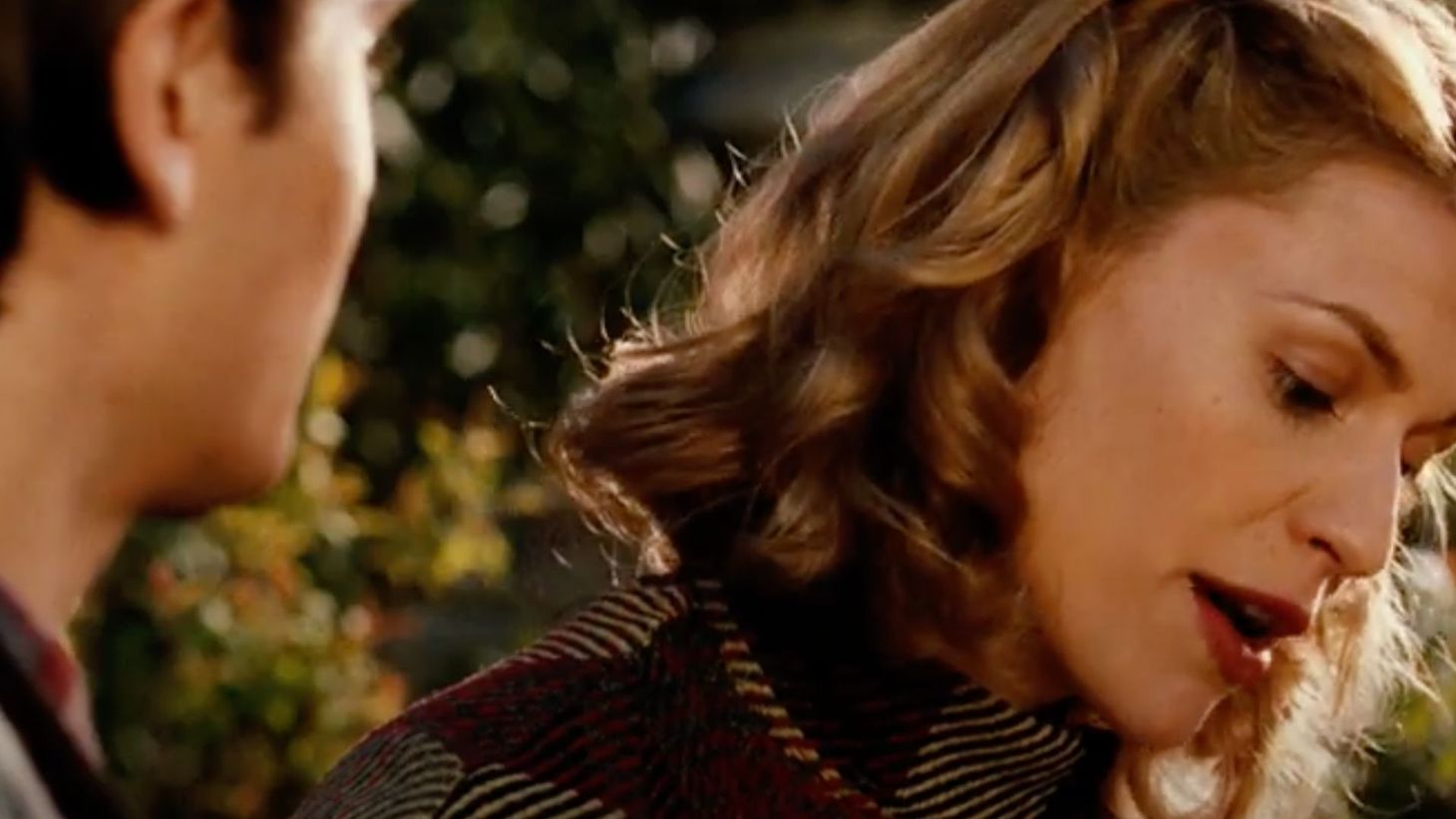
Finding the perfect Claire Danes movie depends entirely on your current emotional state, whether you are seeking a cathartic cry, a whimsical escape, or an intellectual challenge. From her breakout 90s performances to her transformative biographical roles, Danes has curated a filmography defined by high-stakes vulnerability and technical precision.
Claire Danes remains one of the most decorated and respected actors of her generation. While many modern audiences recognize her primarily for her eight-season run as Carrie Mathison in Homeland, her cinematic contributions offer a diverse spectrum of tones and genres. As of 2026, her filmography stands as a testament to her ability to anchor complex narratives with her signature "quivering chin" emotional honesty. This guide ranks five essential Claire Danes films, categorizing them by mood to help you select the right viewing experience for your evening.
1. The Mood: Pure Romance and Stylized Tragedy
The Film: William Shakespeare's Romeo + Juliet (1996)
If you are in the mood for high-octane passion, visual splendor, and a devastating emotional payoff, Baz Luhrmann’s Romeo + Juliet is the definitive choice. Released in 1996, this film catapulted a young Claire Danes into global superstardom. At just 16 years old during filming, Danes brought a grounded, luminous maturity to the role of Juliet Capulet that contrasted sharply with the frenetic, neon-drenched world of Verona Beach.
Luhrmann’s interpretation of the Shakespearean classic remains a high-water mark for 1990s cinema. The film’s success relies heavily on the chemistry between Danes and Leonardo DiCaprio. Unlike many adaptations that lean into the "damsel" trope, Danes’ Juliet is decisive and emotionally resilient. Her performance is characterized by stillness; amidst the gunfights, Hawaiian shirts, and pop-culture needle drops, she provides the film’s heartbeat.
The "fish tank" scene—where the star-crossed lovers first lock eyes through a saltwater aquarium—remains one of the most iconic moments in romantic cinema history. Technically, Danes handles the Elizabethan dialogue with an ease that makes it feel contemporary, a feat that many veteran actors struggle to achieve. For viewers in 2026, the film serves as a nostalgic time capsule of mid-90s "MTV style" while retaining its power as a visceral tragedy. It is the perfect film for when you want to feel the overwhelming weight of first love and the inevitable sting of its loss.
2. The Mood: Whimsical Adventure and Lighthearted Magic
The Film: Stardust (2007)
When the world feels heavy and you require a literal dose of magic, Stardust is the essential Danes selection. Directed by Matthew Vaughn and based on the novel by Neil Gaiman, this 2007 fantasy adventure features Danes in one of her most charming and ethereal roles. She plays Yvaine, a fallen star who takes human form after crashing into the magical realm of Stormhold.
What makes Stardust stand out in the fantasy genre is its refusal to take itself too seriously while still maintaining high emotional stakes. Danes’ performance is a masterclass in comedic timing and physical acting. As Yvaine, she must navigate the peculiarities of human behavior, the threat of witches seeking her heart (led by a terrifyingly brilliant Michelle Pfeiffer), and a burgeoning romance with a clumsy villager named Tristan (Charlie Cox).
In 2026, Stardust is often cited as one of the most underrated fantasy films of the 2000s. It avoids the dark, gritty realism that came to define the genre post-Game of Thrones, opting instead for vibrant colors, soaring orchestral scores, and genuine heart. Danes literally glows in this film—a visual effect that mirrors her character’s celestial nature. It is the ideal movie for a family night or a solo watch when you need to be reminded that wonder still exists.
3. The Mood: Intellectual Depth and Emotional Reflection
The Film: The Hours (2002)
For those evenings when you want to sit with complex themes of legacy, mental health, and the intergenerational impact of choice, The Hours provides a profound viewing experience. Directed by Stephen Daldry, this film interweaves the lives of three women across different decades, all connected by Virginia Woolf’s novel Mrs. Dalloway.
Danes plays Julia Vaughan, the daughter of Clarissa Vaughan (Meryl Streep) in the contemporary segment of the film. While her role is supporting, it is pivotal. Julia acts as a mirror to Clarissa’s anxieties, representing the next generation trying to find footing amidst the shadow of their parents' unfulfilled desires and the specter of the AIDS crisis.
The technical depth of The Hours is found in its editing and its ability to maintain a consistent emotional frequency across disparate timelines. Acting alongside titans like Streep, Julianne Moore, and Nicole Kidman (who won an Oscar for her role as Woolf), Danes more than holds her own. She brings a subtle, modern irritation and deep-seated love to her scenes, grounding the more theatrical elements of the film. This is the movie to watch when you are in a quiet, introspective mood and want to appreciate the nuances of human connection and the "ordinary" struggles of life.
4. The Mood: Triumphant Inspiration and Empathy
The Film: Temple Grandin (2010)
If you are looking for a story that celebrates the human spirit and provides a unique perspective on neurodiversity, Temple Grandin is mandatory viewing. Though produced by HBO as a television film, its cinematic quality and Danes’ transformative performance earned it a permanent place in the pantheon of great biographical dramas.
Danes portrays the real-life Temple Grandin, an autistic woman who revolutionized the humane handling of livestock and became a world-renowned advocate for the autistic community. This role required Danes to completely subvert her usual screen persona. She mastered Grandin’s specific vocal patterns, physical mannerisms, and literal way of perceiving the world. The film uses inventive visual effects to show how Grandin "thinks in pictures," allowing the audience to step into her mind.
The performance earned Danes an Emmy, a Golden Globe, and a Screen Actors Guild Award, and for good reason. She avoids the pitfalls of caricature, instead delivering a portrayal that is fiercely intelligent, occasionally stubborn, and deeply moving. In 2026, as society continues to improve its understanding of neurodivergence, Temple Grandin remains a touchstone for authentic representation. It is an "upbeat" film in the sense that it depicts a hard-won victory over systemic barriers, making it perfect for when you need motivation or a shift in perspective.
5. The Mood: Quiet Melancholy and Modern Loneliness
The Film: Shopgirl (2005)
Modern life often carries a specific type of quiet isolation, and Shopgirl captures this mood with surgical precision. Written by Steve Martin (based on his novella) and directed by Anand Tucker, the film stars Danes as Mirabelle, a lonely counter girl at Saks Fifth Avenue in Los Angeles who sells gloves that nobody buys.
The film explores a complicated "love triangle" between Mirabelle, a wealthy, older businessman (Steve Martin), and a struggling, socially awkward young man (Jason Schwartzman). Unlike typical romantic comedies, Shopgirl is bathed in a cool, melancholic light. It captures the vastness of Los Angeles and the feeling of being invisible in a crowded city.
Danes’ performance is understated and vulnerable. She portrays Mirabelle’s depression and her yearning for connection without over-dramatizing the material. The film asks difficult questions about what we owe to the people we date and whether money can buy intimacy. For a viewer in 2026, Shopgirl feels perhaps even more relevant in an era of digital disconnection. It is the movie to choose when you are feeling a bit "lost in the world" and want to see that feeling validated on screen.
Comparative Overview of Featured Films
The following table provides a technical breakdown of these five films to help you decide based on runtime, critical reception, and core emotional takeaway.
| Film Title | Release Year | Primary Mood | Core Theme | Performance Style |
|---|---|---|---|---|
| Romeo + Juliet | 1996 | Romantic/Tragic | Forbidden Love | Lyrical & Intense |
| Stardust | 2007 | Whimsical/Magic | Identity & Wonder | Charismatic & Light |
| The Hours | 2002 | Introspective | Legacy & Despair | Naturalistic & Subtle |
| Temple Grandin | 2010 | Inspirational | Neurodiversity | Transformative |
| Shopgirl | 2005 | Melancholic | Loneliness | Understated & Raw |
The Technical Artistry of Claire Danes
To understand why these movies rank so highly, one must look at the technical evolution of Danes as an actress. Critics often point to her "crying face" as a hallmark of her work, but this is a reductionist view of a very sophisticated technical skill. Danes possesses a rare ability to allow blood flow and nervous system responses to manifest physically on screen—what many call "internal acting."
In films like The Hours and Shopgirl, she utilizes stillness. Her characters are often observers, and she communicates their internal shifts through micro-expressions. In contrast, Romeo + Juliet and Stardust required a more theatrical approach. In the mid-90s, Danes was often compared to silent film stars because of her expressive eyes and ability to convey narrative weight without dialogue.
By the time she filmed Temple Grandin, her technical range had expanded to include "character work" in the traditional sense—altering her voice and gait. This progression shows an actor who is not content to rely on her natural charisma but is constantly seeking to deconstruct her own persona to serve the story.
Streaming and Availability in 2026
As of 2026, Claire Danes’ catalog is widely available across major platforms. Romeo + Juliet and Stardust are frequently found on premium tiers of services like Disney+ or Paramount+, given their studio origins (Fox and Paramount, respectively). The Hours is a staple on platforms that prioritize Academy Award-winning cinema, such as Max or Criterion Channel.
Temple Grandin, being an HBO original, remains a permanent fixture on the Max streaming library. Shopgirl is often the "hidden gem" of the bunch, occasionally appearing on ad-supported platforms like Tubi or available for digital rental through Amazon and Apple. For the best viewing experience, these films benefit from high-definition restorations, particularly the vibrant color palettes of Romeo + Juliet and Stardust.
Frequently Asked Questions
Which Claire Danes movie won the most awards?
While Romeo + Juliet was a commercial juggernaut and won several BAFTA awards, Temple Grandin is her most decorated film performance. She swept the major awards ceremonies for this role, winning a Primetime Emmy, a Golden Globe, and a Screen Actors Guild Award. The Hours was also highly decorated, though the majority of those accolades were focused on the ensemble and Nicole Kidman's lead performance.
Is "My So-Called Life" a movie?
No, My So-Called Life was a television series that aired for one season in 1994-1995. However, it is essential viewing for any Claire Danes fan as it established her as the "voice of a generation." The show is often discussed alongside her films because of its cinematic quality and the depth of her performance as Angela Chase.
Does Claire Danes do her own stunts in Stardust?
While Stardust features significant action sequences, many of the more dangerous stunts were performed by professional doubles. However, Danes was involved in extensive wire-work for the scenes where her character is "falling" or being transported magically. Her physical commitment to the role’s unique movement—transitioning from a literal star to a human woman—was a key part of the production’s choreography.
What is the saddest movie on this list?
The "saddest" movie is subjective, but The Hours generally carries the most sustained weight of sadness and existential dread. While Romeo + Juliet is a tragedy, it is balanced by high energy and romance. The Hours deals with the heavy reality of depression and the difficulty of living an authentic life, which many viewers find more emotionally taxing.
Has Claire Danes worked with the same directors multiple times?
In her film career, Danes has tended to work with a wide variety of directors, ranging from indie icons like Mary Harron (The Dying Gaul) to blockbuster directors like Jonathan Mostow (Terminator 3: Rise of the Machines). However, her most enduring professional relationship was with the producers and writers of Homeland, which occupied over a decade of her career.
Final Recommendation
If you are new to Claire Danes’ filmography and aren't sure where to start, begin with Stardust for an easy, high-quality entry point. If you want to see why she is considered one of the greatest emotional actors of the last thirty years, move next to Temple Grandin. Each of these five films offers a unique window into her talent, ensuring that no matter your mood, there is a Danes performance ready to meet you there.