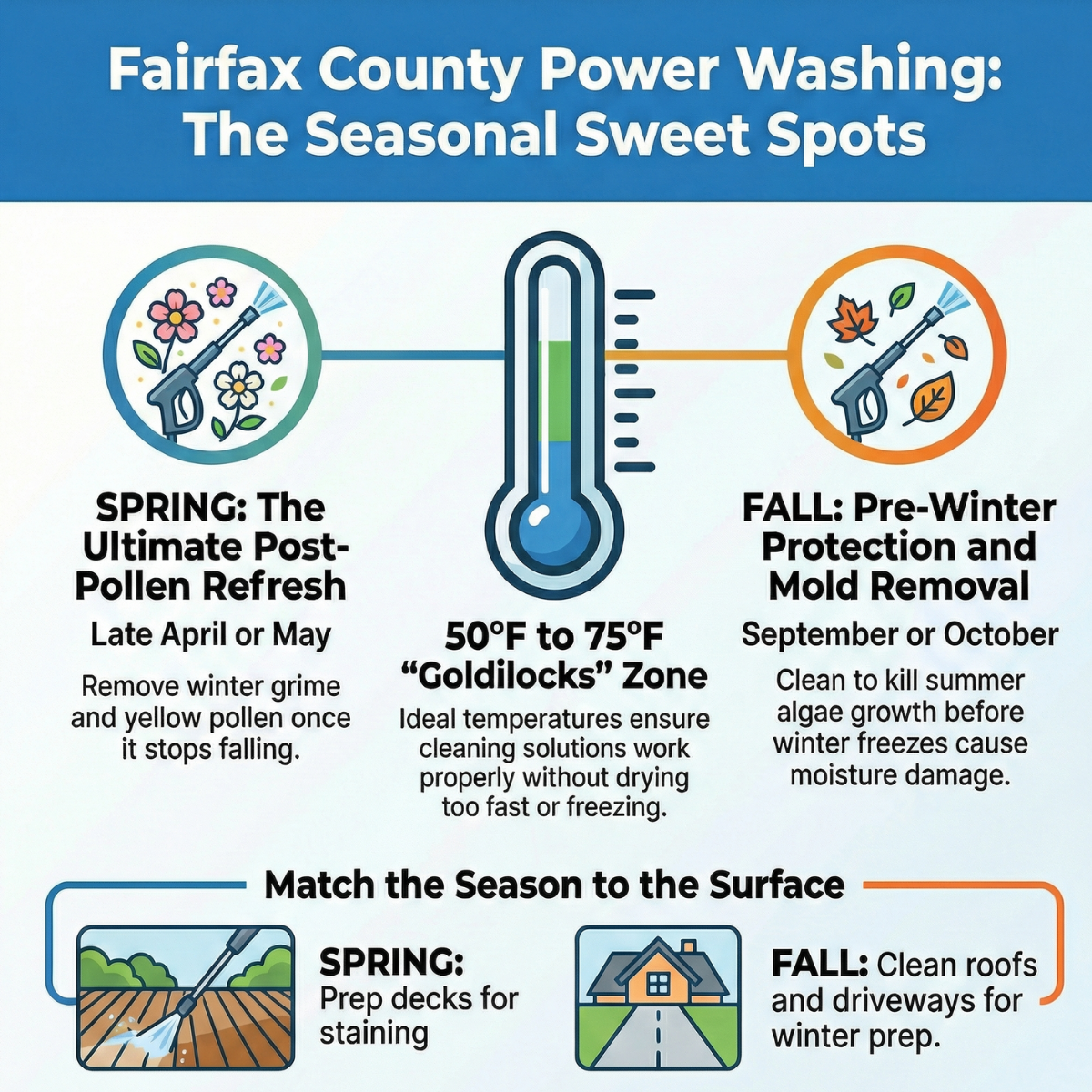
The best time to wash windows is during the Spring or Autumn, specifically on a cloudy, overcast day with temperatures between 50°F and 70°F (10°C to 21°C). This timing prevents cleaning solutions from evaporating too quickly, which is the leading cause of permanent streaks and residue on glass surfaces.
Window maintenance is a fundamental aspect of home and property care that impacts everything from curb appeal to energy efficiency. While many homeowners view window washing as a generic chore, the physics of evaporation and the chemistry of cleaning agents dictate that timing is the most critical factor for success. In 2026, as high-performance glass coatings become more common in residential architecture, understanding the seasonal nuances of window care is more important than ever to protect your investment and ensure clarity.
The Science of Timing: Why Weather Dictates Results
To understand why there is "one best time" despite having four distinct seasons, one must look at the behavior of water and surfactants (soaps) on glass. When you apply a cleaning solution to a window, you are creating a suspension that lifts dirt and oils. If that solution dries before you can physically remove it with a squeegee or microfiber cloth, the solids—the dirt and the soap—are redeposited onto the glass in the form of streaks.
Direct sunlight is the primary enemy of a clear window. On a bright, sunny day, even in cooler temperatures, the glass surface can absorb solar radiation, becoming significantly hotter than the ambient air. This causes the cleaning fluid to flash-dry almost instantly. Therefore, the "best time" is not just a season, but a specific set of meteorological conditions: high cloud cover, low wind, and moderate humidity.
The Role of Humidity and Wind
While temperature is a major factor, humidity and wind speed play supporting roles in the evaporation rate. On a very dry day, moisture leaves the glass surface rapidly, forcing the cleaner to work at an unsustainable pace. Conversely, high humidity can keep the window wet for too long, potentially leading to "runs" or dripping if the technician is not precise. Wind complicates the process by blowing dust and debris onto the wet glass, effectively undoing the cleaning process before the window is even dry.
Spring: The Seasonal Reset and the Pollen Challenge
For many, Spring represents the most popular time for window cleaning. As of 2026, the "Spring Clean" remains a cultural staple, and for good reason. After a long winter, windows are often coated in a layer of salt (in coastal or cold climates), soot from heating systems, and general atmospheric grime.
Addressing the Pollen Factor
The primary challenge of Spring window washing is the "pollen dump." Depending on your geographic location, different species of trees and grasses release massive amounts of microscopic, sticky spores. If you wash your windows too early in the Spring, a single week of high pollen counts can render them dirty again. The professional recommendation is to wait until the "yellow haze" has subsided—usually late May in temperate zones—to perform a deep clean.
Pre-Cleaning Requirements
Spring cleaning is not just about the glass; it is about the entire window assembly. This is the time to:
- Remove and wash screens: Screens trap an immense amount of dust. If you clean the glass but leave a dirty screen, the first rainstorm will splash that dirt back onto the window.
- Clear the sills and tracks: Winter debris can clog the drainage "weep holes" in window frames, leading to moisture buildup and potential wood rot or mold.
- Inspect seals: Check the caulking and weatherstripping for winter damage.
Summer: Navigating Heat and High Evaporation
Washing windows in the height of Summer is a test of speed and technique. While the long daylight hours provide plenty of visibility, the heat index makes it the most difficult time for a DIYer to achieve a streak-free finish.
Strategic Timing for Summer
If you must wash windows in the Summer, you must follow the sun. This means cleaning the West-facing windows in the morning when they are in the shade, and the East-facing windows in the late afternoon. The glass should be cool to the touch. In 2026, professional cleaners often use "pure water" systems—deionized water that leaves no mineral residue—to combat the rapid drying times associated with Summer heat.
The Dangers of Thermal Shock
Though rare with modern double-pane tempered glass, applying ice-cold water to a window that has been baked in 90°F sun can cause thermal shock, leading to cracks. This is particularly relevant for older homes with original single-pane glass. Always ensure the water temperature is somewhat aligned with the glass temperature.
Autumn: The True "Best Time" for Preservation
Many industry experts argue that Autumn is actually the superior season for window maintenance, even over Spring. Cleaning your windows in the late Fall (October or early November) serves two purposes: it removes the accumulated organic debris of Summer (bug remains, bird droppings, and sap) and prepares the home for the low-angle winter sun.
Maximizing Winter Solar Gain
During the winter months, you want as much natural light and solar heat as possible to enter your home. A layer of grime can actually reduce the "Solar Heat Gain Coefficient" (SHGC) of your windows, making your heating system work slightly harder. By cleaning in the Autumn, you ensure that your glass is crystal clear for the months when you spend the most time indoors.
Dealing with Falling Debris
The main hurdle in Autumn is falling leaves and seeds. Ensure that your gutters are cleaned simultaneously with your windows, as overflowing gutters can spill dirty, tannin-stained water directly down the face of your exterior glass.
Winter: Can You Wash Windows in the Cold?
In 2026, advancements in cleaning chemistry have made winter window washing more feasible, but it remains a specialized task. In regions where temperatures drop below freezing, standard soap and water will turn to ice the moment they hit the pane.
Winter Cleaning Techniques
To clean windows in sub-freezing temperatures, professionals use a "winter mix," which usually involves adding a percentage of Isopropyl alcohol or a specialized windshield-wash-style antifreeze to the solution. This lowers the freezing point of the liquid, allowing for a squeegee finish before the water turns to frost.
- Safety Warning: Winter cleaning introduces significant slip hazards. Ice patches can form on walkways from dripping water, and ladder use on frozen ground is extremely dangerous without specialized "levelers" or "stabilizers."
- Interior Focus: Winter is an excellent time to focus on the interior side of the glass, where dust and kitchen grease accumulate regardless of the outside temperature.
Comprehensive Seasonal Comparison Table
The following table summarizes the feasibility and considerations for window cleaning across all four seasons.
| Season | Ideal Month(s) | Temperature Range | Pros | Cons |
|---|---|---|---|---|
| Spring | May - June | 55°F - 70°F | Removes winter salt/soot; prepares for Summer. | High pollen counts; frequent rain showers. |
| Summer | Early June | 70°F - 85°F | Long days; fast drying for frames/sills. | High evaporation causes streaks; physical heat exhaustion. |
| Autumn | Sept - Oct | 50°F - 65°F | Optimal timing; prepares for winter light. | Falling leaves; cooling temperatures. |
| Winter | Mar (Late) | 33°F - 45°F | Maximizes solar heat gain during dark months. | Risk of freezing; dangerous ladder conditions. |
Professional Equipment vs. DIY Methods in 2026
To achieve professional results during the "one best time," you need the right tools. The days of using crumpled-up newspaper and vinegar are largely over, as modern inks can streak and vinegar’s acidity can eventually degrade certain window seals or tints if used in high concentrations.
The Essential Toolkit
- The Squeegee: A high-quality brass or stainless steel squeegee with replaceable rubber blades is the most important tool. The rubber must be sharp and supple; a nicked blade will leave lines.
- The Strip Washer (T-Bar): A microfiber or specialized "scrubber" sleeve on a T-bar handle allows you to apply the solution and agitate the dirt without scratching the glass.
- The Solution: A simple mixture of water and a professional-grade surfactant (like Dawn dish soap or specialized brands like Unger or Ettore) is usually sufficient. These soaps are designed to provide "slip," allowing the squeegee to glide.
- Microfiber Cloths: Use these only for "detailing"—wiping the edges of the frame where the squeegee can’t reach.
- Water-Fed Poles (Optional): For multi-story homes in 2026, many homeowners are investing in DIY-level water-fed poles that use purified water, eliminating the need for ladders.
Common Mistakes to Avoid
Even if you choose the perfect day in Autumn, certain errors can ruin the result.
Cleaning Over Dust
Never start by putting a wet cloth on a dry, dusty window. This creates a "mud" that can scratch the glass. Always use a soft brush or a vacuum to remove loose dust and cobwebs from the frame and glass before applying water.
Using Hard Water
If your tap water has high mineral content (calcium/magnesium), it will leave "white spots" or scale on the glass once the water evaporates. If you have hard water, consider using distilled water for your final mix or using a hose-end filter.
Neglecting the Screens
As mentioned previously, a clean window behind a dirty screen is a wasted effort. Screens should be scrubbed with a soft brush and mild soap, rinsed thoroughly, and allowed to dry completely before being reinstalled.
Regional Considerations and Environmental Impacts
The "one best time" can shift depending on your specific environment.
- Coastal Regions: Salt spray is highly corrosive. Homeowners near the ocean may need to wash windows monthly to prevent "salt etching," which can permanently pit the glass.
- Urban Environments: High traffic and industrial activity lead to "carbon film" buildup. This oily residue often requires a more aggressive surfactant or a degreaser.
- Desert Climates: Dust is the primary concern. In these areas, the "dry" method (using a soft brush frequently) is often used between full wet-washes.
Frequently Asked Questions
1. Does rain ruin clean windows?
No, rain itself is relatively pure. What "ruins" clean windows after a rainstorm is the dirt already present on the glass or the window screen. When rain hits a dirty window, it moves the dirt around and dries in spots. If the window and screen are perfectly clean, a light rain will usually dry without leaving significant marks. However, heavy storms can splash dirt from the ground or overflowing gutters onto the glass.
2. Can I use a pressure washer on my windows?
It is generally discouraged. High-pressure water can easily break the "thermal seal" in double-pane windows, leading to "fogging" or condensation between the panes that cannot be cleaned. Pressure washers can also damage wood frames and blast away the caulking that prevents leaks. A standard garden hose with a spray nozzle is usually sufficient for rinsing.
3. How often should windows be cleaned?
For most residential properties, a full professional-grade cleaning twice a year—once in the Spring and once in the Autumn—is sufficient. If you live in a high-pollen area or near the coast, you may want to add a third "exterior-only" clean in mid-summer.
4. Is vinegar really the best cleaning solution?
While vinegar is eco-friendly and effective at cutting through mineral deposits, it does not provide the "lubrication" or "slip" that a professional squeegee needs. Using a tiny amount of dish soap (surfactant) is often more effective for general dirt and makes the squeegee much easier to use, reducing the physical strain on your arms.
5. Why do my windows look "foggy" even after cleaning?
If the glass looks cloudy and you cannot wipe the cloudiness away from either the inside or the outside, the "insulated glass unit" (IGU) seal has likely failed. This allows moisture and minerals to get between the two panes of glass. Unfortunately, this cannot be cleaned and usually requires the replacement of the glass unit itself.
Final Recommendation
To achieve the best results with the least amount of effort, schedule your deep window cleaning for a cloudy day in mid-to-late October. This "Autumn Window" provides the ideal balance of cool glass temperatures and low biological activity (pollen), ensuring that your windows remain clear throughout the holiday season and into the dark winter months. Always prioritize safety by using ladder stabilizers or water-fed poles, and never attempt to wash windows in high winds or freezing temperatures without professional-grade additives.