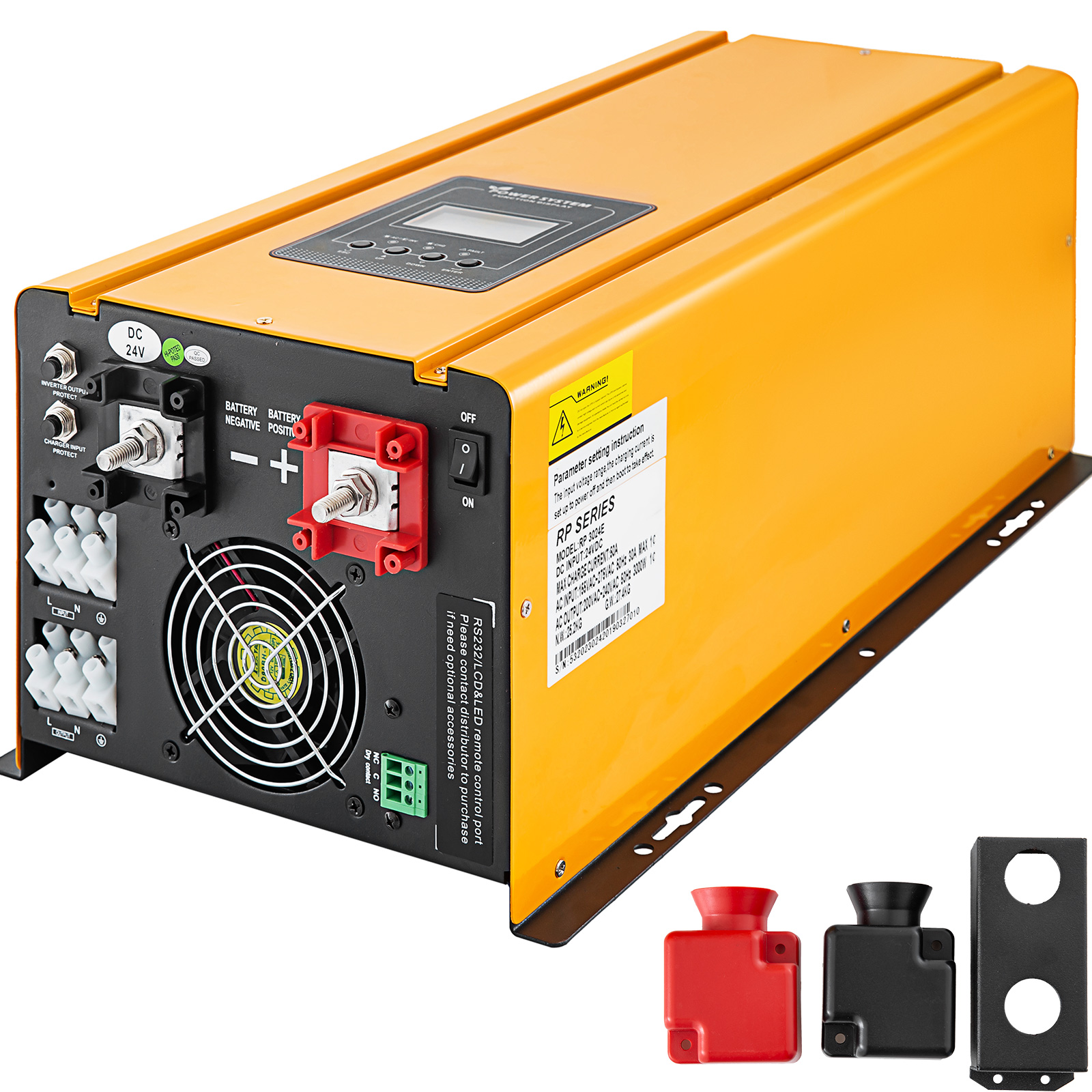
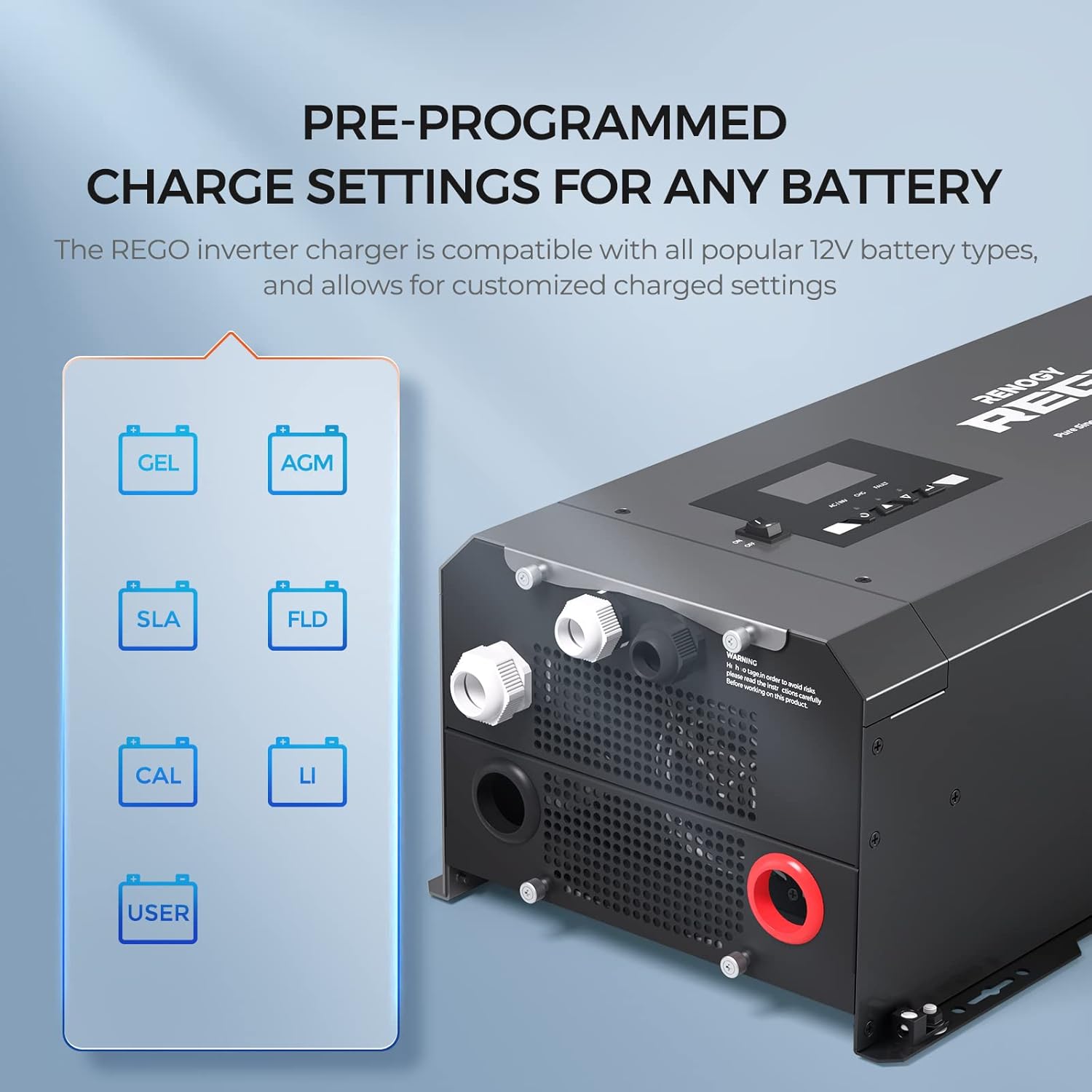
A 3000w inverter charger is a dual-function power system that converts direct current (DC) from batteries into alternating current (AC) to run household or industrial appliances, while also functioning as a battery charger that replenishes the battery bank when connected to shore power or a generator.
Introduction to 3000w Inverter Chargers
Navigating off-grid power systems, mobile workspaces, marine electrical setups, or emergency backup systems requires an understanding of how power is converted, managed, and stored. At the heart of many robust medium-to-large scale power systems sits the 3000-watt inverter charger. This device bridges the gap between stored direct current (DC) energy—typically from a 12V, 24V, or 48V battery bank—and the alternating current (AC) required by standard appliances, tools, and electronics.
By combining two distinct components into a single chassis—an inverter and a battery charger—this hardware streamlines wiring, reduces system footprint, and automates power transfer. However, operating a 3000w inverter charger safely and efficiently requires a firm grasp of electrical principles, proper sizing, wiring standards, and load management. This guide explores the core mechanics, system requirements, operational considerations, and maintenance practices associated with 3000w inverter chargers.
Defining the Core Components and Dual Functionality
To appreciate what a 3000w unit accomplishes, it is necessary to examine its two primary internal systems: the inverter section and the charger section.
The Inverter Operation (DC to AC)
The inverter side of the unit takes low-voltage DC power from a battery bank and transforms it into 120V or 230V AC power (depending on regional standards). A 3000-watt rating indicates the continuous output capacity the unit can supply under normal operating conditions. Many quality units also feature a surge capacity—often double the continuous rating (6000 watts)—to accommodate the high startup current drawn by inductive loads like compressor motors, air conditioners, and heavy-duty power tools.
The Charger Operation (AC to DC)
When an external AC source, such as utility power, a shore power pedestal, or a gas-powered generator, is connected to the system, the device reverses its operation. The internal battery charger converts the incoming AC voltage into regulated DC voltage to recharge the battery bank. Intelligent multi-stage charging algorithms (Bulk, Absorption, and Float) ensure that lead-acid, AGM, gel, or lithium iron phosphate (LiFePO4) batteries are charged efficiently without overcharging or degrading lifespan.
The Automatic Transfer Switch (ATS)
A critical feature of any inverter charger is the integrated transfer switch. The ATS monitors the availability of external AC power. When shore power or generator power is present, the inverter passes that AC power directly through to the loads while simultaneously charging the batteries. If the external AC source fails or is disconnected, the ATS switches over to inverter mode within milliseconds, ensuring an uninterrupted power supply (UPS function) for sensitive electronics.
Sizing, Electrical Requirements, and System Architecture
Installing a 3000w inverter charger requires careful engineering of the surrounding electrical ecosystem. Failing to account for amperage draws, cable sizing, and battery chemistry can lead to voltage drops, tripped breakers, or severe safety hazards.
DC System Voltage: 12V, 24V, or 48V
Power equals voltage multiplied by amperage ($P = V \times I$). To deliver 3000 watts of continuous power at 12 volts, a system must draw roughly 250 amperes of DC current, ignoring conversion inefficiencies. At 85% to 90% efficiency, the actual DC draw can exceed 290 amps. Drawing 290 amps from a 12V system requires massive, thick copper cables and heavy-duty fuses to prevent overheating.
For this reason, many modern 3000w inverter chargers utilize 24V or 48V DC architectures. A 48V system reduces the current draw for a 3000-watt load to approximately 70–75 amps, allowing for thinner wiring, lower resistive heat losses, and more efficient energy transfer.
Battery Bank Capacity
An inverter can only supply power as long as the battery bank stores it. Running a 3000w inverter at maximum capacity drains a battery bank rapidly.
- Lead-Acid Batteries: Traditional flooded or AGM batteries should generally not be discharged below 50% state of charge to maintain service life. Drawing 3000W from a 12V lead-acid bank requires a massive capacity (often 600Ah or more) just to support short high-draw events.
- Lithium Batteries (LiFePO4): Lithium chemistries allow deeper discharges (often 80% to 90%) and handle high current draws much better, making them the preferred pairing for modern 3000w inverter installations.
Comparative Overview of System Voltage Options
| DC System Voltage | Approximate Amperage at 3000W | Recommended Cable Gauge (AWG) | Typical Application Scope |
|---|---|---|---|
| 12-Volt | ~250A - 290A | 4/0 AWG (or dual 2/0) | Small RVs, basic marine, mobile vans |
| 24-Volt | ~125A - 145A | 1/0 or 2/0 AWG | Medium RVs, larger workshop setups |
| 48-Volt | ~63A - 73A | 4 AWG or 2 AWG | Whole-home backup, off-grid cabins, large solar systems |
Pure Sine Wave vs. Modified Sine Wave Output
When selecting or operating a 3000w inverter charger, the output waveform is a critical technical specification. Inverters are classified into two primary categories based on how they synthesize AC power.
Pure Sine Wave Inverters
Pure sine wave units produce an electrical waveform that mirrors or exceeds the quality of grid power. The wave is smooth, consistent, and continuous.
- Compatibility: Safely powers all household electronics, including variable-speed compressors, laser printers, digital clocks, medical CPAP machines, induction cooktops, and sensitive audio-video equipment.
- Efficiency: Minimizes electrical noise, buzzing in audio systems, and overheating in electric motors.
Modified Sine Wave Inverters
Modified sine wave inverters produce a blocky, stepped waveform that approximates alternating current. While generally less expensive, they come with significant operational trade-offs.
- Limitations: Can cause a audible hum in microwave ovens, reduce the efficiency of electric motors, and potentially damage sensitive digital controls or switch-mode power supplies.
- Modern Relevance: As sensitive electronics become ubiquitous, modified sine wave inverters are increasingly phased out in favor of affordable pure sine wave options.
Installation Best Practices and Safety Measures
Installing high-power electrical equipment involves significant safety considerations. A 3000w inverter charger handles lethal voltages on the AC side and massive fault currents on the DC side.
Cable Sizing and Overcurrent Protection
- DC Fusing: A high-capacity, slow-blow fuse or circuit breaker must be installed on the positive DC cable as close to the battery terminal as possible. This protects the cable run from short circuits, which can cause catastrophic battery fires.
- Cable Length: Keep DC cable runs as short as possible. Long runs introduce voltage drop, forcing the inverter to draw even higher current to maintain output.
- Chassis Grounding: The inverter chassis must be securely connected to earth ground, vehicle chassis, or marine ground busbar, depending on the installation environment, to protect against shock hazards.
Thermal Management and Placement
Inverters generate heat during conversion and charging. They rely on internal cooling fans and external heatsinks to maintain safe operating temperatures.
- Install the unit in a well-ventilated, dry, and dust-free compartment.
- Avoid mounting the inverter directly in battery compartments, as corrosive hydrogen gas and acid fumes can damage internal circuit boards.
- Maintain clearance around cooling vents as specified by the manufacturer.
Common Operational Mistakes to Avoid
Avoiding typical pitfalls ensures the longevity and reliability of a 3000w power system.
- Overloading the Inverter: Attempting to run loads that continuously exceed 3000 watts will trigger overload protection, shutting down the unit. Users must calculate the running wattage of all simultaneously active appliances.
- Ignoring Surge Ratings: While the continuous rating is 3000W, starting a large electric motor (like a sump pump or air conditioner) may require an instantaneous surge of 4500W to 6000W. Ensure the inverter's peak surge rating covers these loads.
- Inadequate Battery Sinking: Connecting a powerful 3000w inverter to a weak or undersized battery bank will cause immediate voltage sag, triggering low-voltage disconnects under heavy loads.
- Incorrect Polarity: Reversing positive and negative DC connections can instantly destroy internal diodes and fuses, rendering the unit inoperable and voiding warranties.
Frequently Asked Questions
Can a 3000w inverter charger run a residential refrigerator?
Yes, a 3000w pure sine wave inverter charger can easily run a standard residential refrigerator. While refrigerators typically consume only 150 to 800 watts during normal running cycles, their compressor motors require a higher surge wattage to start up. A 3000w unit provides ample continuous and surge capacity for this application, along with many other household appliances simultaneously.
How long will a 3000w inverter run on a single battery?
Run time depends entirely on the capacity of your battery bank and the actual load drawn, not just the inverter's maximum rating. For example, running a constant 1000-watt load on a 12V 200Ah lithium battery bank (holding roughly 2560 watt-hours of usable energy) will deplete the battery in approximately 2.5 hours, factoring in conversion losses. Running the full 3000-watt load would exhaust that same battery bank in under an hour.
Do I need a professional electrician to install a 3000w inverter charger?
While DIY installations are common in mobile applications like RVs and camper vans, stationary home backup or hardwired off-grid installations generally require professional electrical installation. Working with high DC amperage and 120V/230V AC distribution panels involves significant electrical shock risks and must comply with local electrical codes, such as the National Electrical Code (NEC).
Can a 3000w inverter charger charge lithium batteries?
Most modern 3000w inverter chargers feature programmable charging profiles or specific lithium (LiFePO4) settings. Because lithium batteries require precise voltage thresholds and do not use traditional float stages in the same manner as lead-acid batteries, it is essential to verify that the charger's profile matches the specifications provided by your specific lithium battery manufacturer.
What is the difference between an inverter and an inverter charger?
A standard inverter only converts DC power from batteries into AC power for running appliances. It cannot recharge batteries on its own and requires a separate battery charger connected to shore power or a generator. An inverter charger combines both devices into a single housing, automatically managing power conversion, battery charging, and AC source transfer within one integrated unit.
Conclusion and Next Steps
A 3000w inverter charger serves as a versatile power hub capable of delivering reliable AC electricity and maintaining healthy battery reserves across mobile, marine, and off-grid environments. Successfully integrating this equipment into a power system requires meticulous attention to system voltage, cable sizing, battery bank capacity, and load calculations. Before purchasing or installing a unit, map out your electrical load profile, verify your battery chemistry requirements, and consult qualified professionals or manufacturer documentation to ensure a safe, compliant, and efficient installation.