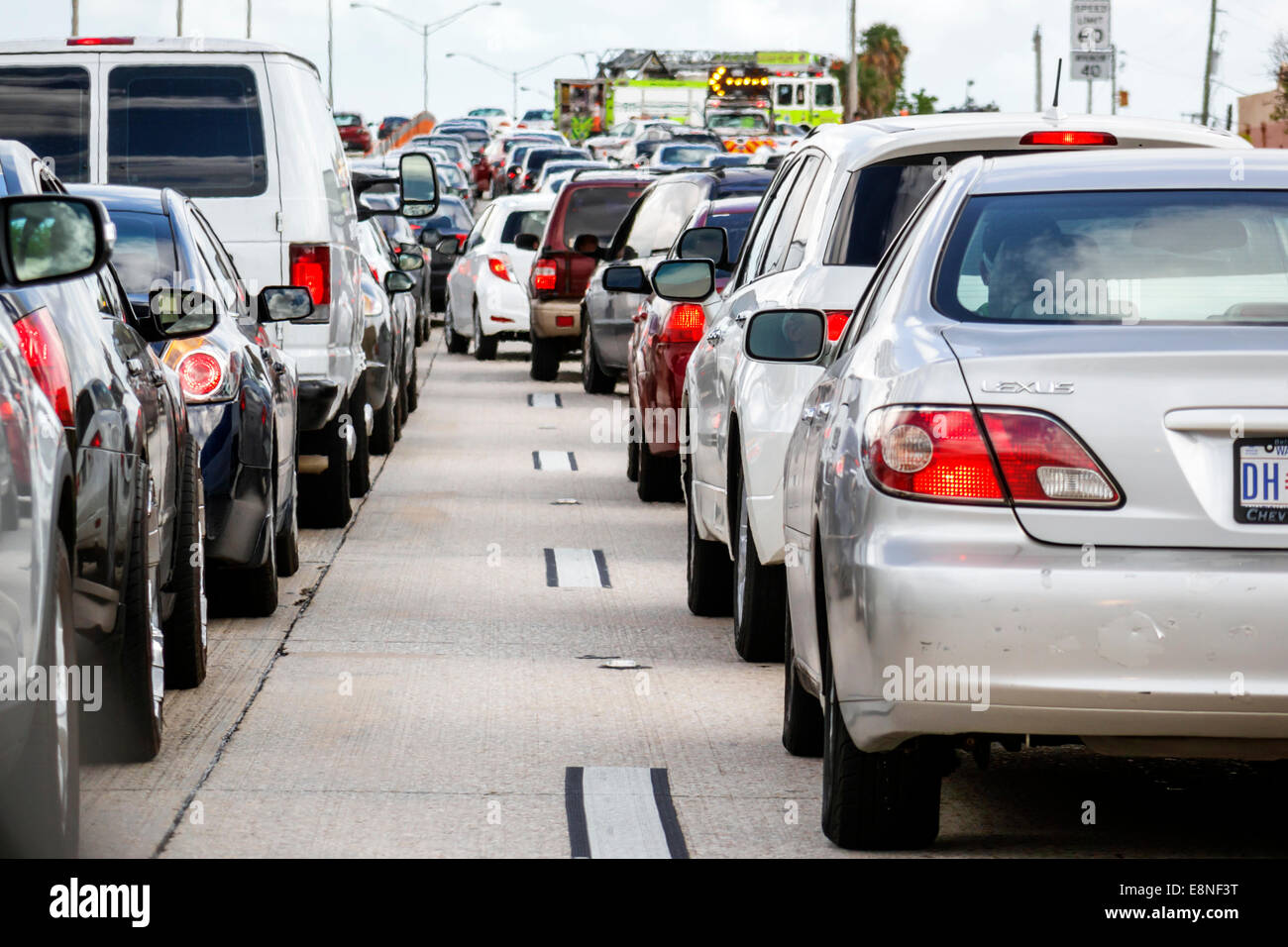
When traffic suddenly comes to a complete standstill on Interstate 95 in Florida, it typically stems from major accidents, severe weather events, or emergency infrastructure repairs handled by the Florida Department of Transportation (FDOT) and local law enforcement. Understanding the underlying triggers, verifying current road conditions through official channels, and knowing how to navigate sudden highway closures can significantly reduce travel delays and safety risks.
The Critical Role of I-95 in Florida’s Transportation Network
Interstate 95 is the primary north-to-south interstate highway on the East Coast of the United States, running from Miami, Florida, all the way to Maine. In Florida, the highway spans over 380 miles, serving as a vital economic corridor, hurricane evacuation route, and daily commuter artery for millions of residents in South Florida, the Space Coast, Northeast Florida, and beyond. Because of its immense volume—carrying hundreds of thousands of vehicles daily through dense urban cores and rapidly growing suburban areas—any disruption on I-95 can quickly trigger massive regional gridlock.
When a sudden traffic stoppage occurs, drivers are often left stranded for hours without immediate information. Recognizing the structural patterns of these delays helps motorists decipher whether they are facing a minor bottleneck, a severe multi-vehicle collision, or a major structural closure. State transportation authorities rely on a combination of high-definition cameras, electronic toll and message boards, and real-time sensor data to manage these incidents, but the window between an event occurring and traffic backing up can be mere minutes.
Reason 1: Major Traffic Collisions and Multi-Vehicle Accidents
The most frequent catalyst for a complete shutdown or severe slowdown on I-95 in Florida is a serious motor vehicle accident. Given the high speeds, heavy commercial truck traffic, and dense congestion characteristic of the corridor, collisions can rapidly block multiple lanes or require a total closure for emergency response and accident reconstruction.
Severe Multi-Car Pileups
Multi-vehicle collisions, particularly those involving commercial semi-trucks, often require extensive clearance operations. When a semi-truck jackknifes or spills its cargo across the interstate, standard tow trucks cannot immediately clear the scene. Heavy-duty recovery wreckers must be dispatched, which can take hours to arrive and maneuver in heavy traffic. Furthermore, if hazardous materials are involved—such as spilled fuel, industrial chemicals, or commercial goods—the Department of Environmental Protection and specialized hazmat teams must intervene before the lanes can be safely reopened to the public.
Fatal Accidents and Crash Investigations
Under Florida law and standard operating procedures enforced by the Florida Highway Patrol (FHP), any crash resulting in critical injuries or fatalities requires a thorough homicide or traffic homicide investigation. Investigators must map the scene, measure skid marks, document vehicle resting positions, and collect forensic evidence before moving the vehicles. During this mandatory investigative window, lanes of I-95 may remain completely closed for several hours, regardless of the resulting traffic backup.
Reason 2: Emergency Roadwork, Infrastructure Failures, and Bridge Malfunctions
While scheduled construction on I-95 is typically routed overnight to minimize disruption, unexpected infrastructure failures and emergency repairs frequently occur during peak travel times, forcing sudden lane or highway closures.
Emergency Pothole Repairs and Asphalt Failures
Extreme weather, heavy truck loads, and torrential Florida downpours can rapidly compromise the integrity of the asphalt. When large potholes or surface failures emerge suddenly in high-speed travel lanes, they pose an immediate threat to motorist safety, risking blown tires, loss of control, and secondary accidents. FDOT maintenance crews are dispatched for emergency patching, which requires temporarily shutting down lanes during active traffic periods.
Drawbridge Openings and Mechanical Failures
Several key segments of I-95 and its direct connectors interact with major waterways, most notably around South Florida and Jacksonville. While most mainline stretches are elevated, adjacent drawbridges and flyover ramps can experience mechanical failures, electrical faults, or delayed bridge openings for marine traffic. When a drawbridge fails in the open position or refuses to lock correctly, traffic on approaching feeder ramps and mainline lanes halts completely until mechanical technicians manually override or repair the system.
Reason 3: Severe Weather Events, Flooding, and Visibility Hazards
Florida’s subtropical climate introduces extreme weather phenomena that can render sections of I-95 impassable within minutes. Localized storms, tropical systems, and environmental hazards frequently force law enforcement to halt traffic proactively.
Flash Flooding and Standing Water
Low-lying sections of I-95—particularly in coastal urban areas like Miami, Fort Lauderdale, and Jacksonville—are susceptible to rapid flash flooding during intense summer convective storms or tropical weather systems. When drainage systems become overwhelmed, deep standing water accumulates across multiple lanes. Driving through standing water risks hydroplaning, engine failure, and vehicle stalling, prompting FHP to close flooded segments until pumps clear the water.
Heavy Fog and Smoke Obstructions
During the dry season or following controlled agricultural burns, thick smoke can drift across sections of I-95, severely compromising visibility. Similarly, dense fog banks frequently roll in across inland and coastal stretches during the cooler months. When visibility drops to near zero, driving at highway speeds becomes extremely hazardous. Law enforcement agencies frequently implement rolling roadblocks or complete closures until natural clearing occurs.
Official Verification: How to Check Live I-95 Conditions
Relying on unverified social media reports or word-of-mouth during an I-95 standstill can lead to poor routing decisions. Motorists seeking accurate, up-to-the-minute status updates should consult official state-managed resources.
| Information Source | What It Provides | Best Used For |
|---|---|---|
| FL511 (FL511.com) | Real-time traffic maps, average speeds, CCTV camera feeds, and incident reports. | Pre-trip planning and checking specific mile markers along I-95. |
| Florida Highway Patrol (FHP Live Traffic) | Active dispatch logs, live crash locations, road closures, and hazard alerts. | Verifying whether an incident involves injuries, investigations, or hazmat. |
| FDOT District Feeds | Targeted updates regarding regional construction, bridge maintenance, and detours. | Understanding scheduled vs. emergency infrastructure delays. |
| Waze / Google Maps | Crowd-sourced rerouting, speed tracking, and estimated delay times. | Dynamic in-trip navigation around sudden bottlenecks. |
Practical Steps When Caught in an I-95 Standstop
Being trapped in a stationary traffic jam on an interstate requires specific safety precautions to protect yourself and your passengers.
- Turn on Hazard Lights: Immediately engage your hazard flashers to alert approaching motorists behind you that traffic has come to a sudden halt, especially around blind curves or over-elevation crests.
- Monitor Fuel and Engine Temperature: Keep an eye on your vehicle's fuel gauge and temperature monitor. In extended delays, turn off the air conditioning or the engine entirely if stationary for long periods to prevent overheating.
- Stay in Your Vehicle: Never exit your vehicle on an interstate highway. Walking between lanes or standing on the shoulder exposes you to extreme danger from distracted or fatigued drivers.
- Create a Corridor for Emergency Vehicles: Pull as far to the left or right edge of your lane as safely possible to allow ambulances, fire trucks, and police cruisers unobstructed access to the incident scene.
- Listen to Local Emergency Broadcasts: Tune your car radio to local emergency advisory stations or utilize hands-free mobile tools to check official agency updates regarding expected clearance times.
Frequently Asked Questions
Why does traffic on I-95 often stop without any visible accident?
Phantom traffic jams are common on high-density corridors like I-95. A single driver tapping their brakes too hard can cause a ripple effect of braking behind them, compounding backward until traffic comes to a complete standstill miles upstream from any actual incident or obstruction.
How long do major I-95 closures typically last in Florida?
The duration depends heavily on the nature of the incident. Minor accidents with minor property damage are typically cleared within 30 to 45 minutes. However, major crashes involving fatalities, commercial truck rollovers, or hazardous material spills can require closures lasting anywhere from two to six hours while investigations and heavy recovery operations take place.
Can I use the I-95 Express Lanes if there is a backup on the main lanes?
I-95 Express Lanes feature dynamic toll pricing and strict access rules. If an accident occurs within or downstream of the express lanes, or if emergency vehicles must utilize the corridor, express lanes may be temporarily closed by FDOT operators. Entering express lanes during a major backup without checking live signage can trap you in a restricted corridor with no immediate exit options.
What should I do if my car breaks down while I-95 traffic is stopped?
If your vehicle stalls or experiences mechanical failure during a traffic stoppage, put your hazard lights on immediately. Try to coast or steer your vehicle safely to the right-hand shoulder or median. Stay inside with your seatbelt fastened and call 911 or *FHP (*347) for roadside assistance.
Are there alternative routes to bypass severe I-95 delays in Florida?
Depending on your location, parallel alternative routes include U.S. Route 1 (US-1), Florida’s Turnpike (where applicable), and state roads running parallel to the coast. However, keep in mind that local alternate routes frequently experience severe secondary congestion as thousands of diverted motorists attempt to bypass the interstate at the same time.
Recommended Next Actions
If you are currently facing a standstill on I-95, pull up the official FL511 app or website to assess the extent of the delay and identify the nearest upcoming exit. If the blockage is predicted to last multiple hours, utilize verified navigation apps to map an alternate local route once police allow traffic to filter off the interstate safely. Always prioritize safety, maintain a safe following distance when movement resumes, and check your vehicle's readiness before embarking on long trips along major Florida corridors.