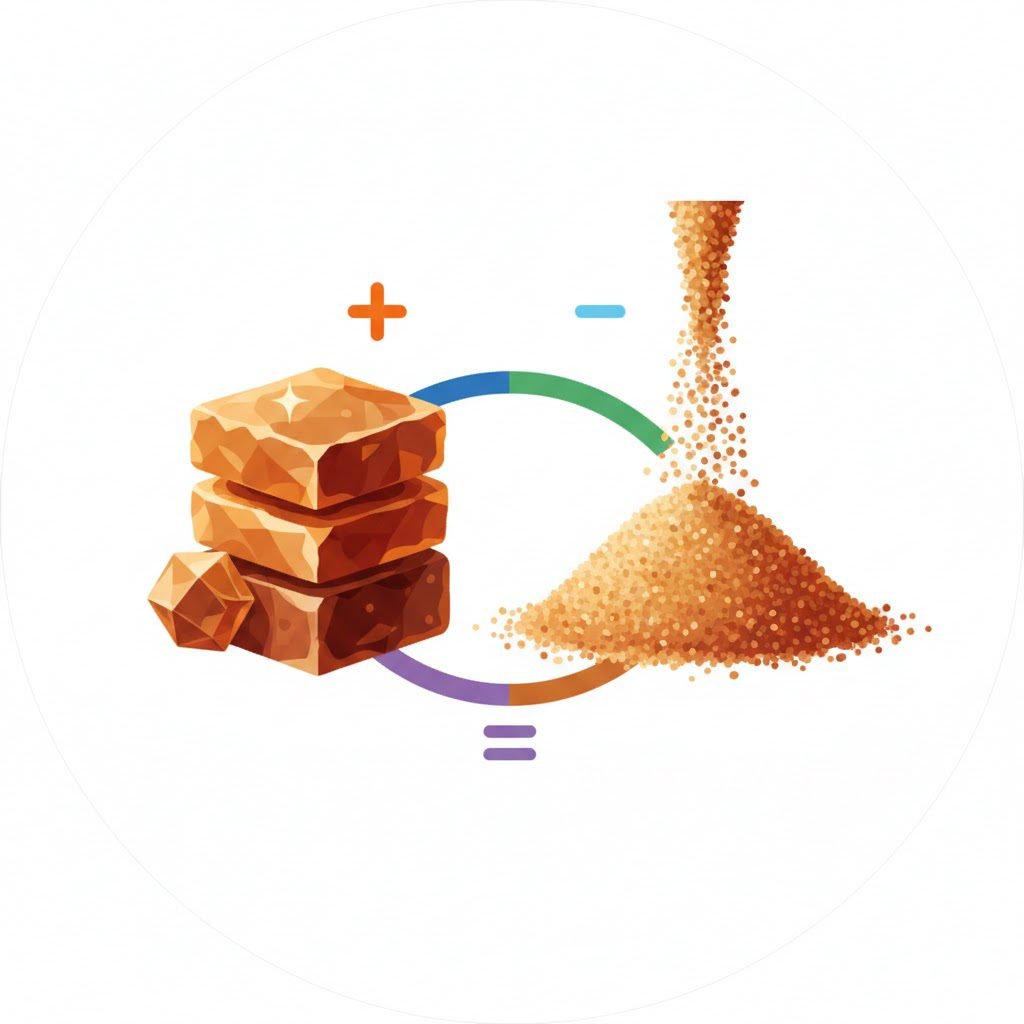
One cup of packed brown sugar weighs precisely 220 grams under standard volumetric and gravitational baking conditions. This specific measurement serves as a cornerstone for precise recipe scaling, pastry development, and accurate metric conversion, bridging the gap between traditional volume-based measuring cups and weight-based kitchen scales.
Baking is fundamentally a science of ratios, where small deviations in dry ingredient density can alter the moisture balance, spread, and crumb structure of cakes, cookies, and pastries. Unlike granulated white sugar, which flows freely and settles uniformly, brown sugar contains molasses and moisture, making its density heavily dependent on how tightly it is pressed into a measuring cup. Understanding that 220 grams represents a firmly packed cup allows bakers to transition away from inconsistent volumetric tools and adopt digital scales for absolute repeatability. Whether you are scaling up a family recipe, converting a British or European formula into American measurements, or troubleshooting why a batch of chocolate chip cookies spread too much or too little, knowing this baseline weight transforms guesswork into precision.
The Science of Sugar Density: Why Packing Matters
To understand why a cup of brown sugar weighs 220 grams, one must examine the physical properties of the ingredient itself. Brown sugar is essentially granulated white sugar coated with a film of sugarcane molasses, typically ranging from 3.5% to 6.5% molasses for light brown sugar, and up to 10% or more for dark brown sugar. This molasses coating creates sticky, hygroscopic crystals that tend to clump together, leaving microscopic air pockets when poured loosely into a container.
When a recipe calls for one cup of brown sugar "packed," it is an instruction to expel those air pockets. If you scoop brown sugar loosely out of a bag or canister without pressing it down, a one-cup measure will typically hold only about 145 to 160 grams of sugar because of the trapped air. Conversely, if you press the sugar down firmly against the sides and bottom of the cup with your fingers or the back of a spoon until it forms a solid mold that retains the cup's shape when inverted, you maximize the mass-to-volume ratio. At maximum compression within a standard 240-milliliter US cup, that volume hits the industry-standard benchmark of 220 grams.
Light Versus Dark Brown Sugar Variations
A common point of confusion among home bakers is whether light brown sugar and dark brown sugar share the exact same weight when measured by the cup. Chemically, dark brown sugar contains a higher percentage of molasses than light brown sugar. Because molasses has a higher density than dry sugar crystals, a tightly packed cup of dark brown sugar can sometimes weigh marginally more—sometimes by 2 to 5 grams—than light brown sugar under identical packing pressure.
However, in standard baking practice and professional recipe formulation, this minor variance is considered negligible. Both light and dark brown sugar are universally calculated at 220 grams per packed cup. The difference in moisture and acidity between the two types affects flavor profile and pH balance in doughs, but for all practical weighing and measuring purposes, the 220-gram standard applies equally to both varieties.
Volumetric Measurement Versus Digital Kitchen Scales
Relying on physical measuring cups introduces significant human error into the baking process. Two people using the exact same set of measuring cups can scoop the same brown sugar and arrive at vastly different weights depending on their technique. One person might lightly tap the cup, settling the sugar moderately to 180 grams, while another might press it down aggressively, packing in 235 grams.
This variability is precisely why professional pastry chefs and commercial bakeries exclusively use weight measurements (grams and ounces) rather than volume (cups and tablespoons). A digital kitchen scale eliminates the variables of scooping technique, humidity, and cup calibration. When a baker places a mixing bowl on a scale, tares it to zero, and adds 220 grams of brown sugar, they are guaranteed to have the exact amount intended by the recipe developer, regardless of whether the sugar is fresh out of a soft bag or slightly dried out.
Common Measuring Errors to Avoid
- The Scoop-and-Sweep Method: Scooping directly into the brown sugar canister with the measuring cup without packing it down results in an under-filled cup, leading to dry, crumbly baked goods.
- Over-Packing Hard Sugar: If brown sugar has been exposed to dry air and has hardened into a brick, forcing it into a cup can create massive structural voids that distort the actual sugar mass, even if the cup looks full.
- Ignoring Container Calibration: Inaccurate measuring cups with warped rims or incorrect volumetric stamping can throw off volume calculations even before packing occurs.
Comparative Ingredient Densities in Baking
To put the 220-gram weight of packed brown sugar into perspective, it helps to compare it with other common baking ingredients measured by the cup. Because different ingredients possess distinct particle sizes, shapes, and moisture levels, one cup of volume rarely equals one cup of weight across a pantry.
| Ingredient | Cup Type / Preparation | Weight in Grams | Weight in Ounces |
|---|---|---|---|
| Brown Sugar | 1 Cup, Firmly Packed | 220 g | 7.76 oz |
| Granulated White Sugar | 1 Cup, Granulated / Level | 200 g | 7.05 oz |
| All-Purpose Flour | 1 Cup, Fluffed and Level | 120 - 125 g | 4.23 - 4.41 oz |
| Powdered (Confectioners') Sugar | 1 Cup, Sifted | 120 g | 4.23 oz |
| Rolled Oats | 1 Cup, Dry | 90 g | 3.17 oz |
| Butter | 1 Cup, Stick Form | 227 g | 8.00 oz |
As demonstrated in the comparison table, brown sugar is significantly denser than white granulated sugar. While a cup of white sugar weighs 200 grams, a cup of packed brown sugar weighs 220 grams—a 10% increase in mass driven entirely by the density of the molasses and the physical compression of packing. Understanding these distinct weights prevents costly recipe disasters when substituting ingredients or converting legacy recipes.
Practical Applications in Recipe Scaling and Conversion
When adapting recipes from volume-based US standard units to metric weights, using the 220-gram benchmark ensures consistency across different kitchen environments. If a recipe calls for "1 1/2 cups packed brown sugar," the calculation is straightforward: multiply 220 grams by 1.5, yielding 330 grams. For a half cup, divide by two to reach 110 grams.
This mathematical predictability makes weighing ingredients invaluable when doubling or halving recipes. When scaling a batch of cookies up by 150%, manual cup measurements invite errors such as miscounting fractional scoops or inconsistent packing pressure across multiple cups. Weighing the total required amount in a single bowl on a digital scale reduces calculation errors and streamlines kitchen workflow.
Troubleshooting Brown Sugar Textures
The moisture content of brown sugar directly impacts its weight and behavior in baking. Fresh brown sugar is soft and pliable, allowing it to pack tightly into the 220-gram target. However, brown sugar left in an unsealed package quickly loses its moisture to the surrounding air, causing the molasses coating to crystallize and harden.
If your brown sugar has hardened into a solid block, attempting to weigh out 220 grams by hacking off chunks can be highly inaccurate because of large internal air gaps within the hardened mass. To restore rock-hard brown sugar to its pliable state, place it in a bowl alongside a slice of fresh white bread or a damp paper towel, cover it tightly, and let it sit overnight. The sugar will absorb the ambient moisture, softening back up so it can be accurately packed and weighed.
Frequently Asked Questions
Does "packed" brown sugar mean light or dark brown sugar?
In most baking contexts, "packed brown sugar" refers to either light or dark brown sugar interchangeably unless the recipe specifically states otherwise. Both varieties share the benchmark weight of 220 grams per packed cup, though dark brown sugar imparts a stronger molasses flavor and slightly more moisture.
How much does unpacked or loose brown sugar weigh?
A loose, un-packed cup of brown sugar—scooped directly from the bag without pressing down—typically weighs between 145 and 160 grams. This massive discrepancy of 60 to 75 grams is why strict adherence to the "packed" instruction is vital for achieving correct moisture levels in recipes.
Can I use a digital scale instead of measuring cups for brown sugar?
Yes, using a digital kitchen scale is the preferred method for professional and precision home bakers. Simply place your mixing bowl on the scale, press the tare or zero button, and add brown sugar directly until the digital display reads 220 grams, completely bypassing the need for measuring cups.
What happens if I use too much brown sugar in a recipe?
Exceeding the 220-gram per cup ratio introduces excess sugar and moisture into your dough or batter. In cookies, this leads to excessive spreading, a crisp, caramelized outer edge, and a chewy or dense center. In cakes, excess sugar can cause the structure to collapse in the center due to weakened gluten strands.
How should I store brown sugar to maintain its moisture?
Store brown sugar in an airtight container, a heavy-duty ziplock bag, or its original packaging sealed inside a secondary air-blocking container. Adding a specialized terra cotta brown sugar saver disk soaked in water can help maintain ideal moisture levels for months.
Conclusion and Next Action
Mastering the conversion that one cup of packed brown sugar equals 220 grams empowers you to take full control of your baking precision. To upgrade your kitchen workflow immediately, transition from volumetric measuring cups to a reliable digital kitchen scale that reads in grams. Whenever a recipe calls for packed brown sugar, place your mixing bowl on the scale, tare it to zero, and measure out your ingredients by weight for flawless, repeatable results every single time.