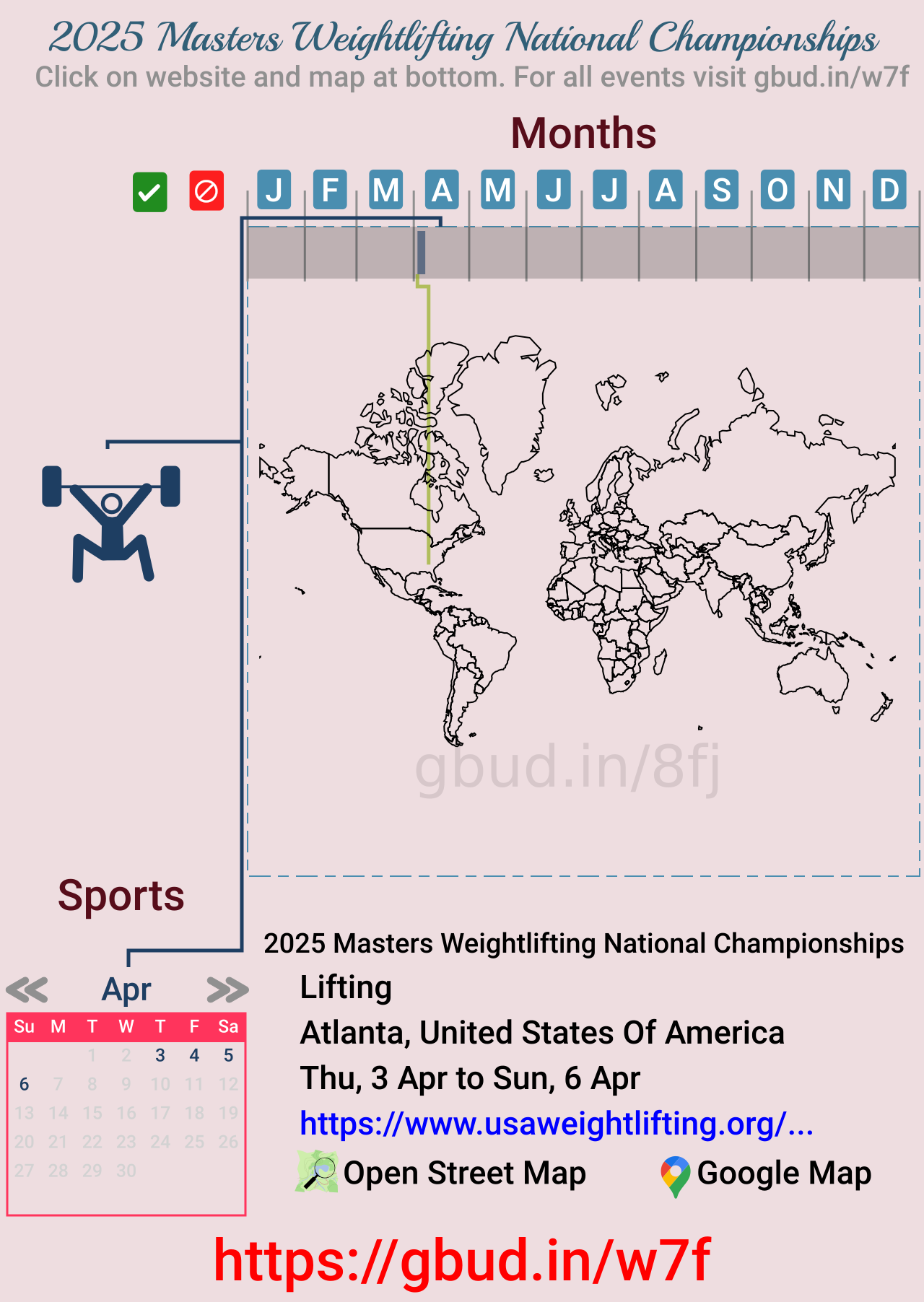
The 2025 USA Weightlifting (USAW) Masters Nationals was a landmark event in the domestic calendar, serving as the premier championship for athletes aged 35 and older. Held to identify national champions across various age and weight categories, the competition required participants to meet specific qualifying totals, adhere to rigorous anti-doping protocols, and maintain active USAW membership throughout the qualification and competition windows.
Understanding the USAW Masters Nationals Framework
The USAW Masters Nationals is not merely a local competition; it is a high-stakes, federation-sanctioned event that serves as a primary pathway for international representation. Unlike local meets that may prioritize participation, the Masters Nationals operates under strict technical rules dictated by the International Weightlifting Federation (IWF) and adapted for the USAW Masters age-group structure.
For athletes who competed in 2025, the event represented the culmination of a rigorous qualification period. Participants were required to post an official "Qualifying Total" at a sanctioned USAW event within the established timeframe. This ensures that every individual on the platform has demonstrated the baseline proficiency necessary to maintain the competitive integrity of a national championship.
The Significance of Age and Weight Categories
Weightlifting is inherently a sport of precision, and the Masters division is further stratified to ensure equitable competition. Athletes are grouped by both body weight and age, with age brackets beginning at 35 and increasing in five-year increments (e.g., 35-39, 40-44, 45-49, and so on).
Age Group Dynamics
The physiological demands on a 35-year-old athlete differ significantly from those on a 70-year-old athlete. By segmenting participants into these categories, USAW allows for a level playing field where masters athletes can compete against peers with similar biological milestones. The 2025 event highlighted the depth of talent in the younger masters brackets while celebrating the resilience of those in the older age groups, many of whom have been involved in the sport for decades.
Weight Class Standardization
Weight classes are strictly regulated to prevent unfair advantages. Athletes must weigh in within two hours of their session. If an athlete fails to make their declared weight class, they are generally disqualified or, in specific scenarios, forced to compete in a higher category, which often renders their total non-competitive against the specialized athletes in that heavier weight class.
Qualifying Requirements and Technical Standards
The path to the 2025 Masters Nationals was defined by strict administrative and technical prerequisites. Understanding these requirements is essential for any athlete planning to participate in future iterations of this event.
1. Membership and Residency
Participants must hold a current USAW membership. Because this is a national-level event, proof of U.S. citizenship or specific residency requirements may be verified during the registration process to ensure compliance with national team eligibility rules.
2. The Qualifying Total
Perhaps the most daunting hurdle is the qualifying total. USAW publishes a specific document—the "Qualifying Totals"—which outlines the minimum sum of the snatch and the clean and jerk required for every age and weight category. These totals are adjusted periodically; failing to reach these numbers in a sanctioned, referee-judged environment prevents an athlete from registering for the Nationals.
3. Anti-Doping Compliance
As a WADA (World Anti-Doping Agency) signatory, USAW maintains a zero-tolerance policy regarding performance-enhancing substances. Masters athletes are subject to random in-competition and out-of-competition testing. Familiarity with the "Therapeutic Use Exemption" (TUE) process is vital; if an athlete requires a medication that is on the banned substance list, they must secure a TUE well in advance of the competition.
Operational Execution: What Happens at the Meet
For those who have never attended a national-level weightlifting meet, the 2025 experience provided a masterclass in event management. The logistics of a multi-day national championship are significant, involving synchronized warm-up areas, official scoring tables, and strict referee oversight.
The Competition Schedule
Masters Nationals typically spans several days to accommodate the high volume of athletes. Each session is divided by gender, weight class, and age group. The "lottery" system for weigh-ins is used to determine the lifting order, and athletes must be prepared for the specific cadence of an IWF-style meet, which differs from the more relaxed environment of local cross-training competitions.
Technical Officials and Refereeing
The meet is overseen by national and international level referees who judge each lift based on the "good lift" criteria. This includes keeping the barbell under control, completing the lock-out phase of the lift, and remaining within the platform boundaries. Any failure to meet these technical standards results in a "no lift," emphasizing the importance of training specifically for the scrutiny of high-level judges.
Comparison of Masters Competition Levels
To better understand where the Masters Nationals sits in the broader landscape of weightlifting, consider the following breakdown of competition tiers.
| Level | Primary Goal | Qualification Requirement | Intensity |
|---|---|---|---|
| Local/Club Meet | Participation/Personal Records | None (Membership only) | Moderate |
| State Championships | Regional Standing | Qualifying Total (Varies) | High |
| Masters Nationals | National Title/Team Selection | Strict Qualifying Total | Elite |
| IWF Masters Worlds | International Standing | National Total/Medal Rank | Peak |
Common Challenges and Troubleshooting
Preparation for an event like the 2025 Masters Nationals is as much about mental and logistical management as it is about physical strength.
Managing the Weight Cut
Many athletes attempt to "cut" weight in the final days before the meet. This is a common source of performance degradation. Medical professionals consistently advise against drastic fluid restriction, as it can lead to electrolyte imbalances that negatively impact power output and cognitive focus on the platform. A well-structured diet and training program starting months before the event is the standard recommendation to ensure the athlete makes weight naturally.
Dealing with Competition Anxiety
The environment of the Nationals is significantly more intense than a gym environment. The noise, the lights, and the presence of national-level referees can disrupt even the most seasoned lifter. Experienced competitors recommend "mock meets"—training sessions that simulate the exact timing of a competition—to acclimate the nervous system to the pressure of a 60-second clock and external judgment.
Equipment and Attire
USAW has specific rules regarding singlet design, knee sleeves, and footwear. Using non-compliant equipment—such as a singlet with excessive logos or sleeves that do not meet IWF thickness specifications—can lead to embarrassment or disqualification at the rack. Always review the most recent USAW rulebook before purchasing competition gear.
Training for Success: Expert Recommendations
The transition from a recreational lifter to a national-level competitor requires a shift in mindset. It is no longer about "getting a workout in"; it is about maximizing recovery and technical efficiency.
- Periodization: Utilize a structured training cycle that peaks exactly at the date of the Nationals. This involves weeks of high-volume hypertrophy or strength work, followed by a taper phase to ensure maximum nervous system readiness.
- Video Analysis: Because small technical flaws become magnified under heavy, near-maximum loads, regular video analysis of your lifts is non-negotiable. Look for consistency in your footwork and bar path.
- Nutrition and Recovery: As masters athletes, recovery is the limiting factor. Prioritize sleep quality, protein intake, and mobility work. Ignoring joint health is the most common cause of early burnout in the masters division.
- Mentorship: Engaging with a coach who has experience with masters-level physiology is highly beneficial. They can help adjust volume to account for the slower recovery times associated with aging.
Frequently Asked Questions
What is the minimum age to compete in the Masters division? The Masters division begins at age 35. Athletes may compete in the calendar year they turn 35, regardless of their birthday date.
Do I need a coach to register for the USAW Masters Nationals? While you do not need a registered coach to register for the event, having a qualified coach is highly recommended. Coaches are essential for managing your attempts on the platform and guiding your training strategy.
How often do the Qualifying Totals change? Qualifying totals are reviewed periodically by USAW based on national performance data. It is critical to check the official USAW website annually to ensure you are training toward the current, active standards.
Can I compete if I have an injury? While you can participate with a known injury, it is strongly advised to consult a medical professional. Weightlifting places significant load on joints and connective tissues, and competing while compromised can exacerbate long-term damage.
What happens if I miss my qualifying total? If you do not achieve a total at a sanctioned event that meets or exceeds the qualifying threshold, you will be ineligible to register for the Masters Nationals. Athletes must ensure their results are uploaded to the official USAW records.
Next Steps for Future Competitors
If you are aiming for future participation, your immediate action should be to verify your current standing against the latest USAW qualifying standards. Locate an upcoming sanctioned meet in your region to secure your official total. Simultaneously, conduct a thorough audit of your training equipment and health status to ensure you can reach the competition date in peak condition. The 2025 Masters Nationals demonstrated that excellence is not defined by age, but by the consistency and dedication of the athlete. By focusing on your technical foundations and strictly following the governing body's administrative procedures, you position yourself to contribute to the high level of competition defining the sport.