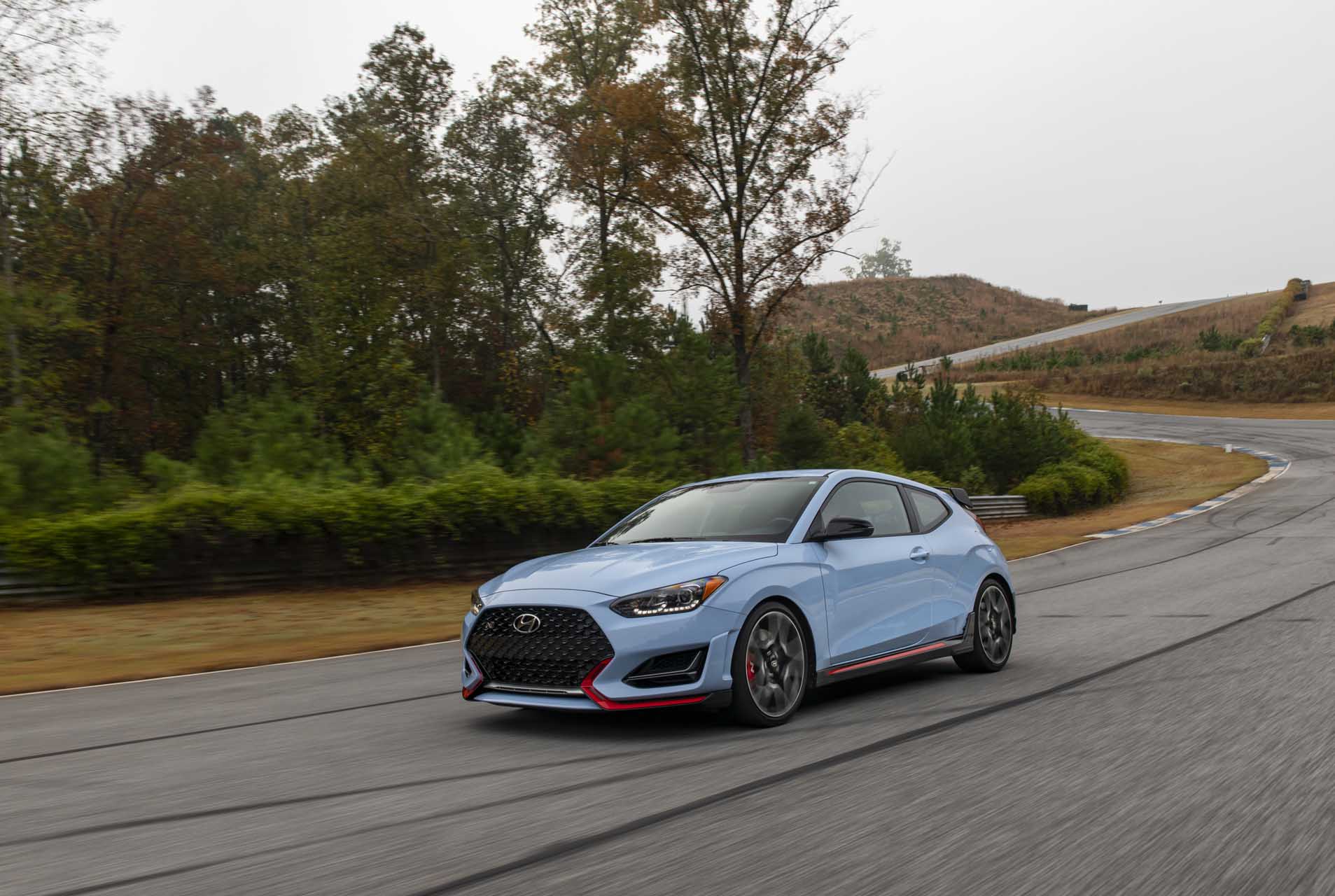
The 2019 Hyundai Veloster N achieves a 0-60 mph acceleration time of approximately 5.4 to 5.6 seconds, depending on transmission type and traction conditions. This performance figure established the vehicle as a formidable contender in the hot-hatch segment upon its introduction, balancing track-oriented engineering with accessible, daily-drivable power in a distinct three-door configuration.
Introduction to the 2019 Veloster N Performance Profile
When Hyundai introduced the "N" performance brand to the North American market in 2019, it aimed to bridge the gap between enthusiast-grade track vehicles and practical commuter cars. The 2019 Veloster N was the first product of this initiative, utilizing a 2.0-liter turbocharged inline-four engine. Understanding its acceleration capabilities requires looking at the interplay between its powertrain, gear ratios, and the mechanical advantages provided by its electronic limited-slip differential.
For many automotive enthusiasts, the 0-60 mph metric serves as a baseline for a vehicle’s ability to put power to the pavement. In the case of the 2019 Veloster N, the vehicle was rated at 250 horsepower in base form, with an optional Performance Package raising output to 275 horsepower. This specific performance upgrade, combined with larger brakes, sticky Pirelli P-Zero tires, and active suspension, is the primary driver behind the sub-6-second acceleration times reported by independent testers.
Powertrain Specifications and Acceleration Mechanics
The heart of the 2019 Veloster N is its Theta II 2.0-liter turbocharged engine. To achieve a rapid 0-60 sprint, the engine management system relies on a transient overboost function that pushes torque delivery higher for short durations.
The Performance Package Variable
The 2019 model year offered a critical distinction: the standard Veloster N versus the version equipped with the Performance Package. The 25-horsepower difference between the two models is not just about peak power; it is about the torque curve. The Performance Package offers 260 lb-ft of torque, which remains available across a wide power band. When performing a launch, the availability of this torque at lower RPMs allows the driver to overcome the inertia of the vehicle more effectively.
Transmission and Drivetrain Dynamics
The 2019 model was offered exclusively with a six-speed manual transmission featuring rev-matching technology. Launching a manual transmission car requires driver skill, specifically regarding clutch modulation and throttle control. Unlike modern dual-clutch transmissions (DCTs) that allow for consistent, automated "launch control" starts, the 2019 Veloster N’s acceleration is heavily dependent on the driver’s ability to manage wheel spin. In the first and second gears, the vehicle is prone to torque steer if the driver accelerates aggressively without properly managing the steering input, which can marginally impact 0-60 times if the traction control system intervenes.
Factors Influencing 0-60 Performance
Achieving a sub-6-second time in a front-wheel-drive (FWD) vehicle like the Veloster N involves several external and mechanical variables. Unlike all-wheel-drive vehicles that benefit from instant bite at all four corners, the Veloster N must manage power distribution through the front wheels.
Tire Composition and Grip
The Pirelli P-Zero tires provided with the Performance Package were specifically engineered for this chassis. The rubber compound is optimized for a balance of dry-weather grip and temperature management. Drivers attempting to replicate manufacturer-tested times often find that tire pressure and temperature play a significant role. A cold tire will struggle to find traction, leading to excessive wheel spin in first gear, which effectively adds tenths of a second to the acceleration run.
Road Surface and Environment
The condition of the tarmac is perhaps the most overlooked variable. Public roads often have lower coefficients of friction compared to prepared drag strips. Dust, gravel, or even the slight incline of a road can skew results. Additionally, ambient air temperature impacts the turbocharger's efficiency. Because the 2019 Veloster N utilizes an intercooler, ambient heat soak—common in warm climates—can reduce air density and slightly degrade engine performance during repeated launch attempts.
Weight Distribution
The Veloster N possesses a curb weight ranging from approximately 3,036 to 3,106 pounds. Because it is a three-door hatch, the weight is distributed toward the front to favor the drivetrain. While this aids in keeping the tires planted during acceleration, it also means that the front tires are handling both the steering and the propulsion. Keeping the steering wheel perfectly straight is essential to maintaining the lowest possible acceleration time, as any deviation in steering increases rolling resistance and disturbs the chassis balance.
Comparative Benchmarking within the Hot Hatch Segment
To contextualize the 2019 Veloster N’s performance, it is helpful to compare it against its primary competitors during its debut year. The segment was highly competitive, featuring vehicles that had been refined over several generations.
| Vehicle Model (2019) | Approx. 0-60 Time (Seconds) | Drivetrain |
|---|---|---|
| Hyundai Veloster N (Perf. Pkg) | 5.4 - 5.6 | FWD |
| Volkswagen Golf GTI | 5.8 - 6.0 | FWD |
| Honda Civic Type R | 5.0 - 5.4 | FWD |
| Ford Focus ST | 6.1 - 6.3 | FWD |
As indicated in the table, the Veloster N sits comfortably in the upper echelon of the FWD hot hatch category. While the Civic Type R often edges it out by a few fractions of a second due to advanced suspension geometry and aerodynamic tuning, the Veloster N offers a raw, visceral experience that many enthusiasts prefer. The Golf GTI, while refined and exceptionally practical, generally trails in raw acceleration due to its focus on grand touring comfort rather than out-and-out track performance.
Practical Considerations for Enthusiasts
For owners or prospective buyers interested in testing or improving their 0-60 times, there are several practical steps and limitations to consider.
The Role of N Mode
The 2019 Veloster N features a customizable "N Mode" accessible via buttons on the steering wheel. This mode adjusts the engine throttle response, suspension stiffness, and exhaust sound. For a performance launch, setting the engine and differential to their most aggressive profiles is standard practice. However, it is important to note that the stability control system (ESC) in the 2019 model is quite intrusive. While it is designed for safety, experienced drivers often find that even with the ESC in "Sport" or "Off" mode, the electronic limited-slip differential works harder to manage traction, which is a net positive for acceleration but requires the driver to be attentive to steering feedback.
Maintenance and Component Health
Achieving the factory-stated 0-60 potential requires a vehicle in peak mechanical condition. This includes:
- Air Intake: Ensuring the intake filter is clean allows for maximum airflow to the turbocharger.
- Fuel Quality: The 2019 Veloster N engine is designed to run on premium unleaded gasoline (91 octane or higher). Running lower-grade fuel will cause the engine computer to retard ignition timing to prevent knocking, which inevitably results in a loss of power and slower acceleration.
- Cooling System: A clean radiator and an effective intercooler are vital. If the engine detects high intake temperatures, it will pull power to protect the internal components.
Common Mistakes during Acceleration
The most common mistake drivers make when trying to record their own 0-60 times is "dumping" the clutch. Because the Veloster N is FWD, dropping the clutch at high RPMs usually results in nothing more than burning rubber and a slow start. The key is a "slip-and-grip" technique—slowly easing the clutch out while simultaneously applying throttle to find the threshold of the tire's grip.
Professional Advice and Safety Limitations
While performance testing can be exhilarating, it is important to exercise caution. Attempting 0-60 runs on public roads is inherently dangerous and, in many jurisdictions, illegal. Professional automotive testing should only be conducted on closed circuits or designated drag strips where surface conditions are controlled and emergency services are available.
Furthermore, repeated aggressive launches place significant stress on the clutch, axles, and transmission mounts. The 2019 Veloster N is a robust vehicle, but it is not a purpose-built drag racer. Frequent "launching" will accelerate the wear of consumables such as the clutch disc and tire treads. If you notice signs of transmission slippage or excessive vibration during acceleration, it is a sign that your driving habits may be exceeding the design parameters of the drivetrain components. Always consult your owner’s manual for specific break-in periods if components have been replaced, and adhere to recommended service intervals to ensure the engine performs as intended by the manufacturer.
Conclusion and Recommendations
The 2019 Veloster N remains a high-water mark for the entry of Hyundai into the performance vehicle space. Its 0-60 capability, clocking in at approximately 5.4 to 5.6 seconds, is a testament to the effectiveness of the Performance Package and the vehicle's engineering. For those looking to enjoy this performance, the best approach is to ensure the vehicle is maintained with premium fuel, high-quality tires, and clean air filters, and to focus on refining the engagement between the clutch and the throttle.
If you own a 2019 Veloster N and wish to track its performance, start by visiting a local drag strip for "Test and Tune" nights. These events provide a safe, legal, and prepped surface where you can learn the nuances of your car’s acceleration without the risks associated with public road testing. By focusing on consistent driver input rather than raw aggression, you will find that the Veloster N is a capable machine that continues to reward the driver long after the initial sprint.