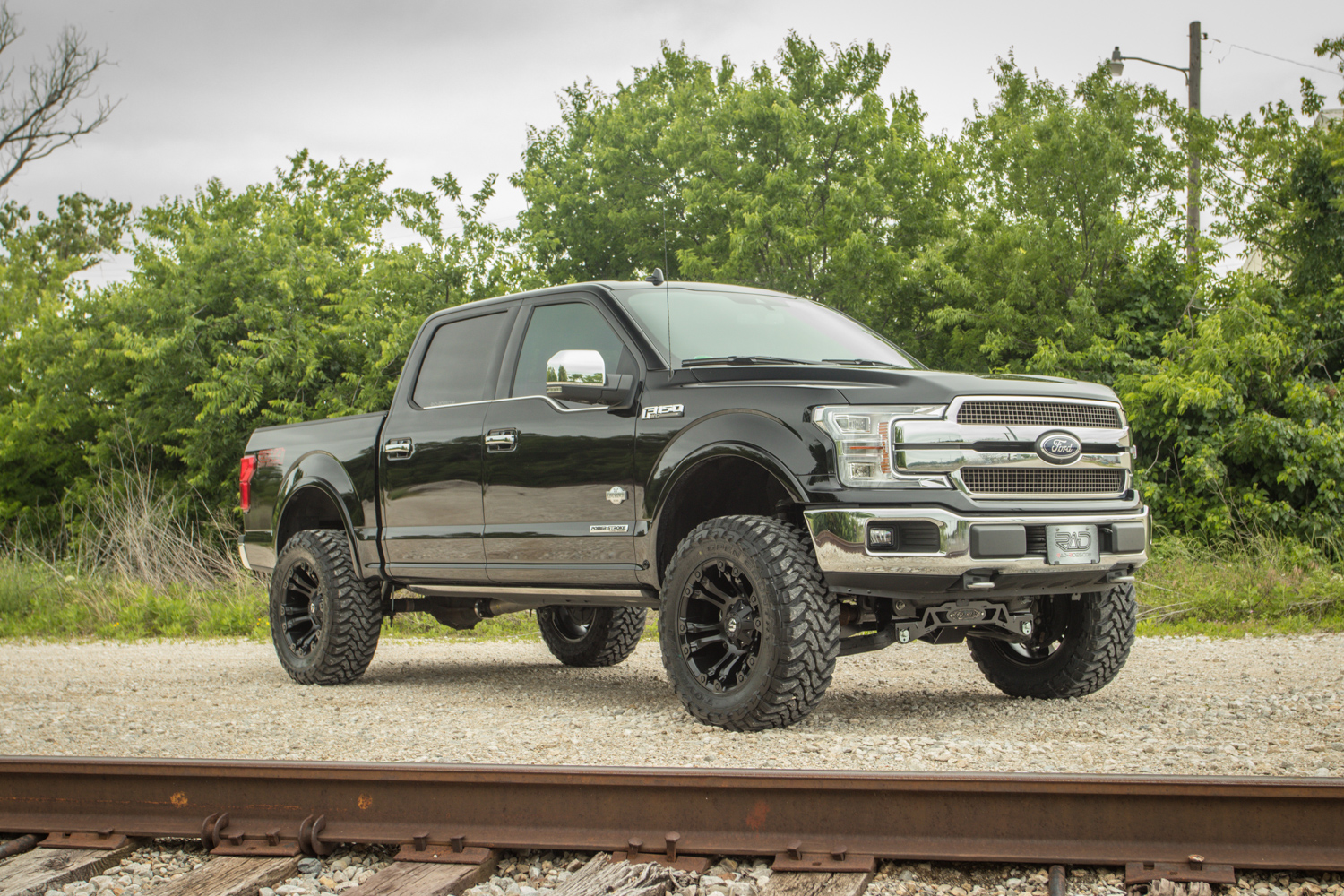
Lifting a 2019 Ford F-150 involves a strategic progression from leveling kits to high-performance suspension systems. Trends have evolved from simple aesthetic height increases toward integrated, off-road-capable geometry corrections, prioritizing ride quality, tire clearance, and factory sensor compatibility for the truck's advanced safety systems.
The Evolution of the 2019 F-150 Modification Landscape
When the 2019 Ford F-150 hit the market, it represented a mature point in the thirteenth generation of the model (2015–2020). By 2019, the truck featured refined driver-assist technologies, including adaptive cruise control and collision warning systems, which fundamentally changed how aftermarket companies approached suspension modifications.
In the early years of this generation, owners primarily sought "bro-lifts"—inexpensive spacers that provided an aggressive stance with minimal mechanical complexity. As the platform aged and matured through 2026, the aftermarket shifted toward engineering-focused solutions. Enthusiasts moved away from simple block spacers toward coilover conversions and upper control arm (UCA) replacements that preserve factory suspension geometry. This shift was largely driven by the realization that extreme angles on factory ball joints and CV (Constant Velocity) axles led to premature component failure and degraded handling.
Understanding the Options: A Technical Progression
The journey of modifying a 2019 F-150 usually follows a distinct technical path. Understanding these levels is crucial to determining the long-term impact on your vehicle's performance and maintenance requirements.
1. Leveling Kits (The Entry Point)
Leveling kits are designed to address the "factory rake," where the rear of the truck sits higher than the front. A 2-inch leveling spacer is the most common modification. It sits atop the factory front strut assembly. While cost-effective, these kits do not improve suspension travel; they simply limit the extension of the factory shock. By 2026, many owners have moved past these in favor of "Leveling Struts," which replace the factory housing with a unit tuned for the specific height increase.
2. Performance Coilovers (The Mid-Tier)
Moving from spacers to performance coilovers provides a significant leap in ride quality. Unlike a spacer, a coilover uses a redesigned spring rate and shock valving to manage the increased ride height. This approach is favored by owners who use their trucks for occasional overlanding or trail driving. These systems allow for adjustable height, enabling the owner to dial in the exact stance while minimizing the stress placed on factory suspension components.
3. Suspension Lift Systems (4 to 6 Inches)
True suspension lift kits involve relocating the factory lower control arms and differential housing using a crossmember drop system. This is a complex modification that requires permanent changes to the truck’s chassis. These kits are intended for those seeking to run 35-inch or larger tires. Because they drop the mounting points for the suspension, they maintain better CV angles than a massive leveling kit would, though they increase the truck's overall center of gravity significantly.
Modification Comparison Table
| Modification Type | Primary Goal | Ride Quality Impact | Complexity | Cost Range (Estimated) |
|---|---|---|---|---|
| Leveling Spacer | Aesthetics/Rake | Neutral/Stiff | Low | Low |
| Leveling Struts | Height/Handling | Improved | Medium | Moderate |
| Performance Coilovers | Off-road Performance | Excellent | Medium | High |
| 4"–6" Drop Kit | Maximum Tire Size | Factory-like | High | Very High |
Critical Considerations for the 2019 Model Year
Because the 2019 F-150 is equipped with sophisticated electronic systems, any modification affecting height must be approached with caution.
- Advanced Driver-Assistance Systems (ADAS): The front-facing cameras and radar sensors for features like Pre-Collision Assist are calibrated for a specific ride height. A significant lift can shift the sensor's focus, potentially causing false positives or reduced effectiveness. Post-lift, a professional recalibration is often necessary.
- CV Axle Geometry: The F-150’s front drivetrain is sensitive to angle changes. If you lift the truck beyond 2.5 inches without dropping the front differential, the CV joints operate at an angle that accelerates boot wear and internal joint heat.
- Alignment Requirements: Any change to the front suspension height necessitates an immediate four-wheel alignment. Failure to do so will result in rapid, uneven tire wear and erratic steering response. By 2026, professional shops are well-versed in the specific caster and camber requirements for lifted aluminum-body F-150s.
The Role of Upper Control Arms (UCAs)
If you decide to lift your 2019 F-150 by more than 2 inches, swapping the factory Upper Control Arms is highly recommended. The factory arm is designed for a specific range of motion. When you lift the truck, the factory ball joint is forced into an aggressive, unnatural angle that restricts suspension droop and leads to binding. Aftermarket UCAs feature corrected geometry and high-angle ball joints or uniballs that allow the suspension to travel through its full arc without binding or premature wear.
Practical Tips for Long-Term Maintenance
Maintaining a lifted vehicle requires more than standard servicing. You should adopt a "pre-emptive" inspection schedule:
- Check Hardware Torques: After the initial 500 miles of driving following an installation, have all suspension bolts re-torqued. Lift kits introduce vibrations that can loosen fasteners over time.
- Inspect CV Boots: If you have any front-end lift, the rubber boots on your CV axles are now at an increased risk of tearing. Check them for grease splatter every time you perform an oil change.
- Tire Rotation: Larger tires, typical on lifted trucks, are prone to cupping if they aren't rotated every 5,000 miles. Stick to a strict rotation schedule to preserve the tread life of expensive off-road tires.
- Brake Performance: Increasing the tire diameter increases the unsprung mass of the vehicle. This puts more strain on the factory braking system. Ensure your brake pads are checked frequently, and consider upgrading to high-performance pads or rotors if you frequently haul loads in a lifted truck.
Frequently Asked Questions
Will lifting my 2019 F-150 void my warranty? The Magnuson-Moss Warranty Act generally prevents manufacturers from voiding an entire vehicle warranty due to aftermarket modifications. However, if a part failure—such as a blown shock or a worn-out wheel bearing—can be directly linked to the lift kit, the dealership may deny a warranty claim for that specific component.
Does a lift kit affect my towing capacity? A lift kit itself does not change the physical towing capacity of the truck as rated by Ford, but it changes the dynamics. A lifted truck has a higher center of gravity, which can increase trailer sway. Additionally, you must ensure your hitch receiver drop is adjusted to keep the trailer level.
What is the largest tire size I can fit on a 2-inch level? With a 2-inch level, most 2019 F-150 owners successfully run 33-inch tires (typically 275/60R20 or 285/55R20) without significant rubbing. Trying to fit 35-inch tires usually requires trimming the plastic crash bars located behind the front bumper, which is not recommended for safety reasons.
Do I need new shocks if I install a leveling kit? If you use a simple spacer kit, you can technically use the stock shocks. However, the stock shocks will be at their limit, which often results in a "topping out" sensation over bumps. Replacing them with shocks designed for the extended length of the lift is highly recommended for a better ride.
Are alignment specs for a lifted F-150 different from stock? Yes. A professional alignment technician should aim for increased positive caster. This helps compensate for the larger tires and improved high-speed stability, which is often compromised when a truck’s geometry is altered.
Final Recommendation
For most 2019 F-150 owners, the "sweet spot" is a 2-inch leveling strut system paired with aftermarket Upper Control Arms. This approach provides the desired aggressive stance, accommodates larger 33-inch tires, and improves off-road capability without the massive geometry compromises and maintenance headaches associated with 6-inch lift kits. Always prioritize high-quality components and have the work performed—or at least inspected—by a specialist who understands the specific nuances of the 2019 chassis and its safety sensor architecture.