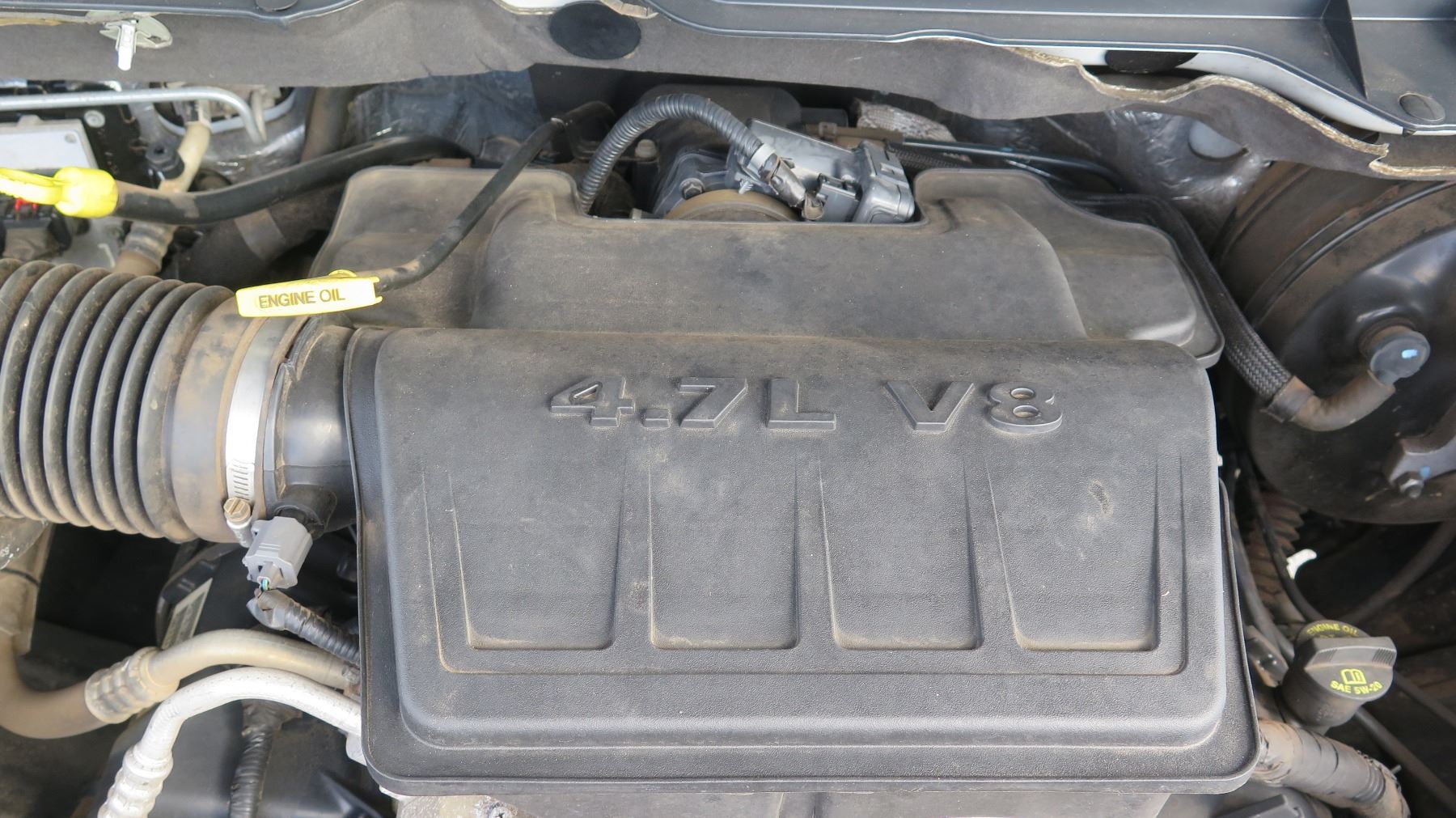
The 2002 Dodge Ram 1500 introduced an entirely redesigned third-generation platform for Chrysler’s full-size pickup truck, headlined by the debut of the 4.7-liter PowerTech V8 engine. Designed to replace the aging 5.2-liter Magnum V8, this overhead-cam powerplant introduced modern multi-valve technology, improved fuel efficiency, and a broader power band to Chrysler's light-duty truck lineup.
Introduction to the 2002 Dodge Ram 1500 and the 4.7L PowerTech V8
When Chrysler rolled out the redesigned 2002 Dodge Ram 1500, it marked a monumental shift in styling, capability, and engineering. Beneath the aggressive, semi-truck-inspired sheet metal lay a completely revised chassis and an updated powertrain lineup. While the heavy-duty variants and high-end trims retained or transitioned through larger displacement engines like the 5.9L Magnum and the incoming 5.7L Hemi, the light-duty workhorse for many buyers became the 4.7L PowerTech V8.
The 4.7L engine represented a departure from traditional pushrod V8 designs that had dominated American trucks for decades. By utilizing a single overhead camshaft (SOHC) per cylinder bank, cross-flow aluminum cylinder heads, and a deep-skirt iron engine block, the 4.7L V8 offered a balance of responsive low-end torque, higher-rpm horsepower, and reduced emissions. For truck owners navigating the early 2000s automotive landscape, this engine provided a smoother, more refined driving dynamic compared to its predecessors while maintaining the utility expected of a half-ton pickup.
Technical Specifications and Design Architecture
At its core, the 4.7L PowerTech V8 is an internal combustion engine featuring an iron block paired with lightweight aluminum cylinder heads. This combination helps manage overall weight while maintaining structural rigidity in high-stress areas like the crankshaft mains and cylinder bores. The engine utilizes a bore of 93.0 mm (3.66 inches) and a stroke of 86.5 mm (3.41 inches), resulting in a total displacement of 4,701 cubic centimeters (287 cubic inches).
Valvetrain configuration is one of the defining characteristics of the 4.7L design. Unlike traditional overhead-valve (OHV) pushrod engines, the PowerTech utilizes a chain-driven SOHC setup with two valves per cylinder—one intake and one exhaust—actuated by roller rocker arms. This configuration allows for more precise valve timing and higher operational rev limits, making the engine feel eager and responsive across a wide rpm range.
| Specification | Detail |
|---|---|
| Displacement | 4.7 L (287 cu in) |
| Configuration | 90-degree V8 |
| Block Material | Cast iron |
| Head Material | Aluminum alloy |
| Valvetrain | SOHC, 2 valves per cylinder |
| Bore x Stroke | 93.0 mm x 86.5 mm (3.66 in x 3.41 in) |
| Compression Ratio | 9.3:1 |
| Horsepower | 235 hp @ 4,800 rpm |
| Torque | 295 lb-ft @ 3,200 rpm |
| Fuel Induction | Sequential multi-port electronic fuel injection |
Power Output, Performance, and Drivetrain Pairing
In the 2002 Dodge Ram 1500, the 4.7L V8 was factory-rated at 235 horsepower at 4,800 rpm and 295 lb-ft of torque at 3,200 rpm. While these figures were competitive for light-duty half-ton trucks of the early 2000s, they occupied a middle ground between the base 3.7L V6 and the larger displacement V8 options.
The engine’s torque curve is relatively flat, with a significant portion of its 295 lb-ft available down low in the rpm band. This characteristic is crucial for a pickup truck, as it ensures confident off-the-line acceleration and stable towing behavior under load. When paired with the available transmissions—most notably the 45RFE four-speed automatic (or its five-speed operational variant utilizing an alternate second-gear ratio)—the 4.7L delivered smooth gear changes and effective gear spacing for highway cruising and city driving alike.
However, prospective owners and restorers must evaluate the 4.7L's capabilities realistically. While fully capable of handling standard hauling tasks, light towing, and daily commuting, it lacks the raw towing capacity and heavy-duty ceiling of later high-output variants or the legendary 5.7L Hemi that superseded much of the Magnum and PowerTech lineup in subsequent model years.
Fuel Economy and Operational Efficiency
One of the primary engineering justifications for introducing the 4.7L V8 was improving thermal efficiency and reducing fuel consumption compared to the older pushrod engines it replaced. With a compression ratio of 9.3:1, the engine is designed to run efficiently on standard 87-octane unleaded gasoline.
Real-world fuel economy for a 2002 Dodge Ram 1500 equipped with the 4.7L engine typically ranges from 12 to 14 miles per gallon (mpg) in city driving conditions, scaling up to 16 to 18 mpg on highway stretches, depending heavily on axle ratios, cab configuration (Regular, Quad Cab), and whether the truck features two-wheel drive (2WD) or four-wheel drive (4WD). Heavy loads, larger aftermarket tires, and aggressive driving habits will predictably push fuel consumption toward the lower end of this spectrum.
Common Mechanical Issues and Maintenance Considerations
While the 4.7L PowerTech V8 is generally regarded as a durable engine when properly maintained, it possesses specific mechanical tendencies that owners and buyers should monitor closely. Understanding these historical failure points helps prevent catastrophic engine damage.
Cooling System Sensitivity and Overheating
The aluminum cylinder heads paired with the cast-iron block make the 4.7L engine exceptionally sensitive to overheating. If the cooling system experiences a leak, a stuck thermostat, a failing water pump, or an air pocket, the aluminum heads can warp or drop valve seats very quickly. Maintaining a pristine cooling system—including regular coolant flushes and prompt replacement of hoses and the radiator—is mandatory for longevity.
Timing Chain and Tensioner Wear
The valvetrain utilizes a complex multi-chain setup involving a primary lower chain and two secondary upper chains, managed by plastic chain guides and hydraulic tensioners. Over high mileage or due to neglected oil change intervals, these plastic guides can crack, and the tensioners can bleed down. This leads to a distinct ticking or rattling noise from the front of the engine. Ignoring timing chain wear can result in skipped teeth, valve-to-piston contact, and catastrophic engine failure.
Oil Maintenance Requirements
The tight tolerances within the 4.7L engine and its hydraulic lash adjusters demand clean, high-quality oil. Extended oil change intervals often lead to sludge accumulation, which starves the top end of lubrication, causing noisy lifters, premature cam wear, and potential oil pressure issues. Adhering to strict oil change intervals using the correct viscosity oil is critical.
Maintenance Checklist for Long-Term Reliability
To keep a 2002 Dodge Ram 1500 with the 4.7L V8 operating at peak efficiency, owners should follow a disciplined maintenance schedule:
- Engine Oil and Filter: Change the oil every 3,000 to 5,000 miles using the manufacturer-specified oil weight and a high-quality filter to prevent sludge buildup.
- Cooling System Service: Inspect hoses, clamps, and the water pump annually. Replace coolant every 30,000 to 50,000 miles to protect aluminum head passages from corrosion.
- Spark Plug Inspection: The 4.7L engine utilizes sixteen spark plugs in some dual-plug configurations or standard single plugs depending on specific calibration variants, though standard 2002 models use one per cylinder. Check and replace plugs per service guidelines to maintain smooth ignition.
- Timing Component Audits: Listen for startup rattles or top-end ticking. Inspect the timing chain guides and tensioners if engine mileage exceeds 150,000 miles.
- Transmission Fluid Maintenance: Service the 45RFE automatic transmission with recommended ATF+4 fluid to ensure correct hydraulic pressure and shift quality.
Frequently Asked Questions
Is the 2002 Dodge Ram 1500 4.7L V8 an interference engine?
Yes, the 4.7L PowerTech V8 is an interference engine. This means that if a timing chain fails, slips, or breaks while the engine is running, the pistons can collide with the open valves, causing severe internal engine damage. Regular inspection of the timing chain components is vital to prevent this issue.
How much can a 2002 Dodge Ram 1500 with the 4.7L engine tow?
Towing capacity for a 2002 Dodge Ram 1500 4.7L typically ranges from approximately 6,000 to 7,750 pounds, depending heavily on the truck's cab style, axle ratio (such as 3.55 vs. 3.92 gears), and whether it is equipped with 2WD or 4WD. Always consult the specific door-jamb sticker and owner's manual for exact ratings.
What kind of oil does the 2002 Dodge Ram 1500 4.7L use?
The factory specification for the 2002 Dodge Ram 1500 4.7L V8 is typically 5W-30 conventional or synthetic motor oil. Using the correct viscosity is essential for maintaining proper oil pressure through the intricate internal oil passages and hydraulic lash adjusters.
Why does my 4.7L engine tick when starting up?
A common tick or tap upon startup in the 4.7L engine is often caused by temporary oil drain-back in the hydraulic lash adjusters or slight wear in the timing chain tensioners. If the ticking disappears after the engine warms up, it is often considered a normal characteristic of higher-mileage units, but persistent ticking warrants professional inspection.
How does the 4.7L V8 compare to the 5.7L Hemi engine?
The 4.7L V8 is a lighter, smaller-displacement engine focused on balanced efficiency and adequate daily utility. The 5.7L Hemi, introduced shortly after for the 2003 model year, offers significantly more horsepower and torque, superior towing capacity, and a traditional pushrod design, though it generally consumes more fuel in daily driving.
Final Recommendation
The 2002 Dodge Ram 1500 4.7L V8 engine stands as a capable, smooth-running powerplant that bridged the gap between old-school truck engines and modern overhead-cam architecture. For buyers or owners evaluating a vehicle with this engine, success relies entirely on verifying past maintenance records. Prioritize vehicles with documented oil change histories and healthy cooling systems. If well-maintained, a 4.7L-equipped Ram 1500 serves as a reliable daily driver and light-utility truck; however, neglected units require immediate remediation of cooling and timing components to ensure dependable service.