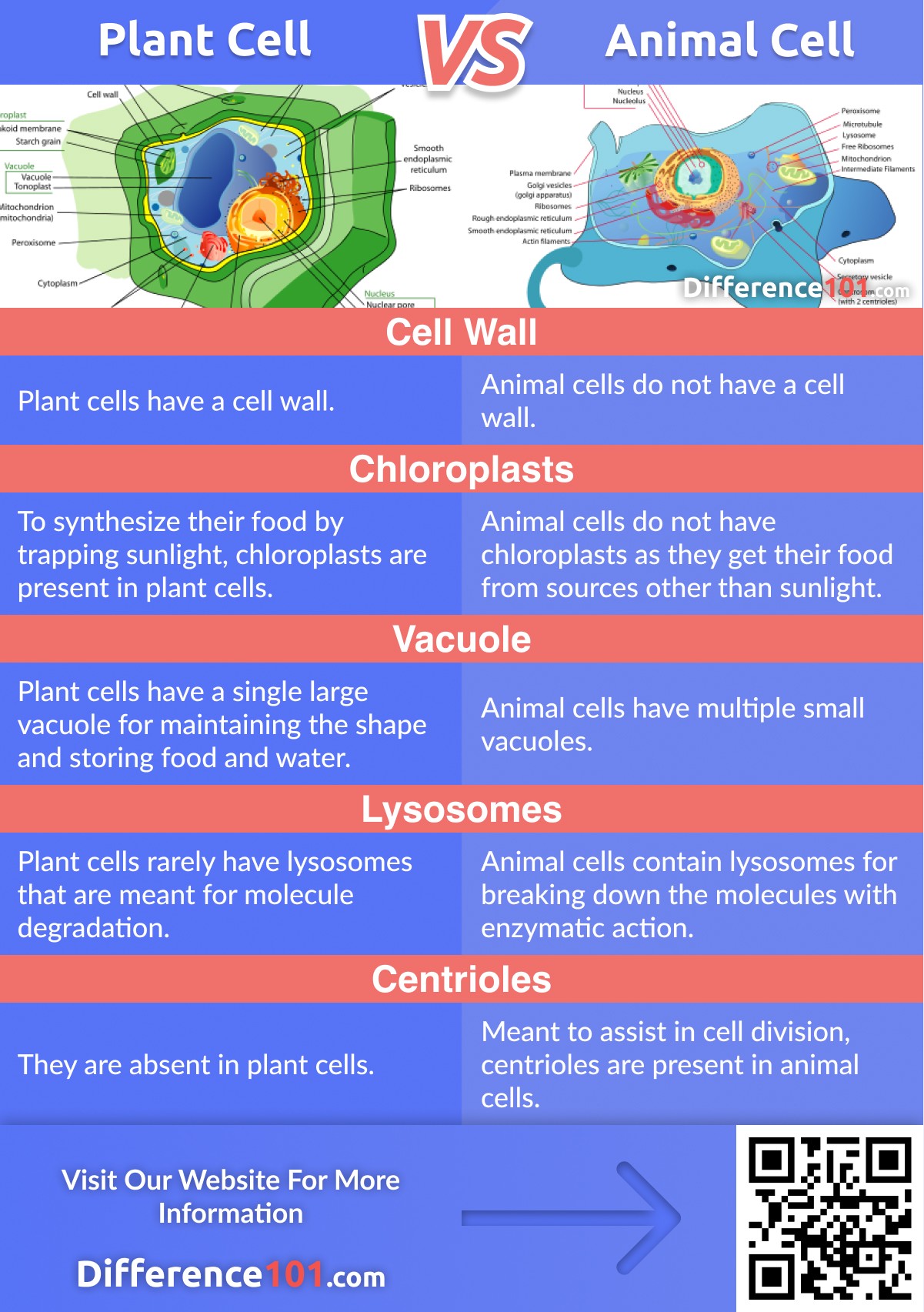
Understanding the 2 differences between plant and animal cells reveals how diverse organisms achieve structural support, energy production, and survival. Specifically, plant cells possess a rigid cell wall surrounding their plasma membrane, whereas animal cells contain only a flexible cell membrane; additionally, plant cells house specialized organelles called chloroplasts for photosynthesis, while animal cells lack these structures entirely.
Introduction to Eukaryotic Cellular Architecture
At the microscopic foundation of all complex multi-cellular life are eukaryotic cells. These sophisticated building blocks share a remarkably similar core architecture. Whether examining a leaf from a towering oak tree or a skin cell from a mammal, microscopists will find that both plant and animal cells contain a membrane-bound nucleus that houses genetic material, alongside various other functional compartments known as organelles. These shared features include the mitochondria for cellular respiration, the endoplasmic reticulum for protein and lipid synthesis, and the Golgi apparatus for packaging molecules.
However, despite these fundamental similarities, the evolutionary paths of plants and animals diverged significantly millions of years ago. To survive in their respective environments, these two groups of organisms developed distinct physiological strategies. Plants are stationary organisms rooted in place, requiring robust structural integrity to reach toward sunlight and withstand environmental pressures like wind and heavy rain. Conversely, most animals are motile, requiring flexible bodies, complex nervous systems, and entirely different mechanisms for obtaining nutrients.
These divergent lifestyle requirements are mirrored at the microscopic level. While dozens of subtle variations exist between plant and animal cells, two primary structural divergences stand out as the most defining markers of classification. Examining these specific differences provides critical insight into how life functions on Earth.
Difference 1: The Plant Cell Wall versus the Animal Cell Membrane
The first and most immediately apparent difference between plant and animal cells lies in their outer boundaries. While both cell types possess a flexible inner plasma membrane composed of a phospholipid bilayer, plant cells feature an additional, highly rigid outer layer known as the cell wall.
Composition and Structure of the Plant Cell Wall
The plant cell wall is a tough, durable layer that envelops the plasma membrane. It is primarily composed of cellulose, a complex carbohydrate consisting of thousands of linked glucose units that form strong microfibrils. Alongside cellulose, plant cell walls contain hemicellulose, pectin, and often lignin in mature cells—a complex organic polymer that hardens the wall, giving wood its characteristic rigidity.
This rigid architecture serves several vital functions for the plant:
- Structural Support: The cell wall acts as an external skeleton, allowing plants to grow upward against the pull of gravity without needing a skeletal system of bones.
- Turgor Pressure Regulation: Because plant cells frequently absorb water through osmosis, the rigid cell wall prevents the cell from bursting when internal fluid pressure (turgor pressure) rises. This internal pressure keeps non-woody plants crisp and upright.
- Pathogen Defense: The wall serves as a physical barrier against bacteria, fungi, and other potential pathogens attempting to penetrate the cellular interior.
The Flexible Animal Cell Boundary
In stark contrast, animal cells completely lack a cell wall. The outermost layer of an animal cell is the plasma membrane, which is fluid and flexible. This structural absence is not a disadvantage; rather, it is a prerequisite for animal biology.
Without a rigid wall restricting their shape, animal cells can change form, migrate, and organize into complex tissues such as muscles, nerves, and blood vessels. This flexibility allows for processes like phagocytosis (the engulfing of solid particles by the cell membrane) and enables the formation of diverse tissue types that require cells to pack tightly together or slide past one another. Without this cellular plasticity, dynamic processes like muscle contraction, embryonic development, and immune response would be impossible.
Difference 2: Chloroplasts and Autotrophic Versus Heterotrophic Energy
The second major structural divergence between plant and animal cells involves the mechanisms by which they capture and process energy. Plant cells are autotrophic, meaning they manufacture their own food using light energy, whereas animal cells are heterotrophic, relying on the consumption of external organic material for sustenance.
The Role of Chloroplasts in Photosynthesis
Plant cells contain specialized plastids known as chloroplasts. These oval-shaped organelles are the site of photosynthesis, the biological process by which light energy is converted into chemical energy. Inside each chloroplast is a complex system of internal membranes arranged in stacked, disk-like structures called thylakoids, surrounded by a fluid-filled space known as the stroma.
The thylakoid membranes contain chlorophyll, a green pigment that absorbs light energy—predominantly from the blue and red portions of the electromagnetic spectrum—while reflecting green light, which gives plants their characteristic color. Through a series of light-dependent and light-independent reactions (the Calvin cycle), chloroplasts transform carbon dioxide from the atmosphere and water from the soil into glucose, releasing oxygen as a valuable byproduct.
How Animal Cells Obtain Energy
Animal cells lack chloroplasts and cannot perform photosynthesis. To generate adenosine triphosphate (ATP), the primary energy currency of the cell, animal cells must ingest organic molecules, such as carbohydrates, fats, and proteins, derived from other organisms.
Once these nutrients enter the animal cell, they are broken down through cellular respiration—a process that occurs primarily within the mitochondria, an organelle shared by both plant and animal cells. While plant cells also utilize mitochondria to break down the glucose they produce at night or in non-photosynthetic tissues, they rely on chloroplasts to generate that initial supply of glucose. Animal cells bypass the synthesis phase entirely, depending completely on a constant external supply of nutrients.
| Feature | Plant Cell | Animal Cell |
|---|---|---|
| Outer Boundary | Plasma membrane surrounded by a rigid cell wall made of cellulose | Flexible plasma membrane only (no cell wall) |
| Energy Production | Autotrophic; contains chloroplasts for photosynthesis | Heterotrophic; lacks chloroplasts, relies on external nutrients |
| Vacuole Structure | Typically contains one large central vacuole occupying most of the cell volume | Often contains multiple small, temporary vacuoles |
| Shape | Generally fixed, rectangular, or geometric shape | Variable, irregular, or rounded shape |
| Centrioles | Generally absent in most higher plants (present in some lower plant forms) | Present in pairs near the nucleus, assisting in cell division |
Comparing Additional Cellular Characteristics
While the cell wall and chloroplasts represent the two primary differences highlighted in foundational biology, they do not exist in isolation. Several secondary structural variations accompany these two major distinctions, further adapting plant and animal cells to their respective biological roles.
Vacuoles: Storage and Pressure
Plant cells typically feature a single, large central vacuole that can occupy up to 90 percent of the cell's interior volume. This large membrane-bound sac stores water, enzymes, inorganic ions, and waste products. By adjusting the water volume inside this central vacuole, the plant cell controls its turgor pressure, directly influencing the wilting or firming of leaves and stems.
Animal cells, by contrast, contain multiple smaller vacuoles that serve temporary storage and transport functions, such as taking in nutrients or expelling waste, but they do not play a major role in structural support.
Cell Division and Centrioles
During cellular reproduction, plant and animal cells utilize slightly different machinery. Animal cells contain a pair of centrioles—cylindrical organelle structures composed of microtubules—that help organize the mitotic spindle during cell division. Most higher plant cells lack centrioles, relying instead on other microtubule-organizing centers to manage chromosome separation during mitosis.
Frequently Asked Questions
Do plant cells contain mitochondria?
Yes, plant cells contain mitochondria. While plant cells have chloroplasts to produce glucose via photosynthesis, they still need mitochondria to break down that glucose into usable ATP energy, especially during times when sunlight is unavailable, such as at night.
Why do plant cells need a cell wall if they already have a cell membrane?
The plasma membrane is delicate and flexible, making it vulnerable to rupture if internal fluid pressure becomes too high. The rigid cell wall provides mechanical strength, protects against physical damage, and allows plants to maintain an upright posture without a skeletal system.
Can animal cells perform photosynthesis?
No, animal cells cannot perform photosynthesis because they lack chloroplasts and the pigment chlorophyll. All animals must consume other organisms to acquire the organic molecules necessary for cellular respiration and survival.
What happens to a plant cell if it loses too much water?
When a plant cell loses water, the central vacuole shrinks, and the plasma membrane pulls away from the rigid cell wall in a process known as plasmolysis. This loss of turgor pressure causes the plant to wilt, though the rigid cell wall itself generally maintains its external geometric shape.
Are there any plant cells that lack chloroplasts?
Yes, not all plant cells contain chloroplasts. Cells located in the roots, bulbs, and inner layers of woody stems do not receive sunlight and therefore lack chloroplasts, functioning primarily in storage, transport, or structural support rather than photosynthesis.
Practical Next Actions and Further Study
To deepen your understanding of cellular biology, observe both plant and animal cells under a light microscope using simple laboratory techniques. A classic experiment involves preparing a wet mount of an onion bulb epidermis to observe the distinct cell wall and large vacuole, contrasted with a cheek epithelial cell scraping stained with methylene blue to observe the flexible plasma membrane and prominent nucleus without a surrounding wall. Comparing these specimens firsthand bridges the gap between theoretical textbook descriptions and observable biological reality.