To obtain an accurate 1996 Toyota Camry auto insurance quote in Texas in 2026, owners must navigate the state’s mandatory 30/60/25 liability limits while accounting for the vehicle’s status as a 30-year-old classic. Most Texas drivers find that liability-only policies or specialized "antique" coverage offer the best value for this specific model year, with annual premiums typically ranging from $450 to $950 depending on the driver's location and record.
Understanding the Texas Legal Framework for Older Vehicles
In 2026, the Texas motor vehicle insurance landscape remains governed by the Texas Financial Responsibility Law, which requires every driver to demonstrate the ability to pay for damages they cause in an accident. For a vehicle as old as the 1996 Toyota Camry, the insurance requirements do not change, but the strategy for meeting them does.
The 30/60/25 Rule
Texas law mandates minimum liability coverage limits, often abbreviated as 30/60/25. This means your policy must provide:
- $30,000 for bodily injury to one person.
- $60,000 for total bodily injury per accident (if multiple people are hurt).
- $25,000 for property damage.
For a 1996 Camry owner, the property damage component is particularly critical. While the Camry itself may only be worth a few thousand dollars in 2026, the damage it could cause to a newer electric vehicle or a structural barrier could easily exceed $25,000. Consequently, many insurance experts in Texas suggest increasing the property damage limit to $50,000, as the premium increase for this jump is usually negligible on an older vehicle.
TexasSure: The Verification System
Texas utilizes a real-time insurance verification system known as TexasSure. This database allows law enforcement and county tax assessor-collectors to instantly verify if a 1996 Camry has the required coverage. When you receive an insurance quote and purchase a policy, the insurer notifies the state. If you allow your coverage to lapse, the system flags the vehicle, which can lead to fines or the inability to renew your vehicle registration.
The 1996 Toyota Camry: A 2026 Perspective
The 1996 Toyota Camry belongs to the XV10 generation, a series widely regarded by automotive historians and engineers for its "over-engineered" build quality. By 2026, a 1996 Camry is officially 30 years old. This milestone changes how insurance companies view the vehicle in the Texas market.
Reliability and Safety Ratings
While the 1996 Camry was a leader in safety during its era, it lacks the advanced driver-assistance systems (ADAS) found in modern vehicles, such as automatic emergency braking or lane-keep assist. However, insurers in Texas still view the Camry favorably due to its predictable handling and the availability of replacement parts. Because the 1996 model was a high-volume seller, "recycled" or aftermarket parts are plentiful in Texas, which helps keep potential repair costs low and, by extension, stabilizes the comprehensive and collision portions of a quote.
The Antique and Classic Designation
Under Texas Transportation Code § 504.502, a vehicle that is at least 25 years old can be registered as an "Antique" or "Classic."
- Antique Plates: These are for vehicles used primarily for exhibitions, club activities, and parades. If your 1996 Camry is a restored show car and not a daily driver, you can seek "Collector" insurance, which is significantly cheaper than standard auto insurance.
- Classic Plates: These allow for more regular use but still signal to insurers that the vehicle is a preserved specimen.
If you are using the Camry for daily commuting in cities like Houston or San Antonio, you will need a standard personal auto policy (PAP), even though the car qualifies for classic status based on age.
Key Factors Influencing Your Texas Quote
When you request a quote for a 1996 Camry, insurers look at more than just the car's age. In 2026, several Texas-specific factors will dictate whether your monthly premium is $40 or $140.
Geographic Location (Territory Ratings)
Texas is a massive state with diverse driving environments.
- Urban Hubs (Dallas, Houston, Austin): Rates are higher due to increased traffic density, higher rates of uninsured motorists, and a greater frequency of accidents. A 1996 Camry garaged in downtown Houston will likely see a 20-30% higher quote than one in a rural area.
- The Hail Belt: Parts of North Texas and the Panhandle are prone to severe hailstorms. If you are seeking comprehensive coverage (to protect against weather damage) for your Camry, expect higher rates in these regions.
- Coastal Regions: Areas like Galveston or Corpus Christi may have higher comprehensive rates due to the risk of flood and hurricane damage.
The Role of Credit-Based Insurance Scores
In Texas, insurers are legally allowed to use your credit history to help determine your premium. For an older vehicle like the 1996 Camry, where the car's value is low, your "responsibility score" (derived from your credit) can actually have a larger impact on the quote than the vehicle's safety features. Drivers with high credit scores often see significant discounts, even on basic liability policies.
Driving History and Claims Frequency
The Texas Department of Insurance (TDI) notes that a single at-fault accident or multiple speeding tickets in the past three years can increase your premium by 40% or more. For the owner of a 30-year-old Camry, maintaining a clean record is the most effective way to keep insurance costs below the value of the car itself.
Coverage Options: What Do You Actually Need?
One of the biggest mistakes owners of older vehicles make is "over-insuring" the car or, conversely, leaving themselves vulnerable to lawsuits.
Liability Only vs. Full Coverage
In 2026, the market value of a 1996 Toyota Camry in good condition typically fluctuates between $1,500 and $3,500.
- Collision Coverage: This pays to repair your car if you hit something. If your annual collision premium is $300 and your deductible is $500, you are effectively paying $800 for a car that might only be worth $2,000. In most cases, collision coverage is not cost-effective for a 1996 Camry.
- Comprehensive Coverage: This covers theft, fire, and weather damage. Given Texas’s propensity for hailstorms and the fact that 1990s-era Toyotas remain targets for parts theft, a low-cost comprehensive policy might be worth considering if the premium is low.
Uninsured/Underinsured Motorist (UM/UIM)
Texas has a high rate of uninsured drivers. If a driver without insurance hits your 1996 Camry, you would normally have to pay for your own repairs and medical bills. UM/UIM coverage is highly recommended in Texas. While you can opt-out in writing, keeping this coverage ensures that your classic Camry can be repaired or replaced if an uninsured driver is at fault.
Personal Injury Protection (PIP)
Texas law requires insurers to offer you $2,500 in PIP coverage. PIP covers medical expenses and a portion of lost wages regardless of who caused the accident. Because a 1996 Camry lacks modern side-impact airbags and advanced crumple zones, the medical protection provided by PIP is a prudent addition to any Texas quote.
2026 Comparison of Insurance Types for a 1996 Camry
The following table compares the typical annual costs and benefits for three different insurance strategies for a 1996 Toyota Camry based in a mid-sized Texas city (e.g., Fort Worth or El Paso).
| Policy Type | Coverage Included | Estimated Annual Premium | Best For |
|---|---|---|---|
| Minimum Liability | 30/60/25 Limits Only | $450 – $650 | Budget-conscious daily drivers |
| Standard "Full" Coverage | Liability + Comp/Coll ($500 Deductible) | $900 – $1,300 | Daily drivers in high-theft/hail areas |
| Collector/Classic | Agreed Value + Limited Mileage | $200 – $400 | Show cars, weekend drivers, garaged vehicles |
| Enhanced Liability | 50/100/50 + PIP + UM/UIM | $700 – $900 | Drivers seeking maximum legal protection |
Note: Figures are estimates based on 2026 market trends. Actual quotes will vary based on individual driver profiles and specific Texas zip codes.
How to Get the Most Accurate Quote
To ensure you are getting the best rate for your 1996 Camry in Texas, follow these specific steps:
- Gather Your VIN: The 17-digit Vehicle Identification Number is essential. It tells the insurer exactly which trim level you have (DX, LE, or XLE) and which safety features (like ABS or dual airbags) were factory-installed.
- Determine Your Annual Mileage: In 2026, many Texas insurers offer "pay-per-mile" or low-mileage discounts. If you only drive the Camry 5,000 miles a year, your quote could be 15-20% lower.
- Check for Bundling: If you have homeowners or renters insurance in Texas, bundling it with your Camry's auto policy is almost always the most effective way to drop the price.
- Use the Texas Department of Insurance (TDI) Resources: The TDI Help Line provides tools to compare sample rates among the top companies operating in the state.
- Ask About "Agreed Value": If you have spent thousands of dollars restoring your 1996 Camry, a standard "Actual Cash Value" policy will not compensate you fairly if the car is totaled. Look for an "Agreed Value" quote, common in classic car insurance.
Common Mistakes to Avoid in Texas
Drivers of older cars often fall into traps that either cost them money or leave them legally exposed.
- Ignoring the "Texas Sure" Database: Don't assume that because you have a paper insurance card, you're fine. If your insurer fails to upload your data to the state system, you could be pulled over. Always verify with your agent that your electronic filing is active.
- Setting Deductibles Too High: If your 1996 Camry is worth $2,000 and you set a $1,000 deductible, the insurance company is only on the hook for $1,000. In many cases, it’s better to drop the coverage entirely or keep a lower deductible if you cannot afford a $1,000 surprise.
- Neglecting the "Named Driver" Exclusion: In Texas, some "discount" insurance companies offer lower quotes by excluding other household members from the policy. Ensure that anyone who might drive your Camry is specifically covered.
Frequently Asked Questions
Does the age of the 1996 Camry make it more expensive to insure?
Not necessarily. While the car lacks modern safety features, its low market value means the insurance company has very little "loss exposure" regarding the vehicle itself. Most of your premium goes toward liability (damaging others). For a clean-record driver, a 1996 Camry is usually one of the cheapest cars to insure in Texas.
Can I get "Antique" plates for my Camry and still drive it to work?
No. In Texas, "Antique" plates are strictly for exhibition and club use. If you use an Antique-plated vehicle for regular commuting, you are violating state law and your insurance company can deny any claims made during a commute. If you want the "Classic" look for a daily driver, you must use "Classic" plates and maintain a standard auto insurance policy.
What is the best insurance company for an older Toyota in Texas?
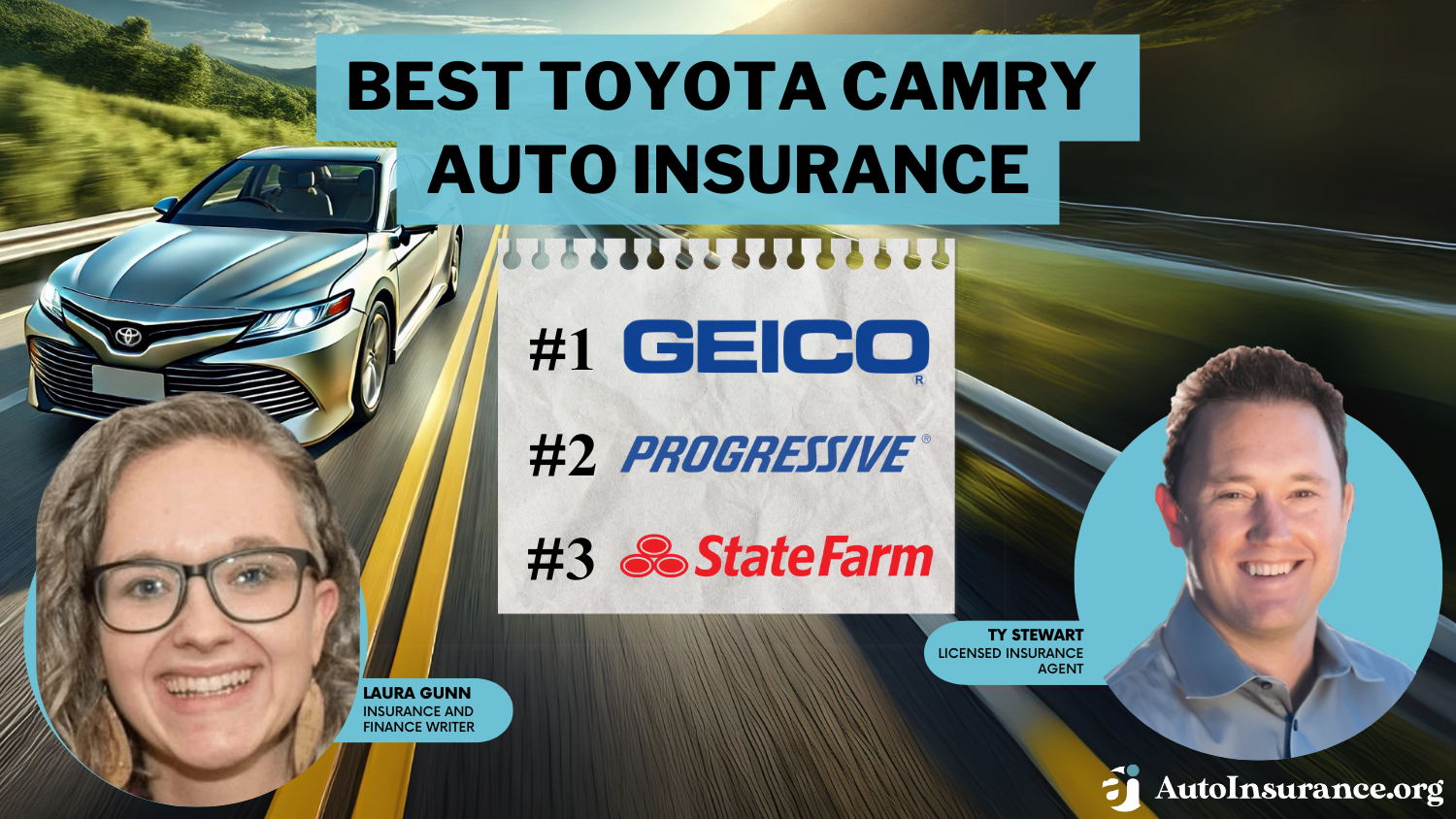
There is no single "best" company, as rates shift frequently. However, companies like State Farm, GEICO, and Progressive have large footprints in Texas and offer competitive rates for older vehicles. For high-quality restorations, specialty insurers like Hagerty or Grundy are better suited for 1996 models.
Does Texas require PIP (Personal Injury Protection)?
Texas law requires insurance companies to offer it to you. You are not required to buy it, but you must reject it in writing if you don't want it. Given the 1996 Camry's 30-year-old safety tech, PIP is a highly recommended addition to your quote.
How does a "total loss" work for a 1996 Camry in Texas?
In Texas, a vehicle is typically considered a total loss if the cost of repairs plus the salvage value exceeds the Actual Cash Value (ACV) of the car. Since a 1996 Camry has a relatively low ACV, even a minor fender-bender might result in the insurance company "totalling" the car. If this happens, you can often "buy back" the car from the insurer with a salvage title if you wish to repair it yourself.
Final Recommendation for Texas Camry Owners
If your 1996 Toyota Camry is a reliable daily driver, the most cost-effective insurance strategy in 2026 is to purchase a policy with Liability limits of 50/100/50, include Uninsured Motorist coverage, and Personal Injury Protection, while opting out of Collision and Comprehensive coverage. This configuration provides robust legal and financial protection for the driver without overpaying for a vehicle with a low replacement value. If the vehicle is a pristine, low-mileage survivor, seek a Classic Car policy with an "Agreed Value" to ensure your investment is fully protected.