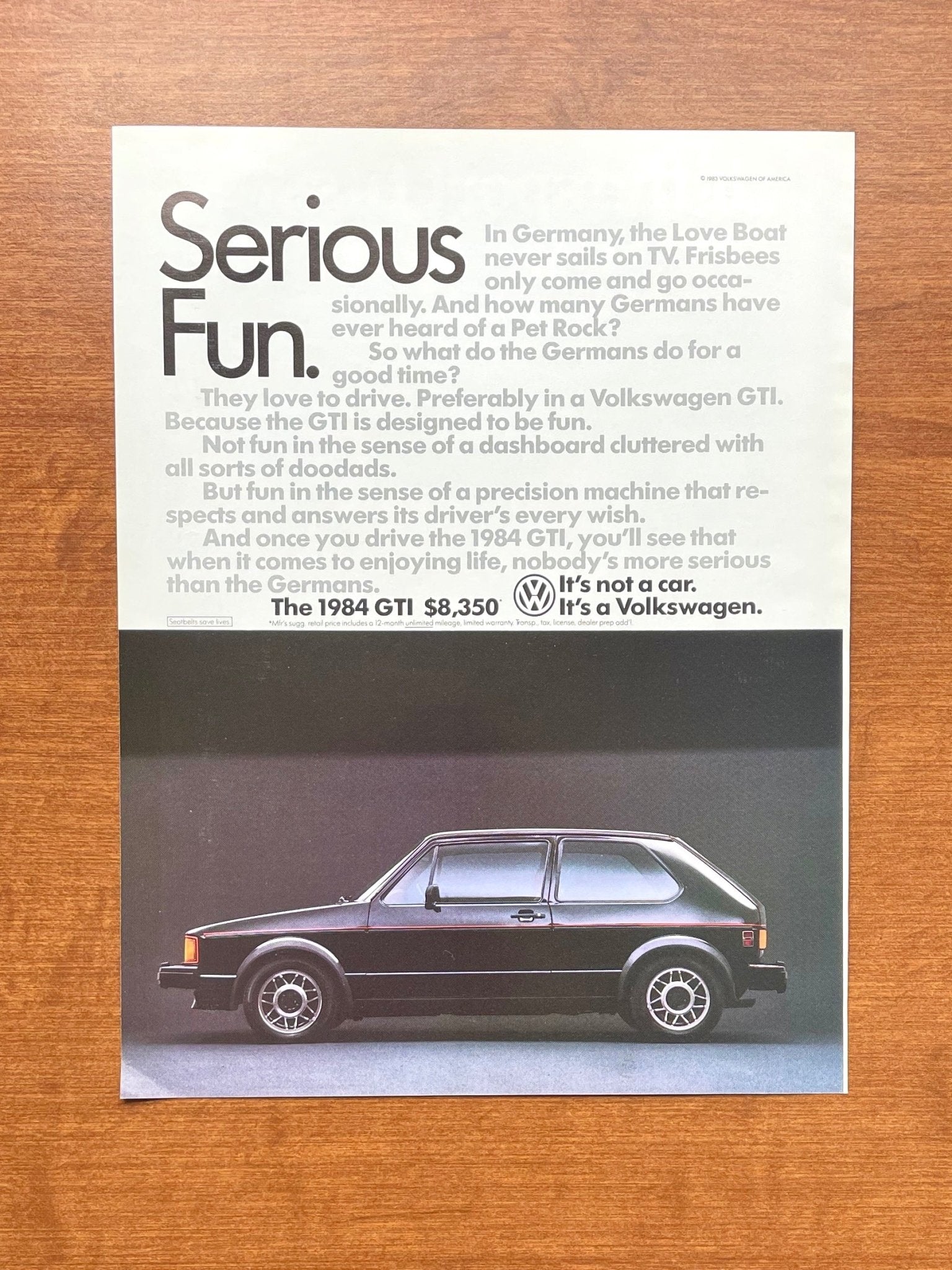
The 1984 Volkswagen GTI represents the final and most refined iteration of the first-generation (Mk1) Rabbit GTI in North America. Renowned for its 1.8-liter fuel-injected engine, lightweight chassis, and exceptional handling, it remains the benchmark for the "hot hatch" segment, offering a purist driving experience that combines German engineering with everyday versatility.
In the landscape of automotive history, few vehicles have achieved the cult status of the 1984 Volkswagen GTI. While the GTI nameplate debuted in Europe in 1976, it did not reach North American shores until the 1983 model year. This makes the 1984 model particularly significant; it was the "swan song" of the Mk1 chassis before the larger, heavier Mk2 took over in 1985. For collectors and driving enthusiasts in 2026, the 1984 GTI is often viewed as the peak of the original formula: a car that is light, communicative, and deceptively quick through the corners.
The Historical Context of the 1984 GTI
The early 1980s were a period of transition for the automotive industry. Performance cars were beginning to emerge from the "Malaise Era," where strict emissions regulations had sapped engines of their power. Volkswagen’s solution was not a high-displacement V8, but a precision-tuned, fuel-injected four-cylinder engine dropped into their popular economy car, the Rabbit.
The 1984 GTI was manufactured at Volkswagen’s Westmoreland plant in Pennsylvania. Unlike the standard Rabbit, which was often criticized for having a "softened" suspension for American tastes, the GTI was a return to European form. By 1984, Volkswagen had ironed out the production quirks of the American facility, resulting in a vehicle that felt tighter and more robust than the earlier 1979–1981 Rabbits. It served as a proof of concept that American drivers would pay a premium for a small car if it offered genuine performance and build quality.
Mechanical Specifications and Engine Performance
At the heart of the 1984 GTI is the legendary 1.8-liter "JH" engine. While 90 horsepower may seem modest by 2026 standards, the vehicle’s curb weight of approximately 2,100 pounds meant that every horse was utilized effectively.
The Powerplant
The engine featured a 1,780cc displacement with a cast-iron block and an aluminum alloy head. The critical component for its performance was the Bosch K-Jetronic (CIS) mechanical fuel injection system. This system provided reliable fuel delivery and a distinctive, mechanical throttle response that modern drive-by-wire systems often struggle to replicate.
- Horsepower: 90 hp @ 5,500 rpm
- Torque: 105 lb-ft @ 3,250 rpm
- Compression Ratio: 8.5:1
- 0-60 MPH: Approximately 9.5 to 10.0 seconds
- Top Speed: 108 mph
The Drivetrain
Power was sent to the front wheels via a five-speed close-ratio manual transmission. The gear ratios were specifically chosen to keep the engine in its power band, making the car feel much faster in city driving and on winding roads than its 0-60 time would suggest. The shifter utilized a "golf ball" dimpled knob, a nod to the original 1976 European design, which has since become a signature GTI interior element.
Chassis, Suspension, and Handling Dynamics
What truly separated the 1984 GTI from its competitors—and its standard Rabbit siblings—was the chassis tuning. Volkswagen engineers stiffened the suspension by roughly 30% compared to the base Rabbit.
Suspension Components
The front suspension utilized MacPherson struts with a 17mm stabilizer bar. In the rear, a semi-independent torsion beam axle was paired with a 19mm stabilizer bar. This setup was designed to minimize body roll and provide the "inside rear wheel lift" characteristic that is now a trademark of spirited Mk1 driving.
Braking and Steering
The 1984 GTI featured 9.4-inch vented front disc brakes, which were a significant upgrade over the solid discs found on lower trims. The steering was a rack-and-pinion setup that, while unassisted, offered immense feedback. Drivers in 2026 often remark on the "transparency" of the 1984 GTI; you feel every crack in the pavement and every nuance of grip through the steering wheel and the seat.
Exterior Design and Styling Cues
The 1984 GTI adhered to a philosophy of "functional aggression." It did not need massive wings or scoops to declare its intent. Instead, it used subtle trim changes to distinguish itself from the standard economy hatchbacks of the era.
Aesthetic Highlights
- Black-out Trim: Most of the chrome found on standard Rabbits was replaced with satin black trim. This included the window surrounds, door handles, and bumpers.
- Red Grille Piping: The iconic red stripe surrounding the front grille made its appearance, a feature that continues on GTIs produced today.
- Fender Flares: Substantial black plastic wheel arch extensions were added to accommodate wider tires and give the car a more planted stance.
- Snowflake Alloy Wheels: The 1984 model typically featured 14x6-inch "Snowflake" (Avus) alloy wheels, which are now among the most sought-after vintage VW wheels.
In 1984, the color palette was limited but classic: Black, Royal Red, Cashmere White, and Diamond Silver Metallic. The simplicity of the "box" design, penned originally by Giorgetto Giugiaro, ensured that the car aged gracefully, avoiding the over-styled trends of the late 80s.
Interior Ergonomics and Equipment
Inside, the 1984 GTI was a masterclass in driver-centric design. While the materials were utilitarian, the layout was optimized for high-performance driving.
Seating and Comfort
The most notable feature was the highly bolstered sport seats. These seats, often upholstered in a distinctive "midnight blue" or "burgundy" velour with striped inserts, provided lateral support that was unheard of in the small-car segment at the time. They were designed to hold the driver firmly in place during high-G cornering.
Instrumentation
The dashboard was straightforward, featuring a large tachometer and speedometer. In the center console, three additional VDO gauges were standard, monitoring oil temperature, a clock, and a voltmeter (though some configurations varied). This emphasized the car’s identity as a serious driving machine rather than a mere commuter.
Comparative Specifications: 1984 vs. The Future
To understand the 1984 GTI's place in history, it is helpful to compare it to the model that replaced it.
| Feature | 1984 Rabbit GTI (Mk1) | 1985 Golf GTI (Mk2) |
|---|---|---|
| Engine Displacement | 1.8L Inline-4 | 1.8L Inline-4 |
| Horsepower | 90 hp | 102 hp |
| Curb Weight | ~2,100 lbs | ~2,350 lbs |
| Wheelbase | 94.5 inches | 97.3 inches |
| Rear Brakes | Drum | Disc |
| Top Speed | 108 mph | 114 mph |
| Driving Character | Raw, Go-Kart Like | Refined, Stable |
While the 1985 model was objectively faster and more comfortable, many enthusiasts prefer the 1984 model for its lightness and visceral connection to the road.
Common Issues and Maintenance for Collectors
If you are looking to acquire or maintain a 1984 GTI in 2026, there are several age-specific concerns to address. These cars are now over 40 years old, and while they are robust, they require specialized care.
1. Structural Rust
The most significant threat to a 1984 GTI is corrosion. Key areas to inspect include:
- The Strut Towers: Rust here can be structural and difficult to repair.
- Floor Pans: Water often leaks through worn windshield seals, sitting under the carpet and rotting the floors from the inside out.
- Rain Tray: The area under the windshield where the battery and wiper motor sit is prone to leaf buildup, which holds moisture and causes rust.
2. Fuel System Maintenance
The Bosch K-Jetronic system is reliable but does not tolerate sitting. If a GTI has been parked for years, the fuel distributor and warm-up regulator (WUR) can gum up. In 2026, finding specialists who can calibrate these mechanical systems is becoming more difficult, though parts are still supported by the Volkswagen Classic Parts program.
3. Electrical Grounds
Older Volkswagens are notorious for "electrical gremlins," which are almost always caused by corroded ground points. Cleaning the main battery ground and the various ground "flowers" behind the dash can solve most intermittent issues with gauges or lighting.
The Market Value and Collectibility in 2026
As of 2026, the 1984 Volkswagen GTI has transitioned from a "cheap fun car" to a legitimate blue-chip classic. Values for well-preserved, unmolested examples have seen a steady climb over the last decade.
- Survivor Condition: Original cars with low mileage (under 75,000) and original paint can command prices upwards of $30,000 to $45,000 at specialty auctions like Bring a Trailer.
- Driver Quality: Solid examples with some modifications or higher mileage typically trade in the $12,000 to $18,000 range.
- Project Cars: Rough but complete GTIs are becoming rarer, often starting at $5,000, as the cost of rust repair and interior restoration often exceeds the vehicle's immediate value.
The "Westy" (Westmoreland-built) GTI is particularly prized in the US, especially the 1984 model, as it represents the final year of the classic "early" look before the styling shift of the mid-80s.
FAQs About the 1984 Volkswagen GTI
Is the 1984 GTI a good daily driver in 2026?
While it is mechanically simple and fuel-efficient, using a 1984 GTI as a primary daily driver in 2026 is challenging. It lacks modern safety features like airbags and ABS, and its small size makes it vulnerable in modern traffic. However, as a fair-weather commuter or weekend car, it is exceptionally rewarding.
What is the difference between a 1984 GTI and a 1984 Rabbit?
The GTI is a performance trim of the Rabbit. It includes the 1.8L engine (versus the 1.7L or diesel options), a close-ratio 5-speed transmission, stiffer suspension, larger brakes, sport seats, flared wheel arches, and unique "Snowflake" wheels.
How can I verify if a car is a true 1984 GTI?
Check the VIN. A genuine 1984 Rabbit GTI will have a VIN starting with "1VW," indicating it was built in the US. Additionally, look for the "17" engine code prefix or the "JH" stamp on the engine block. Be wary of "clones" (standard Rabbits with GTI parts swapped in); true GTIs have specific body-mounting points for the fender flares and different interior wiring harnesses.
Are parts easy to find for a 40-year-old GTI?
Mechanical parts (engine, brakes, suspension) are widely available through enthusiasts' sites like ECS Tuning or Black Forest Industries. Interior trim and specific GTI-only body parts are much harder to find and often require scouring classifieds or specialized forums like VWVortex.
Expert Guidance: The Next Steps for Buyers
If you are looking to step into the world of Mk1 ownership, your first action should be to join a dedicated community. The wealth of knowledge in the vintage VW community is the best tool you have for maintaining these vehicles.
Before purchasing, prioritize a rust-free shell over a running engine. Engines are relatively easy to rebuild or swap, but significant body rot on a unibody car like the GTI can be a financial "black hole." Always request a "PPI" (Pre-Purchase Inspection) from a shop familiar with vintage European cars, specifically asking them to check the rear beam mounting points and the fuel tank neck, which is another common area for hidden corrosion.
The 1984 Volkswagen GTI is more than just a car; it is a piece of automotive history that defined a genre. Driving one today is a reminder that you don't need 500 horsepower to have the time of your life behind the wheel—sometimes, all you need is a 2,100-pound box and a winding road.