A 180-degree measurement represents a straight line, a half-turn in geometry, a complete reversal of direction, or a fundamental change in perspective. Its significance spans mathematics, navigation, physics, engineering, and everyday idiom, serving as a universal standard for opposition, alignment, and full rotation.
Understanding the concept of 180 degrees requires exploring how this single measurement functions across multiple disciplines. From the foundational axioms of Euclidean geometry to the practical mechanics of navigation and the figurative language of human decision-making, the half-turn occupies a unique position. It marks the exact boundary where direction inverts, where angles open to their maximum half-circle extent, and where systemic shifts redefine trajectories.
Geometric Definition and Properties
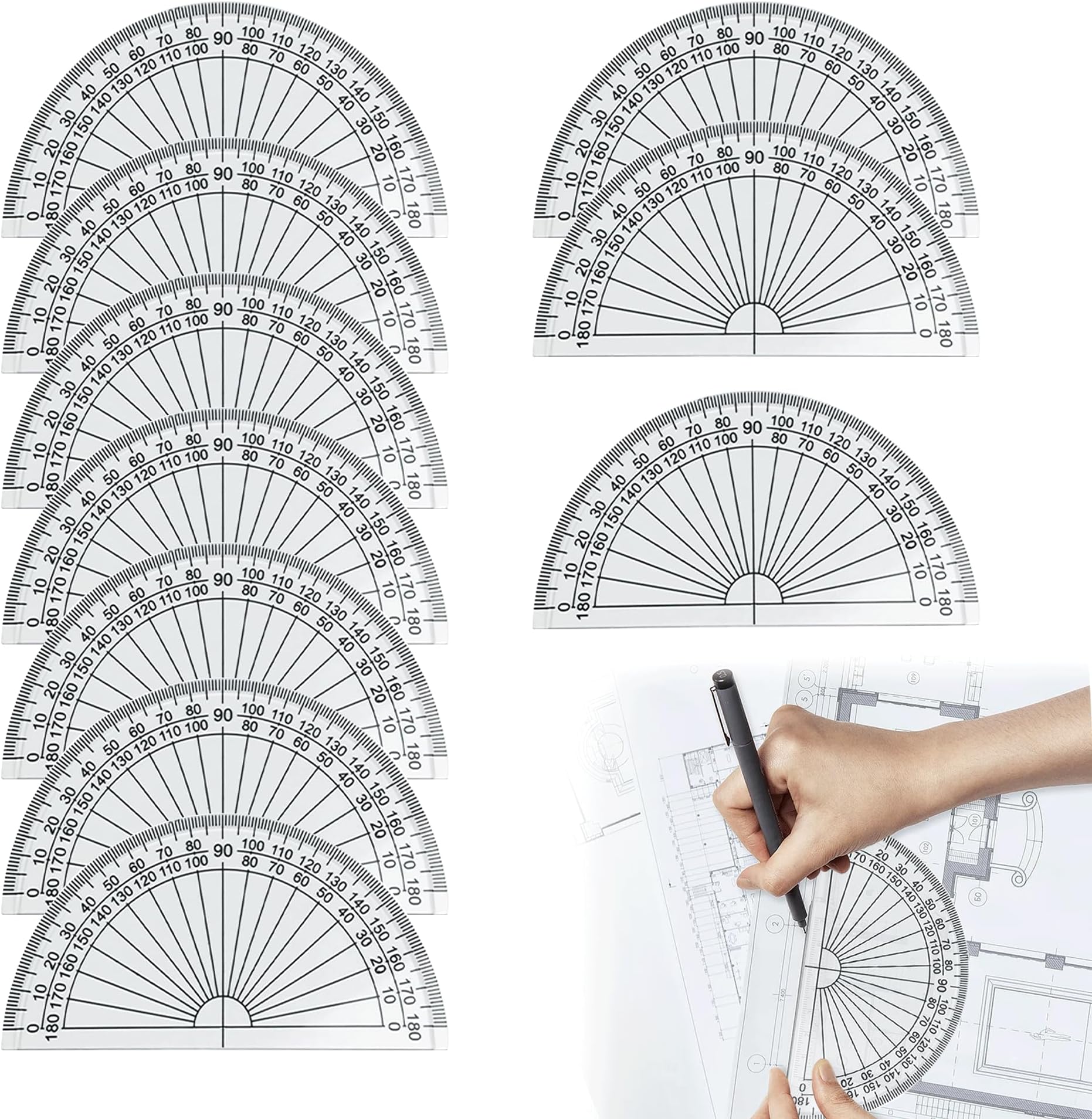
In geometry, an angle measures the amount of rotation between two intersecting rays sharing a common endpoint, known as the vertex. A degree is a unit of angular measure representing 1/360th of a full rotation around a circle. Consequently, 180 degrees equals half of a complete circle.
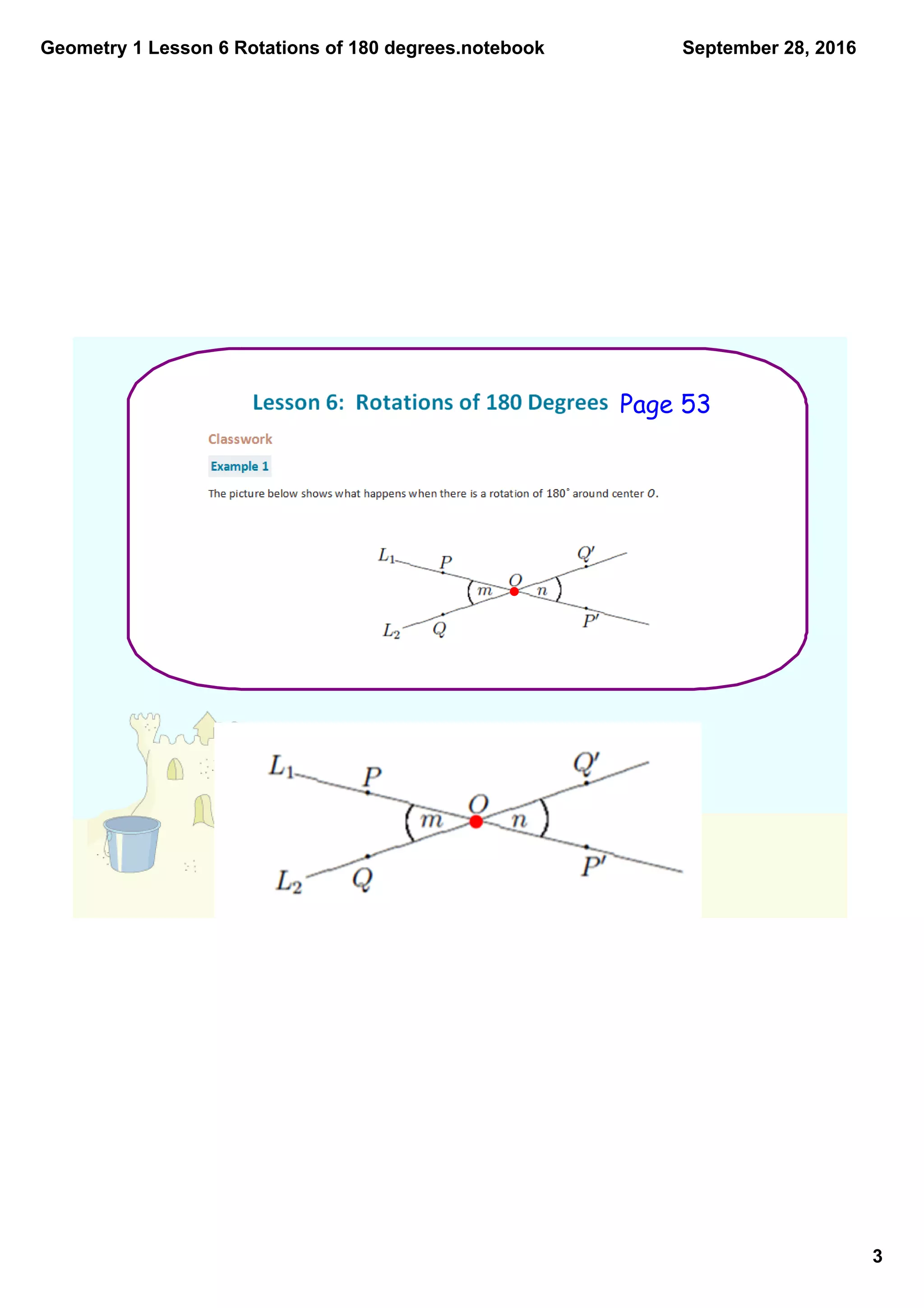
When two rays extend in exact opposite directions from a shared vertex, they form what is geometrically classified as a straight angle. Unlike acute angles (measuring less than 90 degrees) or obtuse angles (measuring between 90 and 180 degrees), a straight angle visually manifests as a continuous, unbroken straight line. The vertex acts as the midpoint of this linear span.
Supplementary and Linear Pair Relationships
The 180-degree measurement is foundational to the study of polygons and angle relationships:
- Linear Pairs: When two adjacent angles share a common side and their non-common sides form a straight line, the sum of their measures is always exactly 180 degrees. If one angle measures 70 degrees, its adjacent linear partner must measure 110 degrees.
- Supplementary Angles: Any two angles whose degree measures add up to 180 degrees are supplementary, regardless of whether they are adjacent to one another.
- Triangle Angle Sum Theorem: In Euclidean geometry, the interior angles of any triangle always add up to 180 degrees. This property holds true for acute, obtuse, right, scalene, isosceles, and equilateral triangles alike.
- Polygon Interior Angles: The sum of the interior angles of any simple polygon with $n$ sides can be calculated using the formula $(n - 2) \times 180^\circ$. A quadrilateral ($n=4$) yields $360^\circ$, a pentagon ($n=5$) yields $540^\circ$, and so forth.
These geometric properties ensure that 180 degrees functions as a primary benchmark for structural stability, architectural design, and mathematical proofs.
Trigonometric Significance
In trigonometry, 180 degrees corresponds to $\pi$ radians. The transition from degrees to radians is critical for advanced mathematical analysis, calculus, and physics, where angle measures must be expressed as real numbers proportional to arc length.
On the Cartesian coordinate system, the unit circle—a circle with a radius of one centered at the origin—defines trigonometric functions for all real numbers. An angle of 180 degrees corresponds to the point $(-1, 0)$ on the negative $x$-axis. This specific coordinate governs the fundamental trigonometric values at this angle:
- Sine ($\sin$): The $y$-coordinate of the corresponding point on the unit circle. Therefore, $\sin(180^\circ) = 0$.
- Cosine ($\cos$): The $x$-coordinate of the corresponding point. Therefore, $\cos(180^\circ) = -1$.
- Tangent ($\tan$): The ratio of sine to cosine ($\sin / \cos$). Therefore, $\tan(180^\circ) = 0 / -1 = 0$.
These values are essential for modeling wave mechanics, alternating current (AC) electricity, and harmonic oscillations. For instance, in an AC power cycle, a 180-degree phase shift represents the exact midpoint where the current or voltage wave crosses zero and inverts its polarity.
Navigation, Orientation, and Physics
Beyond pure mathematics, 180 degrees governs spatial orientation, navigation, and physical vectors.
Compass Bearings and Reciprocals
In terrestrial navigation, directions are measured clockwise in degrees from magnetic or true north ($0^\circ$). A heading of $0^\circ$ points directly north, $90^\circ$ points east, $180^\circ$ points south, and $270^\circ$ points west.
The concept of a reciprocal heading relies entirely on adding or subtracting 180 degrees:
- If a pilot or captain travels on a heading of $045^\circ$ (northeast), the direct return route—the reciprocal heading—is calculated by adding $180^\circ$, resulting in $225^\circ$ (southwest).
- If a heading exceeds $180^\circ$, such as $270^\circ$, subtracting $180^\circ$ yields the reciprocal heading of $090^\circ$.
This mathematical symmetry ensures that travelers can reliably retrace their exact paths across oceans, airspaces, and land surveys.
Vector Physics and Momentum
In physics, a 180-degree vector orientation indicates opposing forces or velocities moving along the same line in opposite directions. When two equal forces act on an object from directions separated by 180 degrees, they cancel each other out, resulting in net zero acceleration (equilibrium).
In rotational dynamics, a 180-degree phase inversion in wave mechanics leads to destructive interference, where two waves out of phase by 180 degrees cancel each other's amplitudes entirely, provided their amplitudes are equal.
| Field | Application of $180^\circ$ | Practical Significance |
|---|---|---|
| Geometry | Straight angles & triangle sums | Defines linear alignment and polygon structural limits. |
| Trigonometry | Unit circle coordinates ($-\pi$ radians) | Establishes zero-crossings for sine and negative peaks for cosine. |
| Navigation | Reciprocal bearings | Enables exact route reversal and backtracking. |
| Physics | Vector opposition & phase shifts | Governs mechanical equilibrium and wave cancellation. |
| Idiom | Complete reversal ("180-degree turn") | Describes total changes in policy, opinion, or strategy. |
Figurative Usage and Idiomatic Significance
The term "180 degrees" has crossed over from technical lexicon into everyday language to describe profound, qualitative transformations.
When an individual, organization, or government executes a "180-degree turn" or "does a 180," it signifies a complete reversal of stance, policy, or behavior. For example, a company that transitions from opposing environmental regulations to actively funding clean-energy initiatives has performed a figurative 180.
This idiom relies on the visual metaphor of turning around to face the exact opposite direction from where one previously looked or traveled. Unlike a "360-degree turn"—which colloquially misused as a synonym for change actually brings a person back to their original starting point—a 180-degree shift guarantees absolute divergence from the prior path.
Practical Considerations and Common Misunderstandings
When working with measurements, angles, and directional data, practitioners across various technical fields encounter specific operational challenges and misconceptions regarding 180-degree values.
The 360-Degree Confusion
A frequent linguistic error occurs when people use "360-degree" to mean a complete transformation or a thorough review (as in a "360-degree feedback review"). Geometrically, 360 degrees represents a full circle, returning an object or vector to its exact original orientation. Conversely, 180 degrees represents the exact opposite state. Writers and speakers aiming to denote radical change or opposition should use 180 degrees, whereas 360 degrees should be reserved for cyclical completeness or comprehensive, all-around coverage.
Compass Wrap-Around Errors
In digital navigation and programming, calculating reciprocal headings requires careful handling when crossing the $360^\circ$ threshold. Simply adding $180^\circ$ to a heading of $300^\circ$ yields $480^\circ$, which exceeds the standard $360^\circ$ compass circle. Algorithms must incorporate conditional logic:
- If the heading is less than $180^\circ$, add $180^\circ$.
- If the heading is greater than or equal to $180^\circ$, subtract $180^\circ$.
Failing to account for this mathematical wrap-around results in severe navigation errors in robotics, aviation software, and GIS mapping applications.
Frequently Asked Questions
What is the difference between a 90-degree angle and a 180-degree angle?
A 90-degree angle is a right angle, forming an exact L-shape where two lines meet perpendicularly. A 180-degree angle is a straight angle, forming an unbroken straight line that extends in two opposite directions from a vertex.
Why do the angles of a triangle always equal 180 degrees?
In Euclidean geometry, this is proven by drawing a line parallel to one side of a triangle through the opposite vertex. Using alternate interior angles formed by transversals, the three interior angles can be arranged side-by-side along that straight line, demonstrating that they always sum to a straight angle ($180^\circ$).
How do you calculate a reciprocal compass heading using 180 degrees?
To find the exact opposite direction of a travel heading, add $180^\circ$ if the original heading is less than $180^\circ$, or subtract $180^\circ$ if the original heading is $180^\circ$ or greater. For example, the reciprocal of $60^\circ$ is $240^\circ$.
What does a 180-degree phase shift mean in electronics?
A 180-degree phase shift in an AC circuit means that the waveform is inverted. The peaks become troughs and the troughs become peaks, effectively multiplying the signal by $-1$, which is critical for signal processing and noise cancellation.
Is saying "doing a 360" correct when someone changes their mind completely?
No. Doing a 360 means turning in a full circle and ending up facing the exact same direction you started. To describe a complete reversal of opinion or policy, the correct phrase is "doing a 180."