Navigating IT infrastructure support can be complex, particularly when enterprise hardware moves past its initial warranty period. Third-party maintenance (TPM) for Dell servers, storage arrays, and networking equipment offers an alternative to manufacturer-led renewals. By understanding how independent support works, organizations can optimize maintenance costs while maintaining high system availability.
Enterprise hardware maintenance accounts for a substantial portion of an organization's operational technology budget. When original equipment manufacturer (OEM) warranties expire, businesses typically face steep price increases for extended contracts or pressure to upgrade fully functional infrastructure. Third-party maintenance providers step into this gap, offering independent support, parts replacement, and troubleshooting services. Examining the operational realities, cost structures, and service nuances of these alternative contracts reveals several strategies that maximize hardware lifespans without compromising performance or security.
1. Escaping the OEM Support Lifecycle and End-of-Life (EOL) Traps
Original equipment manufacturers design their product lifecycles to encourage regular hardware refreshes. Once a Dell PowerEdge server or EqualLogic/PowerVault storage array reaches its End-of-Life (EOL) or End-of-Service-Life (EOSL) milestone, the OEM often inflates renewal prices or declares the platform obsolete.
OEMs use EOSL designations to compel organizations into premature hardware migrations. Independent support providers disregard arbitrary OEM retirement schedules. By utilizing a robust secondary market for OEM-agnostic replacement parts, third-party maintainers keep legacy Dell infrastructure running for years past its official sunset date. This delays capital expenditure outlays for complete infrastructure overhauls and reduces electronic waste.
2. Unlocking Cost Reductions of 40% to 70%
The most immediate financial driver for adopting independent maintenance is cost reduction. OEM support contracts command premium pricing, especially as equipment ages.
Independent maintenance providers typically deliver savings ranging from 40% to 70% compared to equivalent OEM coverage levels. These savings stem from flexible pricing models, lower overhead, and direct sourcing of parts. Organizations do not pay for bundled software licenses or engineering updates they do not need. Instead, they pay strictly for hardware-level support, parts replacement labor, and proactive monitoring tailored to their specific asset register.
3. Customizing Service Level Agreements (SLAs) for Specific Workloads
OEMs typically offer standardized service tiers—such as 4-hour on-site response or Next Business Day (NBD)—applied uniformly across an entire data center. This rigid approach forces organizations to pay top dollar for mission-critical response times on non-critical test and development servers.
Independent providers allow organizations to mix and match service levels across their Dell inventory. A production database cluster can be assigned a strict 4-hour on-site hardware replacement window, while a secondary backup node situated in a remote office can operate under an NBD or spares-depot agreement. This granular customization ensures that IT budgets are allocated efficiently based on the actual business impact of each workload.
4. Leveraging Multi-Vendor Consolidation
Modern enterprise environments rarely consist of a single manufacturer's hardware. A typical data center features Dell PowerEdge servers, Cisco or HPE switches, NetApp or Dell EMC storage arrays, and various other vendor platforms.
Managing separate contracts for each manufacturer creates administrative friction, multiple helpdesk workflows, and fragmented escalation paths. Third-party maintenance providers specialize in multi-vendor support. Consolidating all data center maintenance under a single independent contract allows IT teams to manage support tickets through one portal, coordinate a single point of escalation, and review consolidated billing statements.
5. Accessing Tier-3 and Tier-4 Senior Engineering Expertise
A common misconception is that independent maintainers employ less qualified personnel than OEMs. In practice, independent engineering teams often possess broader, cross-platform competencies.
OEM support structures frequently rely on tiered models where tier-1 and tier-2 agents follow strict, script-based diagnostic trees before escalating issues. Established independent maintenance firms typically staff their helpdesks with senior, field-experienced systems engineers who can diagnose complex hardware, firmware, and hypervisor interaction issues immediately. This reduces Mean Time to Resolution (MTTR) and minimizes downtime during critical hardware failures.
6. Sourcing Hard-to-Find and Legacy Parts Securely
As Dell hardware ages, the availability of original replacement parts through official OEM channels diminishes rapidly. When a motherboard fails on a server model manufactured several years prior, sourcing an exact OEM replacement can become a bottleneck.
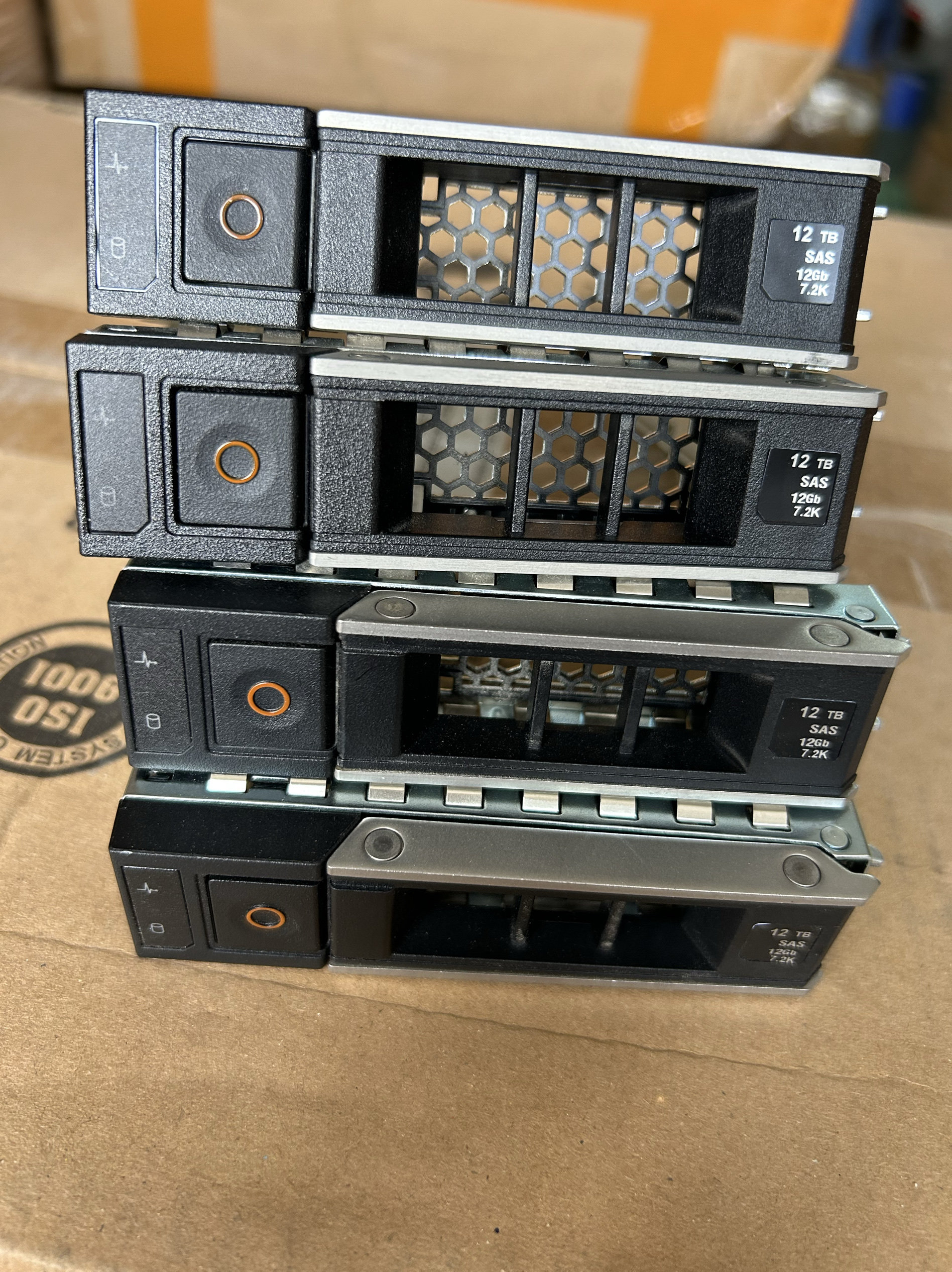
Independent maintenance providers maintain extensive, globally distributed supply chains and secondary parts inventories. They specialize in sourcing certified, tested-working OEM replacement parts—ranging from legacy RAID controllers and power supply units to specific enterprise-grade SAS hard drives. Rigorous testing protocols ensure that replacement components match the exact technical specifications required by the host Dell chassis.
7. Gaining Flexibility Through Co-Terminous Contracts and Audits
Enterprise hardware procurement happens incrementally. Organizations purchase new Dell servers throughout the year, resulting in a fragmented landscape of warranty start and end dates. Managing these rolling renewals places an administrative burden on IT procurement teams.
Independent maintainers accommodate co-terminous contract structures, aligning all hardware assets onto a single, synchronized annual renewal date. Furthermore, flexible maintenance agreements permit dynamic asset scaling. Organizations can add new equipment or drop decommissioned servers mid-contract without facing punitive cancellation fees, ensuring the maintenance inventory accurately reflects the active data center footprint.
8. Navigating the Nuances of Firmware and Microcode Updates
A frequent point of debate regarding independent maintenance involves access to proprietary firmware, BIOS updates, and microcode patches. OEMs often tie firmware downloads to active service contracts or proprietary portals.
Organizations utilizing independent support must adopt strategic firmware management practices:
- Baseline Establishment: Lock down stable, tested firmware versions for Dell servers and storage controllers before transitioning off OEM support.
- Public Repository Access: Many critical security patches and driver updates remain publicly accessible via Dell's support drivers and downloads portal without requiring an active warranty entitlement.
- Proactive Patching: Coordinate with the third-party provider to verify that microcode levels are stable and compatible with target hypervisors and operating systems during onboarding.
9. Implementing Rigorous Onboarding and Asset Discovery Audits
Transitioning from an OEM warranty to an independent maintenance provider requires a structured onboarding process. A successful shift depends on accurate data regarding asset inventory, exact configurations, and current hardware health.
Independent providers typically conduct an initial technical audit during onboarding. This process inventories every Dell server serial number, maps installed components (CPUs, RAM modules, expansion cards, power supplies), and verifies baseline operational status. Catching latent hardware faults—such as degraded redundant power supplies or failing cache battery units—before the contract officially begins prevents disputes over pre-existing conditions.
10. Understanding Remote Monitoring and Diagnostics Integration
Modern enterprise hardware relies heavily on telemetry, automated health reporting, and remote management tools. For Dell environments, integration with tools like Integrated Dell Remote Access Controller (iDRAC) is vital for rapid fault isolation.
Reputable third-party maintenance providers integrate their support ticketing systems with automated monitoring tools. When a hardware fault occurs—such as a predictive drive failure or a fan speed anomaly—the iDRAC platform can automatically generate an alert that reaches the independent provider's helpdesk, initiating parts dispatch and engineer scheduling without manual intervention from internal IT staff.
11. Comparing OEM and Independent Support Models
Evaluating the operational and financial impact of independent support requires a clear comparison between standard manufacturer warranties and third-party maintenance agreements.
| Feature / Criteria | OEM Support (e.g., Dell ProSupport) | Third-Party Maintenance (TPM) |
|---|---|---|
| Pricing Structure | High, premium rates; steep increases upon EOL/EOSL | Cost-effective; typically 40% to 70% lower than OEM |
| Hardware Lifespan | Discouraged past official EOSL dates; encourages upgrades | Extended indefinitely through secondary parts sourcing |
| Contract Flexibility | Rigid terms; standardized SLAs across all assets | Highly customizable SLAs and co-terminous billing |
| Multi-Vendor Support | Limited primarily to OEM-branded gear | Consolidated support across servers, storage, and networking |
| Engineering Tiering | Script-driven tiered support models | Direct access to senior field engineers |
| Asset Scalability | Penalties or complex procedures for mid-term changes | Dynamic scaling (add/drop assets easily) |
12. Mitigating Risks and Auditing Provider Credentials
While independent maintenance delivers substantial financial and operational benefits, partnering with the right provider is critical. The market includes various vendors, ranging from boutique regional operators to large global enterprises.
To mitigate operational risk, IT leaders should evaluate potential providers against specific criteria:
- Parts Inventory Quality: Verify whether the provider maintains local, regional, and global spare parts depots stocked with authentic, tested-working OEM components.
- Engineer Certification: Confirm that field engineers hold relevant certifications (such as Dell hardware accreditations, CompTIA Server+, or vendor-specific credentials).
- Escalation Pathways: Review the provider's contractual escalation matrix, guaranteed response times, and onsite dispatch procedures.
- Client References: Request case studies and references from organizations operating similar Dell data center footprints under the provider's care.
Frequently Asked Questions
Will using a third-party maintainer void my Dell hardware warranty?
Using a third-party maintenance provider does not void an active Dell manufacturer warranty. Under consumer and commercial protection regulations, hardware owners possess the right to service and maintain their equipment using independent providers. However, TPM contracts are typically deployed after the initial OEM warranty or ProSupport agreement has expired. If a server is still under original factory warranty, maintaining OEM coverage is standard practice until that period concludes.
How do third-party maintainers handle critical firmware and BIOS updates?
While OEMs often restrict access to certain proprietary firmware updates to active warranty holders, many essential security patches, drivers, and diagnostic utilities remain accessible through public channels or can be acquired prior to transitioning off OEM support. Furthermore, enterprise hardware operating on stable, production-tested firmware rarely requires frequent updates unless addressing a specific security vulnerability or hardware compatibility requirement.
Can I mix OEM support and third-party maintenance within the same data center?
Yes. A co-existence strategy is a common enterprise practice. Organizations frequently keep mission-critical, newly purchased Dell servers under OEM ProSupport while moving older, stable out-of-warranty servers, storage arrays, and networking gear to an independent maintenance provider. This hybrid model optimizes IT spend by directing premium OEM dollars only to assets that truly require manufacturer-level intervention.
What happens if a rare or obsolete part fails and cannot be found immediately?
Reputable independent maintenance providers maintain deep global logistics networks and secondary parts markets specifically designed to source legacy and obsolete hardware. Contracts typically include clauses outlining guaranteed parts availability and remedies—such as providing a higher-spec loaner component or system upgrade at no additional cost—if an exact replacement part is temporarily backordered.
How do I transition my Dell server inventory to a third-party provider?
The transition process begins with a comprehensive hardware audit. The independent provider inventories all Dell assets, records serial numbers, maps configurations, and verifies baseline system health. Once baseline checks are complete, support operations transition to the provider's helpdesk, and automated monitoring integrations (such as iDRAC alerts) are configured to ensure seamless incident reporting.
Maximizing the lifecycle of enterprise Dell infrastructure requires moving beyond rigid OEM support cycles. By leveraging independent maintenance strategies, organizations can control operating expenses, customize service levels, and maintain reliable data center operations well past official hardware retirement dates.