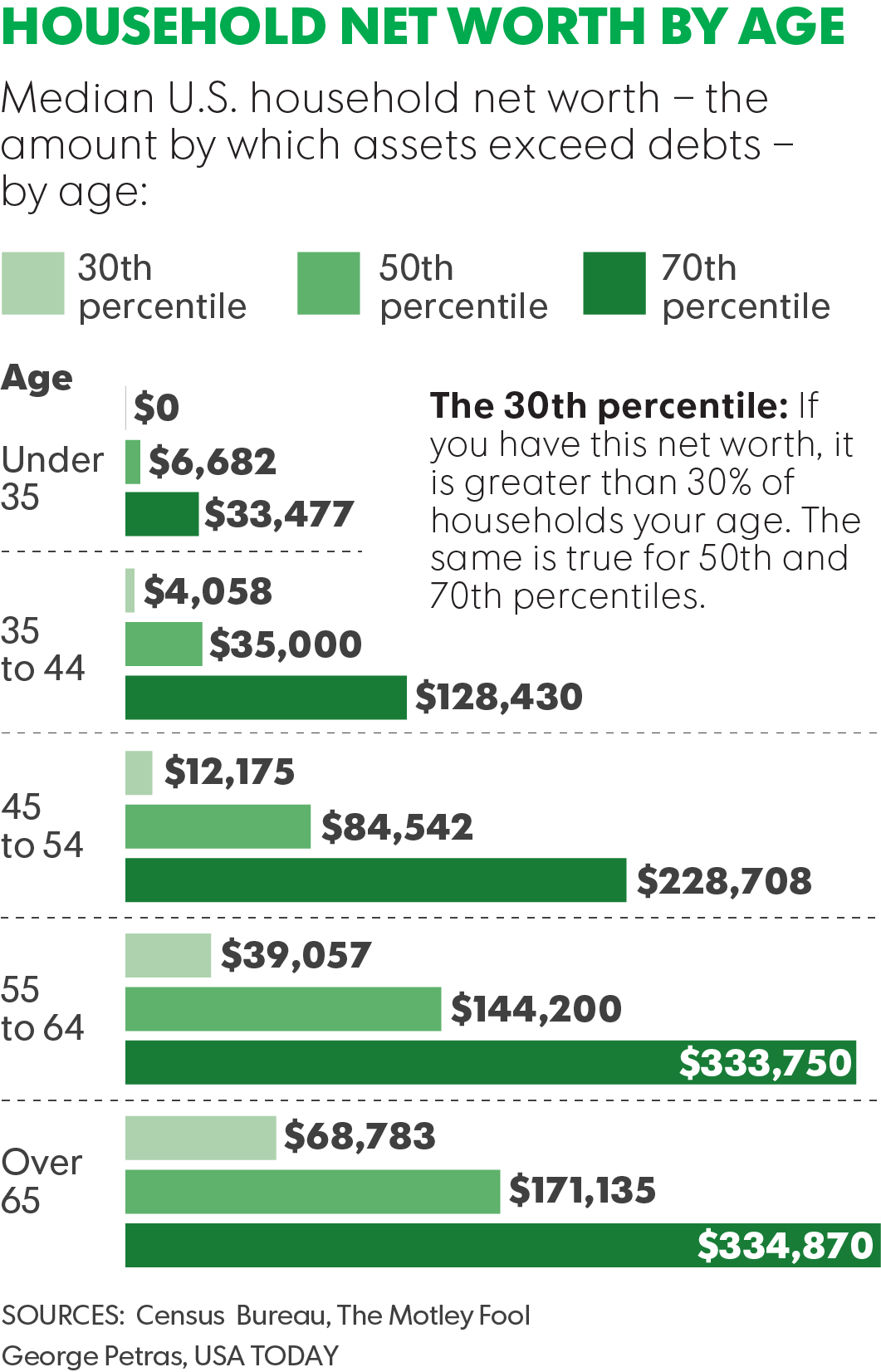
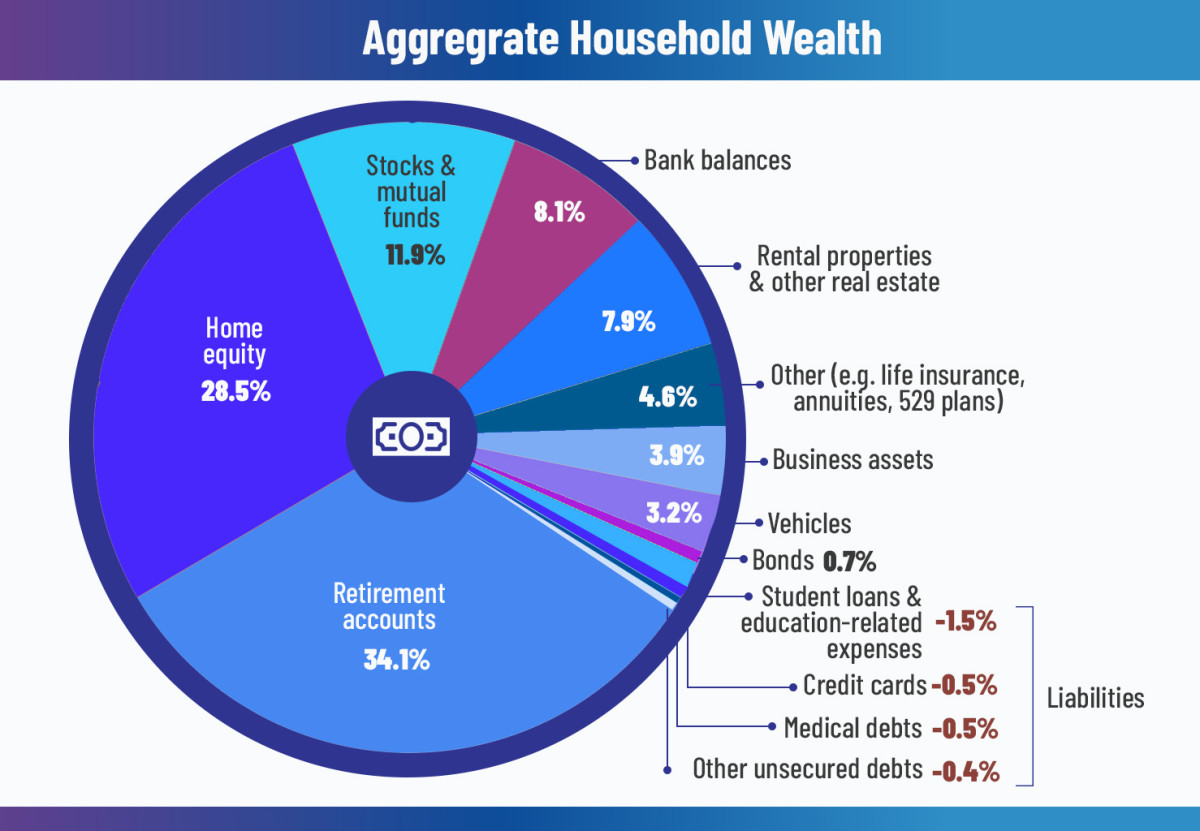
Reaching the top 1 percent net worth threshold by age requires a clear understanding of macroeconomic wealth data, disciplined asset accumulation, and long-term financial planning. Financial research from sources such as the Federal Reserve’s Survey of Consumer Finances indicates that top-tier wealth requirements scale dramatically across different life stages, shifting from under $1 million for younger demographics to well over $10 million for older, established households.
Defining Net Worth and the Top 1 Percent Threshold
Net worth represents the total value of everything a person or household owns, minus all outstanding liabilities. To calculate net worth accurately, you must aggregate liquid assets, real estate equity, retirement accounts, business valuations, and personal property, then subtract mortgages, student loans, credit card debt, and other financial obligations.
The concept of the "1 percent" refers to households whose total net worth places them in the 99th percentile of the population distribution. Because wealth accumulates over decades through compounding interest, business growth, and real estate appreciation, the threshold varies significantly depending on age. Younger demographics generally exhibit lower net worth thresholds due to shorter accumulation windows, whereas older cohorts have had decades to build equity, invest in markets, and scale enterprises.
Understanding these benchmarks requires looking beyond gross income. While a high annual salary can accelerate wealth-building, net worth depends heavily on savings rates, investment choices, and liability management. A high earner with substantial consumer debt may possess a lower net worth than a modest earner with a fully paid-off home and a disciplined investment portfolio.
Breakdown of 1 Percent Net Worth by Age Group
Wealth distribution data from comprehensive financial surveys reveals distinct tiers across generational cohorts. Because economic conditions, market cycles, and inheritance patterns influence these numbers, tracking net worth by age provides a more accurate picture than a single national average.
Young Adults and Early Career Professionals (Under 35)
For individuals under the age of 35, the 1 percent net worth threshold is substantially lower than it is for older demographics. At this stage of life, most people are early in their careers, paying off education debt, and purchasing their first homes.
- Estimated Threshold: Typically ranges from $200,000 to $500,000, depending on economic adjustments and regional cost of living.
- Primary Wealth Drivers: High-paying technical or financial careers, early equity compensation from startups, aggressive initial savings rates, and family assistance or inheritances.
- Common Obstacles: Student loan debt, entry-level salaries, high rental or housing acquisition costs, and limited investment compounding time.
Prime Earning Years (Ages 35 to 44)
As professionals move into their mid-30s and early 40s, income potential typically peaks, and early investments begin to compound visibly. Real estate equity also increases as primary mortgages are paid down.
- Estimated Threshold: Generally falls between $1.5 million and $2.5 million.
- Primary Wealth Drivers: Career advancement into senior management or specialized practices, stock options, business ownership, and growing retirement accounts.
- Common Obstacles: Family formation costs, child care expenses, lifestyle creep, and upgrading to larger primary residences with larger mortgages.
Peak Wealth Accumulation (Ages 45 to 54)
During the decade between 45 and 54, households often hit their highest earning and saving capacity. Children may be approaching college age, but foundational assets like primary homes are well-established.
- Estimated Threshold: Frequently spans $3 million to $5 million.
- Primary Wealth Drivers: Multi-decade investment portfolios, scaling business revenues, real estate portfolios, and executive compensation packages.
- Common Obstacles: College tuition funding, peak lifestyle expenses, and balancing aggressive wealth generation with risk management.
Pre-Retirement and Retirement Transition (Ages 55 to 64)
Entering the pre-retirement phase shifts the focus from aggressive accumulation to capital preservation, tax optimization, and estate planning. Net worth figures reach their apex in this bracket for many families.
- Estimated Threshold: Ranges from $5 million to $8 million or more.
- Primary Wealth Drivers: Decades of compounded investment returns, fully amortized real estate, mature business exits, and maximized employer-sponsored retirement plans.
- Common Obstacles: Healthcare cost projections, sequence-of-returns risk, and navigating complex tax laws surrounding retirement account withdrawals.
Established Retirement (Ages 65 and Older)
For those aged 65 and older, the 1 percent net worth threshold represents a lifetime of earnings, investments, and intergenerational asset transfers.
- Estimated Threshold: Exceeds $10 million in many comprehensive economic datasets.
- Primary Wealth Drivers: Fully realized business ventures, diversified global portfolios, inherited wealth, and long-held real estate holdings.
- Common Obstacles: Required Minimum Distributions (RMDs), estate tax liabilities, healthcare and long-term care costs, and inflation risks.
| Age Group | Estimated 1 Percent Net Worth Threshold | Primary Financial Focus | Major Asset Classes |
|---|---|---|---|
| Under 35 | $200,000 – $500,000 | Debt management & career scaling | Cash, starter home equity, early retirement accounts |
| 35 to 44 | $1.5 million – $2.5 million | Aggressive investing & equity growth | Real estate, stocks, business equity |
| 45 to 54 | $3 million – $5 million | Portfolio diversification & peak earnings | Equities, commercial real estate, business assets |
| 55 to 64 | $5 million – $8 million | Capital preservation & tax strategy | Diverse portfolios, bonds, mature real estate |
| 65+ | $10 million+ | Estate planning & wealth transfer | Multi-generational trusts, equities, fixed income |
Key Drivers of Top-Tier Wealth Accumulation
Reaching the 99th percentile of net worth is rarely the result of a single paycheck or a lucky investment. It requires a systemic approach to capital allocation, asset protection, and income generation. Examining how high-net-worth individuals build and sustain their wealth reveals several consistent pillars.
High Savings and Investment Rates
The foundational element of top-tier wealth is the gap between income and consumption. High-net-worth individuals frequently maintain savings rates that exceed 30 to 50 percent of their gross income. Rather than inflating their lifestyle in direct proportion to their earnings, they funnel surplus capital into income-producing assets. This disciplined reinvestment harnesses the power of compound interest over decades.
Business Ownership and Equity Compensation
While traditional employment can yield financial security, reaching the 1 percent threshold often requires ownership stakes in businesses or significant equity compensation. Founders, early-stage employees with stock options, and successful small-business owners capture disproportionate economic upside when their enterprises scale or achieve liquidity events.
Strategic Real Estate Portfolios
Real estate serves as both a hedge against inflation and a vehicle for forced savings through mortgage amortization. Wealthy households typically own their primary residences outright or hold substantial equity in them, while also expanding into commercial real estate, multi-family residential properties, or real estate investment trusts (REITs) to diversify income streams.
Tax-Efficient Wealth Structuring
Minimizing tax liabilities is just as important as generating income. High earners utilize tax-advantaged accounts, trusts, charitable remainder vehicles, and strategic asset location (placing tax-inefficient assets in tax-sheltered accounts) to preserve capital that would otherwise be lost to federal, state, and local taxes.
Common Misconceptions About the Top 1 Percent
Public perception of wealth is often shaped by media portrayals that emphasize extreme outliers, celebrity lifestyles, or sudden windfalls. However, empirical financial data paints a different picture of how the top 1 percent operates.
- Misconception 1: High income equals high net worth. Income is a flow variable, whereas net worth is a stock variable. A person earning $1 million annually who spends $1.1 million has a negative net worth. Conversely, a disciplined household earning $150,000 annually can reach high-net-worth status over 25 years through consistent frugality and investing.
- Misconception 2: Inherited wealth is the sole driver. While generational wealth plays a role for a segment of the top 1 percent, studies of high-net-worth individuals consistently show that the vast majority are first-generation wealth builders who relied on professional careers, entrepreneurship, and disciplined saving.
- Misconception 3: Speculative trading builds wealth. Mainstream financial data indicates that sustainable wealth is built through broad-market indexing, long-term real estate holding, and private enterprise, rather than day trading, cryptocurrency speculation, or high-risk leverage.
Frequently Asked Questions
What is the exact national net worth required to be in the top 1 percent?
The exact figure varies based on the data source, such as the Federal Reserve's Survey of Consumer Finances or wealth-management research reports. Nationally across all ages, the threshold generally hovers around $11 million to $13 million for a household, but this number drops significantly when examining younger age brackets.
Does primary home equity count toward net worth calculations?
Yes, primary home equity—calculated as the current market value of the property minus the remaining mortgage balance—is a standard component of net worth. However, financial planners often distinguish between liquid net worth (cash, stocks, bonds) and total net worth when evaluating retirement readiness.
How does geographic location affect the 1 percent threshold?
Cost of living and regional economic output create wide disparities in wealth thresholds. The net worth required to enter the top 1 percent in high-cost metropolitan areas like San Francisco or New York City is notably higher than the threshold in smaller cities or rural counties.
Can someone reach the top 1 percent with a standard salary?
While difficult on an average median salary due to math and compounding limits, individuals with upper-middle-class professional salaries (such as specialized physicians, software engineers, or corporate attorneys) frequently reach the 1 percent threshold later in life if they maintain high savings rates and invest aggressively over a 30-year career.
What is the difference between net worth percentiles and income percentiles?
Income percentile measures how much money a household earns in a single calendar year, whereas net worth percentile measures the total accumulated value of all assets minus liabilities built up over a lifetime. A newly graduated doctor might sit in a high income percentile immediately, but their net worth may be negative due to medical school debt.
Practical Next Actions for Wealth Building
Accelerating your progress toward long-term financial benchmarks requires a structured, measurable approach rather than passive observation. Implement the following steps to evaluate and strengthen your financial position:
- Calculate Your Current Net Worth: List all liquid accounts, investments, real estate values, and physical assets. Subtract all short-term and long-term liabilities to establish your accurate baseline figure.
- Determine Your Savings Rate: Audit your past 12 months of income and expenses to calculate the exact percentage of take-home pay you are successfully converting into investments or debt reduction.
- Optimize Asset Allocation: Review your investment portfolio to ensure it matches your risk tolerance, time horizon, and long-term financial goals, minimizing unnecessary fees and cash drag.
- Consult Qualified Professionals: Engage certified financial planners, certified public accountants (CPAs), and estate attorneys to build a comprehensive tax strategy and protect your accumulated capital as your net worth scales.