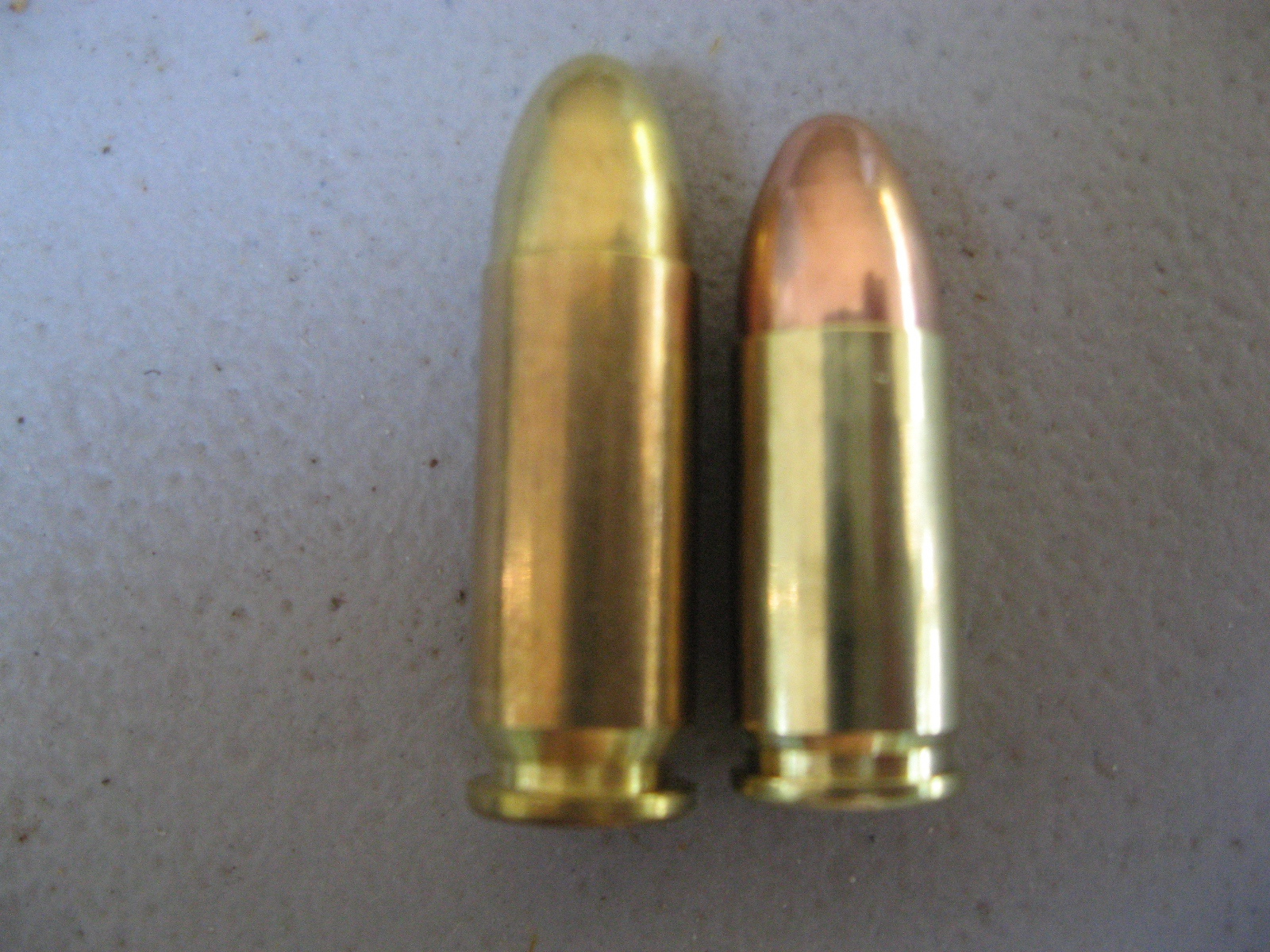
The only clear difference between 9mm and 9mm Luger is the name itself; they are physically and functionally the same cartridge. In the firearms industry, "9mm Luger" is the official technical designation for the 9x19mm Parabellum, while "9mm" is simply the common shorthand used by shooters and retailers.
Confusion surrounding the 9mm cartridge family is common because the number "9mm" refers to the diameter of the projectile, but many distinct cartridges share that same diameter while possessing different case lengths and pressure specifications. When you see a box of ammunition labeled "9mm Luger" and another labeled simply "9mm," they are interchangeable and designed to be fired from the same handguns. However, understanding why these names exist and how to distinguish them from other "9mm" variants—like the 9mm Kurz or 9mm Makarov—is essential for safe firearm operation.
The Origins of the 9mm Luger Name
To understand why we have two names for the same round, we have to look back to the early 20th century. The cartridge was designed by Georg Luger in 1902. Luger was an Austrian designer working for the German firearms manufacturer Deutsche Waffen- und Munitionsfabriken (DWM). He developed the round as an evolution of his previous 7.65x21mm Parabellum cartridge.
The term "Luger" was applied to the cartridge primarily in the United States to associate the ammunition with the famous Luger P08 pistol that used it. In Europe and within military circles, the round is more frequently referred to as the 9x19mm Parabellum. The word "Parabellum" comes from the DWM motto: Si vis pacem, para bellum, which translates from Latin to "If you want peace, prepare for war."
By 2026, the 9mm Luger has cemented itself as the most popular handgun caliber in the world. Whether it is used by the U.S. military (standardized as the 9mm NATO), law enforcement agencies, or millions of concealed carry permit holders, the cartridge remains the industry standard. The "Luger" suffix serves as a tribute to its creator and a way for the Sporting Arms and Ammunition Manufacturers' Institute (SAAMI) to standardize the name for the American market.
Technical Specifications of the 9x19mm
The technical specifications of the 9mm Luger are strictly defined by two major bodies: SAAMI in the United States and the Commission Internationale Permanente (CIP) in Europe. These organizations ensure that a round of 9mm Luger manufactured by one company will safely fit and fire in a pistol manufactured by another.
Case and Projectile Dimensions
The "9x19" designation tells you exactly what the cartridge is. The projectile is approximately 9mm in diameter (specifically .355 inches), and the brass casing is 19.15mm long. The case is slightly tapered, meaning it is wider at the base than at the mouth. This taper is a critical design feature that assists in reliable feeding and extraction in semi-automatic firearms.
Pressure Ratings
The standard 9mm Luger cartridge is rated for a maximum pressure of 35,000 psi according to SAAMI standards. This pressure level allows the round to achieve significant muzzle energy while remaining manageable for shooters of various skill levels. Over the decades, variations such as 9mm +P (Overpressure) have been introduced, which increase the pressure to roughly 38,500 psi to achieve higher velocities. Despite the pressure difference, the external dimensions of a 9mm Luger and a 9mm Luger +P remain identical.
Why the Nomenclature Confusion Persists
The reason people search for the "difference" between 9mm and 9mm Luger is that "9mm" is often used as an umbrella term for several cartridges that are NOT compatible. This is where the nomenclature becomes a safety issue. If you walk into a gun store and ask for "9mm," the clerk will almost certainly hand you 9mm Luger. However, if you own a firearm chambered for a different 9mm variant, using the wrong ammunition can result in a failure to fire or, in some cases, a catastrophic weapon failure.
The Problem with "9mm" Shorthand
In the United States, "9mm" is used so ubiquitously to refer to 9mm Luger that many new shooters are unaware that other 9mm cartridges exist. This shorthand is efficient for experienced shooters, but it lacks the precision required for technical safety. In contrast, European manufacturers and enthusiasts tend to be more specific, almost always using "9x19mm" to avoid any ambiguity.
Other 9mm Cartridges (That are NOT 9mm Luger)
While 9mm and 9mm Luger are the same, there are several other rounds that use a 9mm projectile but have different case dimensions. These are the rounds you must be careful not to confuse with standard 9mm Luger ammunition.
9mm Kurz (.380 ACP)
The 9mm Kurz (which means "short" in German) is better known in the U.S. as the .380 ACP. While the bullet diameter is the same as the 9mm Luger, the case length is only 17mm. This round is significantly less powerful and is typically used in smaller, pocket-sized handguns. You cannot fire a 9mm Kurz in a 9mm Luger handgun reliably, nor should you attempt to fire a 9mm Luger in a .380 ACP handgun.
9mm Makarov (9x18mm)
Common in Eastern European and surplus military firearms, the 9mm Makarov uses an 18mm case. Crucially, the bullet diameter is actually slightly larger than 9mm (.365 inches instead of .355 inches). Because the bullet is wider, it will not chamber properly in a 9mm Luger firearm, and forcing it could result in dangerous pressure spikes.
9mm IMI (9x21mm)
This variant was created for countries where civilian ownership of military calibers (like the 9x19mm) was restricted. The case is 2mm longer than the 9mm Luger, though the overall length of the cartridge is often the same because the bullet is seated deeper.
9mm Browning Long (9x20mm)
An older, largely obsolete cartridge used in early semi-automatic pistols like the FN Model 1903. It is longer than the 9mm Luger and operates at lower pressures.
9mm NATO vs. 9mm Luger
Another common point of confusion is the 9mm NATO. While it is physically a 9x19mm round and will fit into any 9mm Luger chamber, the 9mm NATO is loaded to higher pressures than standard civilian 9mm Luger.
The NATO specification is roughly equivalent to a "9mm Luger +P" load. While most modern, high-quality 9mm pistols are rated to handle NATO-spec ammunition, older or smaller "sub-compact" firearms might experience accelerated wear or damage if fed a steady diet of 9mm NATO. You can identify 9mm NATO brass by the "circle-cross" headstamp on the bottom of the casing, which signifies compliance with military standards.
Identifying the Correct Ammunition
To ensure you are using the correct ammunition, you must always refer to the markings on the firearm itself. Manufacturers typically stamp the specific caliber on the barrel or the slide.
- Check the Barrel/Slide: Look for "9mm Luger," "9x19," or "9mm Parabellum." If the gun says "9mm Kurz" or "9mm Browning," do not use 9mm Luger.
- Verify the Box: Check the ammunition packaging for the SAAMI or CIP seal. The box should clearly state "9mm Luger" or "9x19mm."
- Inspect the Headstamp: The bottom of the cartridge casing (the headstamp) usually indicates the caliber. It will typically say "9mm Luger," "9mm L," or "9x19."
Comparison Table: 9mm Luger vs. Common 9mm Variants
| Cartridge Name | Common Alias | Case Length | Bullet Diameter | Pressure (SAAMI/CIP) |
|---|---|---|---|---|
| 9mm Luger | 9x19mm / 9mm Parabellum | 19.15 mm | .355 in | 35,000 psi |
| 9mm NATO | Military 9x19mm | 19.15 mm | .355 in | ~36,500 psi |
| 9mm Kurz | .380 ACP / 9x17mm | 17.00 mm | .355 in | 21,500 psi |
| 9mm Makarov | 9x18mm | 18.10 mm | .365 in | 24,103 psi |
| 9mm IMI | 9x21mm | 21.00 mm | .355 in | 35,000 psi |
The Role of 9mm Luger in 2026
As of 2026, the 9mm Luger remains the dominant force in the global ammunition market. Its popularity is driven by several factors that have only become more pronounced over time:
- Capacity: Because the 9mm Luger is relatively compact, modern handguns can carry a high volume of rounds (often 15 to 21 rounds in a standard magazine) compared to larger calibers like .45 ACP.
- Recoil Management: The 9mm Luger offers a balance of power and low recoil, making it the preferred choice for training, competition, and self-defense.
- Ballistic Technology: Advances in projectile design, specifically bonded jacketed hollow points (JHP), have allowed the 9mm Luger to match the terminal performance of much larger rounds. By 2026, the gap in "stopping power" between 9mm and larger calibers has been effectively closed by engineering.
- Cost and Availability: Due to the massive scale of production, 9mm Luger is generally the most affordable centerfire handgun ammunition available.
Common Mistakes When Buying Ammunition
Even with the knowledge that 9mm and 9mm Luger are the same, shoppers often make mistakes due to deceptive or unclear labeling.
Assuming all 9mm is the same: This is the most dangerous mistake. As noted above, 9mm Makarov and 9mm Kurz are distinct rounds. Always look for the word "Luger" or the dimensions "9x19" on the box.
Confusing 9mm Luger with 9mm Largo: 9mm Largo is an old Spanish cartridge (9x23mm). It is much longer than 9mm Luger and is found primarily in vintage pistols like the Star Model B or Astra 400. It will not work in a standard 9mm pistol.
Ignoring +P Ratings: Just because the box says "9mm Luger" doesn't mean your gun can handle it if it also says "+P." Always verify that your specific firearm model is rated for high-pressure loads before use.
FAQs About 9mm and 9mm Luger
Can I use 9mm Luger in a gun that just says "9mm"?
Yes. In almost every case, if a modern semi-automatic pistol is stamped "9mm," it is designed for 9mm Luger (9x19mm). However, you should double-check the owner's manual to be certain, as some older European pistols might have specific requirements.
Is 9mm Parabellum different from 9mm Luger?
No, they are identical. 9mm Parabellum is the original name used by DWM, while 9mm Luger is the name standardized by SAAMI for the American market. They are the exact same physical cartridge.
Why is 9mm Luger so much more common than other 9mm rounds?
The 9mm Luger offers the ideal "sweet spot" for semi-automatic handguns. It provides enough energy to be effective for military and police use while being small enough to allow for high magazine capacities and manageable recoil. Its adoption by NATO as a standard sidearm caliber solidified its global dominance.
Can I fire 9mm NATO in my 9mm Luger handgun?
Generally, yes. Most modern handguns built by reputable manufacturers are designed to withstand the slightly higher pressures of NATO-spec 9mm. However, if you have an older firearm, a budget-tier pistol, or an ultra-compact "pocket" 9mm, you should check with the manufacturer before using NATO-stamped ammunition.
What happens if I try to fire .380 ACP in a 9mm Luger gun?
The .380 ACP (9mm Kurz) case is shorter than the 9mm Luger. Because the 9mm Luger is a "rimless" cartridge that headspaces on the mouth of the case, a .380 round will likely slip too far into the chamber. This usually results in a failure to fire because the firing pin cannot reach the primer, or it can cause a dangerous malfunction where the casing ruptures.
Final Recommendation for Shooters
When purchasing ammunition or firearms in 2026, the key is specificity. While you can safely assume that "9mm" refers to "9mm Luger" in a general context, you should always verify the technical specifications (9x19mm) before loading your weapon. If you are a new gun owner, stick to ammunition clearly labeled "9mm Luger" to avoid any risk of accidentally purchasing incompatible variants like 9mm Makarov or .380 ACP. By adhering to the markings on your firearm's barrel and the labels on your ammunition box, you ensure both the longevity of your firearm and your personal safety.