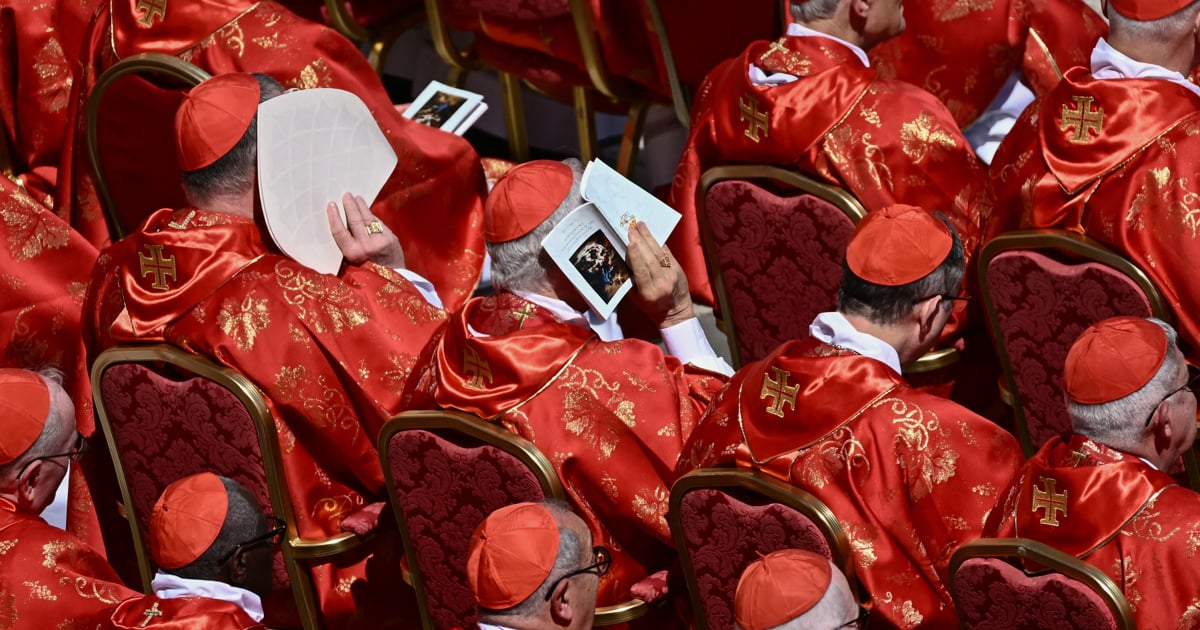
Cardinals are not permitted to smoke in church settings, including the interiors of basilicas, chapels, and areas where liturgical functions occur. This prohibition is rooted in a combination of Vatican State law, universal Canon Law regarding the sanctity of sacred spaces, and health-focused decrees issued by recent Popes. While some historical exceptions existed for private use, modern regulations strictly forbid tobacco use in any public or sacred ecclesiastical environment.
The Legal Framework: Vatican Law and Canon Law
The primary restriction preventing Cardinals and all other clergy from smoking in church settings is established through both civil and ecclesiastical law. In the context of the Vatican City State—where the College of Cardinals frequently operates—the most definitive regulation is Law n. CCCXCI, enacted in 2002 under the pontificate of Pope John Paul II. This law strictly prohibits smoking in all enclosed public places, which includes the interior of every church and chapel within the Vatican's jurisdiction.
Beyond the civil laws of the Vatican State, the Code of Canon Law provides a broader theological and legal basis for this restriction. Canon 1210 states that "only those things which serve the exercise or promotion of worship, piety, or religion are permitted in a sacred place; anything not in accord with the holiness of the place is forbidden." Because smoking is a secular, recreational habit that produces physical waste and potentially offensive odors, it is viewed as discordant with the "holiness of the place."
For a Cardinal, whose role is to be a close advisor to the Pope and a "Prince of the Church," adhering to these laws is not merely a matter of legal compliance but of clerical discipline. The expectation of "modeling" appropriate behavior in sacred spaces is paramount. In 2026, the interpretation of these laws has only become more stringent as the Church continues to emphasize the connection between physical health and spiritual stewardship.
Historical Context: From Acceptance to Prohibition
The relationship between the Catholic hierarchy and tobacco has evolved significantly since the plant was first introduced to Europe from the Americas. In the 16th and 17th centuries, tobacco use—particularly in the form of snuff—was relatively common among the clergy. It was often used for its supposed medicinal properties or as a stimulant during long hours of study and prayer.
However, conflicts regarding the use of tobacco in church settings arose early. In 1624, Pope Urban VIII issued a decree threatening excommunication for anyone who used tobacco in the churches of the Diocese of Seville, specifically because the practice of sneezing (associated with snuff) and the residue left behind were seen as disrespectful to the Blessed Sacrament. This was later expanded to a more general discouragement of tobacco in sacred spaces.
In contrast, Pope Benedict XIII, who reigned in the early 18th century and was a smoker himself, rescinded some of these penalties, though he maintained that the dignity of the liturgy must be preserved. Throughout the 19th and early 20th centuries, it was not uncommon to find Cardinals who smoked cigars or pipes in their private residences or offices. However, the specific "church setting"—the nave, the sanctuary, and the sacristy—remained largely tobacco-free out of respect for the presence of the Eucharist and the solemnity of the Mass.
The Modern Turning Point: Pope Francis and Tobacco Sales
While the 2002 ban addressed the act of smoking in public buildings, a major shift occurred in 2018 when Pope Francis ordered a total ban on the sale of cigarettes within Vatican City. Prior to this, Vatican employees and diplomats (including Cardinals) could purchase cigarettes at a discounted, tax-free rate.
The Holy See Press Office stated at the time that the reason for this move was simple: "The Holy See cannot contribute to an activity that clearly damages the health of people." This move significantly impacted the culture within the Roman Curia. If the Church considers the sale of tobacco to be unethical because of its health risks, the act of smoking by a high-ranking official like a Cardinal in a church setting would be seen as a direct contradiction of the Pope’s magisterial emphasis on the "integrity of the human person."
By 2026, this policy has matured into a broader ecclesiastical culture where tobacco use is increasingly rare among the College of Cardinals. The focus has shifted toward "integral ecology," a concept popularized by the encyclical Laudato si', which suggests that caring for one’s body (the "Temple of the Holy Spirit") is an essential part of caring for God’s creation.
The Conclave: A Unique Church Setting
One of the most specific "church settings" where the question of smoking arises is the Papal Conclave, held within the Sistine Chapel. Historically, the Conclave was a high-stress environment where Cardinals were locked in for days or even weeks. During the 20th century, it was whispered that some Cardinals would smoke to calm their nerves during the intense deliberations.
However, modern regulations have effectively ended this. The Sistine Chapel is not only a sacred space but also a protected UNESCO World Heritage site. The smoke from tobacco would pose a severe threat to the preservation of Michelangelo’s frescoes. Furthermore, the strict secrecy and protocols of the modern Conclave, updated by Pope John Paul II in the Apostolic Constitution Universi Dominici Gregis, emphasize the need for a dignified and prayerful atmosphere.
In recent Conclaves, Cardinals have been housed in the Domus Sanctae Marthae, a modern guesthouse. While this is not a "church" in the liturgical sense, the smoking bans of the Vatican State apply to the common areas and rooms of this facility as well. Consequently, even during the election of a Pope, a Cardinal would find it nearly impossible to smoke without violating both civil law and the specific norms governing the election process.
Liturgical Incense vs. Tobacco Smoke
A common point of confusion for those outside the Church is the use of incense during Catholic services. If the Church bans "smoke" in the form of tobacco, why does it fill the air with "smoke" in the form of incense?
The distinction is purely theological and functional:
- Purpose: Incense is a sacramental. According to the General Instruction of the Roman Missal, it signifies the "ascent of the Church’s prayers to God." Tobacco smoke is a personal habit with no religious significance.
- Composition: Liturgical incense is typically made of natural resins (like frankincense and myrrh) and is used in a controlled, ritualistic manner.
- Context: Incense is used to bless the altar, the Gospel, the bread and wine, and the congregation. It serves to engage the senses in a way that directs the mind toward the divine. Tobacco smoke, conversely, is seen as a distraction that appeals to a physical craving.
Because incense is a vital part of the liturgy, it is the only "smoke" legally and traditionally permitted within a church setting. Any other airborne pollutant, especially tobacco, is viewed as a contamination of this sacred atmosphere.
Comparison of Historical and Modern Regulations
The following table outlines the progression of tobacco regulations within the Vatican and the Catholic Church over the centuries.
| Era/Pope | Regulation Type | Scope and Impact |
|---|---|---|
| 1624 (Urban VIII) | Papal Decree | Threatened excommunication for tobacco use in certain Spanish cathedrals to prevent profaning the Eucharist. |
| 1725 (Benedict XIII) | Relaxation | Lifted some penalties for snuff use but maintained decorum for liturgical celebrations. |
| Early 20th Century | Tradition/Custom | Smoking in private clerical offices was common; strictly avoided during Mass and in the sanctuary. |
| 2002 (John Paul II) | Vatican Law | Enacted Law n. CCCXCI, banning smoking in all public indoor spaces and places of worship in Vatican City. |
| 2018 (Pope Francis) | Sales Ban | Prohibited the sale of all tobacco products within the Vatican to uphold health ethics. |
| 2026 (Current Status) | Universal Practice | Strict adherence to indoor bans; tobacco use widely viewed as incompatible with clerical health directives. |
Theological Justification: The Body as a Temple
The theological reasoning behind the prohibition of smoking in church settings extends beyond simple decorum. It is deeply tied to the Pauline theology found in 1 Corinthians 6:19: "Do you not know that your bodies are temples of the Holy Spirit, who is in you, whom you have received from God?"
In the modern era, the Church has increasingly categorized smoking as a "vice" that can lead to addiction, which in turn diminishes a person's free will. For a Cardinal, who must exercise high levels of discernment and self-control, avoiding addictive behaviors is considered part of their spiritual discipline. When a Cardinal enters a church, they are entering a space dedicated to the "Bread of Life." Introducing a known carcinogen into that environment is seen as an affront to the sanctity of life and the purpose of the sacred space.
Furthermore, the "smell of the sheep," a phrase often used by Pope Francis to describe how priests should be close to their people, does not extend to the smell of tobacco. In contemporary ministry, being "approachable" means being free of habits that might alienate parishioners or set a poor example for the youth of the Church.
Exceptions and Private Settings
It is important to distinguish between "church settings" and "private quarters." A Cardinal who resides in a private apartment (either in Rome or in their home diocese) is technically in a private residence. While the Church strongly discourages smoking for health reasons, a Cardinal would not be "violating" Canon Law by smoking a cigar in his own living room, provided it does not cause scandal or interfere with his duties.
However, "church settings" are defined broadly. They include:
- The Nave and Sanctuary: Where the faithful gather for Mass.
- The Sacristy: Where the clergy vest and prepare for liturgy.
- The Rectory Offices: Where administrative work and pastoral counseling occur.
- Parish Halls: When being used for ecclesiastical or community gatherings.
In none of these areas would a Cardinal be permitted to smoke in 2026. The shift in social norms, combined with the clear direction of the last three papacies, has made smoking an activity that is strictly relegated to private, non-ecclesiastical spaces.
Frequently Asked Questions
Is vaping allowed for Cardinals in church?
No. While vaping does not produce traditional tobacco smoke, it falls under the same general prohibitions as smoking. Vatican Law n. CCCXCI and general liturgical norms prohibit any activity that is not related to worship or piety. Vaping is considered a secular distraction and a potential health risk, making it inappropriate for church settings.
Can a Cardinal smoke in the sacristy while vesting?
No. The sacristy is considered a sacred preparation area for the liturgy. Smoking in the sacristy would be a violation of the dignity of the space and could damage the liturgical vestments, which are often expensive and historically significant.
What happens if a Cardinal is caught smoking in a church?
There is no specific "tobacco police" for the College of Cardinals, but such an act would be a significant breach of protocol and clerical discipline. It would likely result in a private reprimand from the Dean of the College of Cardinals or the Secretariat of State. In the Vatican, it could also result in a civil fine under the 2002 smoking ban.
Did any recent Popes smoke?
Pope John XXIII was known to enjoy an occasional cigarette in private, and Pope Benedict XVI was reported to have enjoyed an occasional orange soda and, in his younger years, was not entirely averse to the social customs of his time. However, none of the recent Popes smoked in public or church settings, and all recent pontiffs have moved the Church toward a tobacco-free policy.
Are there any exceptions for "ceremonal" smoking?
In the Roman Catholic Church, there are no ceremonial uses of tobacco. All ritual "smoke" must come from approved incense. Some indigenous Catholic communities in the Americas have historically integrated tobacco into their prayer traditions, but this is not a practice recognized or permitted for Cardinals within the standard Roman Rite church settings.
Summary and Practical Implications
For those observing the College of Cardinals in 2026, it is clear that the era of the "smoking prelate" has come to an end. The prohibition is not merely a matter of modern "political correctness" but is a reflection of the Church's deepening commitment to the theology of the body and the preservation of sacred spaces.
If you are attending a ceremony where a Cardinal is present, or if you are visiting a basilica in Rome, you will not see tobacco use. The regulations are clear: the air in a church is reserved for the scent of incense and the breath of prayer. For any Cardinal, the path to holiness in the modern world includes a commitment to health and the respectful maintenance of the environments dedicated to God.