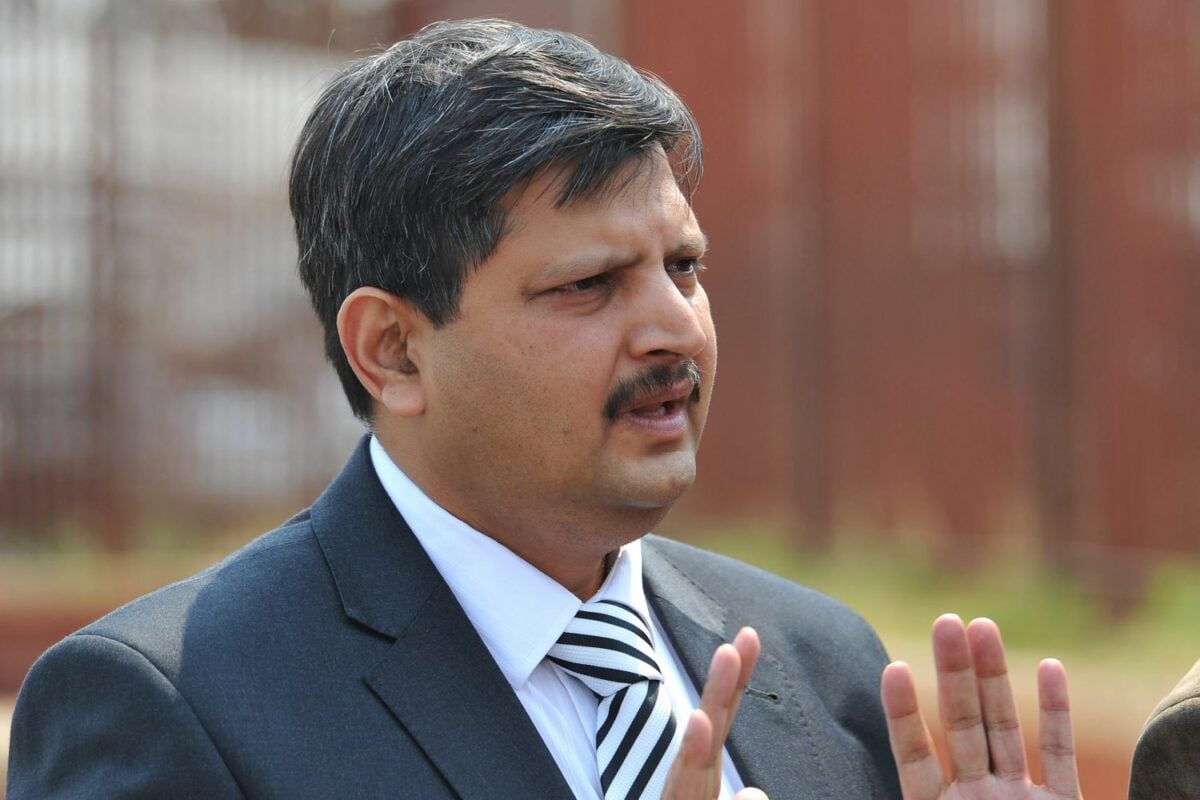
At its peak in 2016, Atul Gupta’s net worth was officially estimated at approximately R10.7 billion (roughly $770 million USD), making him the seventh-richest person in South Africa according to published wealth reports. Following extensive state capture investigations, international sanctions, asset seizures, and bank account closures, his accessible fortune has been drastically reduced, legally frozen, and largely obscured within offshore jurisdictions.
Understanding Atul Gupta’s Net Worth: Peak Valuations vs. Current Reality
Evaluating the net worth of Indian-born South African businessman Atul Gupta requires distinguishing between formal, publicly declared assets at the height of his commercial influence and his current, heavily restricted financial footprint. Unlike conventional corporate executives whose fortunes are anchored in liquid stock markets, real estate portfolios, and transparent institutional holdings, Atul Gupta’s wealth structure became deeply entangled with political patronage networks, state-owned enterprise contracts, and complex offshore transfers.
In December 2016, the South African Sunday Times Rich List named Atul Gupta as the seventh wealthiest businessman in South Africa, citing a net worth of R10.7 billion based on held shares in publicly traded entities like Oakbay Resources and Energy. Concurrently, broader estimations of the aggregate wealth held by the Gupta family—comprising brothers Ajay, Atul, and Rajesh "Tony" Gupta—ranged into several billions of US dollars when factoring in unlisted commercial interests, mining rights, real estate holdings, and private capital funneled internationally.
However, subsequent legal interventions severely disrupted this asset base. Between 2017 and 2021, major South African financial institutions cut ties with Gupta-linked entities, freezing local banking channels. International enforcement actions followed, including targeted sanctions by the U.S. Department of the Treasury and the UK Foreign, Commonwealth & Development Office, alongside court-ordered asset forfeitures in South Africa. As a result, while significant wealth remains hidden in international hubs such as the United Arab Emirates (UAE), Atul Gupta's operational and liquid net worth is heavily impaired, encumbered by legal freezes, and inaccessible through standard banking channels.
Early Commercial Foundations: From Saharanpur to South Africa
To understand how Atul Gupta built his multi-billion-rand empire, it is necessary to examine the family’s commercial migration and expansion during South Africa’s democratic transition in the early 1990s.
Atul Gupta arrived in South Africa from Saharanpur, Uttar Pradesh, India, in 1993—a pivotal moment marked by the end of apartheid and the opening of South Africa's economy to foreign trade and investment. Recognizing an underdeveloped market for consumer electronics and information technology, the family established Sahara Computers in Midrand, Gauteng, in 1994.
- 1993: Arrival in SA
- 1994: Sahara Computers Founded
- 2000s: Corporate Expansion
- 2010s: Oakbay Holdings & State Capture Peak
Sahara Computers quickly grew into a major distributor of personal computers, laptops, and peripheral hardware across Southern Africa. At its height, Sahara employed hundreds of people, generated billions of rands in annual revenue, and established sponsorship deals with national sports bodies, including Cricket South Africa. The success of Sahara Computers provided the initial cash flow and leverage required for the Gupta family to diversify into capital-intensive sectors:
- Mining and Energy: Securing coal and uranium reserves to supply state utility providers.
- Media and Publishing: Launching national media operations to shape public narrative and corporate branding.
- Real Estate: Purchasing high-value commercial and residential properties across Gauteng and Western Cape.
- Engineering and Logistics: Acquiring heavy industrial equipment suppliers and rolling stock services.
This rapid diversification was organized under the umbrella of Oakbay Investments, an investment holding company controlled primarily by Atul Gupta and his brothers.
Key Assets and Corporate Holdings Driving the Peak Valuation
Atul Gupta’s financial peak occurred between 2014 and 2016, driven by a combination of public exchange listings and private commercial acquisitions. The primary asset pillars that constituted his paper wealth during this period included:
1. Oakbay Resources and Energy (JSE Listing)
In November 2014, Oakbay Resources and Energy listed on the Johannesburg Stock Exchange (JSE). The listing provided public visibility to the family's assets, including the Shiva Uranium and Coal mine near Klerksdorp. The company's valuation swelled rapidly following its IPO, driven by internal share trading and aggressive asset valuations, directly inflating Atul Gupta's recorded personal shareholding value to over R10 billion.
2. Optimum Coal Mine Acquisition
In late 2015, Tegeta Exploration and Resources—a company controlled by the Gupta family and key associates—acquired Optimum Coal Holdings from multinational mining giant Glencore for R2.15 billion. Optimum Coal was a strategic asset holding long-term contracts to supply coal to Eskom's Hendrina Power Station. The acquisition became a primary focus of judicial investigations regarding prepayment arrangements and regulatory approvals executed during the transaction.
3. Media Outlets: ANN7 and The New Age
In 2010, the family founded The New Age, a national daily newspaper published by TNA Media. This was followed in 2013 by the launch of ANN7 (African News Network 7), a 24-hour news channel broadcast on the DStv platform. These media properties received substantial advertising spend from government departments and state-owned enterprises (SOEs), creating a lucrative, government-backed revenue stream.
4. Real Estate and Aviation Assets
Atul Gupta and his family accumulated an extensive real estate portfolio, including the Saxonwold compound in Johannesburg—a sprawling multi-property estate—and luxury properties in Cape Town. Internationally, the family purchased high-end residential real estate in Dubai's Emirates Hills and commercial offices in Business Bay. Additionally, the family operated a private Bombardier Global 6000 jet, financed through international leasing agreements.
State Capture and the Zondo Commission Findings
The trajectory of Atul Gupta's net worth cannot be analyzed independently of the concept of "state capture"—the systemic political corruption in which private business interests influence a state's decision-making processes for personal financial gain.
The South African Judicial Commission of Inquiry into Allegations of State Capture (commonly known as the Zondo Commission), chaired by Chief Justice Raymond Zondo, delivered extensive findings on how the Gupta family leveraged relationships with former President Jacob Zuma, political figures, and executives at state-owned enterprises.
- Gupta Family & Business Associates (Oakbay/Tegeta)
- Political & Executive Influence
- State-Owned Enterprises (Eskom, Transnet, SABC)
- Irregular Contracts & Prepayments
- Offshore Shell Companies & Global Banking Network
Key mechanisms detailed in the Zondo Commission reports that contributed to the family's illicit wealth accumulation included:
- Transnet Locomotive Contracts: The redirection of advisory services and procurement commissions worth billions of rands tied to Transnet’s procurement of 1,064 locomotives.
- Eskom Coal Contracts and Prepayments: Favorable supply agreements and an unprecedented R659 million prepayment from Eskom to Tegeta to facilitate the purchase of Optimum Coal.
- SABC and Government Advertising: Direct allocation of state advertising funds to The New Age business breakfasts and news operations without competitive bidding.
- Management Consultancy Fees: Multi-million-rand payments routed through international consulting firms to shell companies controlled by Gupta associate Salim Essa.
Investigative journalism based on the "Guptaleaks"—a vast repository of leaked internal emails—revealed that hundreds of millions of US dollars were funneled out of South Africa through trade misinvoicing, fraudulent consulting fees, and complex networks of shell companies registered in Hong Kong, the United Arab Emirates, and shell jurisdictions.
Sanctions, Banking Eviction, and Asset Forfeiture
The unraveling of the Gupta business empire led to unprecedented actions by financial institutions, domestic law enforcement agencies, and foreign governments, systematically dismantling the public assets that formed Atul Gupta's net worth.
Banking Evictions in South Africa
Beginning in late 2015 and accelerating through 2016, South Africa’s major commercial banks—Standard Bank, First National Bank (FNB), Absa, and Nedbank—terminated account services for Oakbay Investments and associated companies. International auditing firm KPMG, financial advisers Sasfin, and JSE sponsors cut corporate ties. Deprived of banking facilities, Oakbay was forced to delist from the JSE, halting corporate payrolls and forcing operating entities into business rescue or liquidation.
U.S. Treasury Magnitsky Sanctions
In October 2019, the U.S. Department of the Treasury’s Office of Foreign Assets Control (OFAC) designated Atul Gupta, his brothers Ajay and Rajesh, and associate Salim Essa under the Global Magnitsky Human Rights Accountability Act. The sanctions blocked all property and interests in property of the designated individuals within the United States or in the possession or control of U.S. persons, effectively severing their access to the global U.S. dollar financial system.
UK Anti-Corruption Sanctions
In April 2021, the United Kingdom government imposed asset freezes and travel bans on Atul Gupta and his brother Ajay under the UK Global Anti-Corruption Sanctions regime. The UK sanction notice explicitly cited their involvement in serious corruption in South Africa, specifically the misappropriation of state funds.
NPA Asset Forfeiture Unit Actions
In South Africa, the National Prosecuting Authority’s (NPA) Asset Forfeiture Unit (AFU) launched legal actions to seize assets tied to unlawful activities. Major seizures and preservation orders included:
- Optimum Coal Mine: Placed under business rescue and targeted for asset recovery due to unlawful procurement processes.
- Constantiaberg and Saxonwold Real Estate: Restraint orders placed on primary residential properties to prevent sale or transfer.
- Bombardier Jet: Intercepted and grounded following lease defaults and international legal disputes.
- Estina Dairy Farm Proceeds: Freezing orders applied to funds tied to the controversial Vrede Dairy Project in the Free State province.
Comparative Overview of Gupta Family Assets and Current Status
The table below outlines the major components of the business empire associated with Atul Gupta, comparing historical valuations during peak operations with their current legal and financial standing.
| Asset / Holding | Historical Sector | Peak Estimated Value | Current Financial / Legal Status |
|---|---|---|---|
| Oakbay Resources & Energy | Mining / Uranium & Coal | R10+ Billion (Market Cap) | Delisted from JSE; Operations suspended/liquidated |
| Sahara Computers | IT Hardware Distribution | R1.5 Billion - R2 Billion | Ceased operations; Assets liquidated following bank closures |
| Optimum Coal Holdings | Energy / Mining | R2.15 Billion (Acquisition Value) | Business rescue; Subject to NPA asset forfeiture and litigation |
| ANN7 & The New Age | Media & Publishing | R300 Million - R500 Million | Sold via vendor-financed deal (2017); Ceased broadcasting/publishing |
| Saxonwold Residential Estate | Real Estate (Johannesburg) | R50 Million - R100 Million | Seized/Restrained by NPA Asset Forfeiture Unit |
| Dubai Real Estate Assets | International Luxury Property | $20 Million - $50+ Million | Held in UAE; Subject to international restraint applications |
| Offshore Shell Network | Global Capital Holdings | $500+ Million (Transferred) | Obscured; Target of international asset recovery operations |
Current Financial Standing and Offshore Wealth
Assessing Atul Gupta’s net worth requires examining the mechanisms used to shield assets in non-western jurisdictions. Following their departure from South Africa in 2018, the Gupta family relocated their primary operations to Dubai, United Arab Emirates.
While domestic South African assets were largely frozen, liquidated, or placed under business rescue, substantial capital had been systematically transferred offshore during the peak years of state capture. Financial intelligence investigations have tracked flows of capital through shell accounts in jurisdictions such as:
- United Arab Emirates: Commercial accounts, luxury residential purchases, and trade management entities.
- Hong Kong & Singapore: Corporate shell entities used for trade misinvoicing and import-export transfers.
- Offshore Financial Centers: Holding companies registered in secrecy jurisdictions to hold equity in international assets.
However, holding wealth in offshore secrecy jurisdictions while under international sanctions creates extreme friction. Sanctioned individuals face severe operational constraints:
Sanctioned Financial Reality:
Banking Restrictions: Inability to use USD/GBP/EUR
Real Estate Freeze: Inability to easily liquidate
Legal Expenses: Continuous erosion via litigation
Asset Isolation: Inability to invest in equities
Inability to Transact in Major Currencies: U.S. dollar, Euro, and British Pound clearing systems are closed to sanctioned entities, forcing reliance on cash or secondary currencies.
Asset Illiquidity: High-value real estate holdings cannot easily be converted into liquid capital without triggering regulatory oversight or banking flags.
Depreciating Local Assets: Unmaintained real estate and stalled corporate entities in South Africa continue to lose commercial value.
Mounting Legal Costs: Defending against extradition requests, civil litigation, business rescue challenges, and regulatory investigations consumes significant capital reserves.
Consequently, while Atul Gupta may retain nominal access to un-seized cash reserves and private assets in non-sanctioning jurisdictions, his true net worth bears no resemblance to the liquid, multi-billion-rand fortune recorded in 2016. The combination of global sanctions, asset restraint orders, and business liquidations has reduced his accessible wealth significantly.
Disclaimer: Net worth evaluations of individuals involved in pending litigation, international sanctions, and asset forfeiture proceedings are based on public court filings, regulatory disclosures, investigative findings, and historical market data. They do not constitute formal financial audits or investment advice.
Frequently Asked Questions
What was Atul Gupta’s peak net worth?
In December 2016, the South African Sunday Times Rich List estimated Atul Gupta’s personal net worth at approximately R10.7 billion (roughly $770 million USD), based on his public shareholdings in JSE-listed entities like Oakbay Resources and Energy. Aggregate family wealth estimates exceeded this figure.
How did Atul Gupta make his money?
Atul Gupta initially built his wealth through Sahara Computers, an IT equipment distributor founded in South Africa in 1994. The family later expanded into mining, media, and real estate under Oakbay Investments. Judicial inquiries revealed that much of their rapid wealth accumulation between 2010 and 2016 was fueled by lucrative contracts and financial arrangements with South African state-owned enterprises.
Are the Gupta family’s assets frozen?
Yes. Major South African commercial banks closed all accounts associated with Gupta family businesses in 2016. Furthermore, South Africa's NPA Asset Forfeiture Unit issued restraint orders against key domestic assets, while the U.S. and UK governments imposed formal sanctions that freeze their property and financial interests within those jurisdictions.
Why were U.S. and UK sanctions imposed on Atul Gupta?
In October 2019, the U.S. Treasury Department designated Atul Gupta under the Global Magnitsky Human Rights Accountability Act for involvement in corruption and misappropriation of state assets. In April 2021, the UK government imposed similar sanctions under its Global Anti-Corruption Sanctions regime.
What happened to Sahara Computers and Oakbay Investments?
Sahara Computers and Oakbay Investments collapsed operationally after major South African banks, auditors, and stock exchange sponsors severed business relations. Oakbay delisted from the JSE, Sahara shut down operations, and key assets were either sold off, placed under business rescue, or liquidated.
Where is Atul Gupta currently located?
Following the resignation of former South African President Jacob Zuma in 2018, Atul Gupta and his brothers relocated to Dubai, United Arab Emirates. Extradition proceedings initiated by South African authorities have faced ongoing legal challenges within the UAE court system.
Key Takeaways and Current Summary
The story of Atul Gupta's net worth serves as a case study in how political patronage can rapidly inflate private paper fortunes—and how international legal enforcement can subsequently dismantle them.
- Peak Fortune (2016): Formally valued at R10.7 billion ($770M USD), placing Atul Gupta among South Africa's richest figures.
- Primary Drivers: Initial IT hardware distribution (Sahara Computers) transitioned into state-backed coal mining, energy contracts, and government media spending (Oakbay).
- Systemic Downfall: Findings by the Zondo Commission of Inquiry exposed widespread state capture, prompting local banking exclusion, corporate liquidation, and public delisting.
- Global Sanctions Impact: Sanctions by the U.S. Department of the Treasury (OFAC) and the UK Foreign Office successfully severed the family from the international financial system.
- Present Financial Status: While an unknown volume of capital remains hidden in offshore shell networks and international real estate, Atul Gupta's effective net worth is severely eroded, illiquid, and restricted by global legal recovery efforts.