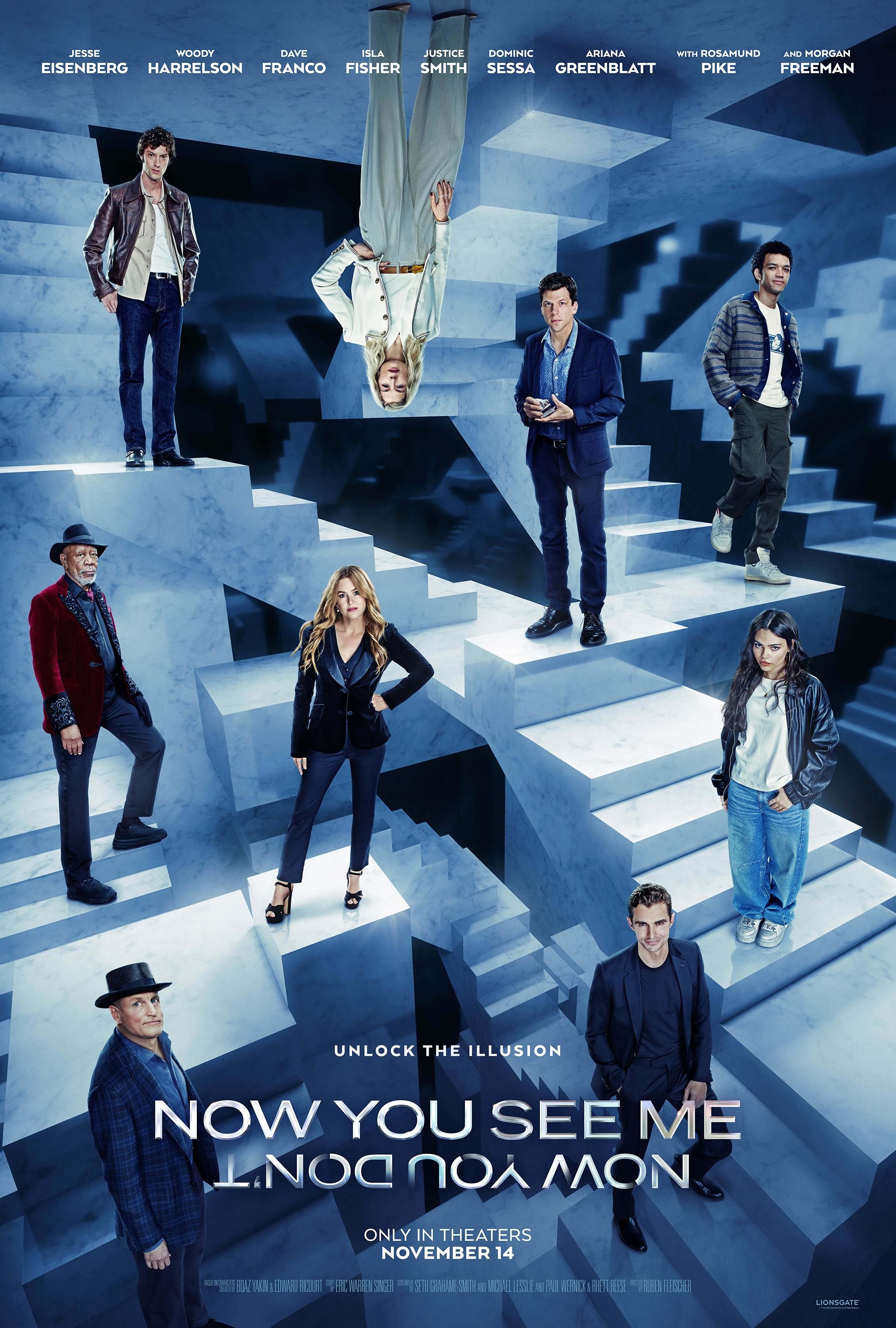
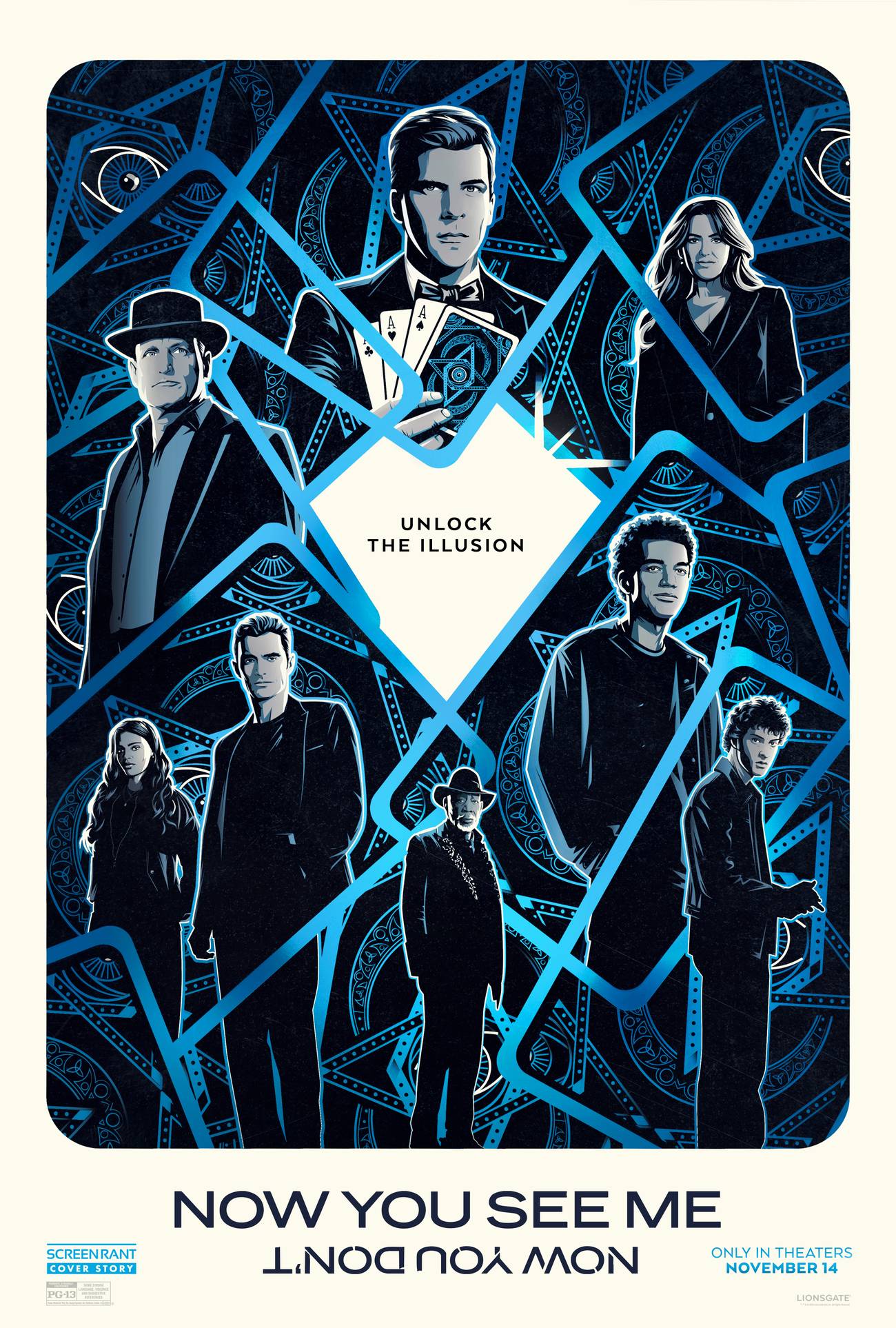
J. Daniel Atlas, portrayed by Jesse Eisenberg, is the arrogant yet brilliant leader of the Four Horsemen in the Now You See Me film franchise. As a master of sleight of hand and psychological manipulation, he serves as the primary illusionist who executes the complex heists orchestrated by the secret society known as The Eye.
The character of J. Daniel Atlas represents the archetype of the modern magician: fast-talking, highly technical, and deeply obsessed with the mechanics of the "prestige." Throughout the franchise, Atlas evolves from a self-absorbed street performer into a high-stakes operative who uses magic as a tool for social justice and corporate whistleblowing. Understanding Atlas requires a deep dive into his psychological profile, his technical repertoire of illusions, and his pivotal role within the overarching narrative of the Four Horsemen.
The Architecture of an Illusionist: Who is J. Daniel Atlas?
J. Daniel Atlas is introduced in the first Now You See Me film as a popular street magician specializing in card tricks and large-scale public illusions. His personality is defined by a need for control and a relentless pursuit of perfection. Unlike his fellow Horsemen, who each bring a specific niche skill to the group—Merritt McKinney with mentalism, Jack Wilder with sleight of hand and lock-picking, and Henley Reeves (later Lula May) with escape artistry—Atlas acts as the strategic front-man.
His Tarot card designation, The Lovers, is a paradox. In the context of the films, it doesn’t necessarily refer to romantic love but rather to the concept of duality and the relationship between the magician and the audience. Atlas thrives on the gaze of the public; he is nothing without an audience to deceive. This need for validation drives much of his friction with Dylan Rhodes, the Horsemen’s handler, as Atlas frequently chafes under the requirement of working in the shadows.
By 2026, looking back at the character’s trajectory, it is clear that Atlas’s primary arc is one of humility. He begins the series believing he is the smartest person in any room, only to realize that the true power of The Eye lies in collective action and the admission that even a master of deception can be deceived.
Technical Magic Mastery: Signature Illusions
The "magic" performed by J. Daniel Atlas is a blend of actual sleight-of-hand techniques, mechanical engineering, and cinematic visual effects. To understand the character, one must analyze the specific feats that define his reputation.
The Card Flick and the Building Projection
In his introduction, Atlas performs a card flick where he asks a spectator to pick a card from a deck he is riffling at high speed. He then "projects" the chosen card (the Seven of Diamonds) onto a nearby skyscraper. This trick establishes his core methodology: high-intensity focus combined with massive, distracting spectacle. The technical reality of this trick involves a "forced" card—a technique where a magician ensures the spectator picks a specific card through timing and physical pressure.
The Science Center Card Toss (The Heist)
One of the most technically celebrated sequences in the franchise occurs in Now You See Me 2, where the Horsemen must steal a computer chip from a secure facility. The sequence involves the team hiding a playing card (with the chip attached) on their person while being searched by security. Atlas’s role in this sequence demonstrates his extreme dexterity.
The card is passed through flicking, palming, and back-palming maneuvers. While the film uses some digital assistance for the card's trajectory, the actors, including Jesse Eisenberg, underwent extensive training with professional magicians like David Kwong and Andrei Jikh to ensure the hand movements were authentic to the craft of cardistry.
The Rain Control Illusion
Perhaps the most iconic J. Daniel Atlas moment is the "Rain Trick" performed in London. In this sequence, Atlas appears to control falling rain, making the droplets stop mid-air, move upward, and eventually turning them into a massive splash as he disappears.
The technical explanation provided in the film involves high-frequency strobe lights synchronized to the frequency of the falling water droplets. This creates a visual phenomenon known as the stroboscopic effect, where the human eye perceives the water as stationary or moving backward based on the timing of the light pulses. This scene encapsulates the Atlas persona: taking a scientific principle and dressing it in the theatricality of a god-like power.
Character Development and The Eye
Atlas’s relationship with The Eye—the ancient society of magicians—is the driving force behind his actions. In the first film, he is desperate to find the society, viewing it as the ultimate "inner circle" that will validate his genius. He treats the initial instructions left by the mysterious benefactor as a holy quest.
In the sequel, his role shifts. He becomes more cynical as the Horsemen are forced into hiding. His ego clashes with Dylan Rhodes (Mark Ruffalo), as Atlas believes he could lead the group more effectively. This tension is crucial because it highlights Atlas’s flaw: his inability to trust the "long con" if he isn't the one holding the deck.
However, after the events in Macau and London, Atlas’s perspective matures. He begins to understand that The Eye is not just a club for the elite, but a responsibility. By the time the franchise reaches its later stages in 2026, Atlas has transitioned from a seeker of secrets to a guardian of them.
Jesse Eisenberg’s Performance and Influence
The success of J. Daniel Atlas as a character is inseparable from Jesse Eisenberg’s portrayal. Eisenberg brings a specific kinetic energy—a rapid-fire delivery and a restless physicality—that perfectly suits a man whose mind is always ten steps ahead of his hands.
Eisenberg’s performance avoids making Atlas purely unlikable despite his arrogance. There is an underlying vulnerability in Atlas’s need to be seen. In Now You See Me 2, when his plan to contact The Eye independently fails and leads the team into a trap set by Walter Mabry (Daniel Radcliffe), the audience sees Atlas’s confidence shatter. This moment is the turning point for the character, allowing him to finally integrate as a true member of the team rather than its self-appointed king.
Comparative Analysis of the Four Horsemen
To understand J. Daniel Atlas's specific value, it is helpful to compare his attributes with the other members of the original and expanded Horsemen lineups.
| Attribute | J. Daniel Atlas | Merritt McKinney | Jack Wilder | Lula May |
|---|---|---|---|---|
| Primary Skill | Sleight of Hand / Illusion | Mentalism / Hypnosis | Sleight of Hand / Picking | Escape Artistry / Comedy |
| Tarot Card | The Lovers | The Hermit | Death | The High Priestess (approx) |
| Role in Heists | Strategic Lead / Distraction | Interrogation / Crowd Control | Infiltration / Physicality | Spectacle / Diversion |
| Personality | Arrogant / Controlling | Cynical / Observant | Eager / Adaptable | Quirky / Fearless |
| Key Weakness | Ego and Need for Control | Family Issues / Greed | Youthful Impulsivity | Social Awkwardness |
J. Daniel Atlas in Now You See Me 3 (2026 Status)
As of 2026, the Now You See Me franchise has continued to expand, with the third installment further exploring the origins of The Eye and the next generation of magicians. J. Daniel Atlas remains a central figure, though his role has evolved into that of a mentor.
In the latest narratives, the Horsemen are no longer just fugitives or Robin Hood-style thieves; they have become an international entity that monitors corporate malfeasance. Atlas, specifically, is shown overseeing the training of new recruits, emphasizing the balance between the "show" and the "substance." His character has moved away from the neon lights of the stage and toward the more complex, global applications of psychological warfare.
The production of Now You See Me 3 saw a return to the practical effects that made the first two films stand out. Eisenberg reportedly insisted on performing several new cardistry sequences himself, maintaining the character's reputation for technical excellence. The 2026 landscape of the film reflects a more mature Atlas—one who has finally found peace with the fact that he doesn't need to be the only person in the spotlight to be the most powerful person in the room.
Common Misconceptions About J. Daniel Atlas
Throughout the fandom and film criticism, several misconceptions about Atlas persist. Addressing these helps clarify the character’s actual role in the series.
- Is Atlas the Leader? While he often acts as the leader, the series eventually reveals that Dylan Rhodes is the true mastermind. Atlas is the "Field Captain," responsible for tactical execution on the ground, but he is not the ultimate architect of the grand plan.
- Are the Tricks Real? Many viewers wonder if Atlas’s tricks are possible. As mentioned with the Rain Trick, they are often based on real physics (stroboscopic effects) but scaled up to impossible levels for cinematic impact. The card manipulation, however, is based on very real skills practiced by professional magicians.
- Is He Based on a Real Person? While not a direct biopic, the character of Atlas draws inspiration from real-world magicians like David Blaine (for his street magic intensity) and Criss Angel (for his large-scale theatricality).
Troubleshooting Character Perception
For viewers who find J. Daniel Atlas "too arrogant" or "unlikable" in the first film, it is recommended to view the franchise as a single continuous arc. His arrogance is a deliberate character flaw that the narrative systematically deconstructs. If you approach the first film as a standalone, he may seem one-dimensional. However, when viewed alongside the sequel and the subsequent developments leading into 2026, his behavior is clearly shown to be a defensive mechanism hiding a deep-seated fear of failure and a desire for belonging.
Practical Advice for Fans of the Character
If you are inspired by J. Daniel Atlas and wish to explore the world of magic or better understand the character's skills, consider the following steps:
- Study Basic Cardistry: Atlas’s core skill is card manipulation. Begin with the "Charlier Cut" and basic "Riffle Shuffles" to build hand dexterity.
- Analyze the Consulting Magicians: Look into the work of David Kwong, who was the head magic consultant for the films. His book Spellbound discusses the psychology of deception, which is the foundation of Atlas's character.
- Watch for Practical Effects: On subsequent viewings of Now You See Me, try to identify where practical sleight-of-hand ends and CGI begins. The "Science Center" heist is a great place to start, as much of the hand-to-hand card passing was done with minimal digital intervention.
Frequently Asked Questions
Does J. Daniel Atlas appear in all Now You See Me movies? Yes, J. Daniel Atlas is a primary protagonist in both Now You See Me (2013) and Now You See Me 2 (2016). He continues his role in the third installment released by 2026, maintaining his position as the lead Horseman and a high-ranking member of The Eye.
What is the meaning of the Seven of Diamonds in Atlas's trick? The Seven of Diamonds is the card Atlas "forces" on the audience in the first movie. Beyond being a standard card used in magic for its visual clarity, it symbolizes the "lucky" or "perfect" number seven, reinforcing Atlas's desire for perfection and his ability to control even the "random" choices of his audience.
How did Jesse Eisenberg learn the magic for the role? Eisenberg spent weeks working with professional illusionists and cardists. He focused on specific "flourishes"—the flashy, non-secret movements of card manipulation—to ensure that whenever the camera was on his hands, the movements looked natural and expert.
Is J. Daniel Atlas supposed to be the "Lover" in the Tarot? Yes, his Tarot card is The Lovers. In the context of the Horsemen, this signifies his role in creating a connection with the audience and represents the duality of the magician—the public performer versus the private man with secrets. It also hints at his past relationship with Henley Reeves.
Will J. Daniel Atlas be the main character in Now You See Me 3? While the franchise remains an ensemble piece, Atlas remains the central figure of the Horsemen. The 2026 film focuses on his transition into a leadership role within The Eye, sharing the screen with both the original cast and a new generation of magicians.
Next Action: To see the real-world inspiration behind the character's technical skills, research the "Rain Trick" strobe effect or explore the cardistry tutorials provided by the film's technical consultants to see how much of Atlas's magic you can replicate at home.