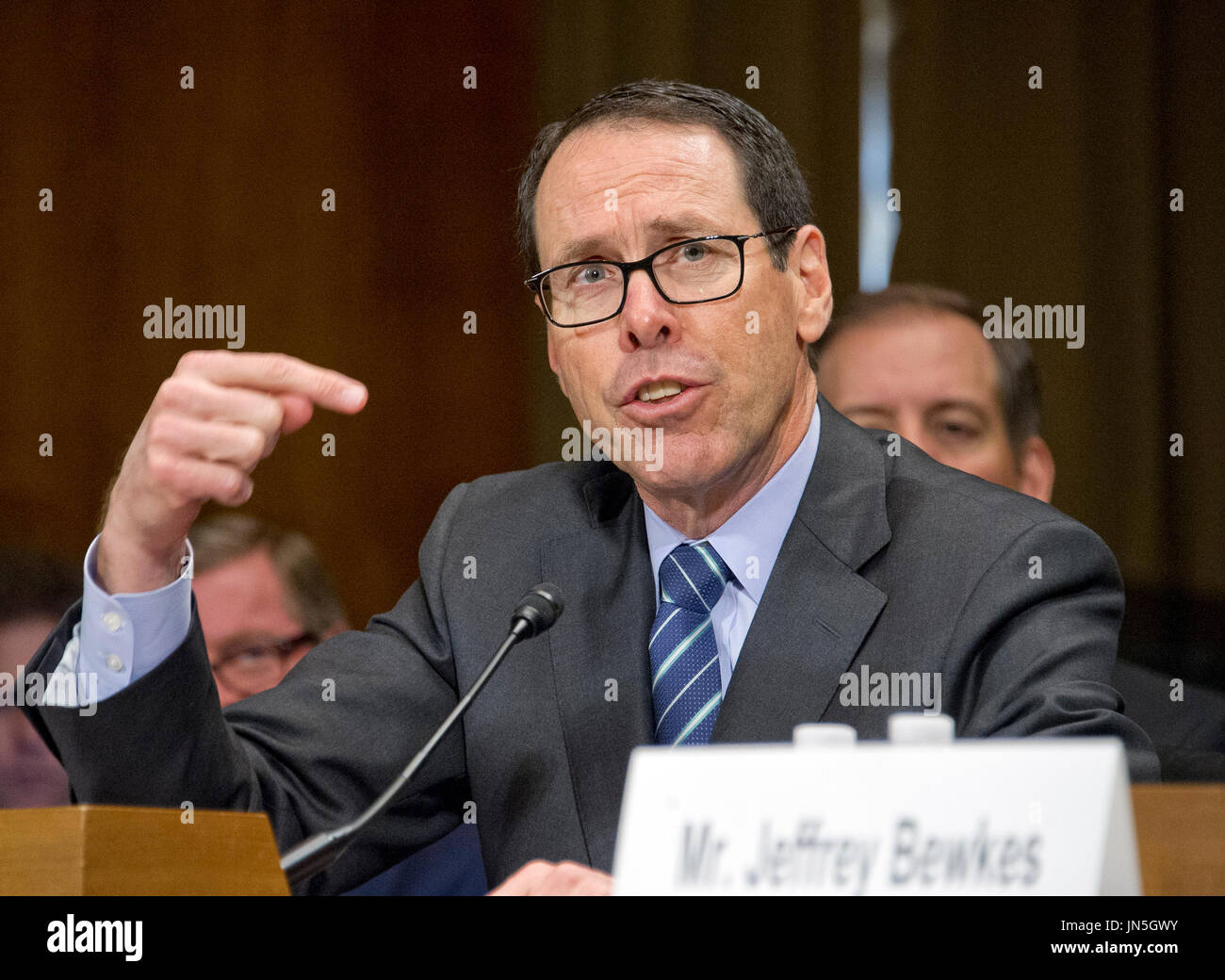
Randall Stephenson served as the Chairman and CEO of AT&T Inc. from 2007 to 2020, a period defined by massive industry consolidation and the transition to mobile broadband. He oversaw the historic acquisitions of DirecTV and Time Warner, attempting to transform the telecommunications giant into a vertically integrated media powerhouse before retiring in June 2020.
The Formative Years and Rise at Southwestern Bell
Randall Lynn Stephenson was born on April 22, 1960, in Oklahoma City. His path to the top of one of the world's largest companies began far from the boardrooms of Dallas. He earned a Bachelor of Science in accounting from the University of Central Oklahoma and later a Master of Accountancy from the University of Oklahoma. This financial background would become a hallmark of his leadership style, characterized by a rigorous focus on balance sheets and capital allocation.
Stephenson began his career in 1982 at Southwestern Bell Telephone in Oklahoma. At the time, the telecommunications industry was on the cusp of a radical transformation following the 1984 breakup of the original AT&T monopoly (the "Ma Bell" system). Southwestern Bell was one of the seven "Baby Bells" created by the divestiture.
Throughout the 1990s and early 2000s, Stephenson rose through the ranks of what would eventually become the modern AT&T. He served in a variety of high-level finance roles, including Senior Vice President of Finance and eventually Chief Financial Officer in 2001. During this time, he worked closely with his predecessor and mentor, Edward Whitacre. Together, they executed a series of aggressive acquisitions—including the purchase of Pacific Telesis, Ameritech, and eventually the "old" AT&T Corp in 2005—effectively reassembling a significant portion of the original Bell System under the SBC (Southwestern Bell Corporation) umbrella, which then adopted the AT&T name.
Assuming the Mantle: The CEO Era (2007–2020)
In June 2007, Randall Stephenson succeeded Whitacre as CEO. The timing was auspicious; his first month on the job coincided with the launch of the original iPhone, for which AT&T held an exclusive multi-year carrier agreement in the United States. This partnership fundamentally changed AT&T's trajectory, shifting its primary revenue engine from traditional landline "voice" services to mobile data.
The Smartphone Revolution and Wireless Dominance
Under Stephenson, AT&T focused heavily on upgrading its wireless infrastructure to handle the explosion of data traffic caused by the iPhone and subsequent Android devices. He oversaw the transition from 3G to 4G LTE, and eventually the early stages of the 5G rollout. The exclusivity of the iPhone allowed AT&T to capture a high-value customer base, though it also necessitated billions of dollars in capital expenditure to prevent network congestion.
The Failed T-Mobile Merger (2011)
One of the most significant moments of Stephenson's early tenure was the 2011 attempt to acquire T-Mobile USA from Deutsche Telekom for $39 billion. Stephenson argued that the merger was necessary to solve AT&T's spectrum crunch and improve service quality. However, the Department of Justice (DOJ) and the Federal Communications Commission (FCC) blocked the deal on antitrust grounds, fearing it would reduce competition in the wireless market.
The failure was a major setback, resulting in AT&T paying T-Mobile a record-breaking "breakup fee" of $3 billion in cash and $1 billion in spectrum. Ironically, this infusion of capital and spectrum is often cited by industry analysts as the catalyst that allowed T-Mobile to modernize its own network and become a formidable competitor to AT&T in the years that followed.
The Pivot to Media: DirecTV and Time Warner
Recognizing that the wireless market was becoming saturated, Stephenson sought new avenues for growth. His strategy shifted toward "vertical integration"—the idea that a company should own both the "pipes" (the distribution network) and the "water" (the content flowing through it).
The DirecTV Acquisition (2015)
In 2015, AT&T acquired DirecTV for approximately $48.5 billion. The goal was to make AT&T the largest pay-TV provider in the world and use the satellite provider's vast customer base to bundle television, internet, and wireless services. However, the timing of the deal coincided with the rapid acceleration of "cord-cutting." As consumers migrated to streaming services like Netflix, the value of traditional satellite TV began to erode faster than AT&T had anticipated.
The Time Warner Merger (2018)
Undeterred by the challenges of DirecTV, Stephenson moved toward an even more ambitious target: Time Warner. In 2016, AT&T announced an $85 billion bid for the media giant, which owned HBO, CNN, and the Warner Bros. film studio.
This deal faced intense opposition from the Trump administration’s DOJ, leading to a high-profile antitrust trial. Stephenson was a central figure in the defense, arguing that the merger was "pro-competitive" because it allowed a traditional distributor to compete with tech giants like Amazon and Google. AT&T eventually won the court battle in 2018 and rebranded the unit as WarnerMedia.
| Key Event | Year | Financial Impact / Context |
|---|---|---|
| iPhone Launch | 2007 | Exclusive carrier agreement; transformed wireless revenue. |
| T-Mobile Bid | 2011 | $39B offer; blocked by DOJ; $4B total breakup fee. |
| DirecTV Acquisition | 2015 | $48.5B; attempt to dominate pay-TV market. |
| Time Warner Merger | 2018 | $85B; legal victory against DOJ; created WarnerMedia. |
| 5G Rollout | 2019 | Initial commercial launch in select cities. |
| Retirement | 2020 | Succeeded by John Stankey; end of a 38-year career. |
Strategic Philosophy and Financial Impact
Stephenson's strategy was built on the belief that scale was the only way to survive in a world dominated by big tech. By owning content like Game of Thrones or the DC Extended Universe, he believed AT&T could offer unique value to its wireless and fiber customers.
However, this strategy came at a significant financial cost. By the end of his tenure, AT&T had become one of the most indebted non-financial companies in the world, with net debt peaking near $180 billion following the Time Warner closing. This debt load put pressure on the company's ability to invest in 5G and fiber-to-the-home (FTTH) while maintaining its high dividend yield—a primary reason many retail investors held the stock.
His tenure also saw a focus on corporate tax reform. Stephenson was a vocal advocate for the 2017 Tax Cuts and Jobs Act, promising that the savings would lead to increased capital investment and job creation. While AT&T did increase its investment in some areas, the company also faced criticism for simultaneous layoffs in its traditional landline business.
Leadership Beyond Telecom
Randall Stephenson was more than just a corporate executive; he was a prominent figure in the American business landscape. He served as the National President of the Boy Scouts of America (BSA) from 2014 to 2016. During his leadership, he played a pivotal role in the controversial and historic decision to end the ban on gay adult leaders, advocating for a more inclusive organization.
He was also a leading member of the Business Roundtable, an association of CEOs of America’s leading companies. In 2016, following a series of tragic events involving racial tension in the U.S., Stephenson delivered a powerful, viral speech to AT&T employees about the need for racial justice and understanding. This was widely considered a groundbreaking moment for a CEO of a Fortune 10 company, as he urged employees to move past "tolerance" toward "understanding."
Succession and the "Unwinding" of the Legacy
In April 2020, AT&T announced that Stephenson would retire as CEO effective July 1, 2020, to be succeeded by John Stankey, the company's then-COO. Stephenson remained Executive Chairman of the Board until January 2021 to ensure a smooth transition.
The years immediately following his departure were marked by a dramatic reversal of his core strategy. Under Stankey, AT&T began a process of "unwinding" the media conglomerate Stephenson had built:
- DirecTV Spinoff: In 2021, AT&T spun off its video business (DirecTV, U-verse, and AT&T TV) into a new entity co-owned by private equity firm TPG.
- WarnerMedia Merger with Discovery: In 2022, AT&T divested WarnerMedia, merging it with Discovery Inc. to create Warner Bros. Discovery.
These moves effectively returned AT&T to its roots as a "pure-play" telecommunications company focused on 5G and fiber. While some analysts view the unwinding as a critique of Stephenson’s "content plus distribution" vision, others argue that his leadership provided the company with the scale necessary to survive a volatile decade of technological disruption.
Common Challenges and Criticisms
Despite his long tenure, Stephenson was often criticized by Wall Street for the company’s stock performance. During much of the 2010s, AT&T shares underperformed the S&P 500. Critics argued that the billions spent on acquisitions would have been better used on network upgrades or share buybacks.
The "Execution Risk" was also a frequent topic of debate. Managing a massive wireless network, a satellite TV provider, and a Hollywood studio required vastly different corporate cultures and skill sets. Many observers felt that the integration of Time Warner was hampered by the clash between the rigid, process-driven culture of a utility-like telecom and the creative, risk-taking culture of a media studio.
FAQs About Randall Stephenson
Who succeeded Randall Stephenson as AT&T CEO?
John Stankey succeeded Randall Stephenson as CEO on July 1, 2020. Stankey had previously served as the CEO of WarnerMedia and the Chief Operating Officer of AT&T, making him the primary architect behind the integration of the media assets before eventually leading the effort to spin them off.
What is Randall Stephenson's net worth?
While exact figures for private individuals are not always public, SEC filings during his tenure indicated that his annual compensation was often in the range of $20 million to $30 million. Upon retirement, his accumulated pension and stock holdings were estimated to be worth over $60 million, though his total net worth is likely higher given his long career and various board positions.
Why did Randall Stephenson buy Time Warner?
Stephenson believed in "vertical integration." He wanted to use Time Warner's premium content (HBO, CNN, Warner Bros.) to differentiate AT&T’s wireless and internet services. He envisioned a future where AT&T could use data from its mobile users to sell more targeted advertising on its television networks, creating a closed-loop ecosystem.
Did Randall Stephenson's strategy fail?
Whether his strategy "failed" is a matter of perspective. Financially, the acquisitions led to a massive debt load and a eventual dividend cut in 2022 after the WarnerMedia spinoff. However, he successfully transitioned the company away from dying landline revenues and secured AT&T's position as a leader in the 5G era.
Where is Randall Stephenson now?
Since retiring from AT&T in 2020 and leaving the board in early 2021, Stephenson has largely stepped out of the public corporate spotlight. He has remained involved in various philanthropic endeavors and occasional advisory roles, maintaining a private life in the Dallas, Texas area.
Final Perspective: A Legacy of Ambition
Analyzing Randall Stephenson’s career requires looking past the simple "success or failure" binary. He was a CEO who was not afraid to make "big bets" in an era where the traditional telecommunications business model was under existential threat. While the massive media conglomerate he envisioned was eventually dismantled, his leadership ensured that AT&T remained a central pillar of the American infrastructure.
For investors and business students, Stephenson’s tenure serves as a critical case study in corporate strategy, the dangers of over-leverage, and the immense difficulty of merging disparate industries. His transition from an accountant in Oklahoma to the head of a global giant remains a quintessential story of the American corporate ladder.
Next Action: For those interested in the current state of the company Stephenson built, research the 2022 WarnerMedia-Discovery merger to see how his successor restructured the assets he acquired.