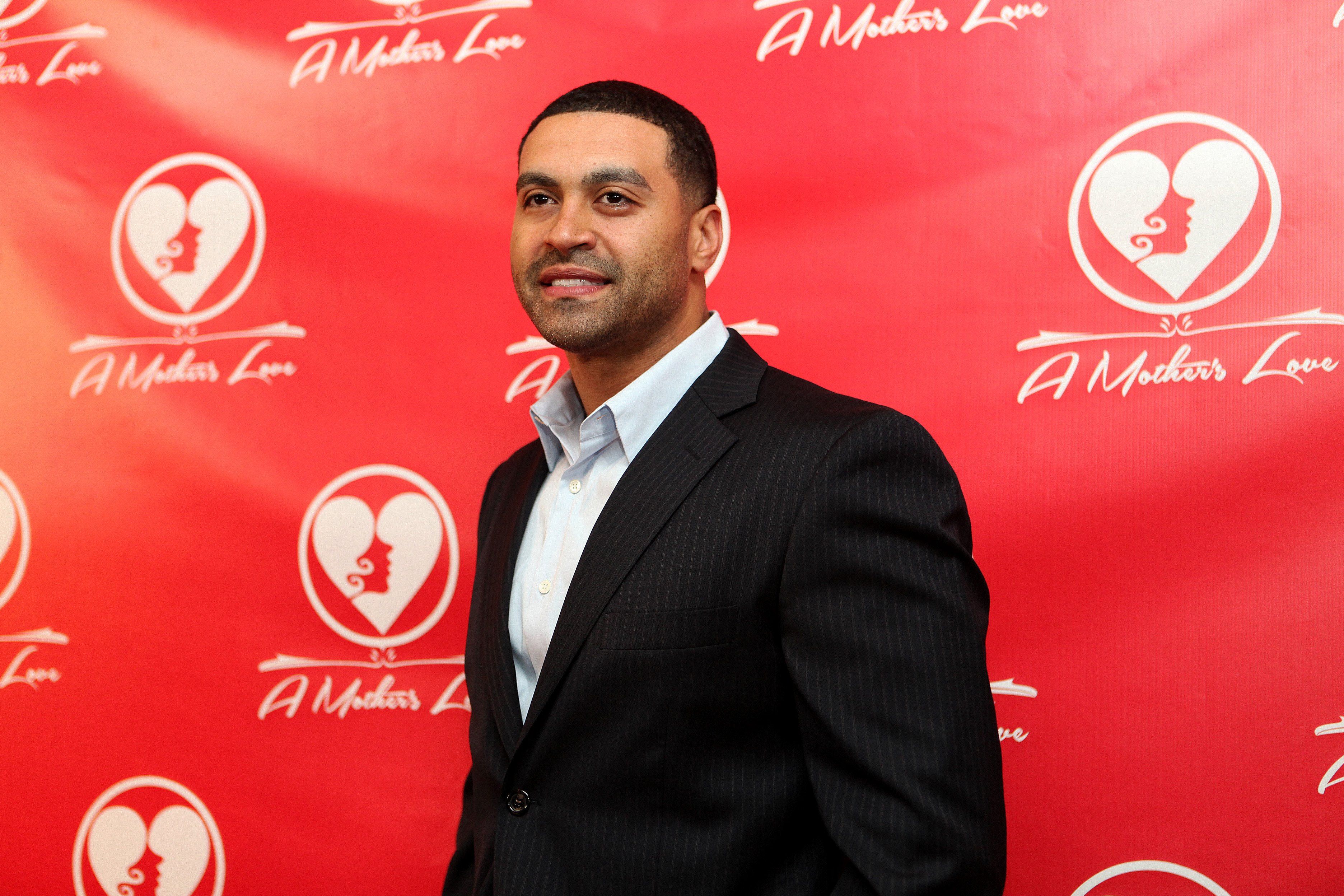
In July 2014, Apollo Nida, best known for his appearances on Bravo’s The Real Housewives of Atlanta, was sentenced to 96 months (eight years) in federal prison followed by five years of supervised release. U.S. District Judge Charles A. Pannell Jr. handed down the sentence after Nida pleaded guilty to conspiracy to commit mail, wire, and bank fraud in a complex multi-million-dollar identity theft and check-kiting scheme.
Background: Public Profile and Criminal History
Apollo Nida achieved widespread national visibility through his marriage to entertainment attorney and media personality Phaedra Parks. Joining the cast of The Real Housewives of Atlanta (RHOA) during its third season in 2010, Nida was portrayed as a fitness consultant, business partner, and devoted husband rebuilding his life following prior legal troubles.
However, federal law enforcement records revealed that Nida's history with the legal system began long before his reality television career. Between 2004 and 2009, Nida served nearly five years in prison following a federal racketeering conviction involving title fraud and vehicle theft rings.
Shortly after his release from federal custody in 2009—the same year he married Parks—Nida initiated a new criminal operation. Over the next four years, while appearing on prime-time cable television, Nida directed a sophisticated financial fraud conspiracy that exploited state agencies, federal benefit databases, commercial banks, and private citizens across multiple states.
Anatomy of the Fraud Scheme: How the Operation Functioned
The criminal enterprise directed by Apollo Nida and his chief co-conspirator, Gayla St. Julien, operated between 2009 and 2013. Federal prosecutors from the U.S. Attorney’s Office for the Northern District of Georgia characterized the enterprise as a highly organized, multi-tiered white-collar crime operation.
- PHASE 1: IDENTITY THEFTStolen PII acquired from databases, car dealerships, and state files
- PHASE 2: SHELL BUSINESS SETUPFake collection agencies & auto repossession firms created (e.g., Euro International Auto Sales) to gain access to credit portals
- PHASE 3: ACCOUNT OPENINGFraudulent bank accounts established using synthetic identities and stolen personal identification data
- PHASE 4: CHECK INTERCEPTION & LAUNDERINGState/federal tax refunds, unclaimed property, and auto loan checks intercepted, deposited, and laundered into cash via shell accounts
1. Identity Theft and Database Exploitation
The core of the operation relied on obtaining the Personally Identifiable Information (PII) of thousands of unsuspecting victims. Nida and his associates acquired stolen Social Security numbers, dates of birth, full names, and financial records from several sources:
- Infiltrated database records from automotive dealerships.
- Purchased credit reports from illicit online data brokers.
- Compromised state agency files containing public and private record listings.
2. Creation of Shell Companies
To bypass institutional fraud checks, Nida established fake shell corporations designed to look like legitimate debt collection agencies, auto repossession companies, and vehicle dealerships. Prominent entities created included:
- Euro International Auto Sales
- Ferrari Autohaus
- National Collections Agencies
These fake businesses allowed Nida and St. Julien to register with credit bureaus such as Equifax and Experian as legitimate commercial clients. Once registered, the conspirators gained direct authorization to run credit checks on individuals, systematically extracting private financial data to execute further identity fraud.
3. Fraudulent Bank Accounts and Check Laundering
Using fake driver's licenses, fraudulent passports, and synthetic identities created from stolen victim profiles, the conspirators opened dozens of accounts at national institutions, including JPMorgan Chase, Bank of America, and Wells Fargo.
Once the accounts were operational, Nida and his network engaged in several distinct revenue-generating frauds:
- State and Federal Tax Refund Interception: Conspirators filed fraudulent tax returns using stolen identity data and directed the resulting refund checks into their shell bank accounts.
- Unclaimed Property Recovery Schemes: Nida’s network applied for state unclaimed property refunds on behalf of individuals without their knowledge, intercepting checks issued by state treasuries.
- Auto Loan and Credit Line Fraud: The group submitted fake auto loan applications to banks and credit unions, pocketing funding checks disbursed for non-existent luxury vehicles.
- U.S. Treasury Check Interception: Fraudulent government checks, including retirement and disability benefit payments, were routed through fake bank accounts opened under synthetic corporate names.
4. Money Laundering Mechanisms
To convert the stolen checks into clean cash, Nida deployed runners—primarily Gayla St. Julien—to make deposits and withdrawals across multiple bank branches in the Atlanta metropolitan area. The funds were quickly drained using cash counter withdrawals, cashier's checks, debit card transactions, and automated teller machine (ATM) transactions before fraud detection systems flagged the activity.
The Federal Investigation and Criminal Charges
The Secret Service Financial Crimes Task Force, in conjunction with the Internal Revenue Service Criminal Investigation (IRS-CI) division and the U.S. Postal Inspection Service, led the investigation into Nida’s activities.
The Arrest of Gayla St. Julien
The federal probe gained critical momentum in September 2013 when federal agents arrested Gayla St. Julien in Atlanta. Investigators discovered St. Julien carrying multiple fraudulent identification cards, counterfeit checks, and corporate documents linked to the shell entities.
Upon her arrest, St. Julien agreed to cooperate with federal law enforcement authorities. She identified Apollo Nida as the primary organizer and director of the scheme, explaining that Nida managed the overall strategy, secured illicit access to databases, arranged shell business documentation, and split the proceeds of the laundered checks.
Federal Search Warrants and Evidence Seizure
Under federal supervision, St. Julien recorded phone conversations and meet-ups with Nida. In September 2013, federal agents executed a search warrant on Nida’s personal vehicle, seizing key physical evidence:
- A laptop computer containing personal identifying information for thousands of individuals.
- Flash drives containing corporate records for fake collection agencies.
- Cellular phones used to coordinate wire transfers and check deposits.
- Counterfeit identification cards matching names used to open fraudulent bank accounts.
Criminal Information and Guilty Plea
In January 2014, federal prosecutors officially filed a criminal complaint against Apollo Nida. Facing mounting evidence compiled by the U.S. Secret Service, Nida agreed to a plea deal.
On May 6, 2014, Nida entered a formal guilty plea in the U.S. District Court for the Northern District of Georgia to one count of conspiracy to commit mail, wire, and bank fraud under 18 U.S.C. § 1349 (referencing bank fraud under 18 U.S.C. § 1344).
Federal Sentencing and Financial Restitution Order
On July 8, 2014, Apollo Nida appeared before U.S. District Judge Charles A. Pannell Jr. for final sentencing. Federal guidelines recommended a lengthy prison sentence, reflecting both the multi-million-dollar scope of the fraud and Nida’s previous criminal record.
| Apollo Nida Judgment Summary | Details |
|---|---|
| Primary Conviction | Conspiracy to Commit Bank Fraud (18 U.S.C. 1349) |
| Prison Term | 96 Months (8 Years) Federal Custody |
| Supervised Release | 5 Years Post-Imprisonment |
| Total Restitution | $1,948,214.85 |
| Primary Victims | U.S. Treasury, State Revenue Departments, JPMorgan Chase, Delta Air Lines, Credit Victims |
The Sentence
Judge Pannell sentenced Nida to 96 months (eight years) in federal prison, followed by five years of supervised release.
During the sentencing hearing, federal prosecutors emphasized that Nida had engaged in a systematic, calculating fraud scheme shortly after completing a prior federal sentence. Judge Pannell noted that while Nida showed remorse, the severity of the identity theft, the damage to innocent victims, and the repeat nature of the offense warranted a significant custodial sentence.
Co-conspirator Gayla St. Julien was sentenced in April 2014 to 61 months (five years and one month) in federal prison for her role in the operation.
Restitution Breakdown
In addition to his prison sentence, Nida was ordered to pay $1,948,214.85 in restitution to the victims of the fraud scheme. The court identified several major institutional and individual victim categories:
| Victim Category / Recipient | Description of Loss / Claim | Fraud Mechanism Used |
|---|---|---|
| U.S. Department of the Treasury | Fraudulent federal tax refunds and stolen government benefit checks. | False tax filings and intercepted federal Treasury checks. |
| State Departments of Revenue | Intercepted state income tax returns and state unclaimed property funds. | False state claims and intercepted state treasury payments. |
| JPMorgan Chase & Major Banks | Direct losses incurred from fraudulent checking and savings accounts. | Account opening via synthetic identities and check-kiting. |
| Delta Air Lines Employees | Stolen identity files used to open fraudulent lines of credit. | Database exploitation of corporate employee files. |
| Private Citizens / Identity Victims | Credit report damage, stolen personal identifiers, direct check theft. | Illicit credit bureau access and synthetic identity creation. |
Summary Case Statistics and Legal Timeline
The following legal timeline summarizes the key events of the federal criminal case against Apollo Nida from the initiation of the fraud scheme through his release from custody:
- 2004 – 2009: Nida serves nearly five years in federal prison for federal racketeering charges related to auto title fraud.
- 2009: Nida is released from federal prison, marries Phaedra Parks, and begins building the bank fraud and identity theft enterprise with co-conspirators.
- 2010: Nida joins the cast of Bravo's The Real Housewives of Atlanta.
- September 2013: Co-conspirator Gayla St. Julien is arrested by federal agents; she cooperates with the Secret Service Task Force. Search warrants executed on Nida yield digital evidence.
- January 2014: Nida is charged in federal court with conspiracy to commit mail, wire, and bank fraud.
- May 6, 2014: Nida pleads guilty in the U.S. District Court for the Northern District of Georgia.
- July 8, 2014: Judge Charles A. Pannell Jr. sentences Nida to 96 months in federal prison and orders $1.94 million in restitution.
- September 2014: Nida surrenders to the Federal Correctional Institution (FCI) Fort Dix in New Jersey to begin serving his sentence.
- 2017: Nida’s federal sentence is reduced by a judge from 96 months to 84 months (seven years). Phaedra Parks finalizes her divorce from Nida.
- May 2019: Nida is released from prison to an Atlanta halfway house, re-arrested nine days later for technical release rules violations, and re-confined.
- November 2019: Nida completes his custodial term and transitions to official supervised release status.
Impact on Personal Life, Media Career, and Television Production
The criminal prosecution of Apollo Nida significantly impacted the cast, narrative, and production of The Real Housewives of Atlanta.
Media Coverage and Television Documentation
Nida’s criminal charges unfolded while cameras were filming Season 6 and Season 7 of The Real Housewives of Atlanta. The show documented the immediate aftermath of his arrest, including strained interactions with his then-wife Phaedra Parks, discussions regarding their two young sons, and the days leading up to his surrender to federal authorities in September 2014.
The legal proceedings created dramatic television moments, particularly during Season 7, which captured Nida's final hours before self-reporting to FCI Fort Dix.
Marital Dissolution
Phaedra Parks did not attend Nida’s July 2014 sentencing hearing, publicly citing safety concerns for their children and the emotional toll of the trial. Parks filed for divorce shortly after Nida began serving his sentence. The divorce was finalized in 2017 following prolonged legal proceedings regarding asset division and custody arrangements for their two children.
Post-Conviction Sentence Reduction, Halfway House, and Supervised Release
Following his initial 2014 commitment to the Federal Bureau of Prisons (BOP), Nida’s legal team pursued sentence modification options available under federal post-conviction statutes.
Sentence Reduction (2017)
In 2017, federal courts granted a motion to reduce Nida's original 96-month sentence down to 84 months (seven years). Sentence reductions in federal custody typically occur under Rule 35(b) of the Federal Rules of Criminal Procedure for substantial assistance, updates to Federal Sentencing Guidelines recalculations, or participation in specific residential drug abuse rehabilitation programs (RDAP) authorized by 18 U.S.C. § 3621(e).
Re-entry and Technical Release Violations (2019)
In May 2019, having completed the custodial portion of his reduced sentence, Nida was transferred from federal prison to a residential re-entry center (halfway house) in Atlanta to prepare for community reintegration.
However, nine days after his placement in the halfway house, federal marshals re-arrested Nida for violating the administrative rules of his conditional release. Reportedly, the violations involved unauthorized communication and administrative infractions rather than new criminal acts. Nida was returned to a local correctional facility to complete the remaining weeks of his sentence.
Full Custodial Release and Supervised Status
In November 2019, Nida formally completed his federal prison commitment and entered his mandatory five-year period of supervised release. Under federal supervision rules, individuals on supervised release must:
- Report regularly to a designated federal probation officer.
- Maintain lawful employment.
- Refrain from committing federal, state, or local crimes.
- Submit to financial monitoring and contribute mandatory payments toward court-ordered restitution balances.
- Obtain permission before traveling outside assigned federal judicial districts.
Frequently Asked Questions (FAQs)
What specific charges was Apollo Nida convicted of?
Apollo Nida was convicted of conspiracy to commit mail, wire, and bank fraud under 18 U.S.C. § 1349. The conviction centered on bank fraud under 18 U.S.C. § 1344, involving identity theft, fake shell businesses, stolen tax returns, and fake auto loan applications.
How many years did Apollo Nida actually serve in federal prison?
Apollo Nida was originally sentenced to 96 months (eight years) in federal prison in July 2014. His sentence was later reduced to 84 months (seven years) in 2017. Accounting for time served, good-conduct credit under federal law, and placement in a halfway house, Nida spent approximately five years in physical prison custody from September 2014 until his release to community supervision in late 2019.
How much restitution was Apollo Nida ordered to pay?
Federal Judge Charles A. Pannell Jr. ordered Apollo Nida to pay $1,948,214.85 in restitution. The funds are designated to reimburse institutional and private victims, including the U.S. Treasury, state departments of revenue, commercial banks, and individuals affected by identity theft.
Who was Gayla St. Julien, and what was her role in the scheme?
Gayla St. Julien was Apollo Nida’s chief co-conspirator. She acted as the primary runner for the operation, using fake driver’s licenses and stolen identity documents to open fraudulent bank accounts, deposit stolen checks, and withdraw cash. St. Julien was arrested in September 2013, cooperated with federal investigators, and was sentenced in April 2014 to 61 months (five years, one month) in federal prison.
Was Phaedra Parks implicated or charged in Apollo Nida's bank fraud scheme?
No. Federal law enforcement authorities, including the Secret Service and the U.S. Attorney’s Office, investigated the conspiracy thoroughly and found no evidence linking Phaedra Parks to Nida’s illegal bank fraud or identity theft operations. Parks was never named as a co-conspirator, charged, or indicted in connection with the criminal enterprise.
Had Apollo Nida been convicted of federal crimes prior to his 2014 sentencing?
Yes. Apollo Nida served nearly five years in prison between 2004 and 2009 following a federal racketeering conviction related to an auto title fraud and car theft ring. His prior criminal record significantly influenced the severity of his 2014 sentence under Federal Sentencing Guidelines.
Practical Legal Takeaways on Federal White-Collar Prosecutions
The federal prosecution of Apollo Nida highlights core aspects of white-collar crime enforcement within the U.S. judicial system:
- Multi-Agency Coordination: White-collar investigations often combine resources from the U.S. Secret Service, IRS Criminal Investigation, and Postal Inspection Service to track digital financial footprints, wire transactions, and bank record anomalies.
- Statutory Penalties under 18 U.S.C. § 1344: Federal bank fraud carries severe statutory penalties, including maximum prison terms of up to 30 years and fines of up to $1,000,000 per violation.
- Impact of Criminal History Categories: Under the Federal Sentencing Guidelines, prior felony convictions significantly elevate a defendant's Criminal History Category (CHC). Nida's previous racketeering conviction directly led to an expanded guidelines range, resulting in an eight-year sentence.
- Mandatory Restitution: Under the Mandatory Victims Restitution Act (MVRA), federal financial crime convictions carry non-dischargeable restitution obligations. Restitution orders remain active legal debts that follow defendants long after their physical release from prison custody.
Disclaimer: This article provides historical coverage of federal court proceedings and public legal records. It is intended strictly for informational and educational purposes and does not constitute formal legal counsel or financial advice.