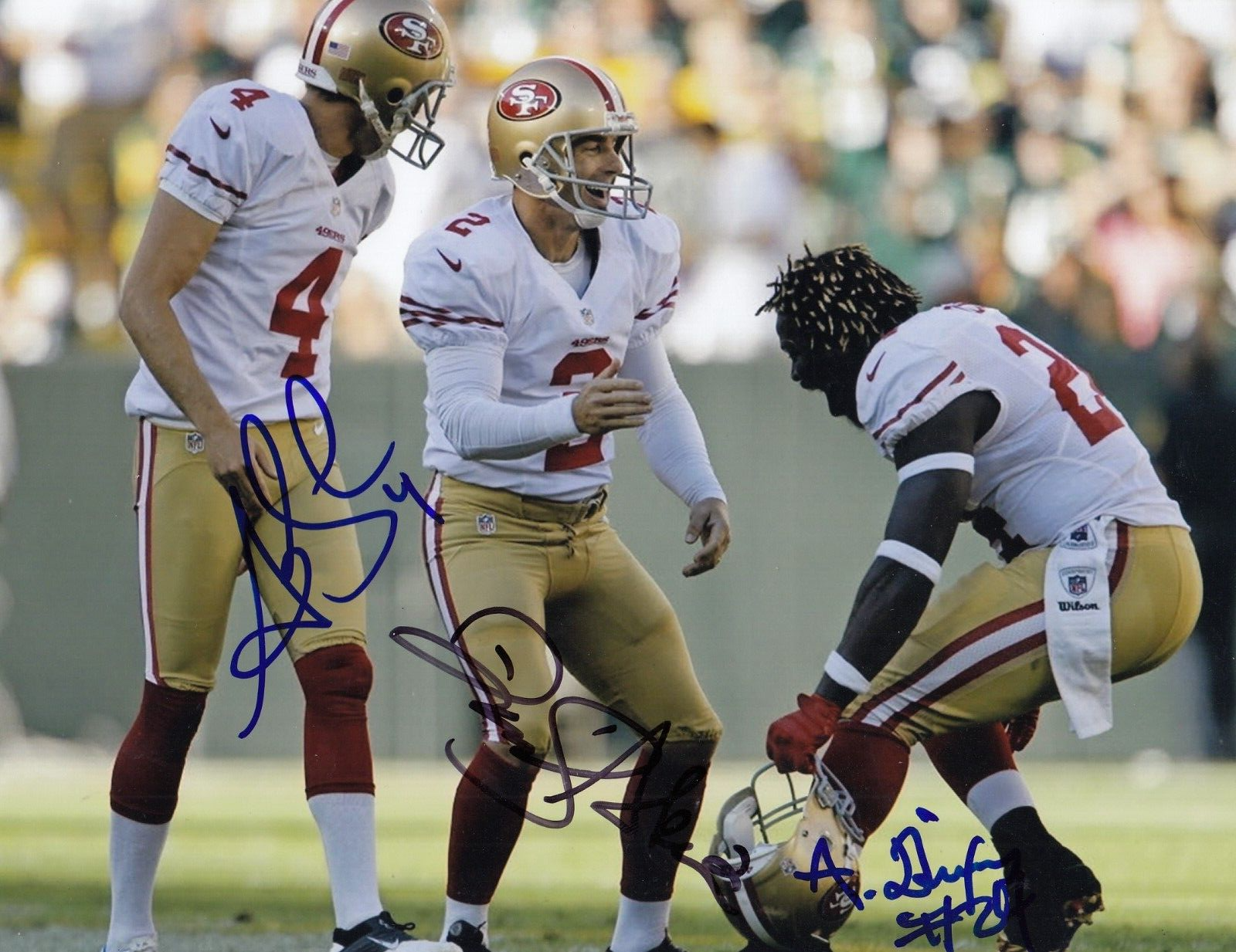
During his 2010 rookie season with the San Francisco 49ers, running back Anthony "Boobie" Dixon played in all 16 games, recording 87 rushing attempts for 247 yards and two touchdowns, along with five receptions for 32 yards. Drafted in the sixth round out of Mississippi State, Dixon served primarily as a special teams player and power short-yardage back before stepping into an expanded offensive role following a late-season injury to starter Frank Gore.
Background and Draft: From Mississippi State to San Francisco
Anthony Dixon entered the 2010 NFL Draft following a historic collegiate career at Mississippi State University. A four-year starter for the Bulldogs in the Southeastern Conference (SEC), Dixon established himself as one of the most durable power runners in college football. By the conclusion of his senior season in 2009, he held Mississippi State's all-time career rushing record with 3,994 yards and 42 rushing touchdowns, capping his collegiate career with a 1,391-yard senior campaign that earned him First-Team All-SEC honors.
Standing 6-foot-1 and weighing 233 pounds, Dixon possessed the classic physical profile of an NFL downhill power back. His scouting report highlighted exceptional lower-body strength, an aggressive running style between the tackles, and superior contact balance that allowed him to push forward for extra yardage after initial contact. However, scouts raised concerns regarding his lateral agility, top-end breakway speed, and pass-blocking refinement, projecting him as a mid-to-late round draft candidate suited for specific short-yardage and goal-line roles.
- Anthony Dixon Draft Profile (2010)
- College: Mississippi State Bulldogs (SEC)
- Height/Weight: 6'1", 233 lbs
- Draft Selection: Round 6, Pick 173 Overall
- Primary Role Projection: Short-Yardage Back & Special Teams Core
The San Francisco 49ers selected Dixon in the sixth round with the 173rd overall pick in the 2010 NFL Draft. Head coach Mike Singletary and the 49ers front office targeted Dixon to add physical depth to a backfield anchored by franchise centerpiece Frank Gore. Additionally, San Francisco signed veteran former All-Pro running back Brian Westbrook prior to the season, placing Dixon third on the running back depth chart heading into his debut professional campaign.
The 2010 San Francisco 49ers Operational Context
The 2010 season was a pivotal and tumultuous year for the San Francisco 49ers organization. Expectations were high following a 8-8 campaign in 2009, with many analysts picking the 49ers to win a weak NFC West division. However, the season quickly devolved into tactical instability and offensive inconsistency.
The team opened the regular season under offensive coordinator Jimmy Raye, whose traditional, run-heavy philosophy prioritized establishing a physical ground attack. Following an 0-3 start during which the offense struggled to generate scoring drives, Raye was dismissed and replaced by quarterback coach Mike Johnson. The offensive system continued to shuffle between quarterbacks Alex Smith and Troy Smith, resulting in an unpredictable passing game that forced the offense to rely heavily on ground production to stay competitive.
- 2010 San Francisco 49ers Offense Overview
- Head Coach: Mike Singletary (Weeks 1–16) / Jim Tomsula (Week 17 Interim)
- Offensive Coordinators: Jimmy Raye (Weeks 1–3) / Mike Johnson (Weeks 4–17)
- Quarterback Rotation: Alex Smith (10 starts) / Troy Smith (6 starts)
- Lead Running Back: Frank Gore (11 games, 853 yards before season-ending injury)
Within this environment, the running back room carried a significant workload. Frank Gore served as the feature back, handling the vast majority of first- and second-down carries. Brian Westbrook was brought in to provide third-down efficiency and pass-catching capability. Dixon’s designated responsibility was to function as a short-yardage specialist, line-of-scrimmage hammer, and key core player on special teams coverage units under coordinator Brad Seely.
Week-by-Week Role Evolution During the 2010 Season
Dixon's usage pattern during his rookie year can be split into two distinct phases: his early-season utilization as a niche rotational player and special teams performer, followed by his late-season role expansion following a major injury in the backfield.
Phase 1: Special Teams and Short-Yardage Duties (Weeks 1–11)
Through the first 11 weeks of the 2010 season, Dixon saw limited offensive touches. Head coach Mike Singletary relied almost exclusively on Frank Gore to control the game flow. Dixon’s offensive snaps were primarily restricted to short-yardage situations—such as 3rd-and-1 or 4th-and-1 conversions—and goal-line packages where his 233-pound frame could push through stacked defensive fronts.
During this stretch, Dixon made his primary contributions on special teams. He logged consistent snaps on kickoff coverage, punt return units, and kickoff return blocking teams, earning praise from the coaching staff for his relentless motor and tackling ability on coverage downs.
Phase 2: Post-Injury Backfield Expansion (Weeks 12–17)
The trajectory of Dixon’s rookie season changed dramatically during Week 12. In a Monday Night Football matchup against the St. Louis Rams on November 29, 2010, starter Frank Gore suffered a fractured right hip in the first half, ruling him out for the remainder of the season.
With Gore sidelined, the 49ers restructured their backfield rotation for the final five games of the season, splitting primary running duties between veteran Brian Westbrook and the rookie Dixon:
- Week 13 at Green Bay Packers: Dixon registered his first career NFL starting assignment. Facing a formidable Packers defense, Dixon logged nine carries for 37 yards and scored his first career NFL touchdown on a short-yardage goal-line plunge.
- Week 14 vs. Seattle Seahawks: Dixon carried the ball 10 times for 21 yards as the 49ers leaned more heavily on Westbrook in the passing game during a 40-21 victory.
- Week 15 at San Diego Chargers: In a difficult 34-7 road loss, Dixon posted 11 carries for 28 yards, continuing to operate as the inside-zone and power-gap runner while Westbrook handled third-down duties.
- Week 16 vs. St. Louis Rams: Dixon delivered his highest single-game rushing output of his rookie season. He carried the ball 12 times for 54 yards, including a season-long 24-yard run, and scored his second touchdown of the year in a 25-17 win.
- Week 17 vs. Arizona Cardinals: Following the mid-week dismissal of Mike Singletary, interim head coach Jim Tomsula led the 49ers to a 38-7 victory. Dixon contributed 11 carries for 37 yards to help close out the season.
2010 Season Statistical Breakdown and Production Metrics
Dixon finished his rookie regular season having played in all 16 games. He accumulated 87 rushing attempts for 247 yards (2.8 yards per carry average) and two touchdowns, along with five receptions for 32 yards.
While his average yards per carry metric (2.8 YPC) appears modest on paper, it reflects his specific tactical deployment. A large percentage of Dixon's carries occurred in compressed field environments—specifically inside the opponent's 10-yard line or on third-and-short scenarios—where defensive lines stack the box with eight or nine defenders, naturally depressing per-carry averages.
| Game Date | Opponent | Carries | Rushing Yards | Yards Per Carry | Rushing TDs | Receptions | Receiving Yards |
|---|---|---|---|---|---|---|---|
| Sep 12, 2010 | @ Seattle Seahawks | 0 | 0 | 0.0 | 0 | 0 | 0 |
| Sep 20, 2010 | vs. New Orleans Saints | 0 | 0 | 0.0 | 0 | 0 | 0 |
| Sep 26, 2010 | @ Kansas City Chiefs | 3 | 9 | 3.0 | 0 | 0 | 0 |
| Oct 3, 2010 | vs. Atlanta Falcons | 2 | 3 | 1.5 | 0 | 0 | 0 |
| Oct 10, 2010 | vs. Philadelphia Eagles | 1 | 2 | 2.0 | 0 | 0 | 0 |
| Oct 17, 2010 | vs. Oakland Raiders | 6 | 13 | 2.2 | 0 | 0 | 0 |
| Oct 24, 2010 | @ Carolina Panthers | 6 | 17 | 2.8 | 0 | 1 | 4 |
| Oct 31, 2010 | vs. Denver Broncos | 7 | 18 | 2.6 | 0 | 0 | 0 |
| Nov 14, 2010 | vs. St. Louis Rams | 3 | 12 | 4.0 | 0 | 0 | 0 |
| Nov 21, 2010 | @ Tampa Bay Buccaneers | 6 | 16 | 2.7 | 0 | 0 | 0 |
| Nov 29, 2010 | @ Arizona Cardinals | 1 | 0 | 0.0 | 0 | 0 | 0 |
| Dec 5, 2010 | @ Green Bay Packers | 9 | 37 | 4.1 | 1 | 0 | 0 |
| Dec 12, 2010 | vs. Seattle Seahawks | 10 | 21 | 2.1 | 0 | 1 | 8 |
| Dec 16, 2010 | @ San Diego Chargers | 11 | 28 | 2.5 | 0 | 2 | 16 |
| Dec 26, 2010 | vs. St. Louis Rams | 12 | 54 | 4.5 | 1 | 0 | 0 |
| Jan 2, 2011 | vs. Arizona Cardinals | 11 | 37 | 3.4 | 0 | 1 | 4 |
| 2010 Totals | 16 Games Played | 87 | 247 | 2.8 | 2 | 5 | 32 |
Special Teams Impact and Locker Room Culture
Beyond his backfield carries, Anthony Dixon made a lasting impression on the 49ers organization through his special teams contributions and infectious personal enthusiasm.
Under special teams coordinator Brad Seely, Dixon developed into one of San Francisco's primary coverage tacklers. His willingness to execute physical blocks on kickoff returns and fight through double-teams on punt coverage made him an indispensable asset on non-offensive downs. Coaches routinely highlighted Dixon's tape during team meetings as an example of maximum effort on special teams execution.
- Anthony Dixon 2010 Special Teams Profile
- Coordinator: Brad Seely
- Primary Roles: Kickoff Coverage Gunner, Punt Return Blocking Unit, Kickoff Return Wedge
- Tackles Recorded: 11 Solo / 3 Assisted Special Teams Tackles
- Key Attribute: High-energy collision player on kick-off coverage units
Dixon's charismatic personality also made him an immediate fan favorite in the Bay Area. Popularizing his college nickname "Boobie"—derived from the character Boobie Miles in the book and film Friday Night Lights—Dixon brought positive energy to a locker room that experienced significant adversity during a disappointing 6-10 season. His upbeat demeanor and media interactions established a strong bond with the fan base that persisted throughout his tenure in San Francisco.
Subsequent Career Trajectory and Legacy with the 49ers
Dixon’s 2010 rookie performance established a solid foundation for a successful four-year tenure with the San Francisco 49ers (2010–2013). Following the 2010 season, the 49ers hired Jim Harbaugh as head coach, initiating one of the most successful eras in modern franchise history.
Under Harbaugh and offensive coordinator Greg Roman, the 49ers adopted a physical, power-running offensive scheme that maximized Dixon’s specific skillset. While Frank Gore remained the focal point of the offense and Kendall Hunter was drafted in 2011 to serve as the primary change-of-pace back, Dixon carved out a reliable, long-term niche:
- Short-Yardage and Goal-Line Execution: Dixon became Harbaugh's preferred option on 3rd-and-short conversion attempts and inside-the-five goal-line packages.
- Fullback Versatility: When injuries hit the 49ers' fullback position, Dixon successfully converted to play power fullback snaps, demonstrating his versatility within heavy-personnel packages (21 and 22 personnel sets).
- Special Teams Captaincy: Dixon grew into a leadership role on special teams, helping San Francisco field one of the NFL's top-ranked coverage units between 2011 and 2013.
During his four seasons in San Francisco, Dixon appeared in 64 regular-season games, contributing to three consecutive NFC Championship Game appearances (2011, 2012, 2013) and a trip to Super Bowl XLVII following the 2012 season.
- Anthony Dixon 49ers Career Summary (2010–2013)
- Regular Season Games Played: 64 of 64
- Total Rushing Attempts: 234
- Total Rushing Yards: 774 yards
- Total Rushing Touchdowns: 8
- Postseason Accomplishments: 3x NFC Championship Appearances, 1x Super Bowl XLVII Appearance
Following the 2013 season, Dixon entered unrestricted free agency and signed a two-year contract with the Buffalo Bills in March 2014, where he played two additional seasons before retiring from professional football.
Frequently Asked Questions
What were Anthony Dixon’s stats during his 2010 rookie season with the 49ers?
In 2010, Anthony Dixon played in all 16 regular-season games for the San Francisco 49ers. He recorded 87 rushing attempts for 247 yards (averaging 2.8 yards per carry) and scored two rushing touchdowns. He also caught five passes for 32 yards and contributed significantly on special teams coverage units with 14 combined tackles.
How did Anthony Dixon get the nickname "Boobie"?
Dixon was nicknamed "Boobie" during his youth after the legendary high school running back James "Boobie" Miles, who was featured in the book and movie Friday Night Lights. The nickname stuck with him throughout his collegiate career at Mississippi State and followed him to the NFL, where teammates and fans frequently referred to him as Boobie Dixon.
Why did Anthony Dixon get more playing time late in the 2010 season?
Dixon's playing time increased significantly during the final five weeks of the 2010 regular season because starting running back Frank Gore suffered a season-ending fractured hip in Week 12 against the St. Louis Rams. Dixon split running back duties with veteran Brian Westbrook for the remainder of the year, starting his first career NFL game in Week 13 against Green Bay.
What college did Anthony Dixon play for before being drafted by the 49ers?
Dixon played college football for the Mississippi State Bulldogs in the Southeastern Conference (SEC) from 2006 to 2009. He set the university's all-time career rushing record with 3,994 rushing yards and 42 touchdowns before being selected by the 49ers in the sixth round (173rd overall) of the 2010 NFL Draft.
How long did Anthony Dixon play for the San Francisco 49ers?
Anthony Dixon played four seasons for the San Francisco 49ers, spanning from 2010 through 2013. He never missed a single regular-season game during his tenure in San Francisco, playing in all 64 games while serving as a power running back, fullback, and core special teams contributor.
Historical Assessment and Further Research
Evaluating Anthony Dixon’s 2010 season provides clear insight into how late-round NFL draft picks successfully construct long-term professional careers. Rather than relying purely on high offensive touch volume, Dixon maximized his value by embracing special teams assignments and excelling within specialized short-yardage roles. Readers analyzing late-round running back development or historical 49ers team rosters can examine official NFL game archives or team historical transaction logs from the 2010 season to track how rotational backfield depth impacts overall roster durability across a 16-game regular season schedule.