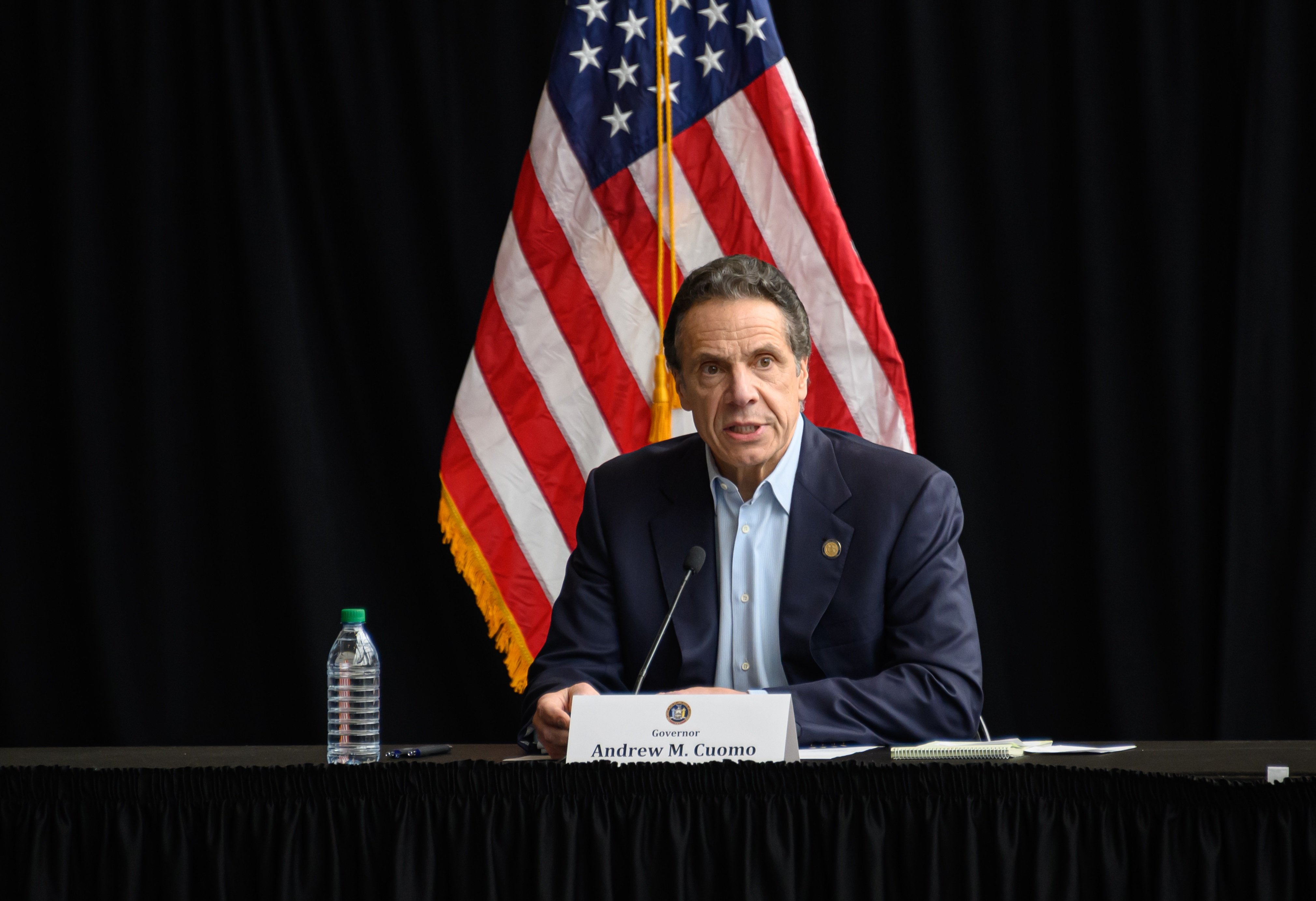
As of 2026, Andrew Cuomo’s net worth is estimated to be between $4 million and $10 million. While his decades of public service provided a stable upper-middle-class income, the majority of his liquid wealth stems from a controversial $5.1 million book deal in 2020, though this figure has been significantly tempered by years of extensive legal defense costs and the absence of a primary government salary since 2021.
Understanding the net worth of a career politician like Andrew Cuomo requires looking beyond a single balance sheet. Unlike figures who enter politics from the world of private equity or high finance, Cuomo’s financial narrative is one of public sector compensation, intellectual property monetization, and the massive liabilities associated with high-stakes litigation. In the years following his resignation as the 56th Governor of New York, his financial status has been defined as much by what he has spent on legal counsel as by what he earned in office.
The Foundation of Public Service Compensation
For the vast majority of his professional life, Andrew Cuomo’s income was a matter of public record. His earnings were tied to the statutory pay scales of the state and federal governments. This "public servant" lifestyle provides a high degree of stability but rarely leads to the "centimillionaire" status seen in the private sector.
During his tenure as the Secretary of Housing and Urban Development (HUD) under President Bill Clinton, his salary was aligned with Executive Level I or II pay grades. Upon returning to New York and eventually becoming the Attorney General in 2007, his salary was approximately $151,000 annually. When he ascended to the governorship in 2011, his salary began at roughly $179,000, eventually rising to $225,000 by 2021—making him, at that time, the highest-paid governor in the United States.
However, a salary of $225,000, while significant, does not inherently produce a multi-million-dollar net worth when one considers the cost of living, taxes, and the expenses associated with maintaining a high-profile political image. The "context" of his net worth, therefore, relies heavily on external income sources that occurred outside his base salary.
The $5.1 Million "American Crisis" Book Deal
The single most significant injection of capital into Cuomo’s personal finances came in 2020. At the height of his national popularity during the COVID-19 pandemic, Cuomo authored American Crisis: Leadership Lessons from the COVID-19 Pandemic. The book deal with Crown Publishing, a subsidiary of Penguin Random House, was valued at $5.125 million.
Tax records released in 2021 confirmed the following breakdown of that deal:
- Initial Payments: Cuomo received $3.12 million in 2020.
- Subsequent Royalties: The remainder was scheduled for payout in the following years.
- Net After Taxes: After accounting for federal and state taxes, as well as approximately $1 million in expenses and charitable donations he claimed to have made, the book deal added roughly $2 million to $3 million to his immediate liquid assets.
This windfall was not without complications. The New York State Joint Commission on Public Ethics (JCOPE) later attempted to claw back the book proceeds, alleging that state resources and staff were improperly used to draft and promote the memoir. While Cuomo successfully fought many of these administrative challenges in court, the legal battles themselves became a "negative asset," draining the very funds he had earned from the publication.
The Burden of Legal Expenses and Litigation
In any context-heavy analysis of Andrew Cuomo’s wealth, one must account for "burn rate"—the speed at which assets are being spent. Since 2021, Cuomo has been embroiled in a series of civil lawsuits and investigations related to allegations of sexual harassment and his administration’s handling of nursing home data during the pandemic.
High-profile defense attorneys in New York City often command rates exceeding $1,000 to $1,500 per hour. Cuomo’s legal team, which has included veteran litigators, has been active for over five years.
- State-Funded Defense: In some instances, Cuomo argued that the state should cover his legal fees because the alleged actions occurred while he was performing his duties as governor. In 2022 and 2023, various rulings mandated that the state pay for portions of his defense in specific civil suits.
- Campaign Fund Usage: Cuomo entered his post-resignation life with a massive campaign war chest—estimated at one point to be over $18 million. Under New York law, campaign funds can often be used to pay for legal fees related to a candidate’s public office. This has served as a "buffer," preventing his personal net worth from being completely liquidated by legal costs.
- Personal Liabilities: Despite the campaign funds, personal legal costs not covered by the state or the campaign account for a significant reduction in his overall net worth.
New York State Pension and Retirement Assets
A critical component of a long-term public official’s net worth is the value of their pension. New York State has one of the most robust public pension systems in the country. Cuomo, having served as Attorney General and Governor, as well as having other creditable service, is eligible for a significant annual pension.
Estimates suggest his annual pension could range between $50,000 and $150,000, depending on the final calculation of his "High-3" average salary and his total years of service credit. In financial planning terms, a guaranteed annual payment of $100,000 is equivalent to having approximately $2.5 million in a private investment account (assuming a 4% withdrawal rate). Therefore, while this isn't "cash in the bank," it represents a massive portion of his financial security in the 2026 context.
Real Estate Holdings and Personal Assets
Andrew Cuomo’s real estate history is often misunderstood because, for 11 years, he resided in the Executive Mansion in Albany, which is state-owned.
- The Lily Pond Home: For years, Cuomo lived in a Mount Kisco home known as "Lily Pond" with his then-partner, Sandra Lee. However, that property was owned by Lee. Upon their split and his subsequent resignation, Cuomo had to establish a new primary residence.
- Current Holdings: As of 2026, Cuomo has maintained a lower profile regarding his primary residence, though he has been associated with properties in the Hamptons and Manhattan. Unlike many of his political peers, he does not own a vast portfolio of commercial real estate or international holdings. His real estate wealth is largely tied to a single primary residence and perhaps minor investment holdings.
Comparative Financial Analysis
To put Andrew Cuomo’s wealth in context, it is helpful to compare him to other governors and national political figures. He is wealthier than the average citizen but significantly less wealthy than "mogul" politicians like Michael Bloomberg or JB Pritzker.
| Wealth Factor | Andrew Cuomo (Est. 2026) | Typical Career Politician | High-Net-Worth Private Citizen |
|---|---|---|---|
| Primary Income Source | Book Royalties / Pension | Salary / Small Investments | Equity / Dividends |
| Liquid Assets | $2M - $5M | $500K - $1M | $10M+ |
| Legal Liabilities | High (Ongoing) | Low | Variable |
| Pension Value | High (NY State Tier) | Moderate | N/A (401k/IRA) |
| Real Estate Strategy | Personal Use | Personal Use | Investment / Rental |
The 2026 Financial Outlook
As we look at Cuomo’s financial standing in 2026, the trajectory is influenced by two potential paths. First is the "Private Citizen" path, where he continues to consult, speak, and potentially write more books. In this scenario, his net worth is likely to grow slowly as his legal issues settle and his pension payments accumulate.
The second is the "Political Comeback" path. If Cuomo were to run for an office such as Mayor of New York City or a return to state-level politics, his finances would again become subject to strict public disclosure. This would likely involve a surge in campaign fundraising, which, while not adding to his personal net worth, would alleviate the pressure on his personal funds for public relations and legal defense.
Factors Influencing Future Valuation:
- Resolution of Civil Suits: If the remaining civil suits are settled or dismissed without massive personal payouts, his net worth will stabilize.
- Media Appearances: Paid speaking engagements or a role as a political commentator for a major network could command fees in the range of $50,000 to $100,000 per appearance.
- The "Clawback" Risk: Should any future court rulings favor the state's attempt to seize his book earnings, his net worth could drop by $5 million overnight.
Frequently Asked Questions
How much did Andrew Cuomo make from his COVID-19 book?
Andrew Cuomo was paid a $5.125 million advance for his book American Crisis. After taxes and agent fees, his take-home pay was estimated at approximately $2.1 million, a portion of which he donated to the United Way of New York State and used to cover various expenses.
Does Andrew Cuomo still receive a salary in 2026?
No, he does not receive a government salary. He is, however, eligible to receive his New York State pension, which is a guaranteed monthly payment based on his decades of service as a state official.
Can Andrew Cuomo use his campaign money for personal expenses?
No. Under New York law, campaign funds must be used for activities related to the "promotion of a candidate" or the "holding of public office." While he can use these funds for legal fees related to his time in office, he cannot use them for personal luxury purchases, mortgages, or daily living expenses.
Is Andrew Cuomo considered a "rich" politician?
In the context of the average American, yes. With a net worth in the mid-seven figures and a six-figure annual pension, he is in the top 1% of wealth holders in the United States. However, in the context of the "political elite"—which includes many multi-millionaires and billionaires—he is considered moderately wealthy.
What is the status of the $5 million book deal clawback?
As of the mid-2020s, several legal challenges regarding the book deal have occurred. While lower courts initially blocked the state's attempt to seize the money, the legal maneuvering has cost Cuomo a significant amount in legal fees, effectively reducing the net value of the deal regardless of the final outcome.
Practical Considerations for Observers
When evaluating the net worth of a figure like Andrew Cuomo, one must distinguish between cash on hand and net worth. A significant portion of Cuomo’s valuation is "locked" in the actuarial value of his pension and the potential value of his personal brand (intellectual property).
For those tracking the intersection of law and finance, Cuomo’s situation serves as a primary case study in how legal defense costs can act as a massive "tax" on the wealth of public figures. If you are analyzing political wealth, always look for the existence of a campaign legal defense fund, as this is often the most important financial vehicle for a politician in crisis, far outweighing their personal checking account.