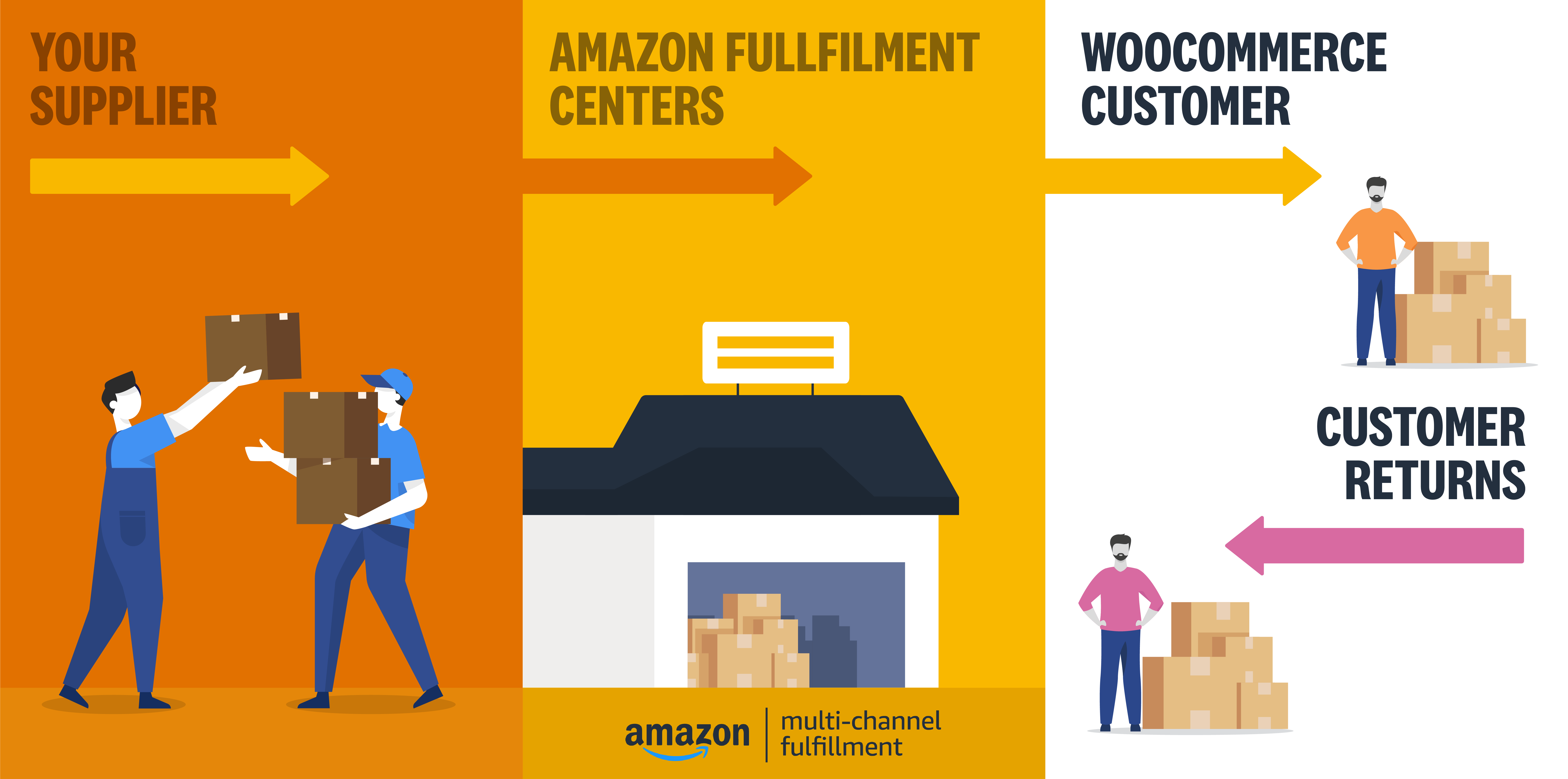
The Amazon Fulfillment Network (AFN)—the underlying logistical backbone of Fulfillment by Amazon (FBA)—is a global supply chain ecosystem of fulfillment centers, sortation facilities, and delivery stations. By depositing inventory into the AFN, third-party sellers delegate warehousing, picking, packing, Prime last-mile shipping, customer service, and reverse logistics directly to Amazon.
What is the Amazon Fulfillment Network (AFN)?
The Amazon Fulfillment Network (AFN) refers to the physical, digital, and operational logistics infrastructure built by Amazon to store, manage, and distribute products on behalf of both Amazon Retail and independent marketplace merchants. Within seller reporting systems, inventory listing types are categorized into two primary fulfillment methods:
- AFN (Amazon Fulfillment Network): Products stored in Amazon facilities and fulfilled by Amazon (standard FBA).
- MFN (Merchant Fulfillment Network): Products stored in seller-controlled warehouses or third-party logistics (3PL) facilities and shipped directly to the customer by the merchant (standard FBM or Seller-Fulfilled Prime).
The AFN is not a single giant warehouse; it is a multi-tiered logistical chain engineered to position inventory as close to consumer demand density as possible. Understanding the layers of this infrastructure clarifies how product moves from the manufacturer to the customer doorstep.
- Amazon Fulfillment Network (AFN) Architecture
- Upstream Storage (Amazon Warehousing & Distribution - AWD)
- Inbound Processing (Inbound Cross-Dock Facilities - IXD)
- Fulfillment Facilities (Sortable & Non-Sortable Fulfillment Centers)
- Downstream Distribution & Delivery (Sortation Centers, Regional Delivery Stations, Customer Doorstep / Hub)
The Architectural Components of AFN
- Amazon Warehousing and Distribution (AWD): Upstream bulk storage facilities designed for long-term supply replenishment. AWD acts as a feeder network into primary fulfillment centers, allowing sellers to maintain bulk safety stock without incurring heavy long-term storage surcharges inside primary fulfillment nodes.
- Inbound Cross-Dock (IXD) Facilities: Receiving nodes that take bulk shipments from domestic suppliers or international freight channels, break them down, and consolidate them for rapid distribution across regional fulfillment facilities.
- Fulfillment Centers (FCs): Primary storage and order-picking nodes. FCs are divided by item characteristics:
- Sortable FCs: Facilities equipped with robotic drive units (Amazon Robotics) that handle smaller products that fit into standardized totes.
- Non-Sortable FCs: Dedicated warehouses designed for bulky, heavy, or oversized merchandise requiring specialized equipment like order pickers and forklifts.
- Specialty FCs: Facilities tailored for specific categories, such as apparel, hazardous materials (Hazmat), or climate-controlled goods.
- Sortation Centers: Mid-mile facilities where packed customer shipments are sorted by postal code and consolidated onto specialized line-haul trucks.
- Delivery Stations: Last-mile nodes where regional packages are transferred to local delivery fleets, independent flex drivers, or postal partners for final delivery.
How the Network Operates: End-to-End Logistics Workflow
Transitioning inventory through the Amazon Fulfillment Network requires adherence to strict physical and administrative standards. A failure at any point in the inbound process can lead to inventory rejections, financial penalties, or receiving delays.
- Shipment Creation (FNSKU Barcoding, Prep Standards)
- Freight Transport (AGL or Partnered Carrier Program)
- Inbound Receiving (Inbound Placement & Dock Processing)
- Picking & Packing (SLAM Lines & Robotic FC Routing)
- Last-Mile Delivery (Regional Delivery Stations & Prime)
- Reverse Logistics (Returns Grading, Restocking/Removal)
1. Shipment Creation and Physical Prep
Before shipping inventory, sellers create a formal shipping plan inside Amazon Seller Central. Every unit entering the AFN must carry a scannable barcode—either a manufacturer UPC/EAN or an Amazon-specific FNSKU (Fulfillment Network Stock Keeping Unit).
Products must also conform to strict prep requirements based on their category:
- Poly-bagging items susceptible to dust, moisture, or dirt (with required suffocation warnings).
- Bubble-wrapping fragile or glass items to withstand a drop test.
- Taping exposed caps on liquid containers to prevent leakage during high-speed conveyor routing.
2. Transport and Inbound Logistics
Sellers transport inventory into the AFN using one of three core freight models:
- Amazon Global Logistics (AGL): Amazon’s ocean and air freight service that routes shipments directly from Asian manufacturing hubs into the North American or European AFN footprint.
- Amazon Partnered Carrier Program: Discounted ground small-parcel (LTL/FTL) transport managed through integrated logistics carriers (such as UPS or regional freight carriers).
- Non-Partnered Third-Party Freight: Independent freight forwarders booking dock appointments directly through Amazon’s Carrier Central portal.
3. Inbound Receiving, Staging, and Placement
Upon arrival at an IXD or Fulfillment Center, dock workers scan carton labels and unpack pallets. The inbound placement system determines whether goods are stored in a single node or distributed across multiple regional fulfillment centers.
Amazon offers sellers options regarding inbound placement:
- Distributed Inventory Placement: The seller pays reduced or zero inbound placement fees by shipping split inventory to multiple FC locations designated by Amazon.
- Minimal Split / Partial Placement: The seller ships to a single inbound location, paying an inbound placement service fee to offset Amazon's internal costs of re-distributing goods across the network.
4. Outbound Picking, Packing, and SLAM Line Processing
When an order is placed on the marketplace, algorithms direct automated guided vehicles (AGVs) or human pickers to the bin location containing the item. Picked items are routed to packing stations via conveyor networks.
At the pack line, computerized systems scan the item barcode, select the exact box dimensions required, print protective dunnage instructions, and send the box to the SLAM (Scan, Label, Apply, Manifest) line. The SLAM system automatically weighs the package to verify correct contents, prints the shipping label, and applies it in a single high-speed motion.
5. Reverse Logistics and Return Processing
If a customer returns an item, the shipment is routed back to a specialized return handling facility within the AFN. Amazon personnel inspect and grade the return:
- Sellable Condition: Returned to active AFN inventory.
- Unsellable Condition: Categorized as customer-damaged, defective, or carrier-damaged. Sellers must generate a removal order, request disposal, or utilize liquidations to remove unsellable units from the network.
Economic Architecture: Fees, Costs, and Surcharges
Using the Amazon Fulfillment Network transforms fixed warehousing expenses into variable operational costs. However, the fee schedule is highly granular and heavily penalizes slow-moving, oversized, or improperly prepped inventory.
- AFN Total Cost Profile
- Operational Fees
- Base FBA Fee
- Low-Inventory
- Returns Proc.
- Storage Surcharges
- Base Monthly
- Aged Inventory
- Peak Q4 Surcharge
- Placement & Prep
- Inbound Place
- Prep Service
- Labeling Fee
- Operational Fees
Base Fulfillment Fees
The primary FBA fulfillment fee is a flat per-unit charge covering picking, packing, shipping, customer service, and standard returns. This fee is calculated based on exact product dimension tiers and shipping weight brackets:
- Standard Size Tiers: Products weighing under 20 lbs with dimensions not exceeding 18 x 14 x 8 inches.
- Large Bulky / Extra-Large Tiers: Items exceeding standard limits, subject to dimensional weight adjustments ($\text{Length} \times \text{Width} \times \text{Height} / 139$).
- Apparel Surcharges: Higher base rates to cover elevated handling and return packaging costs associated with fashion categories.
Monthly Inventory Storage Fees
Amazon assesses monthly storage fees based on the average daily volume of inventory occupies in cubic feet:
- Non-Peak Period (January – September): Standard per-cubic-foot baseline rate.
- Peak Period (October – December): Premium per-cubic-foot rate designed to discourage sellers from storing slow-moving stock during peak holiday shopping surges.
Aged Inventory Surcharges and Capacity Limits
To preserve warehouse throughput, Amazon penalizes inventory that sits idle in fulfillment centers:
- Aged Inventory Surcharge (Long-Term Storage Fees): Assessed monthly on units held in fulfillment centers longer than 180 days, scaling up sharply for units aged beyond 271, 330, and 365 days.
- Low-Inventory-Level Fee: A fee applied to standard-sized products that maintain consistently low inventory levels relative to their historical sales velocity. This fee compensates Amazon for the increased cost of shipping items from distant fulfillment centers when local stock is exhausted.
- Capacity Limits: Sellers are assigned inventory storage and volume caps based on their historical sales performance and operational health metrics.
Cost Breakdown Table
| Fee Component | Primary Cost Trigger | Calculation Basis | Strategic Mitigation Strategy |
|---|---|---|---|
| Base FBA Fulfillment Fee | Outbound customer shipment completion | Per unit; determined by item size tier and shipping weight | Optimize packaging dimensions to fit lower size/weight brackets |
| Monthly Storage Fee | Storage of inventory in FCs (Calculated monthly) | Per cubic foot; higher rates apply during Q4 Peak | Maintain just-in-time inventory velocity; rely on upstream buffer storage |
| Inbound Placement Fee | Shipping inventory to single/minimal split locations | Per unit; varies by product size and location distribution | Select multi-split placement or route inventory through Amazon AWD |
| Aged Inventory Surcharge | Units remaining in FCs longer than 180 days | Per cubic foot charge calculated on a 30-day cadence | Issue removal orders, run liquidation promotions, or drop prices |
| Low-Inventory-Level Fee | Maintaining inventory levels below demand thresholds | Per unit sold; calculated based on historical day-of-supply ratios | Keep consistent buffer inventory; utilize automated AWD auto-replenishment |
| Returns Processing Fee | Customer-initiated returns in high-return categories | Per returned unit; applicable to apparel, shoes, and high-return niches | Standardize sizing charts and enhance product descriptions to lower return rates |
Strategic Advantages vs. Operational Risks
Leveraging the Amazon Fulfillment Network gives brands access to world-class logistics infrastructure, but it also exposes sellers to operational dependencies and fee complexity.
Strategic Advantages
Benefits of Utilizing AFN
- Prime Badge Access: Drives higher conversion rate & Buy Box win rate
- Hands-Off Customer: Amazon handles 24/7 support & last-mile tracking
- Multi-Channel (MCF): Fulfill orders from Shopify, eBay, and custom stores
- Global Expansion: Leverage international FC networks seamlessly
Prime Badge Eligibility: Products in the AFN automatically qualify for Amazon Prime fast shipping. Prime badging dramatically improves product conversion rates and Buy Box priority over merchant-fulfilled offers.
Hands-Off Customer Service & Returns: Amazon handles customer inquiries, tracking notifications, and physical return processing 24/7, reducing internal support overhead for sellers.
Multi-Channel Fulfillment (MCF): Sellers can leverage their AFN inventory to fulfill orders originating from external channels, such as Shopify stores, eBay, or TikTok Shop, unifying inventory into a single pool.
Global Logistics Access: Merchants can launch in international marketplaces (such as Europe, Japan, or Canada) by sending inventory directly to local AFN warehouses via Amazon Global Logistics.
Operational Risks and Limitations
- Margin Compression: The accumulation of storage fees, inbound placement fees, and fulfillment charges can erode net profit margins if pricing models fail to account for size and weight thresholds.
- Loss of Control Over Fulfillment Quality: Commingling of inventory, shipping errors, or damaged packaging executed by Amazon warehouse staff can result in negative buyer reviews tied directly to the product detail page.
- Strict Compliance Standards: Non-compliant inbound shipments risk receiving Prep Chargebacks, delivery appointments rejections, or temporary inbound account suspensions.
- Inventory Lockdown: If an account faces suspended seller privileges, physical inventory inside the AFN can be locked, blocking seller access while monthly storage fees continue to accrue.
Optimizing Your AFN Strategy: Operational Best Practices
To maintain high profit margins and avoid punitive inventory fees, sellers must actively manage their AFN operations.
1. Monitor and Elevate the Inventory Performance Index (IPI)
Amazon evaluates warehouse efficiency through the Inventory Performance Index (IPI). The score is influenced by four core drivers:
- Excess Inventory Percentage: The percentage of units deemed overstocked based on demand forecasts.
- FBA Sell-Through Rate: Calculated as total units shipped over the trailing 90 days divided by average daily units stored in AFN.
- Stranded Inventory Percentage: Products stored in AFN facilities that lack an active, buyable detail page (often due to listing errors, pricing suppression, or compliance holds).
- In-Stock Rate: Maintaining high sales velocity products in stock to avoid missing customer demand.
Maintaining an IPI score above Amazon's required baseline ensures unlimited standard-size storage allocations and exempts sellers from capacity surcharges.
2. Hybridizing Supply Chains with AWD (Amazon Warehousing & Distribution)
To minimize inbound placement fees and protect against low-inventory fees, merchants frequently implement a hybrid supply chain model combining AWD and AFN:
- Overseas Factory / Supplier
- Amazon Warehousing & Distribution (AWD) (Bulk storage, lower monthly rates, no aged inventory surcharges)
- Amazon Fulfillment Network (AFN FCs) (Automated auto-replenishment, active Prime inventory, waives inbound placement fees)
- End-User Customer
By storing primary bulk inventory inside AWD, Amazon automatically replenishes downstream AFN fulfillment centers as stock levels drop. This configuration waives standard inbound placement fees and eliminates low-inventory penalties.
3. Packaging Redesign for Breakpoint Thresholds
A product that sits near size tier boundaries (e.g., 18.1 inches long or weighing 16.1 oz) can cross into a higher fee bracket for a fraction of an inch or ounce.
To optimize physical dimensions:
- Utilize vacuum-sealed polybags for soft goods to prevent bag inflation during transit.
- Redesign outer rigid packaging to keep dimensions under standard-size thresholds (18 x 14 x 8 inches).
- Conduct packaging drop tests to ensure products pass standard fulfillment handling tests without requiring secondary bubble wrapping from Amazon prep teams.
Frequently Asked Questions
What is the primary difference between AFN and MFN on Amazon?
AFN (Amazon Fulfillment Network) means Amazon stores, picks, packs, ships, and handles customer service for inventory via Fulfillment by Amazon (FBA). MFN (Merchant Fulfillment Network) means the merchant manages their own product storage and ships orders directly to buyers (FBM) or through an independent 3PL network.
How does Amazon measure product size and weight for AFN fulfillment fees?
Amazon measures items using high-precision automated scanners (Cubiscan systems) upon arrival at fulfillment centers. The calculated fee relies on the item's unit weight or dimensional weight ($\text{Length} \times \text{Width} \times \text{Height} / 139$), whichever is higher, applied to standardized size tier charts.
How can sellers avoid paying Inbound Placement Service Fees?
Sellers can avoid or minimize inbound placement service fees by choosing the Distributed Inventory Placement option during shipment creation, which requires sending split inventory shipments to multiple destination fulfillment centers designated by Amazon. Alternatively, enrolling products in Amazon Warehousing and Distribution (AWD) waives inbound placement fees when goods are automatically transferred into AFN.
What is stranded inventory and why does it impact AFN performance?
Stranded inventory refers to products physically stored inside an Amazon fulfillment center that cannot be purchased because the detail page is inactive, suppressed, closed, or suspended. Stranded inventory continues to accrue monthly storage fees and aged inventory surcharges while dragging down the seller's overall Inventory Performance Index (IPI) score.
Can orders placed outside of Amazon be shipped using the AFN inventory?
Yes, sellers can use Multi-Channel Fulfillment (MCF) to fulfill orders placed on off-Amazon sales channels (such as independent direct-to-consumer websites or secondary marketplaces). Sellers submit the buyer's shipping information inside Seller Central or via API integrations, and Amazon packs and ships the item from their existing AFN inventory pool.
Practical Recommendation & Next Actions
To maintain healthy profit margins while scaling operations within the Amazon Fulfillment Network, implement this action plan:
- Audit Packaging Breakpoints: Measure product packaging dimensions and weight. Trimming fractions of an inch or packaging bulk efficiently can shift items down standard size tiers, instantly improving net margin per unit.
- Review Inventory Health Monthly: Log into Seller Central and examine the FBA Inventory Dashboard. Clear out items aged over 180 days by creating automated removal or liquidation orders before aged inventory surcharges apply.
- Resolve Stranded Inventory Immediately: Check for stranded inventory weekly to ensure active listings match physical stock.
- Evaluate Upstream Storage Options: If your business is scaling, evaluate integrating Amazon Warehousing and Distribution (AWD) or a private 3PL to feed the AFN. This approach reduces inbound placement fees and avoids capacity constraints during high-volume Q4 periods.
For official regulatory definitions, fee structure breakdowns, and direct shipment creation software workflows, consult the official Amazon Seller Central Help Portal.