In New York, workers' compensation is legally mandated for almost all employers with limited exceptions. While there is no direct "substitute" that allows a business with employees to bypass the law, viable alternatives to traditional private policies include individual self-insurance, joining a Professional Employer Organization (PEO), or qualifying for a legal exemption via Form CE-200 for owner-only entities.
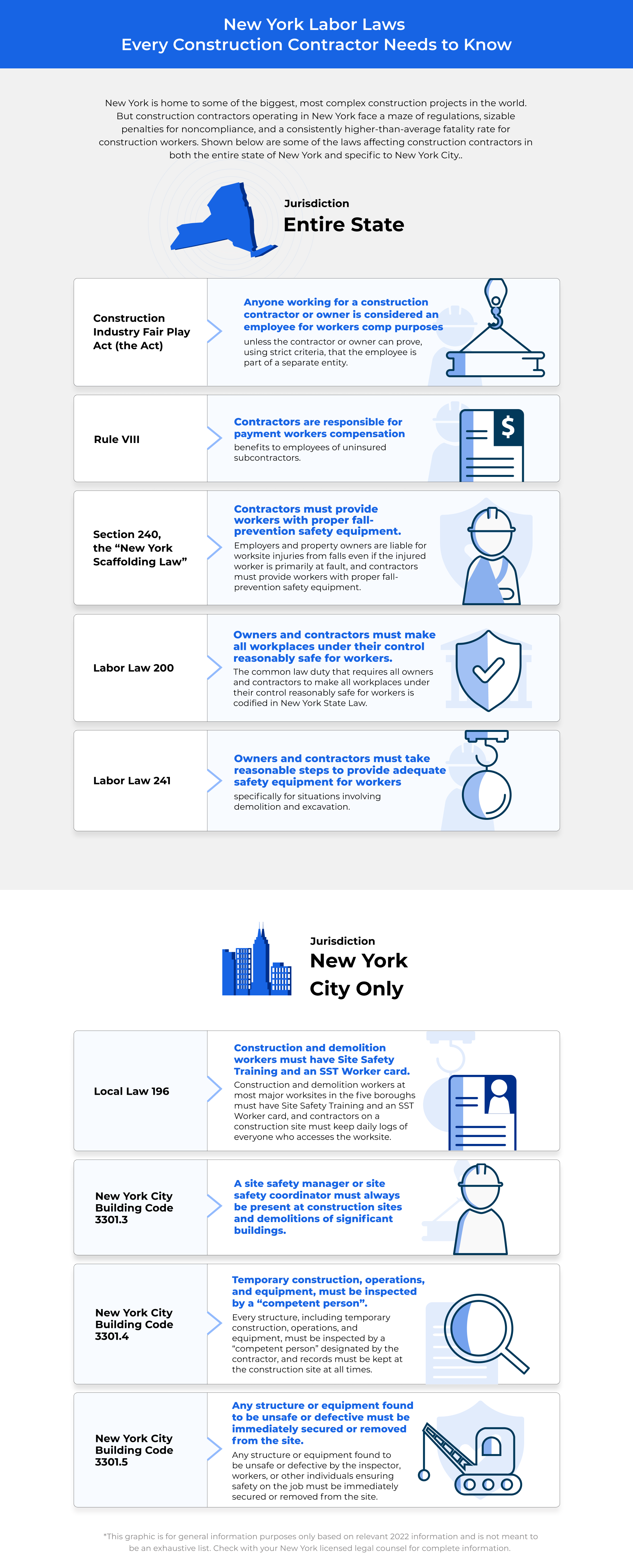
New York State maintains some of the most stringent workers' compensation regulations in the United States. Under the Workers' Compensation Law, any entity employing even one person—including part-time workers, domestic workers, and even some family members—must provide statutory coverage. As we navigate the landscape in 2026, the cost of premiums continues to be a significant line item for small and medium-sized enterprises (SMEs). This financial pressure often leads business owners to seek alternatives. However, in the Empire State, "alternative" does not mean "optional." Instead, it refers to different structures of risk management or legal statuses that change how—or if—a policy must be held.
The Legal Framework: Why "Alternatives" Are Limited
To understand alternatives, one must first understand the rigidity of the New York State Workers’ Compensation Board (WCB) requirements. Unlike some states that allow "opt-out" provisions for certain industries or company sizes, New York assumes every worker is an employee unless proven otherwise. The primary goal of the law is to ensure that medical expenses and lost wages are covered for employees injured on the job, regardless of fault.
For an employer, the failure to carry a valid policy results in severe penalties. In 2026, the WCB continues to utilize sophisticated data-matching systems to identify uninsured employers. Penalties can reach $2,000 for every ten days of non-compliance, and criminal charges are possible in cases of willful negligence. Therefore, any "alternative" pursued must be recognized by the WCB to avoid these catastrophic financial consequences.
Legal Exemptions: Form CE-200 and Owner-Only Entities
The most common way to legally avoid purchasing a workers' compensation policy in New York is through a formal exemption. This is not a "loophole" but a recognition that certain business structures do not have "employees" as defined by the law.
Sole Proprietors and Partnerships
If you operate as a sole proprietor or a partnership and have no employees, you are not required to carry workers' compensation for yourself. However, you are also not covered if you get injured. Many contractors choose to remain in this category to keep overhead low. To prove to general contractors or government agencies that you are legally exempt, you must file a Form CE-200 (Certificate of Attestation of Exemption). This form is filed electronically through the WCB’s web portal.
LLCs and Corporations
For Limited Liability Companies (LLCs) and Corporations, the rules are slightly more complex. In an LLC where all members are individuals and there are no employees, coverage is generally not required. For corporations, if there are one or two executive officers who own all the stock and have no employees, they may also qualify for an exemption. It is critical to note that as soon as a single person is hired—even a temporary seasonal helper—the exemption is voided, and a statutory policy must be secured immediately.
Individual Self-Insurance: For the Financially Robust
For large-scale enterprises in New York, individual self-insurance serves as the most direct alternative to buying a policy from a commercial carrier or the state fund. Self-insurance allows a company to pay its own claims directly rather than paying a monthly or annual premium to an insurer.
Eligibility and Prerequisites
Not every company can self-insure. The WCB’s Office of Self-Insurance requires an applicant to demonstrate immense financial stability. As of 2026, the prerequisites typically include:
- Substantial Net Worth: A company must usually show several million dollars in tangible net worth.
- Security Deposits: The state requires the posting of a security deposit (often in the form of a surety bond, cash, or letters of credit) to ensure claims can be paid even if the company faces insolvency.
- Claims Administration: The employer must have a robust internal system or hire a Third-Party Administrator (TPA) to manage the medical and legal aspects of every workplace injury.
The "why" behind choosing self-insurance is usually long-term cost savings. Large corporations with safe work environments can often pay their actual claim costs for less than the cost of a traditional premium, which is built on industry-wide averages and carrier profit margins.
Professional Employer Organizations (PEOs) and Co-employment
For small to mid-sized businesses that find traditional premiums too high but are not large enough to self-insure, a Professional Employer Organization (PEO) offers a strategic alternative. This is known as a co-employment model.
When a business partners with a PEO, the PEO becomes the "employer of record" for administrative purposes, including payroll, tax filing, and workers' compensation. Because PEOs manage thousands of employees across many different clients, they have the scale to negotiate much lower workers' compensation rates than a small business could on its own.
The Benefits of the PEO Model
- Lower Rates: PEOs often have access to master policies with lower experience rating modifiers (MODs).
- Improved Cash Flow: Many PEOs offer "pay-as-you-go" models, which eliminate the large upfront deposits required by traditional insurance.
- Risk Management: PEOs typically provide safety training and loss-control services to help reduce the frequency of accidents, which further lowers costs over time.
Occupational Accident Insurance (OAI): A Specialized Alternative
Occupational Accident Insurance is often discussed as an alternative, but it is vital to understand its limitations in New York. OAI is designed for independent contractors and 1099 workers—specifically in the trucking and "gig economy" sectors.
OAI provides benefits for medical expenses, disability, and accidental death resulting from a work-related injury. It is often cheaper than workers' compensation. However, OAI is not a legal substitute for workers' compensation if the WCB determines that the "independent contractor" is actually an "employee" under the law.
New York uses a "control test" to determine employment status. If you direct the worker’s schedule, provide their tools, and supervise their methods, they are likely an employee. In this case, an OAI policy will not satisfy the state mandate, and the employer could still be fined for failing to carry statutory workers' compensation. OAI is best used by genuine freelancers who want some level of protection but do not qualify for, or cannot afford, a full voluntary workers' comp policy.
Comparing New York Coverage Options
The following table compares the primary ways businesses handle workplace injury risk in New York in 2026.
| Option | Ideal For | Legal Compliance | Primary Advantage | Major Drawback |
|---|---|---|---|---|
| Traditional Policy | All employers | Fully Compliant | Easiest to set up; standardized. | Can be expensive; requires audits. |
| NYSIF (State Fund) | High-risk industries | Fully Compliant | Must accept all applicants; non-profit. | Often higher rates for safe companies. |
| Self-Insurance | Large corporations | Fully Compliant | Long-term cost control and autonomy. | Massive capital/collateral requirement. |
| PEO Co-employment | Mid-sized firms | Fully Compliant | Economies of scale; reduced admin burden. | Loss of some HR autonomy; admin fees. |
| CE-200 Exemption | Owners only | Fully Compliant | Zero cost. | No coverage for the owner's injuries. |
| OAI (Occ. Accident) | 1099 Contractors | Not Compliant for employees | Low cost; flexible benefits. | Does not protect against WCB fines. |
The New York State Insurance Fund (NYSIF) as an Alternative
While NYSIF is an insurance carrier, many businesses view it as an alternative to the "voluntary market" (private carriers like Travelers or Hartford). NYSIF is a competitive, non-profit state agency.
Unlike private carriers, NYSIF is the "carrier of last resort." They are legally required to provide insurance to any employer that applies, regardless of how dangerous the industry is. For businesses in high-risk sectors—such as roofing, demolition, or logging—private insurers often refuse to write policies. In these instances, NYSIF is the essential alternative that allows the business to remain legal. Additionally, NYSIF often offers "safety group" programs where businesses in the same industry pool their risk to receive dividends and discounts, mimicking some of the benefits of group self-insurance.
Risks of Misclassification and "Ghost Policies"
In the search for alternatives, some businesses are tempted by "ghost policies." A ghost policy is a workers' compensation policy with zero payroll, often purchased by sole proprietors to get a certificate of insurance to show to a general contractor.
While ghost policies are technically legal for individuals with no employees, using them to cover a crew of "independent contractors" is a form of insurance fraud. In 2026, the New York Department of Financial Services (DFS) and the WCB have increased their scrutiny of "1099-only" workforces. If a worker is injured and the "ghost policy" holder is found to have actual employees, the carrier will deny the claim, and the business owner will be personally liable for all medical costs, plus state fines.
Practical Steps for Business Owners in 2026
If you are looking for alternatives to lower your workers' compensation burden in New York, follow these steps:
- Audit Your Classification Codes: Ensure your employees are classified correctly. Misclassifying a clerical worker as a construction laborer can unnecessarily inflate your premiums.
- Apply for CE-200 if Eligible: If you are a single-member LLC or a sole prop with no help, don't pay for a policy you don't need. Get your official exemption certificate online.
- Explore PEO Partnerships: If you have 5–50 employees, get a quote from a PEO. The "alternative" of co-employment often yields the highest savings for this demographic.
- Improve Your Experience Modifier (MOD): The most effective way to "alternate" away from high costs is to improve safety. A MOD below 1.0 acts as a discount on your premium, while a MOD above 1.0 acts as a penalty.
- Consult a Licensed NY Broker: Workers' comp law is hyper-local. A broker specializing in the New York market can help you navigate between private carriers and NYSIF to find the most cost-effective legal path.
Frequently Asked Questions
Can I use my personal health insurance instead of workers' compensation in New York?
No. Personal health insurance policies almost always contain exclusions for work-related injuries. Furthermore, health insurance does not cover "lost wages" (indemnity benefits), which are a legal requirement under the NY Workers' Compensation Law. Using health insurance does not satisfy the legal mandate to carry workers' comp.
Are there "Group Self-Insurance" options for small businesses?
While group self-insurance was once popular in New York, the WCB has significantly tightened regulations on these groups due to past financial failures of several trusts. While some well-funded groups still exist for specific industries (like healthcare or schools), they are much harder to join in 2026 and require strict financial vetting.
What happens if I am a freelancer and my client requires workers' comp?
If you are a sole proprietor with no employees, you should provide the client with a Form CE-200. This proves to the client (and their insurance auditor) that you are legally exempt from the requirement. You do not need to buy a "ghost policy" if you have this certificate.
Does a PEO actually save money on workers' comp?
In many cases, yes. Because a PEO aggregates thousands of employees, they have "buying power." They can also offer "pay-as-you-go" billing, which prevents the "audit shock" many businesses face at the end of the year when a traditional carrier discovers the payroll was higher than estimated.
Is Occupational Accident Insurance (OAI) legal for trucking companies?
OAI is frequently used for independent owner-operators in the trucking industry. However, if the trucking company exercises significant control over the driver, the NY WCB may still classify them as an employee. In such cases, the company would be required to provide standard NY workers' compensation regardless of the OAI policy.
Final Recommendation
For most New York businesses, the best "alternative" to a high-priced traditional policy is either qualifying for a CE-200 exemption (for owner-only businesses) or joining a PEO (for businesses with employees). Never attempt to replace workers' compensation with unauthorized products like OAI or general liability for employees, as the penalties for non-compliance in New York are among the highest in the nation. Always verify your exemption status directly through the New York State Workers' Compensation Board's online portal to ensure you remain in good legal standing.