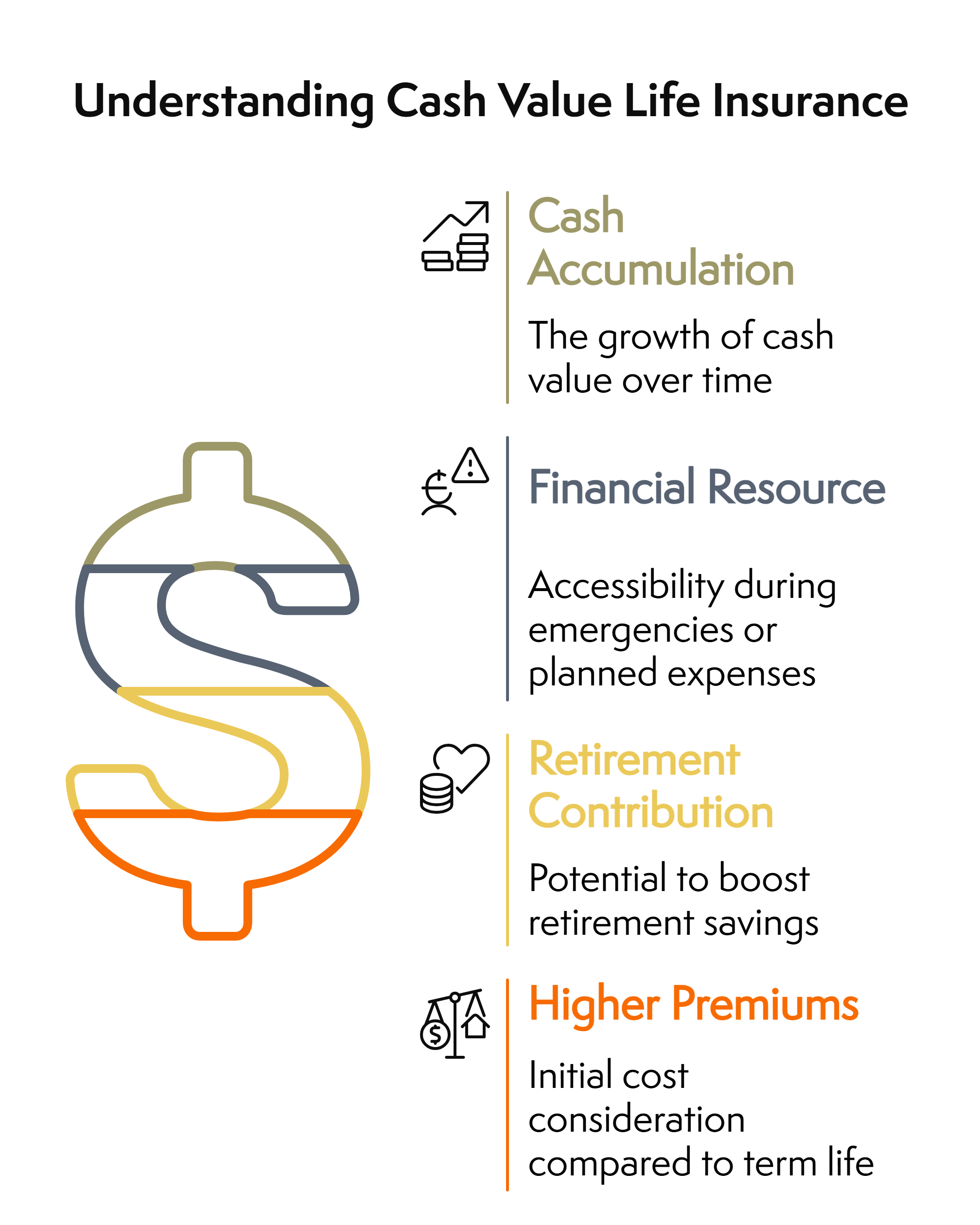
Allstate life insurance cash value represents the "living benefit" of a permanent life insurance policy, acting as a tax-deferred savings component that grows over time. As of 2026, policyholders can access this equity through policy loans, partial withdrawals, or a full surrender to cover expenses like retirement, education, or emergencies.
Permanent life insurance is more than just a death benefit for beneficiaries; it is a financial asset that accumulates value during the insured person's lifetime. For those holding legacy Allstate policies—many of which are now serviced by Everlake Life Insurance following the company’s divestiture of its life insurance business—understanding how cash value accrues and how to access it is critical for effective wealth management.
This guide provides an in-depth analysis of how Allstate life insurance cash value works, the differences between policy types, the mechanics of growth, and the tax implications of accessing your funds.
What is Cash Value in an Allstate Life Insurance Policy?
Cash value is a feature exclusive to permanent life insurance policies, such as Whole Life or Universal Life. Unlike term life insurance, which only provides coverage for a specific period and has no savings component, permanent policies are designed to last a lifetime. A portion of every premium payment you make is diverted into a cash value account.
In the early years of a policy, a larger percentage of the premium goes toward the cost of insurance (COI) and administrative fees. As the policy matures, the cash value begins to grow through interest credits or dividends. This growth is tax-deferred under Internal Revenue Code Section 7702, meaning you do not pay taxes on the gains as long as the money remains within the policy.
The cash value serves several purposes. It can be used to pay premiums later in life (a "vanishing premium" strategy), it can be borrowed against, or it can be withdrawn. However, it is important to note that if the insured person passes away, the beneficiaries typically receive only the face amount (death benefit) of the policy, while the remaining cash value is often retained by the insurance company, depending on the specific policy rider selected.
Eligible Policy Types: Which Allstate Plans Accumulate Value?
Not all Allstate life insurance products build cash value. It is essential to distinguish between the various categories of insurance to determine if your policy has an equity component.
Whole Life Insurance
Allstate’s traditional Whole Life policies offer the most predictability. These policies feature fixed premiums and a guaranteed rate of return on the cash value. Because the growth is guaranteed, the cash value builds steadily over decades. Some legacy Allstate policies may also be "participating," meaning they are eligible to receive dividends, which can be used to increase the cash value or the death benefit.
Universal Life Insurance (UL)
Universal Life policies offer more flexibility than Whole Life. Policyholders can adjust their premium payments and death benefits as their financial situation changes. The cash value in a UL policy earns interest based on current market rates, subject to a minimum guaranteed rate. However, if interest rates are low and the cost of insurance rises, the policyholder may need to pay higher premiums to keep the cash value from depleting and the policy from lapsing.
Variable Universal Life (VUL)
For those seeking higher growth potential, Variable Universal Life allows the cash value to be invested in sub-accounts, which function similarly to mutual funds. While this offers the chance for significant gains, it also carries market risk. If the underlying investments perform poorly, the cash value can decrease, potentially requiring additional premium payments to maintain coverage.
The Mechanics of Cash Value Growth
The growth of your Allstate life insurance cash value is governed by the specific terms of your contract and the broader economic environment of 2026. Understanding the factors that influence this growth helps in long-term financial planning.
- Premium Allocation: When you pay a premium, the insurer deducts the "load," which includes commissions, state taxes, and administrative costs. The remainder is split between the cost of the death benefit and the cash value account.
- Interest Crediting: For Universal Life policies, the company credits interest to the cash value. This rate is determined by the insurer’s portfolio performance but cannot fall below the guaranteed minimum stated in the contract (often 2% to 4% in older policies).
- Dividend Payments: If you hold a participating Whole Life policy, you may receive dividends. While not guaranteed, dividends represent a share of the company's profits. Policyholders often choose to "reinvest" these dividends into the cash value to accelerate growth.
- Cost of Insurance (COI) Deductions: As the insured person ages, the mortality risk increases. The insurance company deducts the COI from the cash value each month. If the cash value growth does not exceed the COI, the account balance will shrink. This is a common risk in older Universal Life policies.
The Blackstone/Everlake Transition
In 2021, Allstate completed the sale of Allstate Life Insurance Company to entities managed by Blackstone, a global investment firm. The life insurance business was subsequently rebranded as Everlake Life Insurance Company.
For policyholders in 2026, this means that while your policy may still bear the Allstate name or was purchased through an Allstate agent, it is likely serviced and managed by Everlake. The terms of your original contract, including your cash value guarantees, interest rate floors, and death benefit, remain legally binding. Everlake is responsible for the financial obligations of these policies. You can find more information about this transition on the Everlake Life Insurance official website.
How to Access Your Allstate Life Insurance Cash Value
Accessing the equity in your life insurance policy is one of its primary advantages. However, each method of access has different consequences for the policy's longevity and tax status.
1. Policy Loans
One of the most popular ways to use cash value is by taking a policy loan. Unlike a bank loan, there is no credit check or application process. You are essentially borrowing against your own collateral.
- Pros: The loan is generally tax-free, and you are not required to pay it back on a set schedule.
- Cons: The insurer charges interest on the loan balance. If the loan plus interest exceeds the total cash value, the policy will lapse, potentially triggering a massive tax bill. Furthermore, any unpaid loan balance is deducted from the death benefit when you pass away.
2. Partial Withdrawals (Surrenders)
You can choose to withdraw a portion of your cash value. This is technically a "partial surrender" of the policy.
- Taxation: Withdrawals are generally taxed on a "First-In, First-Out" (FIFO) basis. This means you can withdraw up to the amount of premiums you have paid (your "basis") without paying taxes. Any amount withdrawn above your basis is taxed as ordinary income.
- Impact: A withdrawal permanently reduces the death benefit and the remaining cash value, which may limit future growth.
3. Full Policy Surrender
If you no longer need the life insurance coverage, you can cancel the policy entirely and take the "Cash Surrender Value."
- Calculation: The cash surrender value is the total cash value minus any surrender charges and outstanding loans. Surrender charges are typically high in the first 10–15 years of a policy but disappear in older contracts.
- Taxation: You will owe ordinary income tax on any amount received that exceeds the total premiums paid into the policy.
4. Paying Premiums with Cash Value
In 2026, many policyholders use their accumulated cash value to cover their monthly premiums. This is known as "surrendering for paid-up additions" or using the "automatic premium loan" feature. This allows the policy to remain in force without out-of-pocket costs, provided the cash value is large enough to sustain the deductions.
Comparison of Access Methods
| Method | Tax Treatment | Impact on Death Benefit | Repayment Required? |
|---|---|---|---|
| Policy Loan | Usually Tax-Free | Reduced by loan amount + interest | No, but recommended |
| Withdrawal | Tax-free up to basis | Permanent reduction | No |
| Full Surrender | Taxed on gains over basis | Policy is terminated | N/A |
| Premium Payment | Tax-free | Minimal if planned correctly | No |
Tax Considerations and the MEC Warning
While life insurance enjoys favorable tax treatment, the IRS has strict rules to prevent people from using these policies solely as tax-sheltered investment vehicles.
The 7-Pay Test
If you fund your policy too quickly—paying in more than the IRS-defined limit within the first seven years—the policy becomes a Modified Endowment Contract (MEC). Once a policy is classified as a MEC, it loses its FIFO tax status. Any withdrawals or loans from a MEC are taxed on a "Last-In, First-Out" (LIFO) basis, meaning the gains (taxable) come out before the basis (tax-free). Additionally, if you are under age 59½, you may face a 10% IRS penalty on MEC distributions.
Basis and Gains
It is crucial to keep track of your "cost basis"—the total of all premiums paid minus any previous tax-free withdrawals. For most Allstate policies that are not MECs, you can access your basis tax-free. However, if the policy lapses while a loan is outstanding, the IRS treats the forgiven loan as a distribution, which can lead to a surprise tax liability. You can reference IRS Publication 525 for detailed rules on taxable and nontaxable income related to life insurance.
Common Mistakes to Avoid
Managing a policy with cash value requires ongoing oversight. Many policyholders fall into traps that can jeopardize their financial security.
- Ignoring Interest on Loans: Even if you don't make monthly payments on a policy loan, the interest is added to the principal. Over time, "interest on interest" can cause the debt to grow exponentially, eventually consuming the entire cash value.
- Failing to Monitor Universal Life COI: In Universal Life policies, the cost of insurance rises every year as you get older. If you are not paying enough premium and interest rates are low, your cash value could hit zero. In 2026, many seniors with policies from the 1980s and 90s are finding they must pay thousands of dollars in "catch-up" premiums to keep their coverage active.
- Surrendering Too Early: Surrender charges in the early years of a policy can be as high as 10% to 50% of the cash value. It is usually best to wait until the surrender charge period has expired before canceling a policy.
- Neglecting the Beneficiary Designation: While focusing on the cash value, don't forget to update your beneficiaries. Cash value access doesn't change who gets the death benefit, but a policy lapse due to over-borrowing will leave your beneficiaries with nothing.
Frequently Asked Questions
How do I check my Allstate life insurance cash value?
You can check your current cash value by logging into the Everlake Life Insurance portal or by contacting your original Allstate agent. You should also receive an annual statement that breaks down your premium payments, interest earned, cost of insurance deductions, and the "net cash surrender value."
Can I use my cash value to buy a different insurance policy?
Yes, through a Section 1035 Exchange. The IRS allows you to transfer the cash value of one life insurance policy to another (or to an annuity) without triggering a tax event. This is often done if a policyholder finds a new product with better features or lower fees in 2026. However, you must follow strict procedures to ensure the funds go directly from one insurer to the other.
What happens to the cash value when I die?
In most standard Allstate policies, the insurance company keeps the cash value, and your beneficiaries receive the face amount of the policy. For example, if you have a $500,000 policy with $50,000 in cash value, your beneficiaries get $500,000. Some policies have an "Option B" or "Increasing Death Benefit" rider where the beneficiaries receive both the face amount and the cash value, but these policies typically have significantly higher premiums.
Will taking a loan from my cash value affect my credit score?
No. Policy loans do not involve credit reporting agencies. If you fail to repay the loan, it does not show up as a default on your credit report; instead, the insurer simply deducts the balance from the death benefit or allows the policy to lapse if the debt exceeds the cash value.
Can Allstate (Everlake) change my interest rate?
For Universal Life policies, the interest rate is "current," meaning it can fluctuate based on the company’s investment performance. However, your contract includes a "guaranteed minimum interest rate" that the company cannot go below. For Whole Life policies, the growth rate is generally fixed at the time of purchase and cannot be changed.
Final Recommendation: Next Steps for Policyholders
If you own an Allstate life insurance policy with cash value, your first action in 2026 should be to request an "In-Force Illustration" from Everlake. This document provides a projection of how your policy will perform in the future based on current interest rates and your current premium levels. It will show you exactly when your cash value might run out or how long you can sustain the policy without further payments.
Before taking a loan or withdrawal, consult with a tax professional to ensure you won't trigger a MEC status or an unexpected tax bill. Life insurance cash value is a powerful tool for financial flexibility, but it requires active management to ensure it remains an asset rather than a liability.