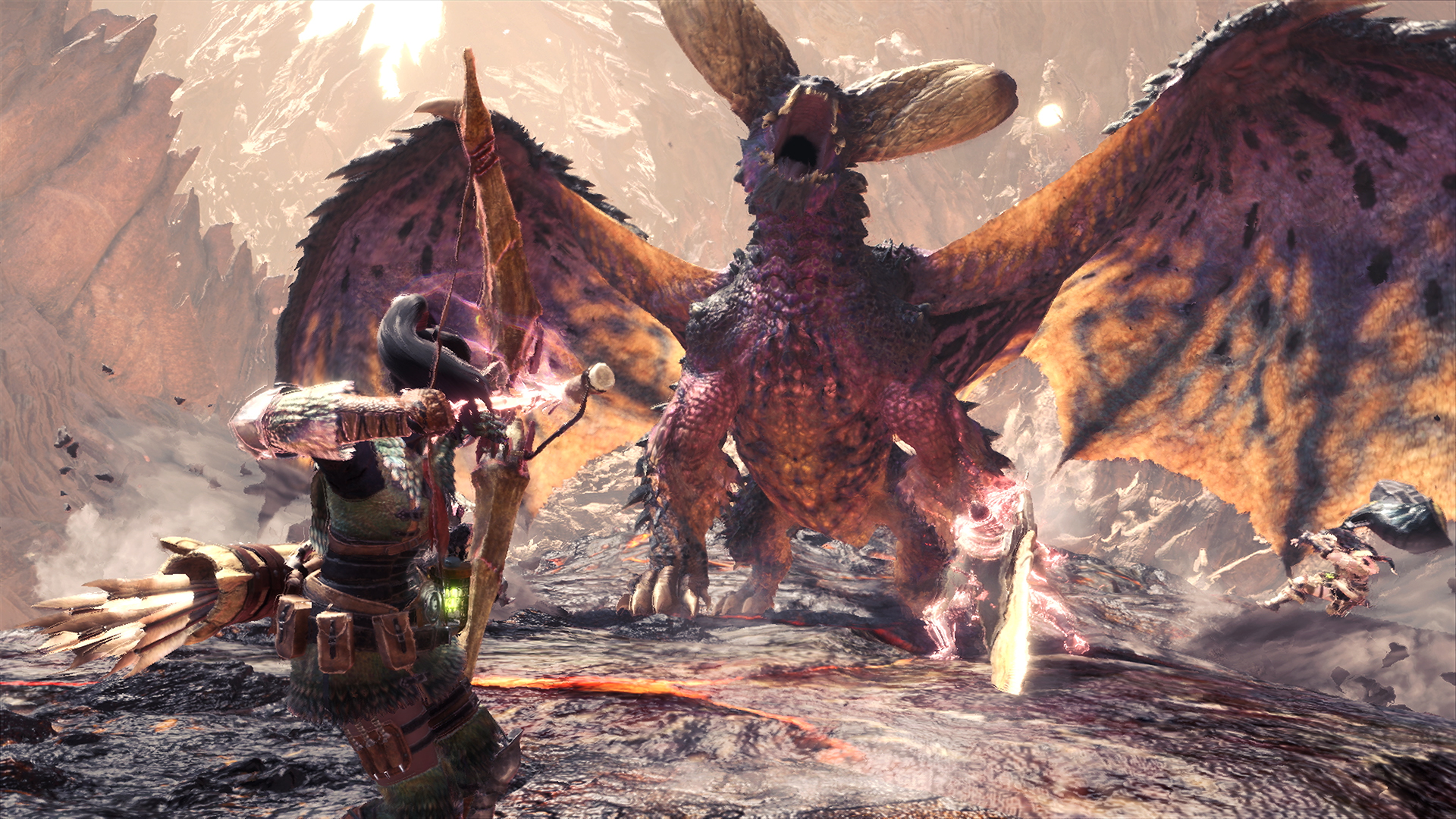
Monster Hunter: World, including the massive Iceborne expansion, features a total of 94 large monsters and dozens of small monsters. This comprehensive roster spans multiple classes, including Elder Dragons, Flying Wyverns, and Brute Wyverns, each requiring specific elemental strategies, specialized equipment, and deep tactical knowledge of their behavioral patterns.
In 2026, Monster Hunter: World remains a cornerstone of the action-RPG genre, celebrated for its complex ecosystem and the tactical depth of its combat. Whether you are a veteran hunter returning for a nostalgia run or a newcomer discovering the New World for the first time, understanding the vast hierarchy of creatures is essential for survival. This guide consolidates every creature encountered across the base game and the Iceborne expansion, detailing their classifications, habitats, and core weaknesses.
The Hierarchy of the New World Ecosystem
Before engaging in combat, it is vital to understand how the Guild classifies these creatures. Classification determines not just the monster's physical traits, but also its threat level and the types of materials it yields. In the 2026 meta, where efficiency is prioritized, knowing these categories helps hunters select the appropriate weapon types and armor skills.
Small Monsters: The Foundation of the Food Chain
While often viewed as mere nuisances, small monsters provide essential crafting materials and can significantly influence a hunt by distracting the player or the target large monster. They are generally categorized by their social structures, such as the pack-hunting Jagras in the Ancient Forest or the scavenging Girros of the Rotten Vale. Understanding their behavior is key to avoiding unnecessary damage during high-stakes encounters.
Large Monsters: The Core Challenges
Large monsters are the primary targets of any hunt. They are divided into several biological classes:
- Bird Wyverns: Often the first challenges hunters face, characterized by avian features and agile movements (e.g., Kulu-Ya-Ku, Yian Garuga).
- Brute Wyverns: Heavy, ground-based monsters that rely on raw physical power and bipedal charges (e.g., Anjanath, Glavenus).
- Flying Wyverns: The most iconic class, capable of aerial maneuvers and devastating elemental breaths (e.g., Rathalos, Diablos).
- Fanged Wyverns: Agile, quadrupedal predators that often use speed and status effects (e.g., Odogaron, Zinogre).
- Elder Dragons: Creatures that exist outside the standard ecosystem, capable of warping the environment itself (e.g., Teostra, Velkhana).
All Large Monsters in Monster Hunter: World (Base Game)
The base game introduced players to the New World, focusing on the Research Commission's efforts to understand the Elder Crossing. The monsters here range from Low Rank to High Rank threats.
The Ancient Forest and Wildspire Waste
The initial journey begins with the Great Jagras, a gluttonous Fanged Wyvern that serves as an introductory encounter. As hunters progress, they encounter the Anjanath, a Brute Wyvern that represents the first major "wall" for many players. The Rathalos and Rathian, the "King and Queen of the Skies," patrol the forest and desert respectively, requiring players to master flash pods and aerial positioning.
In the Wildspire Waste, the Diablos reigns supreme. This herbivorous but highly aggressive Flying Wyvern utilizes tunneling and massive horns to overwhelm hunters. Dealing with Diablos requires a firm grasp of the "Screamer Pod" mechanic to force it out of the ground.
The Coral Highlands and Rotten Vale
The Coral Highlands introduce verticality and more exotic threats like the Legiana, a master of ice that dominates the skies. Conversely, the Rotten Vale is a graveyard of giants, home to the Odogaron, a hyper-aggressive Fanged Wyvern that inflicts the "Bleeding" status. This area also introduces the Vaal Hazak, an Elder Dragon that utilizes "Effluvium" to drain the life force of its enemies, necessitating specialized "Effluvia Resistance" skills.
Post-Launch Additions
Following the initial release, several iconic monsters were added via free title updates. This includes the Deviljho, a nomadic Brute Wyvern that eats everything in its path, and Lunastra, the empress of flame and counterpart to Teostra. The most significant addition was the Behemoth, a crossover monster from Final Fantasy XIV that introduced "raid-style" mechanics, such as the Ecliptic Meteor, which requires specific positioning behind fallen comets to survive.
The Iceborne Expansion: Master Rank and Subspecies
The Iceborne expansion significantly increased the roster by introducing the Hoarfrost Reach and the Master Rank (MR) difficulty. It also introduced Subspecies and Variants, which are more powerful versions of existing monsters with different elemental properties.
New Threats in the Hoarfrost Reach
The journey into the frost begins with the Beotodus, a Piscine Wyvern that swims through deep snow. This is followed by the Banbaro, a massive elk-like Brute Wyvern that uses environmental debris as weapons. The flagship monster of Iceborne, Velkhana, is an Elder Dragon that controls ice with chilling precision, creating walls and pillars to restrict the hunter's movement.
Subspecies and Variants
Iceborne revitalized the base game roster by adding variations that demand different strategies. Examples include:
- Coral Pukei-Pukei: Swaps poison for high-pressure water attacks.
- Viper Tobi-Kadachi: Combines deadly poison and paralysis.
- Savage Deviljho: A variant in a constant state of rage, utilizing massive Dragon-element clouds.
- Seething Bazelgeuse: An upgrade to the "invader" monster, featuring explosive scales that glow purple and have a wider blast radius.
The Apex Predators: Elder Dragons and Endgame Threats
The "Endgame" of Monster Hunter: World is defined by its Elder Dragons and the mysterious Guiding Lands. These encounters represent the peak of difficulty, requiring optimized "meta" builds and precise execution.
The Core Elder Dragons
The base game's endgame centered on the trio of Teostra (Fire), Kushala Daora (Wind), and Vaal Hazak (Effluvium). In Iceborne, this expanded to include Namielle, a majestic Elder Dragon that uses water and electricity to create hazardous electrified pools on the battlefield. The Ruiner Nergigante serves as the final arbiter of the Master Rank story, featuring hardened metallic spikes that deal massive physical damage.
The Black Dragons: Alatreon and Fatalis
In the final updates of the game's life cycle, Capcom introduced the "Black Dragons," the most dangerous entities in the lore. Alatreon requires players to meet elemental damage thresholds to suppress its "Escaton Judgement" wipe mechanic. Fatalis, the final challenge of the game, takes place in the ruins of Castle Schrade. This fight is a 30-minute test of endurance and skill, where Fatalis’s flames become progressively more lethal as the fight reaches its climax.
Comprehensive Monster Reference Table
This table provides a quick reference for the most significant threats in the game, focusing on their primary weaknesses and the type of damage they inflict.
| Monster Name | Class | Primary Weakness | Major Threat/Element |
|---|---|---|---|
| Great Jagras | Fanged Wyvern | Fire | Physical/Gluttony |
| Anjanath | Brute Wyvern | Water | Fire/Physical |
| Rathalos | Flying Wyvern | Dragon/Thunder | Fire/Poison |
| Diablos | Flying Wyvern | Ice | Physical/Stun |
| Odogaron | Fanged Wyvern | Ice/Thunder | Bleeding |
| Nergigante | Elder Dragon | Thunder | Physical/Spike Regrowth |
| Teostra | Elder Dragon | Water/Ice | Fire/Blast |
| Velkhana | Elder Dragon | Fire | Ice/Freezing |
| Zinogre | Fanged Wyvern | Ice | Thunder/Paralysis |
| Namielle | Elder Dragon | Fire | Water/Thunder |
| Rajang | Fanged Beast | Ice | Thunder/Physical |
| Alatreon | Elder Dragon | Element-Dependent | Multi-Elemental |
| Fatalis | Elder Dragon | Dragon | Fire/Massive Physical |
Technical Hunting Strategies for 2026
To conquer all monsters in Monster Hunter: World, one must look beyond simple weapon attacks. The integration of environmental traps and specialized tools is what separates a novice from a master.
The Clutch Claw Mechanic
Introduced in Iceborne, the Clutch Claw is a fundamental tool for all Master Rank hunts. It allows hunters to grapple onto monsters to perform several key actions:
- Wounding: Softening a monster's hide to increase damage and prevent weapon bouncing.
- Flinch Shot: Slamming a monster into a wall or another monster to cause a massive opening and significant damage.
- Dropping Slinger Ammo: Forcing a monster to drop powerful ammo like Piercing Pods or Thorn Pods.
Elemental and Status Management
As of 2026, the community has perfected the math behind "Hitzone Values" (HZV). Every monster part has a different receptivity to damage. For example, while a monster might be weak to Fire, its head might take 30% elemental damage while its legs only take 10%. Using the Hunter's Notes (accessible in-game) is crucial for identifying these weak points.
Furthermore, managing blights is essential. Blight Resistance and Nullberries are your best friends. Iceblight drains your stamina, Waterblight slows stamina recovery, and Fireblight slowly drains health. Ignoring these status effects in high-level hunts like those against Arch-Tempered monsters is a common mistake that leads to failure.
Frequently Asked Questions
How many monsters are there in total in MHW: Iceborne?
There are 94 large monsters in the complete version of the game. This includes all monsters from the 2018 base game, the Iceborne expansion, and all subsequent free title updates including the final addition, Fatalis.
Which monster is considered the hardest in the game?
While subjective, the community generally considers Fatalis to be the ultimate challenge due to its high damage output, tight 30-minute time limit, and the precision required to break its head to weaken its flames. Alatreon is often cited as a close second due to its mandatory elemental DPS check.
Do I need to hunt every monster to reach the endgame?
No. The main story (Assigned Quests) only requires you to hunt a specific subset of monsters. However, many of the best equipment sets and weapon upgrades are locked behind "Optional Quests," "Special Assignments," or specific regions of the Guiding Lands, making it necessary to hunt almost every species eventually.
What is the difference between a Subspecies and a Variant?
A Subspecies is a related species that has adapted to a different environment, often changing its element (e.g., Pukei-Pukei vs. Coral Pukei-Pukei). A Variant is an individual of the base species that has undergone a biological change or reached an extreme state of power (e.g., Bazelgeuse vs. Seething Bazelgeuse).
Can I solo all the monsters in the game?
Yes, every monster in Monster Hunter: World is soloable, as the game features dynamic scaling. However, certain monsters like Kulve Taroth, Safi'jiiva, and Behemoth were designed with multiplayer mechanics in mind and are significantly more difficult (though not impossible) to complete alone.
Final Recommendations for the Modern Hunter
To truly master the roster of Monster Hunter: World in 2026, consistency and preparation are more important than raw reflexes. Always start your hunt by eating at the Canteen for health and stamina boosts. Ensure your Loadout includes essential items like Max Potions, Lifepowders (for multiplayer), and environmental tools like Traps and Tranquilizers.
The path from hunting a lowly Great Jagras to facing the legendary Fatalis is a long one, but by studying the behaviors and weaknesses outlined in this guide, you will be well-equipped to claim your place as an elite hunter of the Fifth Fleet. Your next step should be to focus on the Special Assignments in Seliana, as these will lead you directly toward the powerful endgame gear required for the final encounters.