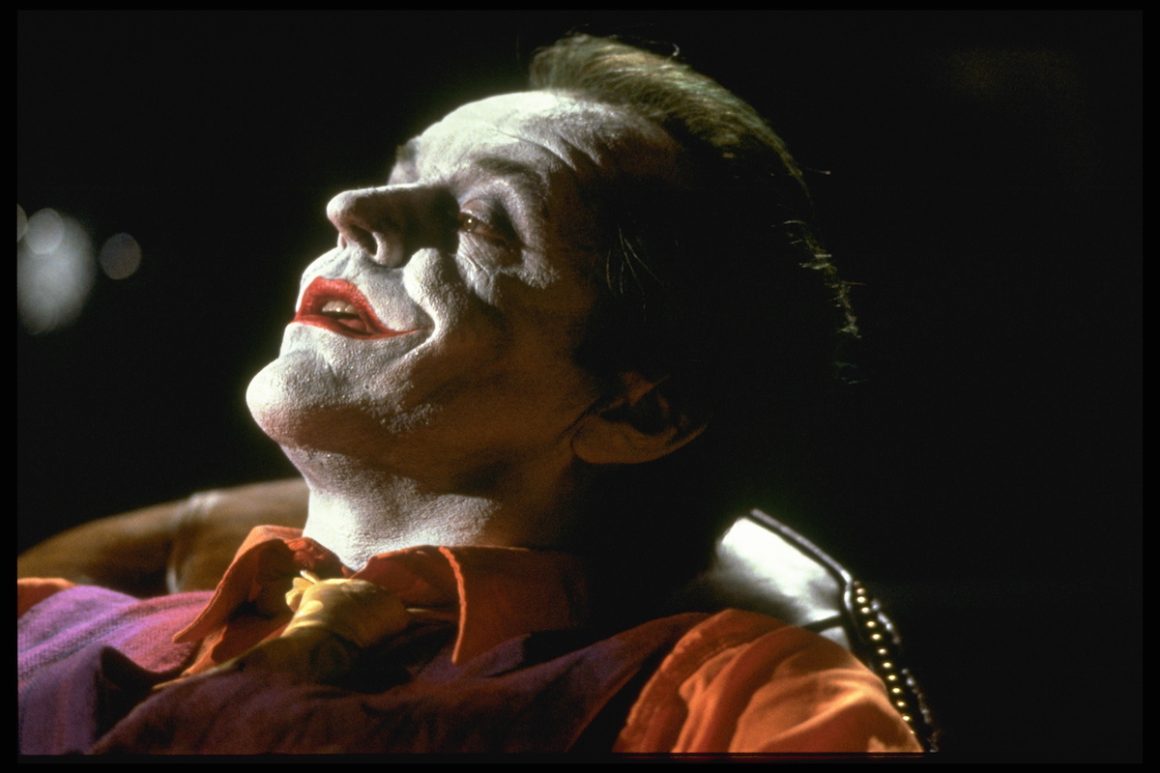
The Joker is not a singular entity, but a shifting ideological mirror to the Batman, evolving through comic book eras, cinematic re-imaginings, and the "Three Jokers" revelation in DC Comics lore. While originally a single criminal mastermind, the character now encompasses three distinct archetypes within the main continuity—The Criminal, The Clown, and The Comedian—alongside dozens of Multiverse variants and legendary live-action portrayals.
Since his debut in 1940, the Joker has served as the ultimate antithesis to the Dark Knight. To understand every version of the Joker, one must look at the character through three specific lenses: the chronological publication eras, the canonical "Three Jokers" mystery, and the cinematic interpretations that have shaped public perception. As of 2026, the character remains the most analyzed antagonist in popular fiction, largely because his "multiple choice" origin allows writers to reinvent him for every generation.
The Evolutionary Eras of the Joker
The Joker's personality and threat level have historically been dictated by the editorial standards of the time. Understanding these eras is the first step in categorizing the "different" Jokers that have appeared in Batman’s life.
The Golden Age: The Cold-Blooded Strategist (1940–1950s)
Introduced in Batman #1 (1940) by Bill Finger, Bob Kane, and Jerry Robinson, the original Joker was a high-stakes serial killer. Unlike the later "insane" versions, the Golden Age Joker was a brilliant, calculated chemist and thief. He announced his crimes via radio and left his victims with a ghoulish, permanent grin caused by "Joker Venom." During this era, he was meant to be killed off in his first appearance, but an editorial intervention saved him, allowing the character to develop into a recurring foil who relied on cold logic as much as theatricality.
The Silver Age: The Harmless Prankster (1950s–1960s)
Following the implementation of the Comics Code Authority, the Joker’s homicidal tendencies were stripped away. For nearly two decades, he was reimagined as a goofy, flamboyant thief who enjoyed elaborate "boners" (the 1950s term for mistakes or gags) and theatrical escapades. This version focused on campy gadgets—like the "Joker-mobile"—rather than chemical warfare. This iteration reached its cultural peak with Cesar Romero’s portrayal in the 1966 Batman television series.
The Bronze and Modern Age: The Psychopathic Anarchist (1970s–Present)
In 1973, writer Dennis O'Neil and artist Neal Adams "restored" the Joker in The Joker's Five-Way Revenge. They returned him to his roots as a murderous sociopath but added a new layer: genuine insanity. This version of the Joker doesn’t just want money; he wants to prove that life is a cruel joke and that anyone can become like him given "one bad day." This era produced the most iconic stories, including The Killing Joke and A Death in the Family.
The "Three Jokers" Canon Explained
One of the most significant developments in DC Comics history was the revelation during the Justice League: Darkseid War and the subsequent Batman: Three Jokers (2020) miniseries. When Batman sat on the Mobius Chair—a device containing all the knowledge in the universe—he asked for the Joker’s true name. The chair responded that there were actually three Jokers.
1. The Criminal
The Criminal is the embodiment of the Golden Age Joker. He is the most serious, stoic, and philosophical of the three. He doesn't laugh often and prefers elaborate, high-level criminal schemes over random chaos. His goal was to turn Batman into a better version of himself by creating a "meaningful" tragedy. Of the three, he was the leader, attempting to create a new Joker who would have a secret identity that truly mattered to Batman.
2. The Clown
The Clown represents the Silver Age. He is the most colorful, loud, and theatrical. He uses gag weapons like acid-spraying flowers, bang-flag guns, and giant mallets. While he is still lethal, he finds genuine joy in the performance of crime. In the Three Jokers narrative, he is often treated as the "least" of the three by his counterparts, though he remains responsible for some of the most public and chaotic attacks on Gotham.
3. The Comedian
The Comedian is the reflection of the Modern Age, specifically the version seen in Alan Moore’s The Killing Joke. He is the most sadistic and personally cruel, defined by his "one bad day" philosophy. He is the one who paralyzed Barbara Gordon and tortured Commissioner Gordon. He represents the Joker as a broken man who turned his trauma into a weaponized form of nihilism. Many fans consider this the "true" Joker, as his psychological warfare is what most defines the modern Batman-Joker dynamic.
Essential Joker Variants in the DC Multiverse
Beyond the main DC continuity (Earth-0), the Multiverse offers "Elseworlds" versions of the Joker that reimagine the character in radical ways.
- The Batman Who Laughs: Perhaps the most famous modern variant, this is a version of Bruce Wayne from the Dark Multiverse. After finally killing the Joker, Bruce was exposed to a concentrated strain of Joker Venom that rewrote his brain. He possesses Batman's tactical genius and the Joker's lack of morality.
- Flashpoint Joker (Martha Wayne): In the Flashpoint timeline, Bruce Wayne was killed in the alley, not his parents. This trauma led Thomas Wayne to become a lethal Batman, while Martha Wayne suffered a mental breakdown and became the Joker. This is one of the few versions where the Joker and Batman share a tragic, romantic history.
- White Knight Joker (Jack Napier): In Sean Murphy's White Knight universe, the Joker is cured of his insanity through medication. He becomes a sane politician named Jack Napier, who seeks to save Gotham from the "vigilante menace" of Batman, effectively swapping their roles as hero and villain.
- The Joker (Earth-9): In the Tangent Comics universe, the Joker is a heroic female anarchist who uses her persona to fight against a totalitarian government.
Comparison of Major Joker Interpretations
| Version/Era | Primary Motivation | Key Weapon/Tool | Defining Storyline |
|---|---|---|---|
| Golden Age | Wealth & Power | Joker Venom | Batman #1 (1940) |
| Silver Age | Theatricality/Pranks | Gadgets/Joker-mobile | Batman #66 |
| The Comedian | Psychological Nihilism | Trauma/Chaos | The Killing Joke |
| The Criminal | Legacy/Efficiency | Strategy | Three Jokers |
| The Batman Who Laughs | Multiversal Conquest | Jokerized Robins | Dark Nights: Metal |
| Martha Wayne Joker | Grief & Revenge | Razor Blades | Flashpoint |
Live-Action Jokers: From TV to the Silver Screen
The Joker has been portrayed by several actors, each emphasizing a different facet of the character’s "Three Jokers" persona.
Cesar Romero (1966–1968)
The quintessential "Clown." Romero refused to shave his mustache for the role, simply painting over it with white makeup. His performance was high-energy and focused on the character as a colorful nuisance rather than a threat to life and limb.
Jack Nicholson (1989)
A blend of "The Criminal" and "The Clown." Nicholson’s Joker (Jack Napier) had a definitive origin involving a chemical vat and a mob background. He brought a sense of sophisticated menace back to the character, treating his crimes as "performance art."
Heath Ledger (2008)
The ultimate "Comedian" in the philosophical sense. Ledger’s Joker in The Dark Knight was an "agent of chaos." He had no origin, no name, and no desire for money. He was a pure ideological force designed to test the limits of Batman’s morality. This portrayal won a posthumous Academy Award and remains the gold standard for cinematic villains.
Joaquin Phoenix (2019/2024)
A grounded, psychological take on the "Comedian" archetype. Phoenix’s Arthur Fleck is a man failed by a crumbling society. This version is unique because it removes the "supervillain" elements and focuses on mental illness and the birth of a symbol. By 2026, this version remains a cultural touchstone for discussions on social alienation.
Barry Keoghan (2022–Present)
Introduced in Matt Reeves' The Batman, Keoghan’s version is a "Proto-Joker." He is heavily scarred and resides in Arkham, acting as a twisted confidant to other villains. This version leans into the grotesque, body-horror aspects of the character often seen in New 52 comics like Death of the Family.
The Joker’s "Multiple Choice" Origin
One reason there are "all these Jokers" is that the character famously refuses to have a single, confirmed backstory. In The Killing Joke, he states: "If I'm going to have a past, I prefer it to be multiple choice!"
The most common origin involves the Red Hood. A failing comedian or small-time crook (Jack Napier, Arthur Fleck, or an unnamed man) attempts to rob the Ace Chemical Processing Plant. To hide his identity, he wears a red dome-shaped helmet. During a confrontation with Batman, he falls into a vat of chemicals that bleaches his skin white, turns his hair green, and snaps his mind. However, because the Joker is an unreliable narrator, every version of him might be telling a different lie—or every version could be a different person entirely who underwent a similar transformation.
Frequently Asked Questions
Is the Joker one person or many?
In the traditional DC continuity, the Joker was long thought to be one man with an evolving personality. However, the Three Jokers storyline confirmed that three distinct men have operated under the name at various times, often working together to maintain the "legend" of the Clown Prince of Crime.
Who is the strongest version of the Joker?
The Emperor Joker is arguably the most powerful. In this storyline, the Joker tricks Mr. Mxyzptlk (a 5th-dimensional imp) into giving him 99% of his power. Joker then reshapes the entire universe in his image, killing and resurrecting Batman every day just for fun. He is essentially a god during this arc.
Does Batman ever kill the Joker?
In the main "Earth-0" continuity, Batman adheres to his "no-kill" rule. However, in several alternate universes, Batman has ended the Joker’s life. Most notably, in Injustice: Gods Among Us, Superman kills the Joker after the villain tricks him into killing a pregnant Lois Lane. In The Dark Knight Returns, an elderly Batman breaks the Joker’s neck just enough to paralyze him, and the Joker finishes the job himself to frame Batman for murder.
Why does the Joker have green hair and white skin?
While the 1989 Batman film and most comics attribute this to a fall into a vat of chemical waste, some versions suggest it is purely makeup. In the Joker (2019) film, Arthur Fleck dyes his hair and uses greasepaint. In the comics, however, it is almost always a permanent physical transformation caused by chemical exposure.
Are Harley Quinn and Joker still together?
As of 2026, Harley Quinn has long since broken away from the Joker in both comics and most media. She is now typically portrayed as an anti-hero or a hero in her own right, often associated with the Suicide Squad or Poison Ivy. The Joker occasionally attempts to manipulate her, but their "partnership" is widely recognized as a cycle of abuse that Harley has moved past.
Practical Recommendation for Readers
If you are trying to navigate the complex history of the Joker, the best approach is to start with the "Three Archetypes" framework. When watching a movie or reading a new comic, ask yourself: Is this the calculated Criminal, the theatrical Clown, or the nihilistic Comedian?
For those looking for the definitive reading experience, the following sequence provides the best "explanation" of the character's facets:
- The Man Who Laughs (Ed Brubaker) – Explains the Golden Age-style first encounter.
- The Killing Joke (Alan Moore) – The definitive "Modern Age" origin and the peak of the Comedian archetype.
- Death of the Family (Scott Snyder) – A look at the Joker’s obsession with Batman's "family."
- Three Jokers (Geoff Johns) – The meta-explanation for why the character seems to change so much over time.
By understanding that the Joker is more of a "force of nature" or a "viral idea" than a consistent human being, you can appreciate the various iterations without getting bogged down in conflicting continuity. Whether he is a man in a vat of chemicals or a societal byproduct, the Joker remains Batman's most enduring—and terrifying—reflection.