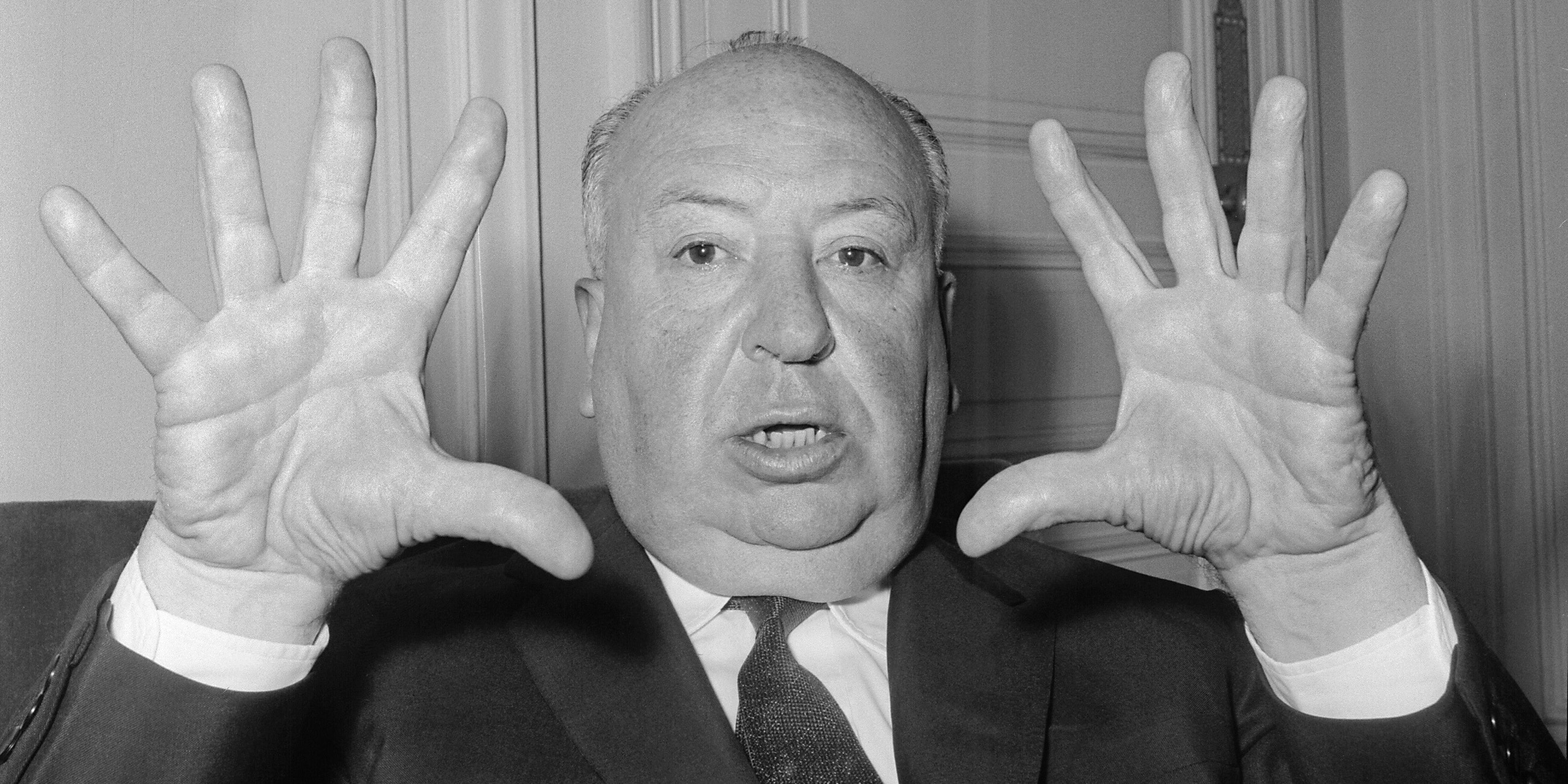
When Alfred Hitchcock died on April 29, 1980, his net worth was estimated between $20 million and $30 million. In 2026 economic terms, this nominal fortune equals approximately $80 million to $120 million after adjusting for inflation, anchored by substantial MCA corporate stock, prime California real estate, and retained film copyrights.
The Valuation of Hitchcock's Estate in Context
Evaluating the wealth of historical figures requires separating tabloid speculation from probate records, corporate filings, and the commercial structures that governed Golden Age Hollywood. When Alfred Hitchcock passed away from renal failure at his home in Bel Air, California, at the age of 80, the public viewed him primarily as the "Master of Suspense." Within the entertainment industry, however, Hitchcock was known as one of the most astute, financially sophisticated business minds in cinematic history.
Estimates filed through probate proceedings and historical analyses of his estate put his total net assets at his death in 1980 at approximately $20 million to $30 million. While modern blockbuster directors often amass paper fortunes in the hundreds of millions or billions, Hitchcock accumulated his wealth in an era dominated by predatory studio contracts, punitive federal income tax rates that reached as high as 70% to 91% during his peak earning decades, and extreme economic inflation throughout the late 1970s.
Adjusting for compound inflation using standard Consumer Price Index (CPI) metrics, a $25 million estate in April 1980 represents roughly $100 million in purchasing power in 2026. However, purchasing power alone does not capture the true scale of his financial acumen. Unlike his peers, who were frequently ruined by studio overhead, bad distribution deals, or lavish living, Hitchcock structured his career around asset retention, equity swaps, and copyright ownership. His net worth at death was not simply cash sitting in savings accounts; it was a diversified portfolio of liquid equities, blue-chip real estate, fine art, and some of the most lucrative film copyrights in American cinema.
The Financial Architecture: Transition from Work-for-Hire to Independent Ownership
To understand how Hitchcock accrued such massive wealth by 1980, one must analyze how he dismantled the standard Hollywood employment model. During the 1930s and 1940s, contract directors worked under rigid studio exclusivity. Under David O. Selznick, who brought Hitchcock to Hollywood from the United Kingdom in 1939, Hitchcock was paid a steady salary while Selznick rented him out to other studios—such as RKO for Suspicion (1941)—at a substantial markup, keeping the windfall profits for Selznick International Pictures.
Hitchcock recognized early that true long-term solvency required three specific structural components:
- Direct ownership of film negatives (the underlying physical and intellectual asset).
- Production company independence to manage tax liabilities and operational overhead.
- Profit-participation points calculated against gross revenues rather than easily manipulated studio net profits.
In 1948, Hitchcock took his first major structural step toward financial independence by forming Transatlantic Pictures with British producer Sidney Bernstein. Although Transatlantic produced commercially uneven projects like Rope (1948) and Under Capricorn (1949), the venture gave Hitchcock firsthand mastery of international rights licensing, co-financing, and production overhead control. When Transatlantic dissolved, Hitchcock transitioned back to major studio distribution via Warner Bros. and Paramount, but with an entirely new legal framework: he established Shamley Productions, an independent production vehicle that would serve as the operational engine for his greatest financial triumphs.
The Landmark Deals That Generated Hitchcock’s Fortune
Hitchcock’s net worth at his death was primarily generated by three distinct, historically unprecedented financial transactions: the profit-sharing structure of Psycho, his equity acquisition in MCA Inc., and the deliberate warehousing of his catalog rights.
Alfred Hitchcock's Wealth Engines: Key Asset Drivers (1955–1980)
| Strategic Deal / Asset | Nominal 1980 Financial Base | 2026 Inflation-Adjusted Impact |
|---|---|---|
| The "Psycho" (1960) Deferred Fee & 60% Negative Ownership | ~$15 million+ cumulative theatrical & initial sales | Over $60 million in cumulative earnings across early decades |
| MCA Inc. Equity Swap (1962) (142,000–150,000 corporate shares) | ~$8 million–$12 million in equity value at death | ~$35 million–$50 million in institutional holdings |
| "The Five Lost Hitchcocks" (Reversionary Copyright Portfolio) | Millions in unexploited deferred asset value | Massive multi-decade catalog revenue for heirs & estate |
| Bel Air & Scotts Valley Properties (Residential Real Estate) | ~$3 million–$5 million based on 1980 appraisals | $25 million+ in prime modern real estate value |
| Fine Art & Personal Assets (Picasso, Braque, Klee, Soutine) | ~$1 million historical market value | $5 million–$10 million at contemporary fine art auctions |
The "Psycho" Masterstroke (1960)
The single most profitable decision of Hitchcock’s life occurred when Paramount Pictures executives balked at the premise, budget, and graphic nature of Robert Bloch's novel Psycho. Paramount viewed the project as an exploitation film unworthy of Hitchcock's prestige and refused to allocate their standard production budget.
Hitchcock countered with a proposal that fundamentally changed film financing:
- He waived his standard upfront directing fee, which at the time ranged between $250,000 and $300,000.
- He agreed to finance the film's production himself, keeping hard production costs under $1 million by using his Alfred Hitchcock Presents television crew from Revue Studios.
- In exchange, he negotiated a 60% ownership stake in the film's negative and 60% of the gross receipts.
Paramount agreed, assuming the picture would fail or produce marginal returns. Instead, Psycho became a cultural phenomenon, grossing more than $32 million in its initial international release and ultimately pulling in tens of millions more in re-releases. Hitchcock personally earned an estimated $15 million in profits from Psycho within a few short years of its debut. In modern corporate terms, it remains one of the highest returns on investment for an individual creative director in cinema history.
The 1962 MCA Inc. Equity Swap
Having amassed massive leverage and capital through Psycho and his wildly successful television series Alfred Hitchcock Presents, Hitchcock made a brilliant move engineered with his longtime talent agent, Lew Wasserman. Wasserman, who headed the talent powerhouse MCA (Music Corporation of America), was in the process of acquiring Decca Records and its subsidiary, Universal Pictures, transforming MCA into a vertically integrated entertainment titan.
In 1962, Hitchcock sold the negative rights of Psycho along with his Shamley Productions television catalog (comprising hundreds of episodes of Alfred Hitchcock Presents and The Alfred Hitchcock Hour) directly to MCA Inc. Rather than accepting cash, which would have triggered catastrophic federal capital gains and income taxes, Hitchcock exchanged the intellectual property for 142,000 to 150,000 shares of MCA common stock.
This single stock swap achieved several financial goals:
- It transformed volatile entertainment royalties into blue-chip corporate equity with dividend yields.
- It made Hitchcock the third-largest individual shareholder in MCA Inc., trailing only MCA founder Jules Stein and Lew Wasserman.
- It aligned Hitchcock’s personal wealth directly with the broader expansion of Universal Studios, giving him executive-level financial insulation regardless of the box office performance of his later films like Marnie (1964) or Topaz (1969).
At the time of his death in 1980, this MCA stock position formed the liquid backbone of his multi-million dollar estate.
The Strategy of the "Five Lost Hitchcocks"
Perhaps the most sophisticated intellectual property maneuver Hitchcock executed involved the contractual recapture of five key films made between 1948 and 1958:
- Rope (1948)
- Rear Window (1954)
- The Trouble with Harry (1955)
- The Man Who Knew Too Much (1956)
- Vertigo (1958)
Under the complex distribution agreements Hitchcock negotiated with Paramount, the theatrical and television rights to these five motion pictures were structured to revert entirely to Hitchcock personally after a fixed exploitation window, typically eight to ten years post-release.
Once the rights reverted to him in the 1960s and 1970s, Hitchcock took an unprecedented step: he deliberately withheld all five titles from public distribution. For over a decade leading up to his death, these masterpieces could not be broadcast on television, leased to film societies, or re-released in theaters. Known throughout the industry as the "Five Lost Hitchcocks," their absence created immense artificial scarcity and critical demand.
While this meant Hitchcock did not monetize these films throughout the final years of his life, it was a deliberate estate planning strategy. He knew that their market value was compounding exponentially in vaults. Following his death, his estate licensed these films back to Universal in 1983 for millions of dollars in advances, followed by blockbuster theatrical re-releases and lucrative home-video launches on VHS, LaserDisc, DVD, and eventual digital streaming formats.
Physical Real Estate, Art, and Private Capital
Beyond paper equity and film negatives, Hitchcock held a conservative, highly valuable physical portfolio. He avoided the flashy, speculative investments typical of the Beverly Hills elite, preferring high-grade land and blue-chip art.
The Bel Air Residence
Hitchcock’s primary home was an English country-style estate located at 10957 Bellagio Road in Bel Air, directly adjacent to the Bel-Air Country Club. Purchased in 1942 for around $40,000, the property served as his main sanctuary for nearly four decades. By the time of his death in 1980, the explosion of southern California real estate values had turned the home into a multi-million-dollar holding. In modern property markets, parcels in this specific corridor routinely command tens of millions of dollars based on land value alone.
The Scotts Valley Ranch
In 1940, Hitchcock and his wife, Alma Reville, purchased a 200-acre mountain estate known as Heart O' The Mountain in Scotts Valley, California, within the Santa Cruz Mountains. The property included a historic ranch home, redwood groves, and active vineyards. The Hitchcocks used this property for decades as a private retreat and agricultural tax write-off, entertaining industry figures with private wine labels and formal dinners. While Hitchcock sold off portions of the acreage in the late 1960s and 1970s, the land contributed significantly to his long-term net asset base.
The Fine Art Collection
Hitchcock was an avid art collector who systematically bought modern masters long before the global post-war art boom sent valuations skyrocketing. His private collection included notable works by:
- Pablo Picasso
- Georges Braque
- Paul Klee
- Chaim Soutine
- Salvador Dalí (with whom he collaborated on Spellbound)
At the time of Hitchcock's death, the fine art collection was appraised in the high six-figure to low seven-figure range, though its true historical value was significantly higher when evaluated in contemporary auction environments.
Estate Settlement, Taxation, and Inheritance
When Alfred Hitchcock died without continuing commercial operations, his estate was administered under the California probate system. The estate faced a unique regulatory landscape in 1980, defined by the transitional tax environment established by the Tax Reform Act of 1976.
- Alfred Hitchcock Estate (1980)
- Estimated $20M–$30M Value
- Marital Deduction Structure
- Alma Reville (Surviving Spouse): Life Estate Rights & Corporate Dividends
- Patricia Hitchcock (Only Daughter): Secondary Remainder Trusts & Long-term IP Inheritance
- Post-1980 Monetization Engine
- 1983 Theatrical Re-releases of 5 Classics
- Global Home Video & VHS Revolution
- Corporate Mergers (Universal/Vivendi/Comcast)
The Role of Alma Reville
Hitchcock’s primary beneficiary was his wife, collaborator, and co-screenwriter, Alma Reville (Lady Hitchcock). Under California’s community property laws, Reville already held a legal half-interest in the marital wealth accumulated since their marriage in 1926. Hitchcock’s will placed substantial portions of his remaining wealth into family trust structures designed to shield the assets from federal estate tax rates, which at the time could claim as much as 70% of an estate above statutory exemptions.
Because Reville was in poor health herself—having suffered strokes—she survived her husband by only two years, dying on July 6, 1982. This necessitated a secondary probate process that transferred the family holdings to their only child, Patricia Hitchcock O'Connell.
The Patricia Hitchcock Era and the 1983 Vault Opening
Patricia Hitchcock was the sole executor and heir to the Hitchcock financial legacy. Rather than liquidating the family's assets to pay estate duties, the estate utilized the liquidity provided by the MCA stock to satisfy inheritance taxes while retaining the exclusive underlying copyrights to the "Five Lost Hitchcocks."\n In 1983, Patricia struck an agreement with Universal Pictures to restore, print, and theatrically re-release Vertigo, Rear Window, The Man Who Knew Too Much, The Trouble with Harry, and Rope. The box-office returns were extraordinary:
- Audiences treated the re-releases not as historical revivals, but as newly discovered masterworks.
- The subsequent explosion of the consumer home video market (VHS and LaserDisc) during the mid-1980s turned the Hitchcock library into an evergreen asset that produced royalties for decades.
- Patricia Hitchcock carefully managed these assets alongside licensing fees for the Alfred Hitchcock's Mystery Magazine, anthologies, and likeness merchandising until her own death in August 2021 at the age of 93.
Lessons from Hitchcock’s Estate for High-Value IP and Wealth Management
The structural blueprint of Alfred Hitchcock's financial life remains an essential case study for creative professionals, entertainment attorneys, and wealth managers managing high-value intellectual property.
1. Equity Always Trumps Salary
Hitchcock's decision to forego his upfront director's fee on Psycho in exchange for 60% negative ownership exemplifies the power of capital appreciation over immediate ordinary income. For high-earning professionals facing peak marginal income tax rates, structured equity or profit-participation provides both superior tax positioning and exponential upside.
2. Diversifying IP into Corporate Shares
Holding individual entertainment copyrights exposes an estate to shifts in cultural taste, distribution disputes, and physical asset decay. By trading his private production company (Shamley) and key films to MCA for corporate common stock, Hitchcock successfully balanced concentrated creative risk with institutional corporate stability.
3. Deliberate Scarcity Increases Value
Hitchcock's strategy of holding the "Five Lost Hitchcocks" in a vault for over a decade proved that scarcity can be engineered. In an era where media is often over-licensed and devalued across streaming platforms, controlling windows of distribution can dramatically elevate an asset's prestige, market demand, and ultimate valuation.
Frequently Asked Questions
Was Alfred Hitchcock the richest director in Hollywood when he died?
Hitchcock was unquestionably among the wealthiest directors in Hollywood when he died in 1980, alongside contemporaries like Frank Capra and early pioneers who had retained studio equity. However, modern mega-wealth among directors—such as the multi-billion-dollar fortunes of George Lucas or Steven Spielberg—was only beginning to materialize in 1980 through modern global merchandising models pioneered by Star Wars (1977). Hitchcock was the bridge between old studio contract salaries and modern equity ownership.
How much money did Hitchcock actually make from "Psycho"?
By the mid-1960s, Hitchcock had personally cleared an estimated $15 million directly from Psycho. When he exchanged the negative for 142,000+ shares of MCA Inc. stock in 1962, he converted those earnings into liquid corporate equity, securing an ongoing stream of capital gains and dividends that sustained his estate for the remainder of his life.
Who inherited Alfred Hitchcock’s fortune?
Hitchcock's estate passed primarily to his wife, Alma Reville. Following Reville's death in 1982, the entirety of the estate—including residual rights, the MCA stock, real estate, and rights to the five retained classic films—was inherited by their only daughter, Patricia Hitchcock O’Connell. Upon Patricia’s death in 2021, the family legacy passed to Hitchcock's three granddaughters: Mary Alma Stone, Tere Carrubba, and Katie O'Connell-Fiala.
Did Hitchcock own the rights to all of his movies when he died?
No. Hitchcock did not own his entire catalog. Major studios owned the perpetual rights to his early British films (Gaumont-British, British International Pictures) and his major contract studio films (Warner Bros. owned Dial M for Murder and Strangers on a Train; MGM owned North by Northwest). However, he successfully held reversionary ownership of five crucial films (Rope, Rear Window, The Trouble with Harry, The Man Who Knew Too Much, and Vertigo) and owned Psycho outright before swapping its negative for MCA stock.
How does inflation affect the evaluation of his estate today?
Nominal reporting from 1980 lists Hitchcock's estate at between $20 million and $30 million. Due to significant cumulative inflation between 1980 and 2026, $1.00 in 1980 holds the purchasing equivalence of roughly $3.80 to $4.20 in modern terms. Consequently, his nominal $20M–$30M net worth translates directly to an inflation-adjusted valuation of approximately $80 million to $120 million today.
Practical Recommendation: Managing Legacy Intellectual Property Estates
For estate planners, artists, and executors handling private catalogs, intellectual property, and reversionary rights, the Hitchcock model offers a clear set of strategic next actions:
- Audit Copyright Reversion Schedules: Review distribution licenses to identify exact reversion dates under domestic and international law (such as the 35-year termination right under Section 203 of the U.S. Copyright Act). Rights that return to an estate must be prepared for re-monetization rather than left abandoned.
- Avoid Flat Buyouts of Core Assets: Structure ownership so that upfront capital is paired with retained gross points or corporate equity in the acquiring distributor, protecting against inflation and unforeseen platform evolutions.
- Maintain Independent Production Vehicles: Keep production assets, publishing rights, and personal likeness licenses inside dedicated entities (like Hitchcock's Shamley Productions) to isolate liability, claim legitimate business deductions, and ease probate administration for future generations.