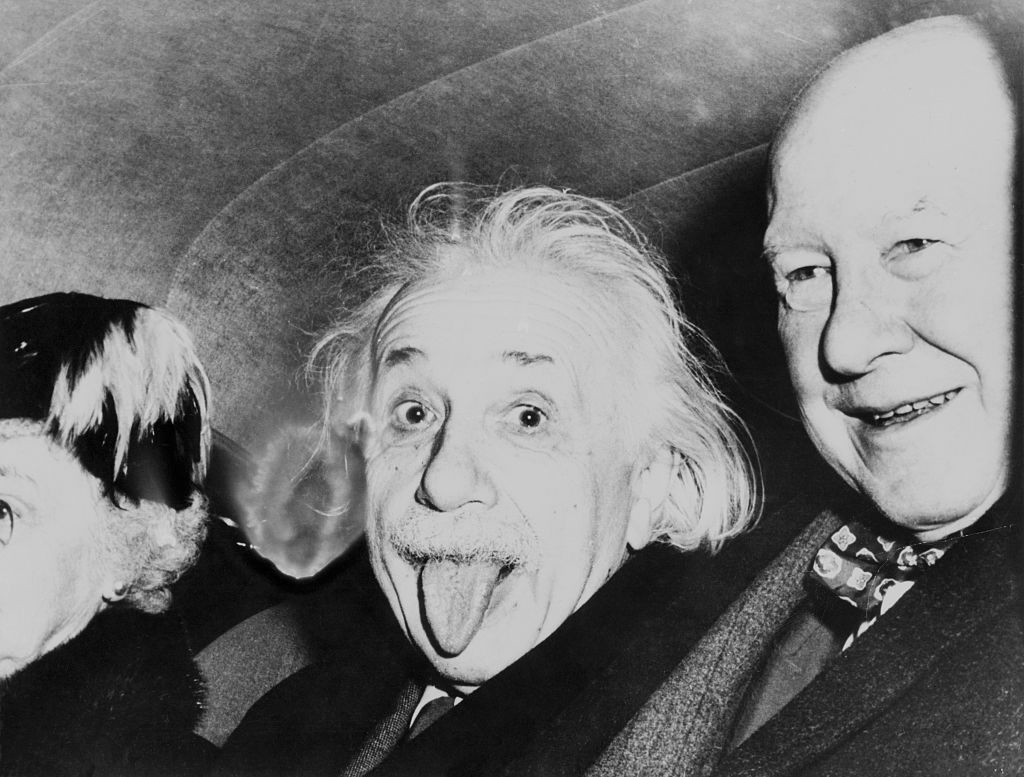
At the time of his death in 1955, Albert Einstein’s net worth was valued at approximately $65,000. When adjusted for inflation to the year 2026, this amount is equivalent to roughly $815,000. While Einstein earned a comfortable living through his tenure at the Institute for Advanced Study and various international accolades, his modest lifestyle and the terms of his divorce settlement prevented the accumulation of vast liquid wealth.
The Economic World of Albert Einstein
To understand Albert Einstein’s net worth, one must first look at the economic environment in which he lived and worked. Einstein was not a "wealthy" man by the standards of modern celebrity scientists or tech entrepreneurs. His financial life was defined by the transition from the hyperinflation of Weimar Germany to the post-Depression stability of the United States.
Einstein’s approach to money was famously indifferent. He was known to use checks as bookmarks and occasionally lose them, much to the chagrin of his second wife, Elsa, who managed much of the family’s daily finances. For Einstein, money was a tool for independence rather than a metric of success. This philosophical stance influenced his earnings throughout his career, from his early days at the Swiss Patent Office to his final years in Princeton.
In the early 20th century, academic salaries were modest. Even a world-renowned physicist could not expect the kind of endorsement deals or speaking fees common in 2026. Most of his income was derived from traditional institutional salaries, book royalties, and the occasional scientific prize.
The Nobel Prize and the Divorce Settlement of 1919
One of the most significant financial events in Einstein’s life occurred before he even won the Nobel Prize. In 1919, when Albert and his first wife, Mileva Marić, finalized their divorce, Einstein made a bold and highly confident financial commitment. He promised that, should he win a Nobel Prize in the future, the entirety of the prize money would be placed in a trust for Mileva and their two sons.
When Einstein was awarded the Nobel Prize in Physics for the year 1921 (received in 1922), the prize money amounted to approximately 121,572 Swedish kronor. In 1923, this was roughly equivalent to $32,000 USD.
The Management of the Nobel Funds
Contrary to popular belief, Einstein did not simply hand over a check. The funds were largely invested in United States securities. However, much of the capital was depleted during the Great Depression. While Mileva was able to purchase three apartment buildings in Zurich with a portion of the funds, the ongoing medical expenses for their younger son, Eduard, who suffered from schizophrenia, consumed a significant portion of the family’s wealth.
From a net worth perspective, the Nobel Prize—usually the crowning financial achievement for a scientist—represented a net zero for Albert Einstein’s personal balance sheet. It served as a divorce settlement and a social safety net for his family rather than a personal asset.
Professional Earnings at the Institute for Advanced Study (IAS)
When Einstein fled Nazi Germany in 1933 to join the newly formed Institute for Advanced Study in Princeton, New Jersey, his salary negotiation became a legendary anecdote in academic history. Abraham Flexner, the founding director of the IAS, asked Einstein what salary he required. Einstein, underestimating his own value and the cost of living in the U.S., suggested $3,000 per year.
Flexner, recognizing that such a low salary would be a professional embarrassment for the institution, insisted on a much higher figure. Einstein was eventually settled at an annual salary of $10,000.
Salary Progression and Comparative Purchasing Power
By the late 1940s, his salary had increased to $15,000. To put these numbers into a 2026 context:
- $10,000 in 1933 is approximately $245,000 today.
- $15,000 in 1948 is approximately $205,000 today.
While these were substantial professional salaries—well above the average American worker’s income of approximately $1,500 to $3,000 during those eras—they were not the types of figures that built dynastic wealth. Einstein’s income allowed him to live a comfortable, upper-middle-class life in Princeton, support his household, and contribute to various charitable causes, particularly those assisting Jewish refugees fleeing Europe.
Real Estate and Personal Assets
Einstein’s primary tangible asset was his home at 112 Mercer Street in Princeton. Purchased in 1935, the simple, white frame house was his sanctuary. At the time of his death, the house was a significant portion of his $65,000 estate.
The Value of 112 Mercer Street
Einstein specifically requested that his home not be turned into a museum. He wanted it to remain a private residence. Following his death, the property was occupied by his stepdaughter, Margot, and his longtime secretary, Helen Dukas. While the nominal value of the home was modest in 1955, the real estate market in Princeton has since seen exponential growth. In 2026, a similar historical property in that location would be valued in the millions, though Einstein’s original valuation remained rooted in its functional use as a family home.
Personal Effects and Intellectual Property
Beyond the home, Einstein’s assets included:
- Violins: Einstein was an avid musician. His violins were high-quality instruments but not necessarily the priceless Stradivarius models that some legends suggest.
- The Library: A vast collection of books and scientific papers.
- Copyrights: This is where the true "net worth" of the Einstein name began to diverge from his personal liquid assets.
Einstein’s will bequeathed his intellectual property, including his manuscripts and the rights to his name and likeness, to the Hebrew University of Jerusalem. During his life, these copyrights provided a steady but modest stream of royalties from his book The Evolution of Physics and other publications. He did not aggressively monetize his image, often turning down lucrative endorsement offers that he felt were undignified.
Historical Net Worth Comparison Table
The following table compares Einstein's financial milestones with historical benchmarks to provide context for his economic standing throughout his life, adjusted to 2026 values.
| Year | Event/Asset | Nominal Value (USD) | Estimated 2026 Value |
|---|---|---|---|
| 1923 | Nobel Prize (Settlement) | $32,000 | $590,000 |
| 1933 | Initial IAS Salary | $10,000 | $245,000 |
| 1948 | Peak IAS Salary | $15,000 | $205,000 |
| 1955 | Total Estate at Death | $65,000 | $815,000 |
| 1955 | Average US Home Price | $7,300 | $92,000 |
| 1955 | Average US Annual Salary | $3,400 | $43,000 |
The Posthumous Value of the Einstein Brand
There is a significant distinction between Albert Einstein’s net worth at death and the "Einstein Brand" as it exists in 2026. While Einstein lived on a fixed academic salary, his estate has become one of the most profitable posthumous entities in history.
The Hebrew University of Jerusalem, which holds the rights to his likeness, reportedly earns between $10 million and $20 million annually in licensing fees. Einstein’s image appears on everything from "Baby Einstein" products to advertisements for tech companies and luxury watches.
If we were to calculate Einstein’s "net worth" based on the valuation of the rights he left behind, the figure would be in the hundreds of millions of dollars. However, this wealth did not exist during his lifetime. He lived through a period where scientific celebrity did not equate to commercial branding. His decision to leave these rights to an educational institution rather than a private heir ensured that his intellectual legacy would fund academic research rather than private luxury.
Einstein’s Financial Philosophy and Legacy
Einstein’s financial status was a direct reflection of his personal values. He famously stated, "I am happy because I want nothing from anyone. I do not care for money. Decorations, titles, or distinctions mean nothing to me."
This lack of material ambition was evident in his daily life. He famously refrained from wearing socks, preferred simple sweatshirts to tailored suits, and spent his leisure time sailing a small wooden boat (which he was notoriously bad at navigating). His expenses were largely directed toward the support of his extended family and his secretary, Helen Dukas, who was essentially a member of the family.
Tax Liability and the IRS
Einstein’s move to the United States also introduced him to the American tax system. While he was a proponent of social services and government investment, he found the complexity of tax forms baffling. He famously remarked that "the hardest thing in the world to understand is the income tax." Despite his immense mathematical ability, he employed an accountant to manage his filings, further indicating that his "net worth" was a matter of administrative necessity rather than personal interest.
Frequently Asked Questions
Was Albert Einstein a millionaire?
No, Albert Einstein was never a millionaire during his lifetime. His highest annual salary was approximately $15,000, and his total estate at the time of his death in 1955 was valued at $65,000. Even when adjusted for 2026 inflation, his peak net worth was just under $1 million.
Who inherited Albert Einstein's money?
Einstein’s will provided for his secretary, Helen Dukas, and his stepdaughter, Margot Einstein. He also ensured that his surviving sons were accounted for. However, the most significant portion of his legacy—his intellectual property and manuscripts—was bequeathed to the Hebrew University of Jerusalem.
How much was the Nobel Prize money worth in today’s dollars?
The Nobel Prize Einstein received in 1922 was worth approximately $32,000 at the time. In 2026 dollars, this is roughly $590,000. Per his divorce agreement, this money was transferred to his first wife, Mileva Marić, for the support of their children.
Did Einstein make money from the atomic bomb or the Manhattan Project?
No. Einstein was not part of the Manhattan Project. While his formula $E=mc^2$ provided the theoretical basis for nuclear energy, he was denied security clearance to work on the project due to his political leanings and pacifist associations. He never received royalties or payments related to nuclear technology.
What is the most expensive Einstein artifact ever sold?
In 2018, the "God Letter," a hand-written note by Einstein discussing his views on religion and philosophy, sold at auction for nearly $2.9 million. While these items hold immense value today, they were merely personal correspondence during his lifetime and did not contribute to his net worth.
Final Financial Recommendation: Historical Perspective
When evaluating the net worth of historical figures like Albert Einstein, it is essential to distinguish between accumulated wealth and intellectual value. Einstein’s financial life serves as a case study in the "Academic Model" of wealth—achieving a level of "enough" to ensure total focus on one's work without the distractions of poverty or the burdens of excess.
For those looking to apply Einstein’s financial logic to the year 2026, the primary lesson is the prioritization of autonomy over assets. Einstein maximized his "net worth" not by increasing his bank balance, but by minimizing his requirements, thereby granting himself the freedom to pursue the most complex questions in the universe. If you are assessing your own financial goals, consider how much of your "worth" is tied to liquid assets versus the "intellectual property" of your skills and legacy.