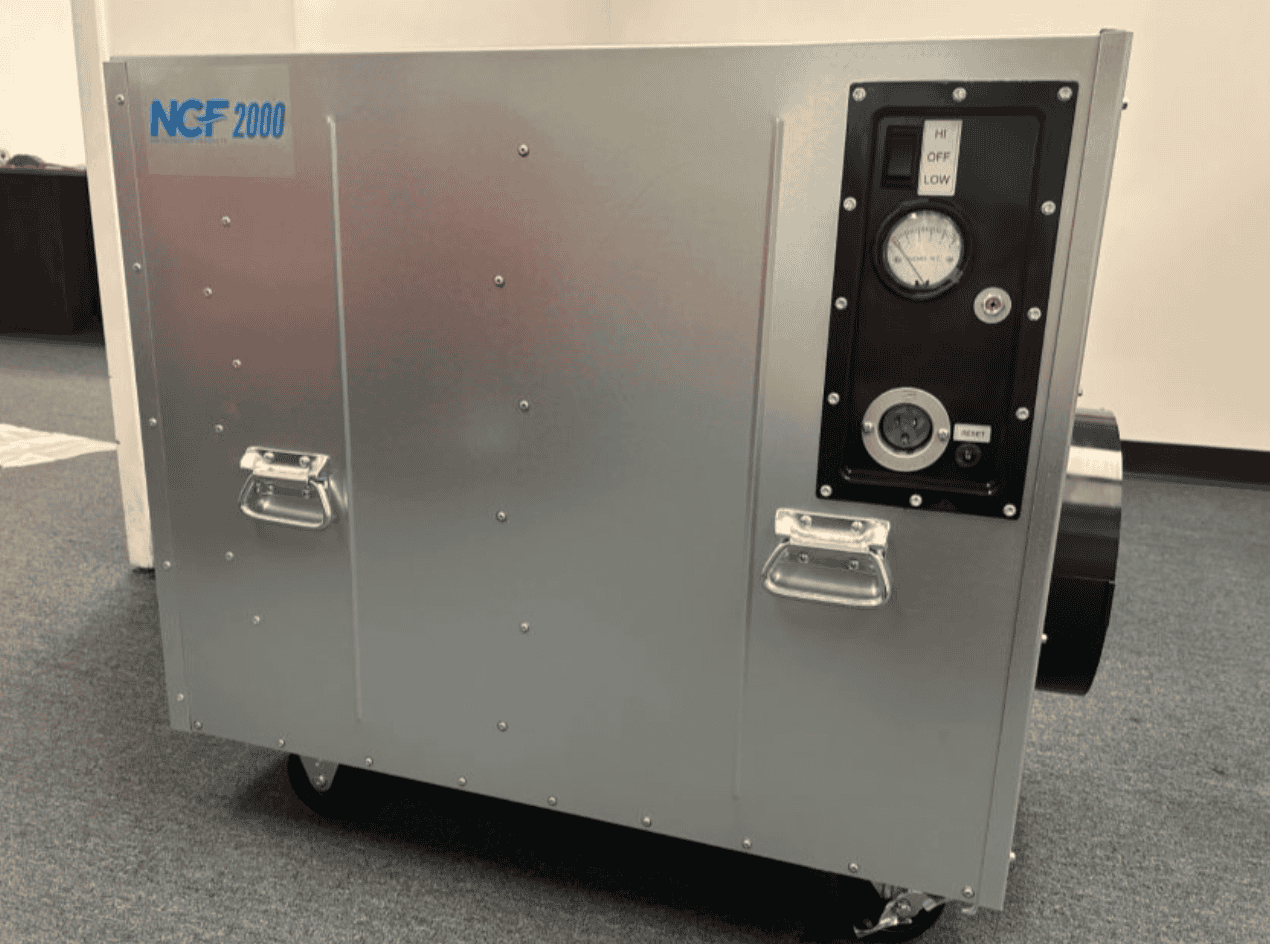
An air scrubber used for mold remediation is a specialized portable filtration system designed to capture microscopic fungal spores, volatile organic compounds, and fine particulate matter from indoor air. Operating continuously within a sealed containment zone, these commercial-grade units pull contaminated air through a multi-stage filtration assembly—typically culminating in a High-Efficiency Particulate Air (HEPA) filter—to purify the environment, protect workers, and prevent cross-contamination into unaffected living spaces.
Understanding the Role of an Air Scrubber in Mold Abatement
When a property suffers from water damage or structural moisture intrusion, mold colonization can establish itself within 24 to 48 hours. Remediation requires more than simply wiping visible growth from drywall, framing, or subflooring. The physical removal process—scraping, sanding, brushing, or demolition—inevitably aerosolizes millions of dormant and active fungal spores. Without intervention, these microscopic invaders travel via HVAC systems and air currents to colonize pristine areas of the building.
An air scrubber acts as the mechanical lung of a containment zone. By continuously cycling room air through high-performance media, it lowers the airborne concentration of particulate matter. This protects the respiratory health of remediation technicians and ensures that ambient spore counts drop to acceptable baseline levels before containment barriers are dismantled. Understanding how these machines integrate into a comprehensive restoration protocol is essential for property owners, facility managers, and remediation professionals alike.
Core Components and Filtration Technology
To appreciate how an air scrubber functions during mold mitigation, one must examine its internal architecture. Unlike standard household air purifiers, commercial remediation scrubbers are engineered for heavy-duty, continuous operation in harsh, dust-laden environments.
Multi-Stage Filtration Sequence
A professional air scrubber relies on a progressive filtration train. Each stage captures progressively smaller particles, safeguarding the expensive final filter from premature clogging.
- Pre-Filters: The first line of defense consists of coarse or pleated pre-filters. These capture large debris, such as dust bunnies, hair, large wood particles, and heavy dust. Some setups include a secondary carbon stage or vapor block to absorb musty odors and microbial volatile organic compounds (mVOCs).
- Intermediate Filters (Optional): In heavy remediation scenarios, a second-stage medium filter traps intermediate particulate matter, extending the lifespan of the primary HEPA element.
- HEPA Final Filter: The gold standard of particulate filtration. By definition, a true HEPA filter must capture a minimum of 99.97% of airborne particles down to 0.3 microns in size. Because mold spores typically range from 1 to 30 microns (with fungal fragments and mycotoxins often existing as even smaller sub-micron particles), a certified HEPA filter captures virtually all viable and non-viable spores passing through the unit.
Airflow Metrics: CFM and Air Changes per Hour (ACH)
The effectiveness of an air scrubber depends heavily on proper sizing and airflow capacity, measured in Cubic Feet per Minute (CFM). Remediation contractors calculate the required capacity based on the volume of the workspace (length × width × height in feet).
To achieve successful remediation, professionals target a specific number of Air Changes per Hour (ACH). For standard mold abatement, industry guidelines (such as those outlined by the Institute of Inspection Cleaning and Restoration Certification, or IICRC S520) typically recommend achieving between 4 and 6 ACH within the containment zone.
| Room Volume (Cubic Feet) | Target ACH | Required CFM (Approximate) | Standard Equipment Match |
|---|---|---|---|
| 1,000 cu. ft. (Small Bathroom) | 4–6 ACH | 66 to 100 CFM | Small portable unit / Variable speed |
| 5,000 cu. ft. (Medium Bedroom) | 4–6 ACH | 333 to 500 CFM | One standard 500 CFM air scrubber |
| 15,000 cu. ft. (Large Open Area) | 4–6 ACH | 1,000 to 1,500 CFM | Multiple 500 CFM units or one large 2,000 CFM unit |
Setting Up and Operating an Air Scrubber in Containment
Deploying an air scrubber is not as simple as plugging it into a wall outlet and turning the dial to high. Correct placement, negative pressure setup, and monitoring are vital for containment integrity.
Establishing Containment and Negative Pressure
Mold remediation requires strict physical isolation. Technicians construct containment barriers using fire-retardant polyethylene sheeting and support poles, sealing doorways and HVAC vents with heavy-duty tape.
An air scrubber can be configured in two primary operational modes:
- Internal Recirculation: The unit sits inside the containment zone, pulling contaminated air in, filtering it through the HEPA system, and exhausting clean air back into the same space. This continuously lowers the particulate load during active physical removal work.
- Negative Air Pressure Setup: The air scrubber is positioned inside the containment zone, but a flexible duct is attached to the exhaust collar and routed out of the building (through a window, door, or cat-door insert). This exhausts filtered air to the exterior, creating negative air pressure inside the workspace. As a result, air from the outside leaks into the containment area rather than allowing contaminated air to escape into clean living quarters when workers open the containment flap.
Operational Best Practices
- Power Supply Verification: Commercial air scrubbers typically draw between 2 and 12 amps depending on motor speed and whether they include auxiliary outlets or UV-C lights. Technicians must verify electrical loads to avoid tripping breakers, especially when running multiple heavy-duty drying fans (air movers) simultaneously.
- Continuous Run Times: During active demolition and cleaning, the scrubber must run 24/7. Turning the unit off allows suspended spores to settle back onto surfaces or migrate through microscopic gaps in containment barriers.
- Ducting Integrity: If running negative air, all flexible ducting must be inspected for tears, kinks, or disconnections. A compromised duct blows contaminated air straight into clean zones, defeating the purpose of containment.
Maintenance, Safety, and Filter Disposal Protocols
An air scrubber is only as effective as its maintenance history. Operating a unit with a saturated or torn filter risks blasting concentrated mold spores back into the environment.
Filter Replacement and Containment Hazards
Changing filters on a mold remediation air scrubber is a high-risk activity. The exterior surface of a used pre-filter and the intake side of a HEPA filter are coated with concentrated fungal particulate.
- Personal Protective Equipment (PPE): Technicians must wear N95 or half-mask elastomeric respirators with P100 filters, disposable coveralls (Tyvek suits), and gloves during filter changes.
- Bagging and Sealing: Used filters should never be tapped out or cleaned with compressed air. Instead, they must be gently slid out of the housing, immediately placed inside heavy-duty polyethylene disposal bags, and sealed tightly with tape before removal from the work area.
- Disposal Compliance: In most jurisdictions, mold-contaminated waste can be disposed of in standard commercial or residential dumpsters, provided it is securely bagged to prevent dusting during transport. Local environmental health codes should always be consulted for specific commercial waste requirements.
Electrical and Mechanical Safety
- GFCI Protection: Always connect remediation equipment to Ground Fault Circuit Interrupter (GFCI) outlets. Water damage sites frequently feature standing moisture, creating severe electrocution hazards.
- Motor Maintenance: Inspect power cords for fraying, ensure housing seals remain airtight, and periodically check the blower wheel for dust accumulation that can cause rotational imbalance and motor burnout.
Comparing Air Scrubbers, Air Movers, and Negative Air Machines
Homeowners and novice contractors often confuse air scrubbers with other restoration equipment. While they look similar from the outside, their internal mechanics and primary functions differ significantly.
| Equipment Type | Primary Function | Filtration Type | Best Used For |
|---|---|---|---|
| Air Scrubber | Purifies air by capturing microscopic particles and spores. | Multi-stage (Pre-filter, Carbon, HEPA) | Continuous cleaning of indoor air during and after remediation. |
| Air Mover (Centrifugal Fan) | Accelerates evaporation of moisture from wet building materials. | None (Air movement only) | Drying out structural framing, subfloors, and drywall after water damage. |
| Negative Air Machine | High-volume air movement designed to exhaust air outdoors. | HEPA (in modern remediation units) | Maintaining negative pressure in large containment zones. |
Note: Many modern commercial air scrubbers are versatile enough to function as both air scrubbers and negative air machines simply by attaching exhaust ducting and adjusting fan speeds.
Frequently Asked Questions
Can I rent an air scrubber from a local hardware store for DIY mold cleanup?
Yes, many tool rental centers and restoration supply houses rent commercial air scrubbers. However, DIY mold remediation is generally discouraged by public health agencies for areas exceeding 10 square feet. If you rent a unit, ensure the rental company has certified that the HEPA filter is intact, clean, and tested, and verify that you follow proper containment and PPE protocols.
How long should an air scrubber run after mold is physically removed?
An air scrubber should continue running for at least 24 to 48 hours after all visible mold has been cleaned, structural materials have dried, and the area has passed a preliminary visual inspection. This allows the system to capture any residual spores stirred up during the final wipe-down before clearance testing occurs.
Do air scrubbers kill mold?
Standard air scrubbers do not kill mold; they capture it mechanically. Air enters the machine and trapped spores remain physically lodged within the fibers of the HEPA filter. Some advanced units incorporate UV-C germicidal lamps designed to neutralize biological contaminants passing through the chamber, but the primary mechanism of action remains physical filtration rather than chemical or thermal destruction.
Will an air scrubber eliminate musty mold odors in my house?
An air scrubber equipped with an activated carbon or potassium permanganate filter stage can significantly reduce musty odors caused by microbial volatile organic compounds (mVOCs). However, an air scrubber alone will not cure odor problems if the active moisture source and underlying mold colonies remain hidden inside wall cavities or HVAC ductwork.
Final Recommendation
When facing significant mold contamination in a residential or commercial property, deploying a properly sized HEPA air scrubber within a strictly sealed containment zone is non-negotiable for safe, effective remediation. Property owners should verify that restoration technicians utilize certified equipment, maintain continuous negative pressure, and adhere to recognized industry standards such as IICRC S520. For extensive infestations exceeding localized boundaries, hiring a professional, certified mold remediation contractor remains the safest path to restoring indoor air quality and structural integrity.