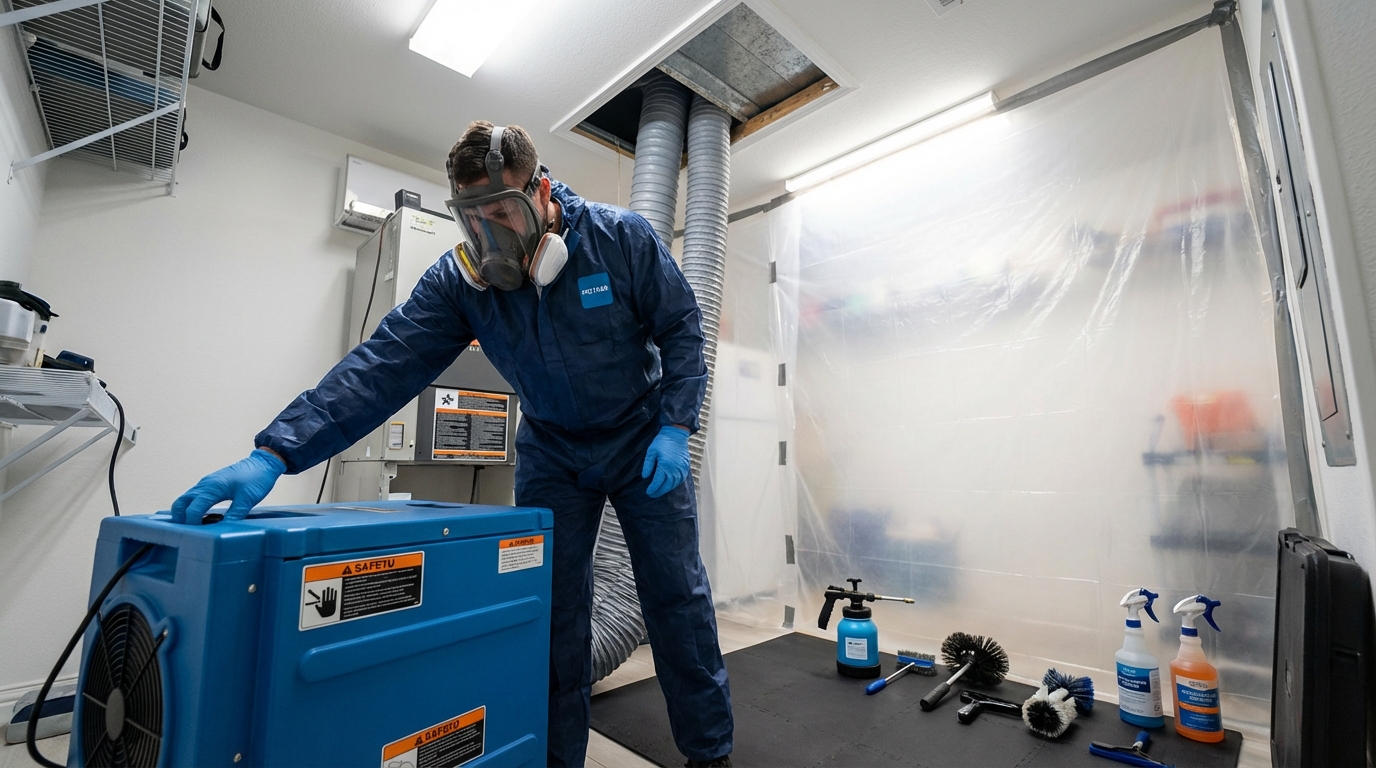
Professional air duct mold remediation companies specialize in the identification, containment, and removal of fungal growth within heating, ventilation, and air conditioning (HVAC) systems. These experts utilize industrial-grade HEPA filtration, negative air pressure machines, and EPA-registered antimicrobial treatments to restore indoor air quality and ensure that mold spores do not recirculate throughout a building.
The presence of mold in air ducts is more than a maintenance nuisance; it is a significant indoor air quality concern that can impact the structural integrity of your HVAC components and the health of the occupants. In 2026, as building codes and health standards for indoor environments continue to tighten, understanding how to select and work with a qualified remediation specialist is essential for any property owner.
The Critical Role of Air Duct Mold Remediation Companies
Air duct mold remediation companies provide a service that goes far beyond the scope of a standard "blow-and-go" vent cleaning. While a general air duct cleaner might focus on removing visible dust and debris, a remediation specialist is trained to handle biological contaminants. Mold requires a specific protocol because improper cleaning can actually worsen the problem by agitating spores and dispersing them into the living spaces of a home or office.
These companies operate at the intersection of HVAC engineering and environmental science. Their primary goal is to address the "Source-Pathway-Receiver" model of indoor pollution. By removing the source (mold growth in the ducts), they clear the pathway (the ventilation system) to protect the receiver (the occupants).
Why Remediation Differs from Standard Cleaning
Standard cleaning usually involves high-powered vacuums and brushes to remove particulate matter. However, mold is an organic organism that attaches itself to surfaces, particularly in the porous lining of fiberglass ducts or on the cooling coils where condensation occurs. Remediation involves:
- Containment: Preventing the spread of spores during the cleaning process.
- Mechanical Agitation: Using specialized tools to break the mold's bond with the duct surface.
- Antimicrobial Application: Using EPA-registered solutions specifically labeled for HVAC use to kill remaining spores.
- Moisture Control: Identifying the root cause of the mold, such as a leaking roof or a malfunctioning evaporator coil, to prevent recurrence.
Signs You Need to Hire a Mold Remediation Specialist
Not every dusty vent requires a remediation team. However, certain "red flags" indicate that the situation has escalated beyond simple dust accumulation. If you notice any of the following, it is time to consult a professional air duct mold remediation company.
Visible Fungal Growth
If you see black, green, or white fuzzy patches on the inside of your vent covers or near the air handler, it is a clear indicator. Mold often thrives on the insulation lining of the plenum or the blower wheel.
Persistent Musty Odors
A "sock-like" or earthy smell that intensifies when the AC or heat kicks on is a classic sign of mold. This odor is caused by Microbial Volatile Organic Compounds (mVOCs), which are gases released by mold during its growth cycle.
Unexplained Health Symptoms
Occupants may experience increased allergy symptoms, asthma flare-ups, headaches, or respiratory irritation that only seems to occur when they are inside the building. This is often linked to the inhalation of mycotoxins or spores distributed by the HVAC system.
Recent Water Damage
If your HVAC system was exposed to flooding, or if there was a significant leak in the attic or crawlspace near the ductwork, mold growth is almost guaranteed within 24 to 48 hours if the area was not professionally dried.
The Professional Remediation Process in 2026
When you hire a reputable company in 2026, you should expect a systematic approach that follows the standards set by the National Air Duct Cleaners Association (NADCA) and the Institute of Inspection, Cleaning and Restoration Certification (IICRC). The process typically follows these six stages.
1. Initial Assessment and Testing
Before any work begins, a technician will perform a visual inspection using borescopes (small cameras on flexible cables) to see deep into the ductwork. They may also take "tape lift" samples or air quality samples to identify the specific type of mold and the concentration of spores.
2. Establishing Negative Pressure
To ensure that mold spores do not escape into your rooms during cleaning, the company will connect a high-vacuum collection device to the main trunk of the ductwork. This creates "negative pressure," meaning all air within the ducts is sucked toward the vacuum and passed through a HEPA (High-Efficiency Particulate Air) filter before being exhausted outside or back into the room.
3. Source Removal and Mechanical Agitation
Technicians use various tools, such as rotating brushes, air whips, and "skipper balls," to dislodge the mold from the duct walls. For fiberglass-lined ducts, this process must be handled with extreme care to avoid damaging the insulation, which could release fiberglass fibers into the air.
4. Cleaning the Air Handling Unit (AHU)
The "heart" of the system—the blower motor, the evaporator coils, and the drain pan—must be cleaned. Mold often starts on the cooling coils due to the constant presence of moisture. Specialists use specialized coil cleaners to remove biofilm and buildup.
5. Application of EPA-Registered Antimicrobials
Once the ducts are physically clean, a technician may apply an antimicrobial treatment. It is critical that the company uses a product specifically registered with the EPA for use in HVAC systems. In 2026, many companies use "green" or botanical-based solutions like thymol (derived from thyme) for clients who are sensitive to synthetic chemicals.
6. Final Verification
The process concludes with a post-remediation inspection. This often involves a "white glove" test or a follow-up air quality test to ensure that the spore counts have returned to normal "background" levels.
Comparing Professional Services vs. DIY
| Feature | Professional Remediation | DIY Cleaning |
|---|---|---|
| Equipment | 10,000+ CFM Vacuum, HEPA Filtration | Shop-Vac (Non-HEPA) |
| Containment | Full system isolation & negative pressure | None |
| Expertise | IICRC/NADCA Certified Technicians | No formal training |
| Safety | Full PPE (Tyvek suits, N95/P100 respirators) | Minimal protection |
| Scope | Entire system (Plenums, coils, trunk lines) | Visible vent areas only |
| Verification | Lab testing and visual documentation | None |
Vetting Air Duct Mold Remediation Companies
Not all companies offering "mold cleaning" are qualified to perform full remediation. Because the industry is often plagued by "bait-and-switch" pricing schemes, property owners must be diligent in their vetting process.
Look for Core Certifications
The most important credential is from the National Air Duct Cleaners Association (NADCA). A company with a "Certified Air Systems Cleaning Specialist" (ASCS) on staff has demonstrated knowledge of industry standards. Additionally, the IICRC offers a "Mold Removal Specialist" (MRS) certification that is highly relevant.
Verify Insurance and Licensing
Standard general liability insurance may not cover mold-related work. Ensure the company has specific "Pollution Liability" or "Mold/Environmental" insurance. This protects you if the company accidentally spreads mold spores throughout your home during the process.
Ask About the Cleaning Method
Avoid companies that suggest only "fogging" the ducts with a chemical. The EPA and NADCA both state that physical removal of the mold is the only effective way to remediate a system. Chemicals are a supplement to cleaning, not a replacement for it.
Review the Detailed Estimate
A reputable company will provide a written scope of work. This should include the number of vents, the cleaning of the air handler, any antimicrobial treatments, and the specific methods used for containment. In 2026, professional estimates for a standard single-family home typically range from $600 to $2,500, depending on the severity of the mold and the size of the HVAC system.
Cost Factors and Economic Considerations in 2026
The cost of air duct mold remediation is influenced by several variables. Understanding these can help you budget appropriately and avoid being overcharged.
- System Size and Accessibility: A multi-zone HVAC system or a home with two separate air handlers will naturally cost more. Accessibility issues, such as ducts located in tight crawlspaces or high ceilings, also increase labor costs.
- Type of Ductwork: Sheet metal ducts are the easiest to clean and remediate. Fiberglass duct board or flexible "flex-duct" is more difficult. If mold has deeply penetrated the porous surface of fiberglass insulation, the remediation company may recommend replacing those sections of the ductwork entirely, as cleaning may be impossible.
- Severity of Infestation: Light surface mold requires less labor than a system where mold has spread into every branch line and the main plenum.
- Local Labor Rates: In 2026, labor costs vary significantly by region, with metropolitan areas generally seeing higher service fees due to increased overhead and regulatory compliance costs.
Potential Risks of Improper Remediation
Choosing a low-quality company can result in "cross-contamination." If a technician uses a vacuum without a HEPA filter, they essentially turn the HVAC system into a "spore cannon," shooting millions of microscopic mold spores into your furniture, carpets, and air.
Furthermore, improper use of chemicals can lead to "Sensory Irritation Syndrome." If biocides are over-applied or used in a way that is inconsistent with their labeling, the fumes can cause respiratory distress for occupants long after the cleaning is finished. Always insist on seeing the Safety Data Sheet (SDS) for any chemical the company intends to use.
Preventing Future Mold Growth in HVAC Systems
Once the remediation company has finished their work, the responsibility shifts to maintenance. Mold cannot grow without moisture. To keep your ducts clean in 2026 and beyond, consider the following steps:
- Maintain Humidity Levels: Keep indoor relative humidity between 30% and 50%. Use a dehumidifier in basements or humid climates.
- High-Efficiency Filtration: Use pleated air filters with a MERV rating of at least 8 to 11. These filters capture the organic dust that mold uses as a food source.
- Regular Coil Cleaning: Have your HVAC system serviced annually. A technician should check the condensate pan to ensure it is draining properly and that there are no standing pools of water.
- Seal Duct Leaks: Leaky ducts in unconditioned spaces (like attics) can lead to condensation, which provides the moisture necessary for mold growth.
Frequently Asked Questions
Can I just spray bleach into my vents to kill mold?
No. Bleach is not recommended for HVAC systems. It is primarily composed of water, which can actually encourage more mold growth if it doesn't dry quickly. Furthermore, bleach is corrosive to metal ductwork and can damage the components of your air handler. Professional companies use EPA-registered antimicrobials designed for metal and fiberglass surfaces.
Is mold in air ducts covered by homeowners insurance?
In 2026, most standard homeowners insurance policies only cover mold remediation if it is the direct result of a "covered peril," such as a sudden pipe burst or fire suppression. Mold caused by poor maintenance, high humidity, or gradual leaks is typically excluded. Check your specific policy for a "Mold Endorsement" or "Limited Fungi Coverage."
How long does the remediation process take?
For a standard 1,500 to 2,000-square-foot home, professional remediation usually takes between 4 and 8 hours. If the mold infestation is severe or requires the replacement of duct sections, the project could span two days.
Will the remediation process make my house messy?
A professional air duct mold remediation company will take extensive precautions to protect your home. This includes laying down drop cloths, wearing shoe covers, and using plastic "curtains" to isolate the work area. The use of negative pressure ensures that dust and spores are sucked into the vacuum rather than settling on your furniture.
What is the difference between a "mold inspection" and "mold remediation"?
An inspection (often performed by an Industrial Hygienist) identifies the problem and provides a "prescription" for cleanup. The remediation company is the contractor that performs the actual physical cleanup based on those findings. In many jurisdictions, it is considered a conflict of interest for the same company to perform both the initial testing and the remediation.
Summary of Recommendations
If you suspect mold in your HVAC system, prioritize safety and indoor air quality by following these steps:
- Stop the System: Turn off your HVAC to prevent further spore dispersal.
- Seek Professional Inspection: Hire a NADCA-certified professional to perform a visual and digital inspection of the internal ductwork.
- Review the Protocol: Ensure the proposed remediation includes mechanical agitation and negative air pressure with HEPA filtration.
- Fix the Moisture Source: Do not perform remediation until the source of moisture (leaks, humidity, or drainage issues) has been permanently repaired.
- Verify the Results: Conduct a post-cleaning walkthrough and consider air quality testing to confirm the system is clean.