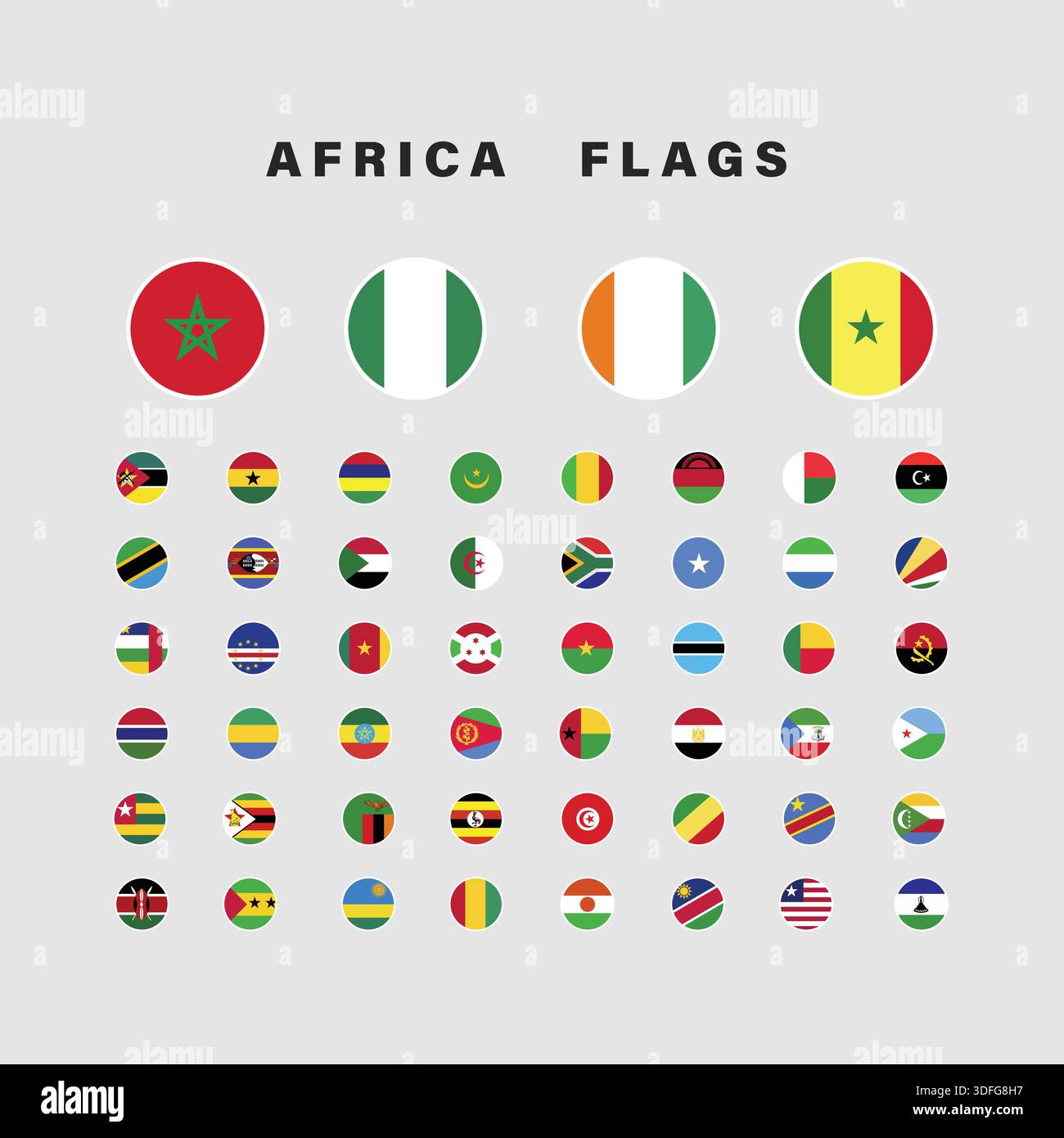
African flags featuring stars are among the most symbolic in the world, representing concepts ranging from Pan-African unity and the struggle against colonialism to religious guidance and the "bright future" of a newly independent nation. Currently, in 2026, dozens of African nations incorporate one or more stars into their national ensigns, often utilizing specific colors like gold, black, or white to convey unique historical and political messages.
The Significance of the Star in African Vexillology
In the study of flags, known as vexillology, the star is a powerful "charge" or emblem. For the African continent, the star became a prevalent symbol during the mid-20th-century independence movements. While the aesthetics vary, the presence of a star generally signals sovereignty and the aspiration for a unified identity.
To understand why so many African flags feature stars, one must look at three primary influences: Pan-Africanism, the "Lone Star" of freedom, and socialist or communist ideologies that shaped the post-colonial era.
The Pan-African Influence
The Pan-African movement, which gained significant momentum in the 1950s and 60s, popularized the use of a central star. The "Black Star," specifically, was popularized by Marcus Garvey’s Black Star Line shipping company and later adopted by Ghana, the first sub-Saharan colony to gain independence. The star was intended to be a "lodestar" for African freedom, guiding other nations toward self-determination.
The Socialist and Communist Influence
During the Cold War, many African liberation movements were supported by the Soviet Union or China. As these movements transitioned into governments, they often adopted the yellow or red star—classic symbols of socialism—to represent the workers, the peasantry, and the revolutionary path of the state. Examples include the flags of Angola, Mozambique, and Ethiopia (during the Derg period, though the modern Ethiopian star has a different meaning).
Religious and Cultural Guidance
In nations with significant Muslim populations, such as Senegal or Djibouti, the star often carries religious connotations or represents a "guiding light." When paired with a crescent, it is a traditional symbol of Islam, but even when standing alone, as in the case of Senegal, it represents the five pillars of the faith or the five continents of the world.
Detailed Analysis of West African Flags with Stars
West Africa is the heartland of the "star" motif on the continent, largely due to the early influence of Ghana’s independence.
Ghana: The Black Star
Ghana’s flag, adopted in 1957, consists of horizontal stripes of red, gold, and green with a large black five-pointed star in the center. Designed by Theodosia Okoh, the black star was taken directly from the banner of the Black Star Line. It symbolizes African emancipation and the hope that Africa would eventually be a united entity. The black color of the star specifically honors the people of Africa.
Senegal: The Green Star
Senegal uses the same Pan-African colors (green, yellow, red) but places a green star in the center of the yellow stripe. The green star represents the opening of the country to the five continents. For the people of Senegal, the green star is also a symbol of hope and progress, deeply rooted in the nation's lush vegetation and its primary religion, Islam, where green is a sacred color.
Cameroon: The Star of Unity
Cameroon’s flag features a vertical tricolor of green, red, and yellow. A single yellow star sits in the center of the red stripe. This is known as the "Star of Unity," representing the union between the formerly British-ruled and French-ruled territories of the country. When the flag was originally adopted in 1957, it had no star; the star was added in 1975 to signify the "United Republic."
Liberia: The Lone Star
The Liberian flag is unique because it predates the 20th-century independence movements. Modeled after the United States flag, it features eleven horizontal red and white stripes and a blue square (canton) containing a single white star. This "Lone Star" represented the fact that Liberia was once the only independent modern republic in Africa during the height of the colonial era.
The Star in the Horn of Africa and East Africa
The flags in the Horn of Africa often use stars to represent ethnic unity or the geographic regions that make up the nation.
Somalia: The Five-Pointed White Star
The Somali flag is a light blue field with a large white star in the center. This star is particularly significant because each of its five points represents a region where the Somali people traditionally live:
- The former Italian Somaliland.
- The former British Somaliland.
- The Ogaden region (Ethiopia).
- The Northern Frontier District (Kenya).
- Djibouti.
While the flag currently represents the Federal Republic of Somalia, the star remains a symbol of the "Greater Somalia" vision.
Ethiopia: The Pentagram of Radiant Rays
The current Ethiopian flag (standardized in 1996 and maintained through 2026) features a blue disk with a yellow pentagram and five rays of light. Unlike most other stars, this is specifically a pentagram. It represents the equality of all Ethiopian ethnic groups, as well as the unity and diversity of the nation. The rays represent the bright future and the "radiance" of Ethiopia’s ancient culture.
Djibouti: The Red Star of Unity
Djibouti's flag consists of two horizontal bands of light blue and light green, with a white isosceles triangle at the hoist containing a red five-pointed star. The red star represents the unity of the diverse population and the blood shed during the struggle for independence. The blue represents the sea and the sky, while the green represents the earth.
Southern African Flags and the Socialist Legacy
In Southern Africa, the star often carries a more militant or revolutionary history, stemming from the liberation struggles of the 1970s and 80s.
Angola: The Star and the Cogwheel
The Angolan flag is a stark departure from the traditional Pan-African tricolor. It features horizontal bands of red and black. In the center is a yellow emblem consisting of a five-pointed star, a segment of a cogwheel, and a machete. The star here represents international solidarity and progress. The machete represents the peasantry and the armed struggle, while the cogwheel represents the industrial workers.
Zimbabwe: The Red Star and the Zimbabwe Bird
The flag of Zimbabwe features seven horizontal stripes of green, yellow, red, black, and green. At the hoist is a white triangle containing a red five-pointed star with a "Zimbabwe Bird" superimposed on it. The red star represents the revolutionary struggle and the nation's aspirations for a socialist future (at the time of its 1980 adoption), while the bird represents the history and heritage of the Great Zimbabwe ruins.
Mozambique: The Star and the Kalashnikov
Mozambique’s flag is famous for being one of the few national flags to depict a modern firearm. The yellow star is positioned behind a crossed hoe and AK-47 rifle, superimposed on an open book. The star symbolizes Marxism and internationalism, while the book, hoe, and gun represent education, agriculture, and defense, respectively.
Comparative Overview of African Flags with Stars
The following table categorizes several prominent African flags by the color and number of stars to help distinguish between them.
| Country | Star Color | Number of Stars | Background Colors | Primary Symbolism |
|---|---|---|---|---|
| Ghana | Black | 1 | Red, Gold, Green | African Freedom/Lodestar |
| Somalia | White | 1 | Light Blue | Five Somali Regions |
| Senegal | Green | 1 | Green, Yellow, Red | Five Continents/Hope |
| Cameroon | Gold | 1 | Green, Red, Yellow | Unity of Territories |
| Liberia | White | 1 | Red/White Stripes, Blue | The Lone Star of Liberty |
| Ethiopia | Gold | 1 (Pentagram) | Green, Yellow, Red | Unity/Equality of Ethnicities |
| Cape Verde | Gold | 10 | Blue, White, Red | The 10 Main Islands |
| Burkina Faso | Gold | 1 | Red, Green | The Revolution/Natural Wealth |
| DR Congo | Gold | 1 | Blue, Red, Yellow | A Radiant Future |
| Djibouti | Red | 1 | Blue, Green, White | Unity/Independence Struggle |
| Comoros | White | 4 | Yellow, White, Red, Blue | The 4 Islands of the Archipelago |
Design Variations and Technical Specifications
When identifying these flags, it is important to note the specific geometry of the stars. Most African flags use a standard five-pointed star (pentagram), but the orientation and "fatness" of the star can vary.
- The Proportion of the Star: In the flag of Burkina Faso, the star is quite large and centered on the boundary of the red and green stripes. In contrast, the stars on the Cape Verde flag are small and arranged in a circle, intended to look like a "constellation" over the Atlantic Ocean.
- Color Significance: A Black Star is almost exclusively found in West African flags (Ghana, Guinea-Bissau, and formerly São Tomé and Príncipe, which has two). It specifically signifies the African people. A Yellow/Gold Star often signifies mineral wealth or a bright future. A White Star usually signifies peace or a specific number of administrative regions.
- Positioning: Most stars are centered. However, in the Democratic Republic of the Congo, the star is located in the upper-left canton (the hoist side), representing the hope for the nation's future shining over its vast territory.
Common Misidentifications
Because many African nations use the same set of "Pan-African colors"—Red, Yellow, and Green—it is easy to confuse their flags, especially when they all feature a single star.
- Ghana vs. Senegal: Both have a central star. Remember that Ghana's star is black (representing the people), while Senegal's star is green (representing the land and religion).
- Cameroon vs. Senegal: Both have three vertical/horizontal stripes and a star. Cameroon’s star is yellow on a red stripe, while Senegal’s is green on a yellow stripe.
- Guinea-Bissau vs. Ghana: Guinea-Bissau has a vertical red stripe at the hoist with a black star, whereas Ghana has horizontal stripes with a black star in the middle.
Frequently Asked Questions
Which African flag has the most stars?
As of 2026, the flag of Cape Verde has the most stars, featuring 10 gold stars arranged in a circle. These stars represent the 10 main islands of the archipelago. The stars are set against a blue background, symbolizing the ocean and the sky, with white and red stripes representing the road to the construction of the nation.
Why is the star on the Ethiopian flag a pentagram?
The Ethiopian star is a pentagram with five rays of light. This was chosen specifically to represent the "interconnectedness" of the various ethnic and linguistic groups in Ethiopia. The blue disk it sits upon represents peace and democracy, which the government aimed to highlight when the design was adopted in the 1990s.
What is the difference between a "Black Star" and a "Yellow Star" in African flags?
A black star is a symbol of racial identity and the Pan-African movement (e.g., Ghana). A yellow star is more frequently a symbol of the nation's mineral wealth, its "radiant" future, or a historical nod to socialist ideals of labor and progress (e.g., Burkina Faso or Angola).
Does the star on the Somali flag represent Islam?
While Somalia is a predominantly Muslim nation, the white star on its flag is primarily a geographic and ethnic symbol rather than a religious one. It represents the five regions where the Somali people are found. Religious symbolism is more prominently found in the flags of nations like Mauritania or Algeria, which use the star in conjunction with a crescent.
How did the American flag influence African flag design?
Liberia is the primary example of this. Founded by the American Colonization Society as a home for freed African American slaves, Liberia adopted a flag in 1847 that closely mirrors the "Stars and Stripes." The single star was meant to show that Liberia was the only independent republic in Africa at the time.
Practical Recommendation for Researchers
When identifying African flags with stars, the most effective method is to first categorize the background colors. If the flag uses the Pan-African tricolor (Red, Gold, Green), look for the color and orientation of the star (Black, Green, or Gold). If the background is blue, it likely belongs to the Horn of Africa (Somalia, Djibouti) or a maritime nation (Cape Verde, DR Congo). Always check the number of points; while the five-pointed star is the standard, unique variations like the Ethiopian pentagram or the Angolan emblem are key to distinguishing between otherwise similar designs.