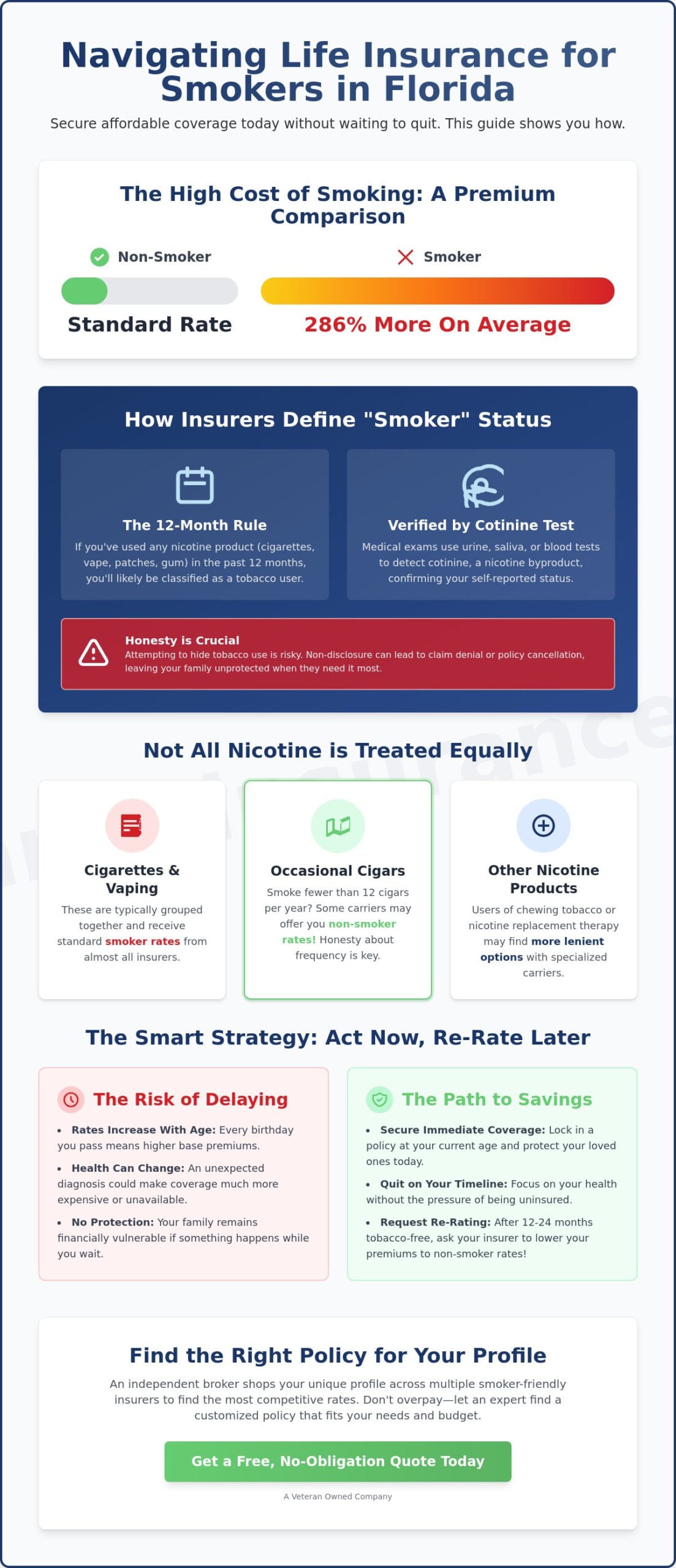
Finding affordable term life insurance at age 56 as a smoker requires a strategic approach to underwriting, health management, and policy design. While premiums are higher for smokers due to documented mortality risks, you can optimize costs by comparing specialized carriers, considering shorter policy terms, and aggressively managing underlying health markers like blood pressure and cholesterol.
Understanding the Financial Impact of Smoking on Life Insurance
When you apply for term life insurance, insurance carriers use actuarial tables to determine your risk profile. For a 56-year-old male, the primary variables are age, medical history, and tobacco usage. Because smoking is statistically linked to increased rates of cardiovascular disease, lung issues, and various cancers, insurers classify smokers into a separate, higher-risk rating category—often labeled as "Table Ratings" or simply "Tobacco User."
This classification impacts your "base rate" significantly. A 56-year-old non-smoker might qualify for "Preferred" or "Standard Plus" rates, whereas a smoker will almost always be relegated to "Standard Tobacco" or "Substandard" categories. In 2026, the premium gap between a non-smoker and a smoker can often be double or triple for the exact same coverage amount. However, "affordable" is a relative term; by structuring the policy correctly, you can still secure essential financial protection for your beneficiaries without overextending your budget.
Preparing for the Underwriting Process
The underwriting process is where your actual cost is determined. Before you apply, it is essential to understand the specific criteria insurance companies evaluate.
The Paramedical Exam
Most term life insurance policies for individuals in their mid-50s require a medical examination. The examiner will record your height, weight, and blood pressure, and take blood and urine samples.
- Cotinine Testing: The laboratory will test specifically for cotinine, a byproduct of nicotine metabolism. Even if you use vaping products, nicotine patches, or chewing tobacco, you will test positive for nicotine and be classified as a smoker by virtually every major carrier.
- Medical Markers: High cholesterol, elevated glucose levels, and hypertension are often comorbid with smoking. If your exam shows these markers are uncontrolled, you may face even higher premiums or potential decline. Improving these numbers through lifestyle adjustments in the months leading up to your application can result in a more favorable rating within the "Smoker" category.
Medical History Records
Insurance companies will request an Attending Physician Statement (APS) or check the Medical Information Bureau (MIB) records. If you have been treated for smoking-related conditions, be prepared to provide detailed reports. Honesty is non-negotiable; misrepresenting your smoking status on an application constitutes material misrepresentation, which gives the insurer the right to deny a death benefit claim later.
Strategies to Manage Costs
If the premiums for a standard 20-year term policy appear prohibitive, consider these professional strategies to lower your monthly out-of-pocket expenses while maintaining necessary coverage.
1. Opting for Shorter Term Lengths
A 20-year term policy for a 56-year-old covers you until age 76. Because the risk of mortality increases significantly in your 60s and 70s, the insurer charges a "risk premium" for those later years. If your goal is to provide for a spouse or cover a mortgage that will be paid off in 10 or 15 years, choosing a 10-year term can drastically reduce the annual cost.
2. Laddering Policies
Instead of purchasing one large, expensive policy, consider a "laddering" strategy. Purchase a smaller policy that covers your immediate needs (e.g., final expenses and small debts) and a second, temporary policy that covers a specific, shrinking debt like a mortgage. This allows you to drop the larger coverage once the debt is retired, lowering your overall premium expenditure.
3. Improving Your Health Rating Within the Smoker Class
Some carriers offer "Smoker Plus" or "Smoker Standard" tiers. If you are otherwise healthy—meaning you have no history of heart disease, diabetes, or respiratory issues—you may qualify for the best possible rate within the smoker category. Focus on maintaining a healthy Body Mass Index (BMI) and keeping your blood pressure within the normal range to maximize your eligibility for these mid-tier rates.
Comparing Term Life Insurance Options
| Feature | Preferred Non-Smoker | Standard Smoker | Impact of Smoking |
|---|---|---|---|
| Risk Classification | Lowest | High | Significant premium hike |
| Medical Exam | Standard | Detailed/Comprehensive | Required for most policies |
| Premium Costs | Baseline | 2x to 3x higher | Decreases budget flexibility |
| Eligibility | High | Subject to underwriting | Higher risk of "Rated" premiums |
Note: Premiums are projections based on 2026 market standards and vary by carrier and health profile.
Common Mistakes to Avoid
- Hiding Tobacco Use: As noted, labs test for nicotine. If you lie on your application and the test comes back positive, your application will likely be denied or "rated up" automatically.
- Applying for Too Much Coverage: Only buy what you need. If you are 56, your children may already be adults and your home equity higher than in your 30s. Use a formal life insurance needs calculator to determine the exact amount of coverage required, rather than guessing.
- Ignoring Policy Riders: Riders, such as Accidental Death or Disability waivers, add to the cost. If affordability is the primary goal, focus on the base death benefit first before adding optional riders that inflate the monthly premium.
- Buying Through One Company Only: Each insurance company has its own "sweet spot" for risk. One company may be more lenient toward smokers with high blood pressure, while another may be more competitive on pricing for older applicants. Use an independent broker who can shop your profile across multiple carriers.
The Role of Lifestyle Changes
If you successfully quit smoking for a specific duration—typically 12 to 24 months—most insurance companies will allow you to apply for a "reclassification." This process involves submitting new medical evidence to prove your tobacco-free status. If successful, your premiums could drop to non-smoker rates, which represents a massive long-term saving. Even if you do not quit today, planning for a future reclassification is a sound financial goal.
Frequently Asked Questions
Can I get life insurance if I use vaping products?
Yes, but you will still be classified as a smoker. Most insurance companies treat vaping, nicotine gum, and patches exactly the same as cigarette smoking for underwriting purposes because the cotinine test will detect the nicotine intake regardless of the delivery method.
How does my age affect the rate increase for smokers?
At 56, your mortality risk is already higher than a 30-year-old. When you add the smoking risk factor to your age, the premium increases are multiplicative rather than additive. This is why shopping around with companies that specialize in "older-age" underwriting is crucial.
Should I choose term or permanent life insurance?
For a 56-year-old smoker, permanent insurance (like Whole Life) is often prohibitively expensive because of the high premiums combined with the smoker rating. Term life is almost always the more affordable choice for securing high death benefits during your working years or until your dependents are financially independent.
Does my family history influence my smoker premiums?
Yes. If you smoke and also have a strong family history of heart disease or cancer, carriers may view your risk as significantly elevated, potentially leading to a "table rating" (a surcharge on top of standard smoker rates). Be prepared to disclose family medical history accurately.
What is a "Table Rating"?
A table rating is an extra premium charge applied when an applicant has health issues or habits that exceed the risk of the "standard" category. If you are a smoker with additional minor health issues, you may be quoted at "Table B" or "Table C," which adds a percentage surcharge to your base premium.
Next Steps for Coverage
To begin, conduct a formal assessment of your financial obligations to determine the necessary coverage amount and duration. Once you have a target number, contact an independent life insurance broker. Unlike "captive" agents who only sell for one company, independent brokers have access to multiple carriers and can provide a "trial application" or "pre-screen" to see which company is most likely to offer you the best rate for your specific medical profile. By providing an honest health history to a broker upfront, you can avoid unnecessary denials and ensure you are applying to the carrier most likely to accept your risk at the lowest possible cost.