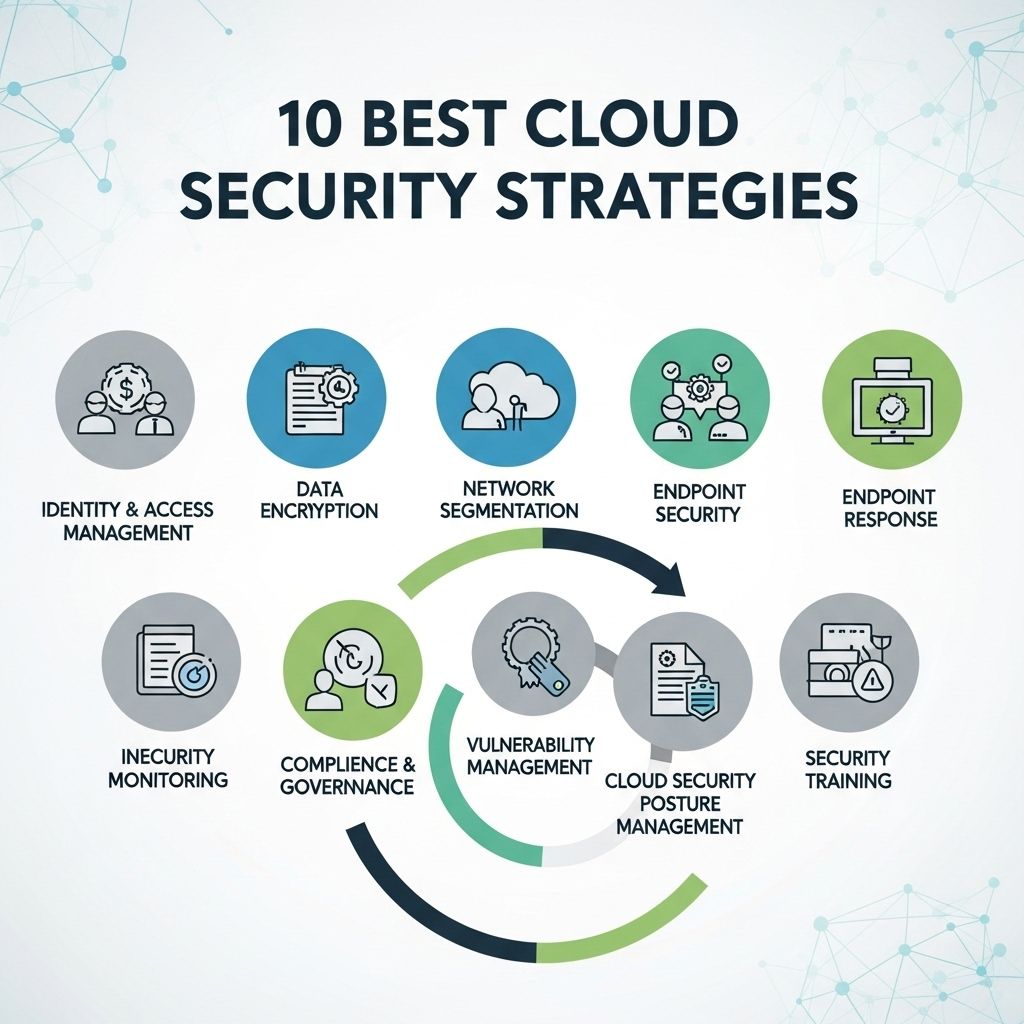
Securing a hybrid infrastructure requires security teams to unify fragmented visibility, align disparate compliance standards, and implement a consistent Identity-first approach. By leveraging Zero Trust principles and centralized observability, organizations can bridge the gap between legacy hardware and dynamic cloud services, ensuring robust protection across all data silos and operational perimeters.
The Evolution of Hybrid Security in 2026
As of 2026, the distinction between on-premises and cloud environments has become increasingly blurred. Most enterprises no longer operate in a "cloud-first" vacuum but rather in a "cloud-smart" reality where legacy systems, private clouds, and multiple public cloud providers coexist. This architectural complexity presents a significant challenge for security teams: maintaining a consistent security posture when the underlying infrastructure ranges from physical servers in a climate-controlled room to serverless functions running in a global hyperscale region.
The core objective for modern security teams is to move away from "siloed security," where different teams and tools manage different environments. Instead, the focus has shifted toward a unified control plane. In this model, security policies are defined centrally and enforced locally, regardless of where the workload resides. This approach mitigates the risk of configuration drift—a common vulnerability where cloud settings evolve faster than their on-premises counterparts, leaving exploitable gaps in the perimeter.
Foundational Prerequisites for Unified Security
Before implementing advanced security tools, security teams must establish a baseline of operational requirements. Securing a hybrid environment is not merely a technical challenge; it is a governance and process-oriented task.
Comprehensive Asset Discovery and Inventory
You cannot secure what you cannot see. In a hybrid setup, assets are ephemeral. A virtual machine might exist for only four hours, while an on-premises mainframe has been running for decades. Security teams require an automated, continuous discovery mechanism that catalogues:
- Physical Hardware: Servers, storage arrays, and networking gear.
- Virtual Assets: VMs, containers, and serverless instances.
- Data Assets: Databases, object storage (S3/Blob), and unstructured data on NAS.
- Identity Assets: User accounts, service principals, and API keys.
Normalizing Security Telemetry
On-premises firewalls generate logs in one format, while AWS CloudTrail or Azure Monitor use another. To achieve "single pane of glass" visibility, security teams must prioritize data normalization. Utilizing standards like the Open Cybersecurity Schema Framework (OCSF) allows teams to ingest data from diverse sources into a Security Information and Event Management (SIEM) system without losing context or metadata.
Zero Trust as the Bridge Between Environments
The Zero Trust Architecture (ZTA), codified by NIST SP 800-207, is the most effective strategy for managing hybrid environments in 2026. The philosophy of "never trust, always verify" applies equally to a user accessing a local file share and a developer pushing code to a cloud-native CI/CD pipeline.
Identity-Centric Security
In a hybrid world, identity is the new perimeter. Security teams must move away from IP-based trust. If a user is on the corporate VPN, they should not automatically be trusted.
- Unified Identity Providers (IdP): Organizations should synchronize their on-premises Active Directory with cloud-based identity services (like Microsoft Entra ID or Okta).
- Phishing-Resistant MFA: By 2026, standard SMS or push-based Multi-Factor Authentication is often insufficient. Security teams should mandate FIDO2-compliant hardware keys or passkeys across both environments to prevent credential harvest attacks.
- Conditional Access Policies: Access should be granted based on the health of the device, the location of the user, and the sensitivity of the resource, rather than just the network path.
Micro-segmentation and Lateral Movement
On-premises environments are notoriously "flat," meaning once an attacker gains entry, they can move laterally with ease. Security teams should implement micro-segmentation, which uses software-defined networking (SDN) to create granular zones. For example, a web server in the cloud should never have a direct path to an on-premises payroll database unless specifically authorized by a verified service identity.
Implementing a Unified Security Stack
To manage both environments effectively, security teams are increasingly adopting "converged" security platforms. These tools are designed to handle the specificities of both hardware and software-defined infrastructure.
Extended Detection and Response (XDR)
While SIEMs are excellent for long-term logging and compliance, XDR platforms provide the real-time correlation needed to stop an attack in progress. A modern XDR should ingest signals from on-premises EDR (Endpoint Detection and Response) and cloud-native security tools (CWPP/CSPM) to identify patterns that look like a coordinated campaign across the hybrid estate.
Cloud Security Posture Management (CSPM) and Hybrid Governance
CSPM tools are essential for cloud environments to detect misconfigurations, such as open S3 buckets. However, in 2026, these tools have evolved into Hybrid Configuration Management. They now audit on-premises virtualization layers (like VMware or Nutanix) alongside cloud tenants to ensure that security benchmarks (like CIS or NIST) are met globally.
Secure Access Service Edge (SASE)
For organizations with a distributed workforce, SASE combines networking and security functions (like Zero Trust Network Access and Cloud SWG) into a single cloud-delivered service. This eliminates the need to backhaul all cloud traffic through an on-premises data center, reducing latency while maintaining strict security inspection.
Comparing Security Controls: On-Premises vs. Cloud
| Feature | On-Premises Strategy | Cloud-Native Strategy | Hybrid Integration Approach |
|---|---|---|---|
| Data Encryption | Hardware Security Modules (HSM) and Disk Encryption. | Cloud KMS and Bring Your Own Key (BYOK). | Centralized Key Management with cross-environment API access. |
| Network Security | Physical Firewalls and VLANs. | Security Groups and Virtual Private Clouds (VPC). | Software-Defined Perimeter (SDP) across all segments. |
| Compliance | Periodic manual audits and physical inspections. | Continuous automated compliance monitoring. | Automated GRC platforms that pull data from both APIs and agents. |
| Incident Response | Manual forensic imaging of physical drives. | Automated snapshotting and ephemeral lab environments. | Unified IR playbooks triggered by a central SOAR platform. |
| Threat Hunting | Deep packet inspection on local switches. | Flow logs and API-level activity monitoring. | Aggregated telemetry in a data lake for cross-domain analysis. |
Operational Challenges and Mitigation
Security teams often face "friction points" when managing hybrid environments. Addressing these requires a shift in culture and tooling.
The Skills Gap
Securing a hybrid environment requires knowledge of physical networking, virtualization, and provider-specific cloud APIs (AWS, Azure, GCP). In 2026, the most successful security teams are those that invest in cross-training. Security analysts should be as comfortable writing a Terraform script to secure a cloud environment as they are configuring a local firewall rule.
Legacy Systems and "Technical Debt"
Many on-premises systems cannot support modern security protocols like OAuth 2.0 or TLS 1.3. For these "un-patchable" systems, security teams should use Isolation and Encapsulation. By placing legacy systems behind a modern "identity proxy" or within a strictly controlled micro-segment, the system can be secured without needing a fundamental rewrite of its underlying code.
Shared Responsibility Model Clarity
A frequent point of failure is the misunderstanding of the Shared Responsibility Model. Security teams often assume the cloud provider handles more than they actually do. While the provider secures the "cloud," the customer secures what is "in the cloud." In a hybrid environment, this responsibility is even more complex. Organizations must clearly document who is responsible for patching the OS, managing the hypervisor, and securing the physical cabling for every segment of the infrastructure.
Compliance and Data Sovereignty in 2026
Global regulations regarding data residency have intensified. Security teams must now navigate a landscape where data must reside within specific geographic boundaries (Data Sovereignty) while still being accessible to global cloud services.
Hybrid strategies allow organizations to keep highly sensitive or regulated data on-premises (or in a "Sovereign Cloud" region) while using the public cloud for non-sensitive compute power. Security teams must implement Data Loss Prevention (DLP) policies that are environment-aware. For example, a DLP rule might allow a document to be shared on a local SharePoint server but block it from being uploaded to a public cloud storage instance if it contains PII (Personally Identifiable Information).
Practical Steps for Security Teams
- Audit the Identity Lifecycle: Ensure that when an employee leaves the company, their access is revoked across both Active Directory and all cloud tenants simultaneously.
- Deploy Unified Agents: Where possible, use security agents (EDR/Vulnerability scanners) that work across Linux, Windows, and containerized environments.
- Automate Remediation: Use Security Orchestration, Automation, and Response (SOAR) to handle common hybrid issues, such as automatically isolating a compromised on-premises workstation or revoking a leaked cloud API key.
- Test the "Borders": Conduct penetration testing specifically targeting the connection points (VPNs, Direct Connects, ExpressRoutes) between your on-premises and cloud environments. These are often the weakest links.
FAQ
What is the biggest security risk in a hybrid environment?
The biggest risk is configuration inconsistency. When security teams apply strict policies in the cloud but leave on-premises systems with "legacy" permissions, attackers find the path of least resistance. Misconfigured VPNs or cross-environment trusts often allow an attacker to compromise a low-security on-premises printer and then move laterally into a high-security cloud database.
How do we handle logging when the data volume is too high?
In 2026, the strategy is log tiering and edge filtering. Instead of sending every single packet log to a high-cost SIEM, security teams use "observability pipelines." These tools filter out "noise" at the source and only send high-fidelity, security-relevant events to the central analytics platform, while storing raw data in low-cost "cold storage" for compliance.
Can we use the same security tools for both on-prem and cloud?
While some specialized tools are still necessary, the trend is toward platform consolidation. Modern EDR and XDR solutions are designed to be environment-agnostic. However, you will still need cloud-native tools (like CSPM) to handle API-level security that doesn't exist on-premises. The key is ensuring these tools integrate into a single reporting dashboard.
Does a hybrid environment make compliance harder?
Yes, it increases the scope of audits. You must prove compliance for both physical security (on-premises) and logical security (cloud). To manage this, security teams should adopt Compliance-as-Code, where infrastructure is automatically audited against a set of digital rules, generating real-time reports for auditors rather than relying on manual spreadsheets.
Should we encrypt data differently in the cloud?
Encryption standards (like AES-256) should remain the same. The difference lies in Key Management. In the cloud, you rely on the provider's KMS, while on-premises you might use a physical HSM. The best strategy is to use a hybrid key management system that allows you to manage the lifecycle of all keys from a single interface, ensuring a consistent rotation policy.
Final Recommendation
Security teams must treat hybrid environments as a single, cohesive ecosystem rather than a collection of separate parts. The most effective strategy for 2026 is to centralize policy and decentralize enforcement. By establishing a strong Identity-first foundation and utilizing automated governance tools, organizations can reap the benefits of cloud scalability without sacrificing the control and security of their on-premises investments.