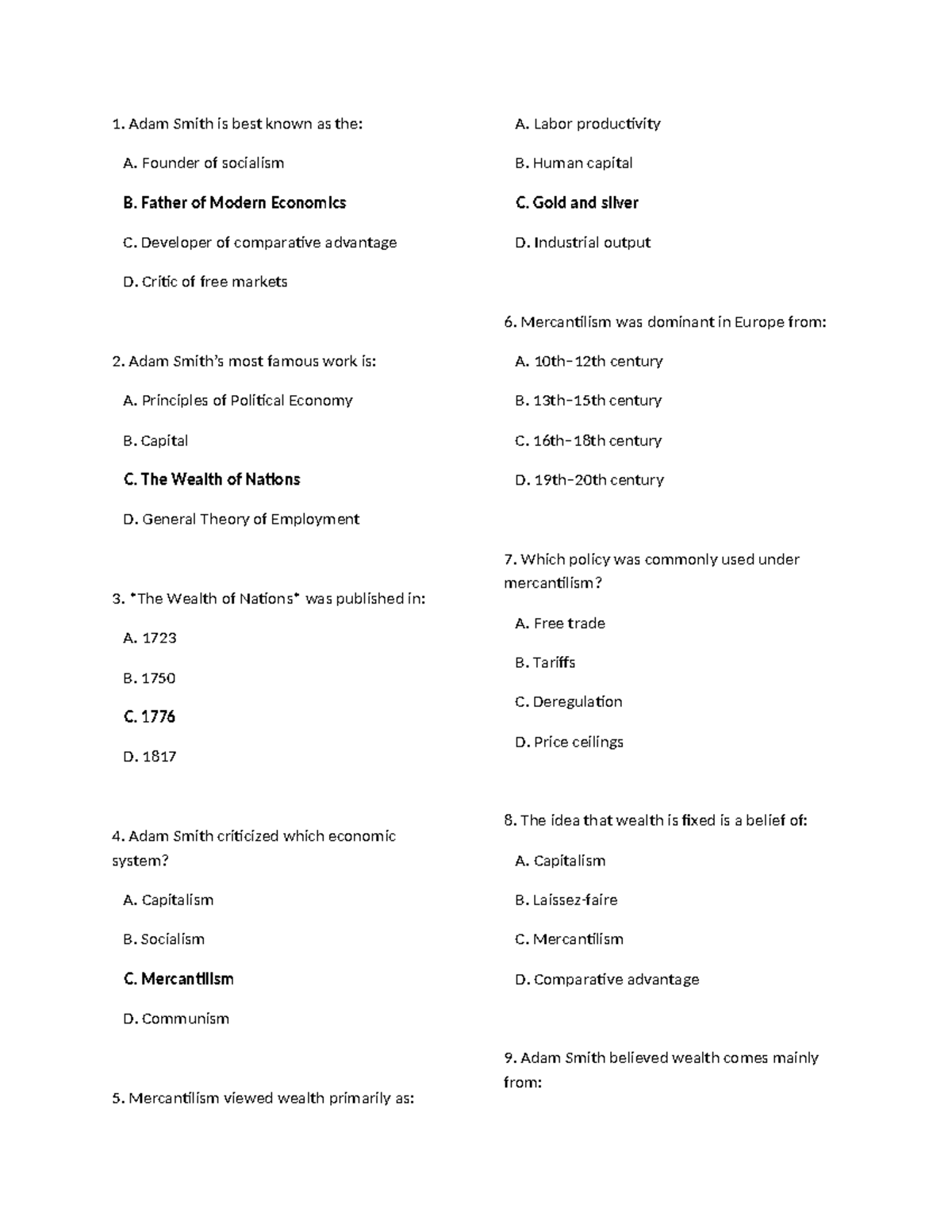
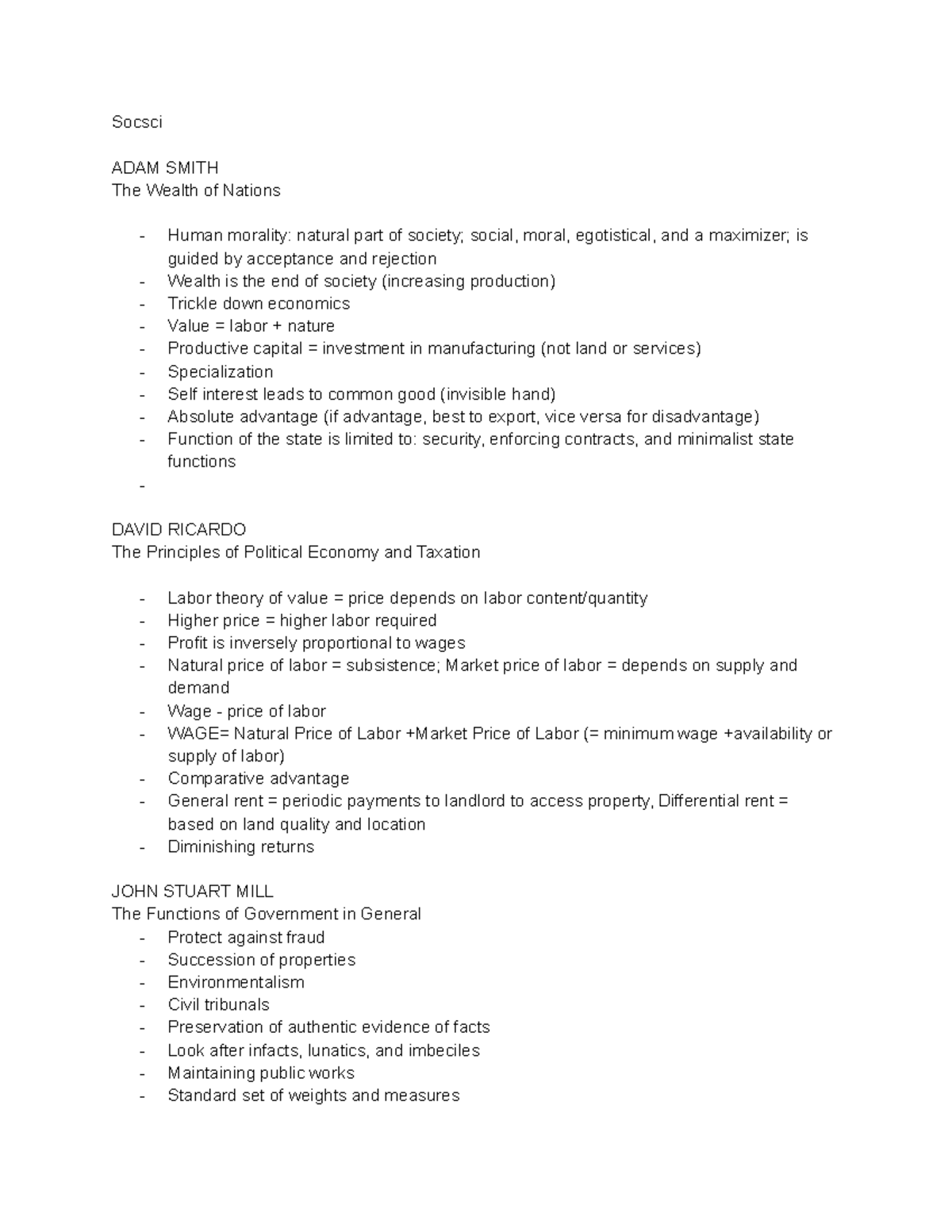
Adam Smith is widely recognized as the father of modern economics, a Scottish philosopher whose 18th-century intellectual contributions laid the foundation for classical economic theory. His work centers on the belief that individual self-interest, when operating within a free market, promotes the broader prosperity of society through the efficient allocation of resources, competition, and the division of labor.
The Historical Context of Adam Smith
To understand the significance of Adam Smith’s definition of economic processes, one must consider the historical landscape of the 18th century. Born in Kirkcaldy, Scotland, in 1723, Smith lived through the dawn of the Industrial Revolution. At the time, the dominant economic system was mercantilism—a policy characterized by government regulation of trade, the accumulation of bullion, and protectionist tariffs designed to maintain a favorable balance of trade for the state.
Smith’s seminal work, An Inquiry into the Nature and Causes of the Wealth of Nations (1776), acted as a radical departure from these protectionist dogmas. He argued that the wealth of a nation should be measured not by the amount of gold or silver in its treasury, but by the sum total of its production and commerce—what we now define as Gross Domestic Product (GDP). By placing the individual and the consumer at the center of the economic model rather than the monarch or the state, Smith provided a framework that would eventually underpin the rise of global capitalism.
The Division of Labor: The Foundation of Productivity
Perhaps the most famous observation in Smith’s work is the division of labor. Smith famously illustrated this concept using a pin factory. He noted that if a single worker were tasked with every step of pin manufacturing—drawing out the wire, straightening it, cutting it, and grinding the point—they could produce very few pins in a day, perhaps not even one.
However, by breaking the production process into distinct, specialized tasks where one person handles only one specific part of the operation, output increases exponentially. Smith identified three reasons for this surge in productivity:
- The increase of dexterity: A worker performing a single, repetitive task becomes significantly more skilled at that specific motion.
- The saving of time: Workers do not waste time transitioning between different types of tasks or moving between workspaces.
- The invention of machinery: Specialized labor often leads workers to identify bottlenecks, sparking the invention of machines that can perform these simple tasks more efficiently.
This concept remains a pillar of modern industrial strategy. In 2026, the global supply chain, which relies on extreme specialization across international borders, is essentially an application of the logic Smith codified centuries ago.
The Invisible Hand and Self-Interest
The term "invisible hand" is frequently cited in economic literature, though Smith only used it sparingly in his writings. It serves as a metaphor for the unintended social benefits resulting from individual self-interest.
In Smith's view, an individual does not aim to promote the public good; they intend only their own security and gain. However, in a free market, to achieve profit, that person must produce something that others value at a price they are willing to pay. Therefore, by pursuing their own gain, the individual is led by an "invisible hand" to promote an end that was no part of their intention: the satisfaction of consumer needs and the efficient allocation of societal resources.
It is crucial to note that Smith did not advocate for total anarchy or the absence of law. He believed that the market required a "system of natural liberty," which included the enforcement of contracts, the protection of property rights, and the provision of public goods—such as infrastructure and education—that would not be profitable for private actors to provide.
The Theory of Moral Sentiments
While Smith is primarily remembered as an economist, he was a moral philosopher. His first major book, The Theory of Moral Sentiments (1759), provides the necessary context for his economic theories. In this work, Smith explored the concept of "sympathy," or the human capacity to imagine the perspective of others.
Some critics of market economics argue that Smith’s "invisible hand" encourages greed. However, The Theory of Moral Sentiments demonstrates that Smith believed human behavior was tempered by social empathy and the desire for the approval of others. He argued that the market functions correctly only when it operates within a society governed by stable institutions and shared moral values. Without these, the pursuit of self-interest can devolve into predatory behavior, which Smith acknowledged as harmful to the health of an economy.
Core Economic Concepts for Modern Understanding
To effectively grasp Smith’s contribution to world history, it is necessary to categorize the primary concepts that define his classical school of thought.
| Concept | Definition | Historical Impact |
|---|---|---|
| Division of Labor | Breaking production into specialized tasks. | Enabled the industrial revolution and mass production. |
| The Invisible Hand | Unintended benefits of self-interested actors. | Encouraged the shift toward market-based economies. |
| Laissez-faire | Minimal government intervention in markets. | Challenged mercantilism and state-controlled monopolies. |
| Labor Theory of Value | Value determined by the labor required to produce it. | Influenced subsequent theories of value in classical economics. |
The Evolution of Smithian Thought
As the global economy evolved into the 20th and 21st centuries, Smith’s ideas have been subject to various interpretations. During the mid-20th century, economists like Milton Friedman and the Chicago School revitalized Smith’s advocacy for free markets, arguing that deregulation and privatization were the most effective ways to foster economic growth.
Conversely, institutional economists point out that Smith’s focus on institutions—such as the legal system and the education system—is often ignored by those who advocate for "pure" free markets. In 2026, as debates over the digital economy, automation, and global trade inequality persist, policymakers often return to The Wealth of Nations to weigh the balance between the efficiency of the "invisible hand" and the necessity of state-managed social safety nets.
Common Misconceptions
One of the most persistent misconceptions about Adam Smith is that he was an advocate for corporate power or the exploitation of workers. On the contrary, Smith was deeply skeptical of the "merchants and manufacturers" of his time. He frequently warned against their influence, fearing they would conspire to restrict trade, keep wages artificially low, or lobby for state-granted monopolies that harmed the public.
Smith advocated for a competitive marketplace where no single entity had the power to dictate prices or manipulate laws. He believed in high wages as a sign of a thriving economy, arguing that "no society can surely be flourishing and happy, of which the far greater part of the members are poor and miserable."
Next Actions: Applying Smithian Principles
For students and observers of history or economics, the most practical way to apply these concepts is to examine current economic policy through the lens of institutional frameworks.
- Evaluate Competitive Environments: Ask whether current markets allow for the entry of new competitors. Smith argued that monopolies are the greatest enemy of the consumer.
- Examine Public Goods: Identify which aspects of your local economy are provided by the government—such as roads, schools, or healthcare—and assess whether these support a more efficient, productive society.
- Analyze Specialized Labor: Observe how global trade allows for the division of labor on a massive scale. Consider how this creates interdependence between nations and how it affects the cost of goods in your local market.
By understanding that Adam Smith viewed economics as a branch of moral philosophy, one can move past the shallow debate of "state vs. market" and appreciate the nuanced interplay between human behavior, institutional design, and material prosperity.
Frequently Asked Questions
1. Was Adam Smith a proponent of total laissez-faire capitalism? Not in the modern sense. While Smith advocated for the removal of state-sponsored monopolies and unnecessary tariffs, he explicitly stated that the government must provide public education, infrastructure, and a judicial system to protect property rights. He believed that competition requires a framework of rules to prevent corruption and exploitation.
2. What is the difference between Smith's "Wealth of Nations" and "Theory of Moral Sentiments"? The Theory of Moral Sentiments deals with the psychological and moral foundations of human interaction, focusing on empathy and social approval. The Wealth of Nations focuses on the mechanics of trade, production, and macro-level economic systems. Together, they represent a complete view of a society that is both commercially successful and morally coherent.
3. Why did Adam Smith criticize mercantilism? Smith argued that mercantilism focused on the accumulation of precious metals, which he saw as a futile goal. He believed that hoarding gold did not improve the standard of living for the average citizen. Instead, he argued that increasing the production of useful goods and services was the true path to national wealth.
4. How does the division of labor relate to the modern gig economy? The division of labor has shifted from the physical factory floor to the digital service economy. In 2026, the gig economy allows for "task-based" labor, where individuals specialize in narrow, highly efficient services, mirroring Smith’s observation that specialization leads to higher individual output and improved skill sets.
5. Is Adam Smith’s Labor Theory of Value still relevant? Modern economics has largely moved toward "subjective theory of value" (where the value of an item is determined by the consumer's utility). While Smith’s specific theory—that labor input is the primary driver of value—is considered outdated by most modern economists, his emphasis on productivity remains a cornerstone of economic success.