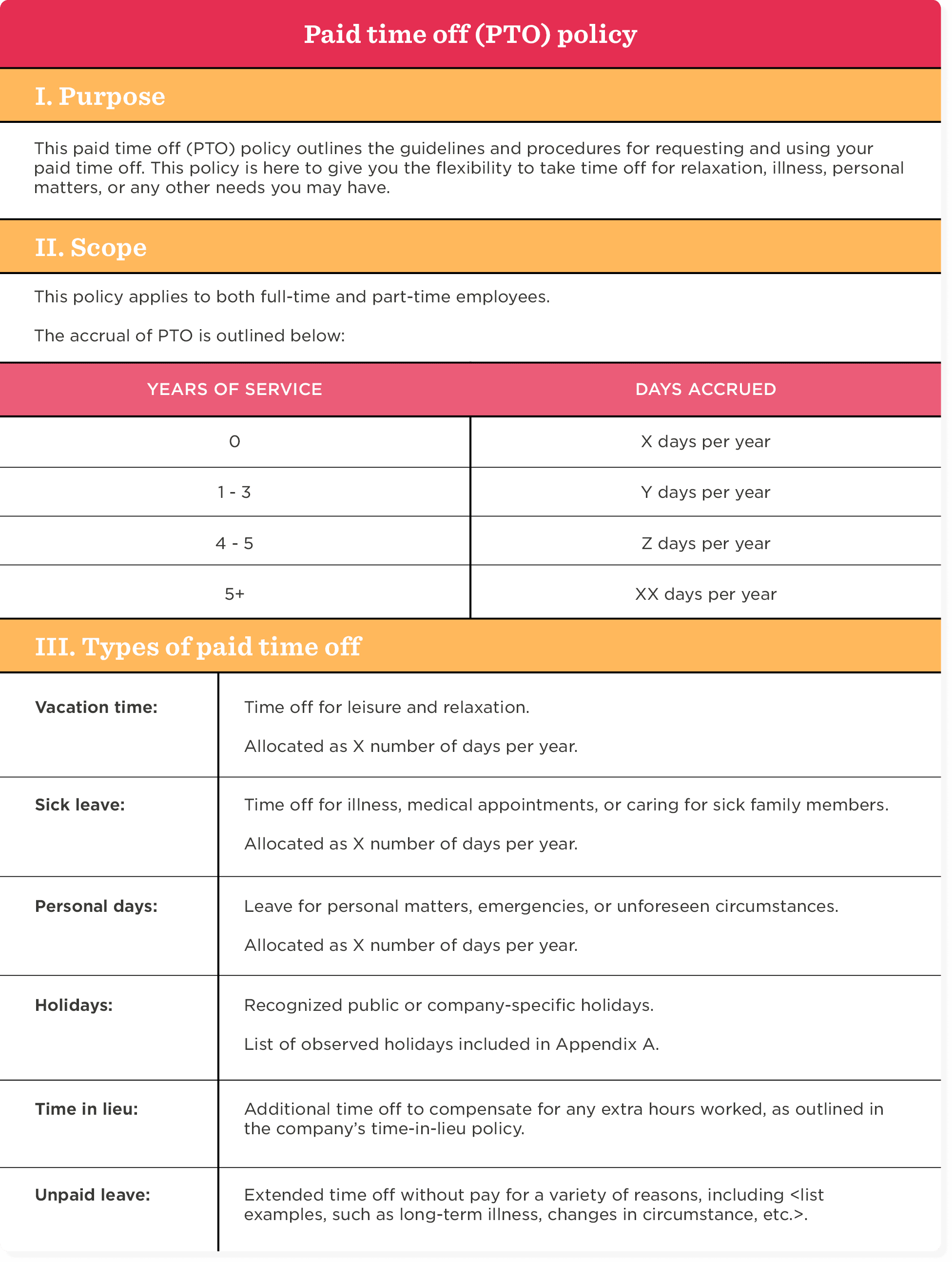
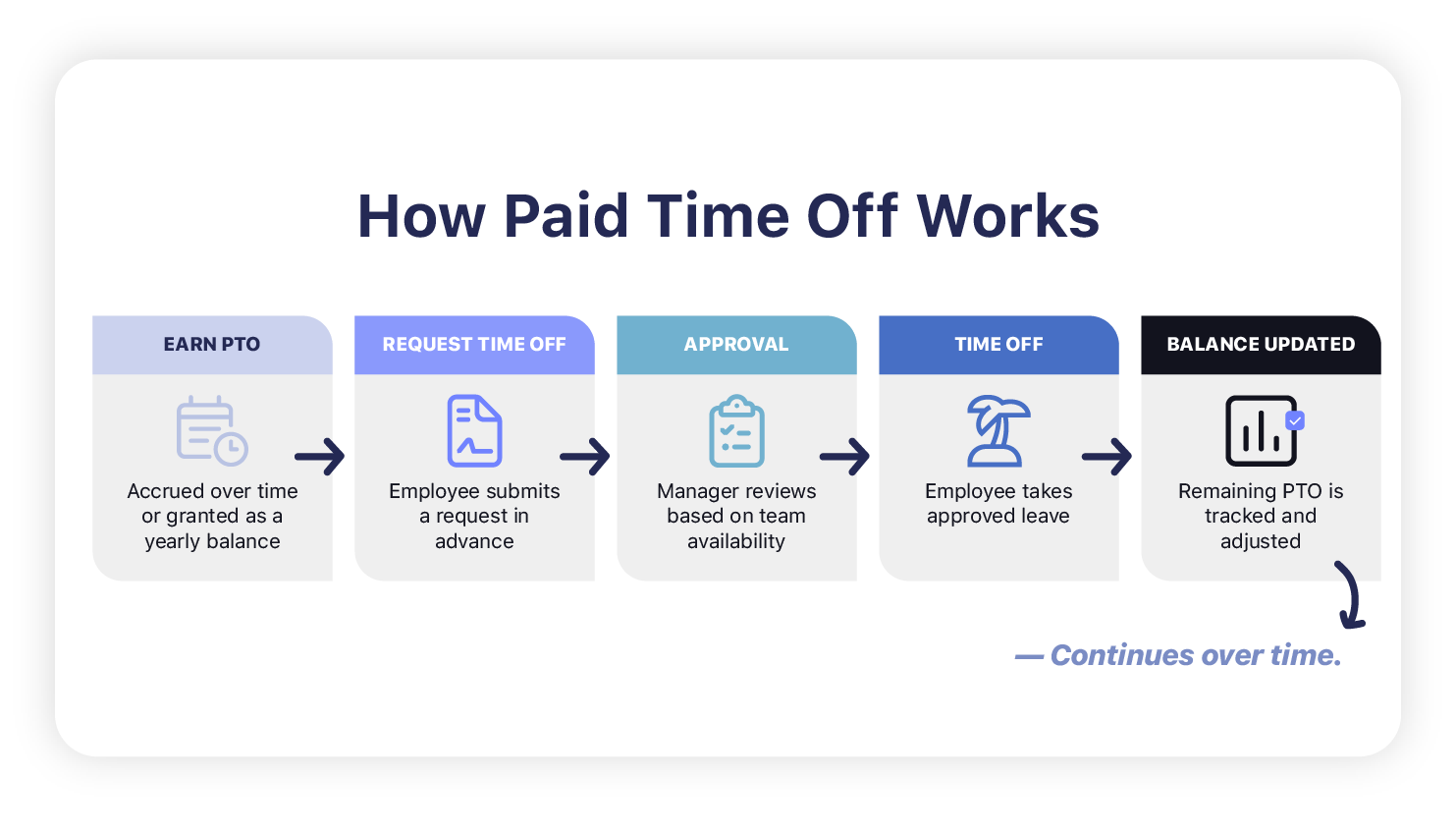
An accrual PTO policy is a structured framework where employees earn paid time off incrementally over time, usually based on hours worked or pay periods completed. This method ensures that leave balances grow in proportion to an employee's service, providing a predictable model for businesses to manage staffing levels and liability while offering employees steady access to rest.
The Mechanism of Accrual-Based Time Off
At its core, an accrual PTO policy functions as a balance sheet transaction. Unlike a "front-loaded" policy, where an employee receives their entire annual allotment of vacation days on January 1st, an accrual policy distributes these days throughout the year. The primary objective is to align the cost of labor with the actual service provided by the employee.
From an administrative perspective, the accrual rate is typically expressed as a ratio. For instance, an employee might earn 0.0385 hours of PTO for every regular hour worked. When extrapolated across a standard 2,080-hour work year (40 hours per week for 52 weeks), this equates to approximately 80 hours, or two weeks of vacation per year. Organizations define these rates based on tenure, exempt versus non-exempt status, or collective bargaining agreements.
Prerequisites for Designing a Policy
Before drafting the language of your policy, you must account for the legal and operational requirements specific to your jurisdiction. While federal law in the United States does not mandate paid time off, numerous states and municipalities have enacted laws that require mandatory accrual-based paid sick leave.
- Jurisdictional Compliance: Determine if your operations are subject to state-specific mandates regarding minimum accrual rates, caps on annual usage, or requirements for "carry-over" balances.
- Operational Budgeting: Analyze your company’s financial capacity. Accrued but unused PTO is often considered a liability on the balance sheet. In many jurisdictions, this balance must be paid out to the employee upon termination.
- Employee Classification: Decide whether the policy will be uniform or segmented. Many companies provide different accrual tiers for entry-level staff compared to senior management to incentivize retention.
Structuring the Accrual Policy Document
A legally sound and clear accrual policy prevents disputes and sets professional expectations. Your policy document should be a cornerstone of the employee handbook and must contain the following specific elements:
- The Accrual Formula: State clearly how time is earned. Is it per hour, per pay period, or per month?
- Waiting Periods: Define any eligibility requirements. For example, will employees begin accruing on their first day of work, or will there be a 90-day introductory period before they can use the balance?
- Maximum Accrual Caps: This is a vital control mechanism. Many organizations set a "cap" (e.g., 160 hours). Once an employee hits this limit, they stop accruing time until they use some of their existing balance. This prevents "leave banking," where employees store massive amounts of time that could result in a significant payout burden if they leave the company.
- Use-It-or-Lose-It Provisions: Clarify if hours carry over to the next calendar year. If they do not, you must clearly state the deadline for using accrued hours to comply with local labor laws.
- Request and Approval Procedures: Define the notice required for taking time off. This manages operational continuity during busy seasons.
Comparing Accrual vs. Front-Loaded Policies
Organizations often debate the merits of accrual-based systems versus front-loaded systems. The following table provides a comparison based on operational impact.
| Feature | Accrual PTO Policy | Front-Loaded PTO Policy |
|---|---|---|
| Risk of Early Departure | Low; employees only use what they earn. | High; employees may use full leave and then quit. |
| Administrative Burden | Higher; requires tracking per pay period. | Lower; a single annual allocation. |
| Employee Perception | Fairness based on tenure and service. | Flexibility for immediate personal needs. |
| Budget Predictability | High; liability is spread out. | Low; large payout liability if terminated early. |
| Compliance Complexity | Requires rigid record-keeping. | Easier to track total annual allotment. |
Technical Challenges and Troubleshooting
Implementing an accrual system is not without technical hurdles. The most common pitfall is a lack of integration between the payroll system and the time-tracking software. If these two systems do not "talk" to each other, you risk manual errors, leading to incorrect payouts or employee frustration regarding their available balances.
If an error occurs, it is generally recommended to conduct a reconciliation audit. First, verify the employee's start date and their specific accrual tier. Second, review the hours recorded as "worked" versus "paid time off" in the payroll ledger. Ensure that no accruals were credited during periods of unpaid leave, as most standard policies dictate that accruals pause when the employee is not actively working.
Legal and Ethical Considerations
In many states, PTO is treated as a form of deferred compensation. If an employee earns that time, they have a legal right to it. Before finalizing your policy, consult with legal counsel to determine how your state views "vacation pay." For example, some states require employers to pay out accrued, unused PTO upon termination, while others allow companies to forfeit it if the policy explicitly states so.
Furthermore, discrimination must be avoided. Accrual rates should be tied to objective criteria, such as tenure or job grade. Tying accrual rates to subjective metrics can lead to claims of disparate treatment, which can expose the organization to litigation.
Managing Employee Expectations
Transparency is the best defense against confusion. Use an employee portal where staff can view their current accrual balance, their "cap" limit, and their projected accrual for the end of the year. When employees can see their own data in real-time, the administrative burden on the HR department decreases significantly, and the likelihood of payroll disputes is minimized.
Frequently Asked Questions
1. Does my company have to provide carry-over for unused PTO? This depends entirely on state law and your internal policy. In many jurisdictions, you are not legally required to offer carry-over as long as your policy is clear. However, some states view accrued PTO as a vested right that cannot be taken away, meaning you may need to allow carry-over or pay out the unused balance.
2. Can I change my accrual policy mid-year? Yes, but you must provide adequate notice to employees. Significant changes to compensation or benefits (which includes PTO) usually require a written notice period, often 30 to 60 days, to ensure employees understand how their balances or future accruals will be affected.
3. What happens if an employee goes on unpaid leave? Most standard policies include a clause stating that accruals cease during unpaid leaves of absence. This is standard practice to ensure that time off is earned only through active service. Ensure this is explicitly documented in your employee handbook.
4. How do I handle negative PTO balances? "Borrowing" against future accruals is a company-specific decision. If you allow it, ensure there is a signed agreement stating that if the employee terminates employment with a negative balance, the value of that time will be deducted from their final paycheck, provided such deductions are legal in your state.
Final Recommendation
To implement an effective accrual PTO policy, start by reviewing your state’s labor statutes to determine the "floor" for your policy. Draft a policy that includes clear, objective accrual rates, a reasonable cap to manage liability, and a well-defined process for carry-over. Once drafted, ensure your payroll system is configured to automate these calculations to reduce manual error. Periodically review your accrual metrics to ensure they align with your business growth and retention goals. For specific compliance questions in your jurisdiction, consult with a qualified employment law attorney to ensure your policy does not inadvertently violate local labor protections.