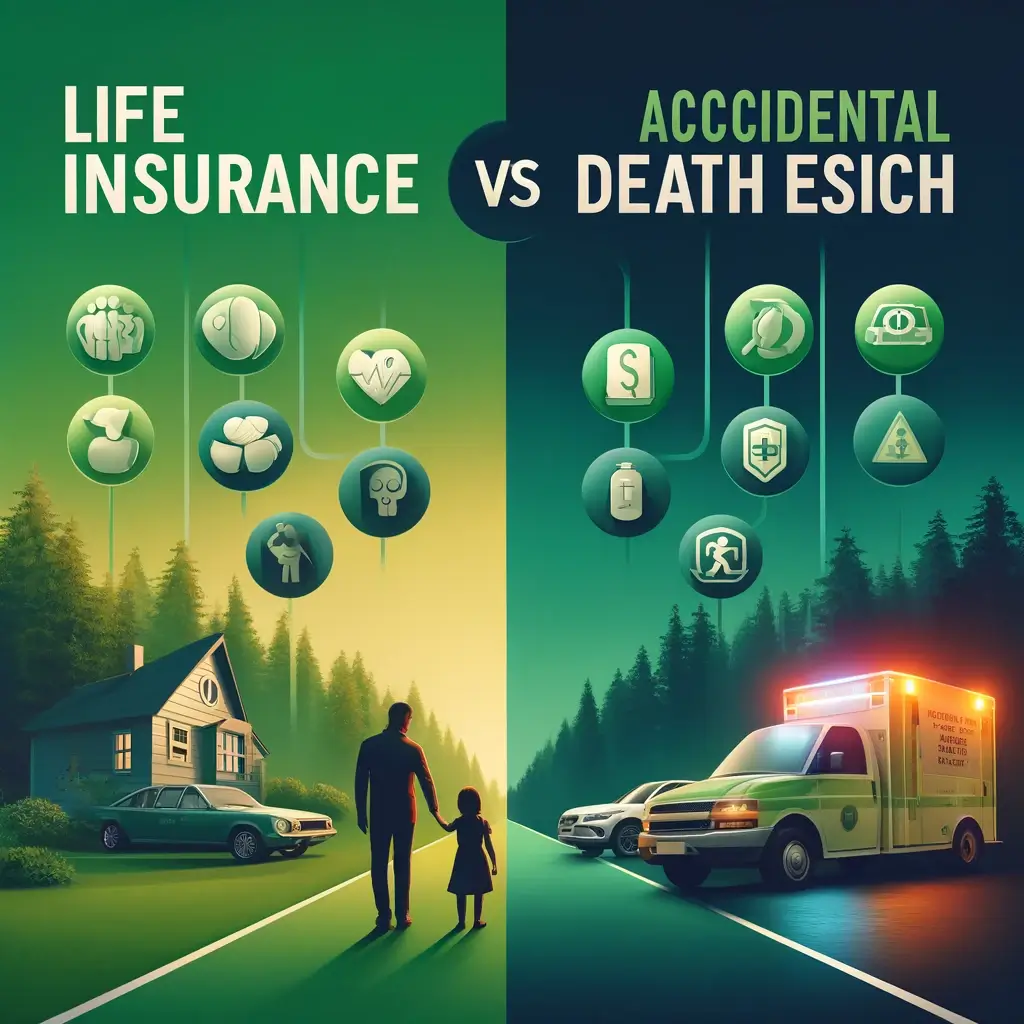
An accidental death life insurance agent specializes in policies that pay out benefits exclusively if the policyholder dies as the direct result of a covered accident. Unlike traditional life insurance, these policies omit underwriting for natural illnesses, offering fast, budget-friendly protection alongside strict exclusions that require careful agent guidance.
What Does an Accidental Death Life Insurance Agent Do?
An accidental death life insurance agent acts as an intermediary between consumers and insurance carriers, specifically focusing on accidental death and dismemberment (AD&D) contracts. These licensed professionals evaluate client risk profiles, clarify nuanced policy definitions, and help buyers understand what separates accidental death protection from traditional life insurance coverage.
While standard term or whole life policies cover death from almost any cause—including chronic disease, cancer, cardiovascular failure, and old age—accidental death policies pay benefits only when fatal injuries result directly and independently from a verifiable accident. Because this distinction frequently leads to misunderstandings during claim administration, a dedicated agent ensures that applicants know the exact operational scope and legal boundaries of their contract before committing to premiums.
Licensed agents assist consumers by:
- Reviewing personal, vocational, and travel risk factors to determine whether standalone AD&D or an accidental death rider on an existing life policy makes financial sense.
- Translating state-specific regulatory disclosures and standard contract exclusions.
- Gathering documentation during the application phase to secure guaranteed issue or simplified issue coverage.
- Assisting beneficiaries with the specialized evidentiary process required to prove accidental causation when submitting a claim.
Accidental Death Insurance vs. Traditional Life Insurance
Choosing the right policy requires understanding how accidental death plans fit within broader personal risk management. Many consumers encounter accidental death policies through unsolicited mailers, credit card perks, or employee benefit packages, often mistaking them for comprehensive life insurance.
Traditional life insurance requires medical underwriting, which may include reviewing prescription drug databases, examining motor vehicle records, and conducting paramedical physical exams. In exchange, the carrier assumes the risk of mortality across natural, medical, and accidental causes.
Accidental death coverage bypasses health underwriting entirely or uses very minimal health questionnaires. As a result, the premiums are significantly lower per dollar of benefit. However, the probability of a payout is substantially narrower, as illnesses account for the vast majority of adult deaths.
| Feature | Standalone Accidental Death (AD&D) | Traditional Term Life Insurance | Accidental Death Rider |
|---|---|---|---|
| Primary Cause of Death Covered | Unintentional bodily injury only | Sickness, disease, natural causes, accidents | Natural causes plus double benefit for accidents |
| Medical Underwriting | None (Guaranteed Issue) | Full or accelerated underwriting | Depends on the base policy |
| Dismemberment Benefits | Yes (Loss of limbs, sight, speech, hearing) | No (unless separate rider added) | Varies by carrier contract |
| Relative Cost | Very low ($10–$30/month for $250k) | Moderate ($25–$80/month for $250k) | Low add-on fee ($3–$8/month) |
| Claim Complexity | High (Requires autopsy, toxicology, accident reports) | Low (Requires standard certified death certificate) | High for the accidental portion |
| Best Used For | High-risk jobs, supplemental gap coverage, uninsurable health | Primary family income replacement | Enhancing payout during peak earning years |
Agents often recommend adding an accidental death benefit rider to a traditional term life policy rather than purchasing a standalone AD&D policy. A rider creates a "double indemnity" scenario: if you die of natural causes, your family receives the base death benefit; if you die in a covered accident, the carrier pays both the base benefit and the rider benefit.
How Policies Define an "Accidental Death"
Insurance carriers apply rigorous legal definitions to determine whether an event qualifies as an accident. An agent helps policyholders parse two standard legal doctrines governing accident insurance: accidental means versus accidental results.
Under the stricter "accidental means" doctrine used in select jurisdictions and older contracts, both the cause and the outcome must be entirely unintended. If an individual intentionally performs an action that unexpectedly results in death—such as deliberately speeding around a blind curve—some insurers may dispute the claim. The broader "accidental results" doctrine requires only that the resulting death was unforeseen, regardless of whether the initial action was deliberate.
Common scenarios typically recognized as covered accidental deaths include:
- Motor Vehicle Collisions: Fatal injuries sustained as a driver, passenger, or pedestrian hit by an automobile, provided intoxication thresholds are not breached.
- Falls and Slips: Lethal physical trauma caused by slipping, falling down stairs, or falling from heights, provided an underlying medical condition (such as a stroke or fainting spell) did not trigger the fall.
- Drowning: Accidental submersion resulting in asphyxiation.
- Heavy Machinery and Workplace Trauma: Unintentional crushing, blunt force trauma, or equipment failure sustained on or off the job.
- Accidental Poisoning: Unintended ingestion of toxic chemicals or carbon monoxide poisoning from malfunctioning appliances.
Every contract enforces a specific time window between the occurrence of the physical trauma and the fatal outcome. Most policies require death to occur within 90 to 365 days of the verifiable accident. If an individual suffers severe injuries in an auto collision, survives on life support for 14 months, and subsequently passes away, the claim may be denied if the policy's contractual time limit has expired.
Key Exclusions That Require Agent Clarification
The primary source of denied AD&D claims stems from policy exclusions. When consulting an accidental death life insurance agent, the most critical discussion involves reviewing the carrier's exclusionary list.
Common AD&D Policy Exclusions:
- Medical & Bodily Causes
- Sickness, physical illness, or mental infirmity
- Fatal events triggered by strokes, heart attacks, or seizures
- Complications arising from medical or surgical procedures
- Behavioral & Substance Factors
- Operating vehicles above legal Blood Alcohol Concentration (BAC) limits
- Overdoses involving non-prescribed narcotics or illicit drugs
- Intentional self-inflicted harm or suicide
- High-Risk Activities & Environments
- Hazardous hobbies (skydiving, scuba diving, auto racing)
- General aviation (piloting non-commercial aircraft)
- Acts of war, military combat, or active civil unrest
Medical and Physical Infirmity
If an individual suffers a severe heart attack while driving, loses consciousness, crashes into a barrier, and dies from the impact, carriers routinely contest the claim. If the medical examiner determines the cardiovascular event initiated the fatal sequence, the insurer will likely classify the primary cause of death as natural disease rather than accidental trauma.
Intoxication and Narcotics
Standard contracts contain strict exclusions for alcohol and chemical influence. If an autopsy reveals a Blood Alcohol Concentration (BAC) above the legal driving limit at the time of a fatal event—even if the insured was not operating a vehicle—insurers may void the benefit under policy terms approved by state regulators. Similarly, non-prescribed controlled substances immediately invalidate coverage in most jurisdictions.
High-Risk Avocations and Aviation
Travel as a fare-paying passenger on a licensed commercial airliner is almost universally covered. However, private aviation, piloting ultralight aircraft, skydiving, mountaineering with specialized gear, and motor racing are standard exclusions. Independent agents evaluate your recreational pursuits to negotiate appropriate coverage endorsements or direct you toward specialty non-standard carriers.
Licensing, Agent Types, and Ethical Standards
Insurance agents must hold a valid Life and Health Insurance Producer License issued by their state’s insurance department. This license legally authorizes them to explain policy provisions, quote rates, execute applications, and receive commissions.
Consumers typically encounter two distinct categories of agents:
- Captive Agents: Employed by or contracted exclusively with a single insurance company (such as State Farm, Northwestern Mutual, or New York Life). They can only offer products from their specific parent carrier, limiting their ability to shop the broader market on your behalf.
- Independent Agents or Brokers: Contracted across dozens of competing carriers. Independent agents compare underwriting standards, exclusionary language, and premium rates across the entire insurance marketplace to match a buyer's exact profile.
Consumers can verify an agent's license status, disciplinary record, and carrier appointments using public consumer portals provided by organizations like the National Association of Insurance Commissioners (NAIC).
Under professional conduct guidelines and modern regulatory frameworks—such as the NAIC Suitability in Life Insurance Model Regulation adopted across many states—agents must determine whether an accidental death product matches the consumer's needs. An ethical agent will never market an accidental death policy as an identical, cheaper substitute for comprehensive term life insurance to an applicant who qualifies for traditional coverage.
Step-by-Step Guide: Evaluating and Purchasing a Policy
Navigating the acquisition of accidental death coverage involves five methodical steps to ensure adequate financial protection without purchasing duplicate or uncollectible benefits.
AD&D Acquisition Workflow:
- Risk Assessment
- Select Structure
- Verify Agent Credentials
- Disclose Lifestyle
- Store Evidentiary Documents
Step 1: Quantify Your Protection Deficit
Calculate outstanding debts, income replacement timelines, and existing employer-sponsored life insurance. If you have chronic medical conditions that disqualify you from traditional term life, calculate whether an accidental death policy provides a viable baseline of partial protection for your dependents.
Step 2: Determine Policy Architecture
Decide between a standalone AD&D policy and an accidental death rider. If you already hold a medically underwritten term policy, adding an accidental death rider usually costs less than buying an entirely separate policy, while avoiding duplicate administrative fees.
Step 3: Screen the Agent's Professional Credentials
Confirm the agent's active status via your state insurance commissioner's online database. Ask directly:
- "Are you captive or independent?"
- "What specific carriers are you quoting?"
- "Does this carrier operate under an accidental means or accidental results legal standard?"
Step 4: Disclose All Vocational and Recreational Hazards
Be fully transparent regarding occupations (e.g., commercial construction, law enforcement, utility line maintenance) and hobbies. Omitting high-risk activities during policy execution creates grounds for material misrepresentation, allowing carriers to rescind coverage during the statutory two-year contestability period.
Step 5: Establish the Claims Package Premise
Store policy numbers, carrier claim contacts, and a copy of the policy exclusions in an accessible location shared with designated beneficiaries. Beneficiaries must know that accidental death claims require specialized proof beyond a standard certified death certificate.
How Agents Assist with the Claims and Evidence Process
The death benefit claim process for traditional life insurance is simple: beneficiaries submit a certified copy of the death certificate along with a claimant statement. The carrier reviews the document and releases payment within a few weeks.
Accidental death claims require significantly higher evidentiary thresholds. Because carriers must verify that natural disease, drug intoxication, and excluded activities played no causal role, an agent plays an invaluable role during claim settlement by guiding the beneficiary through document assembly:
- Certified Autopsy and Toxicology Reports: Full medical reports determining the immediate and contributing causes of death.
- Police Crash Reconstruction Reports: For vehicular fatalities, official law enforcement investigative files proving the insured was not engaged in reckless or criminal behavior.
- Occupational Safety and Health Administration (OSHA) Records: For industrial or workplace accidents, carrier adjusters often require municipal and federal safety inspection findings.
- Emergency Medical Services (EMS) Run Sheets: Chronological notes made by first responders indicating physical presentation and trauma sustained at the scene.
If a carrier delays, disputes, or issues a preliminary reservation of rights letter, an experienced agent serves as an intermediary. They can request re-evaluations, present supplemental records from treating physicians, or clarify ambiguous wording in medical reports before the claimant is forced to hire bad-faith insurance litigation counsel.
Frequently Asked Questions
Can an accidental death policy pay out if the insured dies from an illness?
No. Standalone accidental death policies specifically exclude deaths resulting from any natural illness, disease, bacterial or viral infection, or physiological malfunction. If an insured passes away from pneumonia, cancer, stroke, or heart attack, no death benefit is paid under an accidental death contract.
Why is accidental death insurance so much cheaper than standard term life?
Actuarial tables demonstrate that individuals are far more likely to die from chronic illnesses, cardiac events, or cancer than from violent, unintended accidents. Because insurers assume a much lower statistical probability of paying a claim, they charge significantly lower premiums for accidental death policies than for comprehensive life insurance policies.
Will an accidental death policy pay out for an accidental drug overdose?
In almost all modern standard policies, deaths caused by illegal drugs, non-prescribed controlled substances, or voluntary overdoses of prescribed narcotics are excluded. However, some policies may cover an accidental fatal overdose if it resulted strictly from a verifiable medical administration error made by a licensed healthcare professional.
What is the difference between an insurance agent and an insurance broker?
An insurance agent represents one or more insurance carriers to sell their contracts, whereas an insurance broker represents the consumer directly. In practical everyday usage within the life insurance industry, independent agents function similarly to brokers by maintaining appointments across multiple competing carriers to find suitable rates for their clients.
Does an accidental death policy cover fatal car accidents if the insured was at fault?
Yes, ordinary driver error or at-fault negligence that causes a fatal crash is generally covered under accidental results provisions. However, coverage is almost universally voided if the insured driver was operating the vehicle with a Blood Alcohol Concentration (BAC) above the legal limit, drag racing, or fleeing law enforcement at the time of the collision.
Practical Recommendation
If you need life insurance, begin by applying for traditional, medically underwritten term life coverage through an independent agent. Comprehensive term life provides complete financial protection across both illness and injury, giving your family a dependable safety net.
If medical conditions or tight budgets prevent you from qualifying for standard life insurance—or if your daily work involves high-risk physical tasks—partner with a licensed, independent accidental death insurance agent. Request a carrier that uses the accidental results standard, confirm all hobby and travel exclusions in writing, and ensure your named beneficiaries understand the evidentiary requirements needed to file a successful claim.