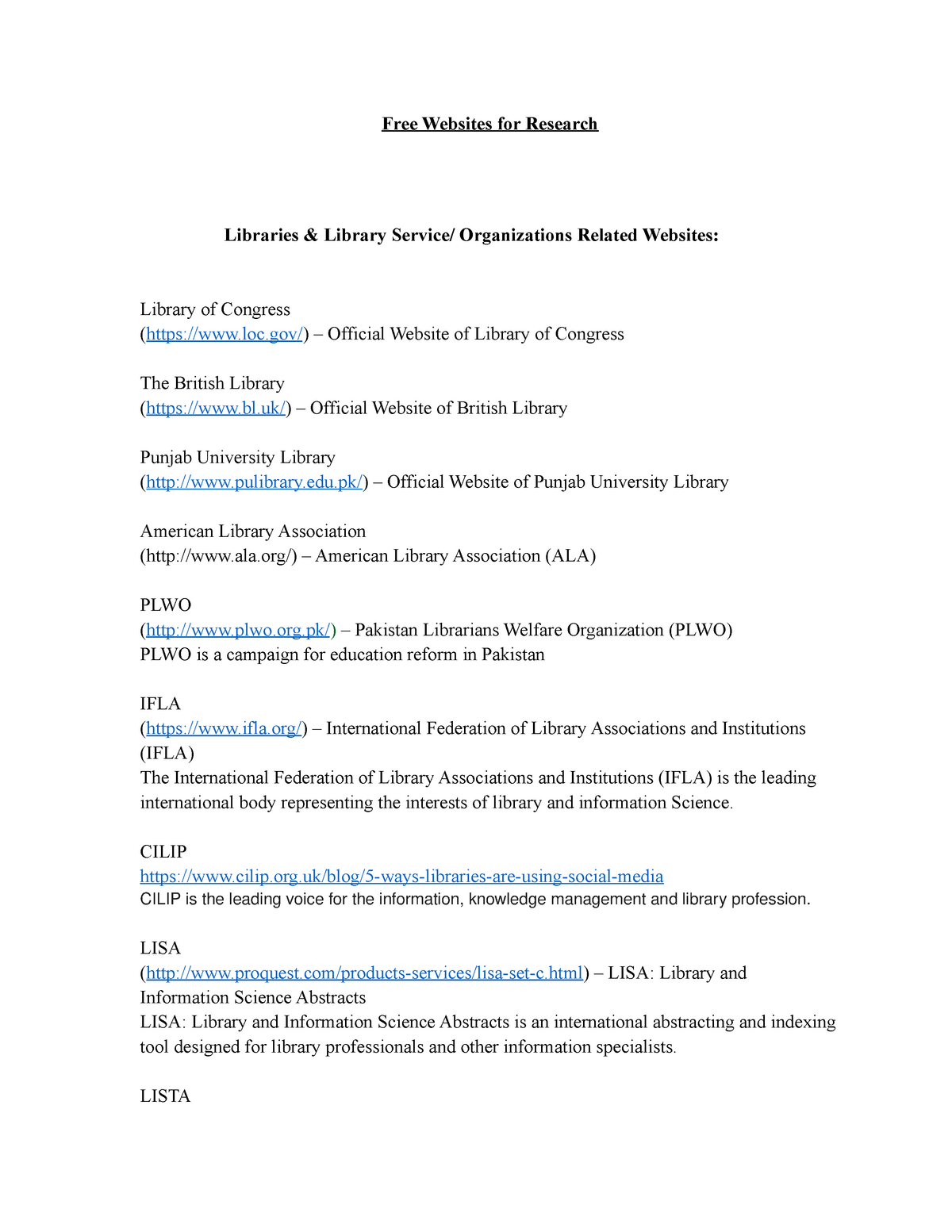
Navigating academic research websites requires understanding the distinct roles of publisher platforms, open-access repositories, citation databases, and gray-literature archives. Scholars, students, and independent researchers utilize these online portals to discover peer-reviewed literature, verify bibliometric impact, manage citations, and access full-text scholarly articles across diverse academic disciplines.
Introduction to Academic Research Portals
The digital transformation of scholarly communication has replaced physical library stacks with a complex ecosystem of academic research websites. Finding reliable, peer-reviewed information requires understanding the architectural differences between various online platforms. Some sites function as multidisciplinary indexing databases, others operate as closed-access publisher portals, and a growing segment serves as open-access repositories funded by institutional grants or public mandates.
Navigating this ecosystem effectively saves time and ensures that literature reviews, systematic analyses, and scholarly manuscripts are built upon verified, authoritative sources. Whether you are an undergraduate student beginning a term paper or an experienced postdoctoral researcher tracking emerging developments in biotechnology, knowing which website to use for a specific task is a foundational skill.
Major Indexing and Citation Databases
Indexing databases do not typically host the full text of every article directly. Instead, they act as massive card catalogs or bibliographic engines that map the relationships between publications, authors, institutions, and citations.
Web of Science
Maintained by Clarivate, the Web of Science is one of the oldest and most authoritative citation indexing services. It covers natural sciences, social sciences, arts, and humanities. Its primary strength lies in citation tracking, allowing researchers to see how a specific paper has been cited over time by subsequent works. This capability supports bibliometric analysis, journal impact factor evaluations, and the identification of foundational papers within a niche field.
Scopus
Launched by Elsevier, Scopus is a massive abstract and citation database competing directly with the Web of Science. Scopus is widely recognized for its extensive coverage of peer-reviewed literature, scientific journals, books, and conference proceedings. It provides robust analytical tools to track research output, calculate h-indices for individual authors, and visualize collaboration networks across global research institutions.
Google Scholar
As a free, publicly accessible search engine, Google Scholar indexes the full text or metadata of scholarly literature across an array of publishing formats and disciplines. It includes peer-reviewed papers, theses, books, abstracts, and court opinions. While it lacks the curated editorial standards and strict quality control filters of subscription databases like Scopus, its comprehensive scope makes it an indispensable starting point for exploratory literature searches.
Open-Access Repositories and Preprint Servers
With the global push toward open science, open-access repositories and preprint servers have become vital components of the modern research workflow. These platforms allow researchers to share findings rapidly without the traditional paywalls imposed by legacy subscription publishers.
arXiv
Operated by Cornell University, arXiv is a foundational open-access archive for physics, mathematics, computer science, quantitative biology, quantitative finance, statistics, electrical engineering, and systems science. Researchers upload unrefereed preprints to arXiv to establish priority of discovery and gather community feedback before formal peer review in an academic journal.
PubMed Central (PMC)
Managed by the National Center for Biotechnology Information (NCBI) at the United States National Library of Medicine, PubMed Central is a free digital repository that archives full-text biomedical and life sciences journal literature. Many public funding agencies, such as the National Institutes of Health (NIH), require grant recipients to deposit their peer-reviewed manuscripts into PMC to ensure public availability.
Directory of Open Access Journals (DOAJ)
The DOAJ is a community-curated online directory that indexes and provides access to high-quality, open-access, peer-reviewed journals. It covers all fields of science, technology, medicine, social sciences, and humanities. Researchers use the DOAJ to identify legitimate open-access publications and avoid predatory journals that charge exorbitant publication fees without providing legitimate peer-review services.
Publisher Platforms and Proprietary Portals
Commercial publishers maintain proprietary web portals that house their specific portfolios of journals, books, and reference works. Institutional subscriptions or individual article purchases are typically required to access full-text content on these sites.
- Elsevier ScienceDirect: Hosts thousands of peer-reviewed journals and book chapters spanning physical sciences, engineering, life sciences, health sciences, social sciences, and humanities.
- SpringerLink: Provides access to millions of scientific documents from journals, books, series, protocols, and reference works published by Springer Nature.
- Wiley Online Library: Offers a multidisciplinary collection of online resources covering life, health, physical sciences, social sciences, and humanities.
- Taylor & Francis Online: Features peer-reviewed research across specialized humanities, social sciences, science, technology, and medicine sub-disciplines.
Comparison of Key Academic Research Websites
The following table compares prominent academic research websites by discipline focus, access model, and primary utility to help researchers select the appropriate resource for their specific workflow.
| Platform Name | Primary Discipline Focus | Access Model | Primary Utility & Features |
|---|---|---|---|
| Google Scholar | Multidisciplinary | Free / Open Search | Broad exploratory search, citation counts, tracking author profiles. |
| Scopus | Multidisciplinary (STM & SSH) | Subscription / Institutional | Bibliometric analysis, citation tracking, comprehensive abstracts. |
| Web of Science | Sciences, Social Sciences, Arts | Subscription / Institutional | Rigorous citation indexing, impact factor evaluation, core collection mapping. |
| arXiv | Physics, Math, Computer Science | Free Open-Access | Rapid sharing of preprints before formal journal peer review. |
| PubMed Central | Biomedical & Life Sciences | Free Open-Access | Full-text archive of life sciences literature compliant with funder mandates. |
| ScienceDirect | STM & Social Sciences | Subscription / Pay-per-view | Access to Elsevier-published journals and book chapters. |
Best Practices for Navigating Academic Portals
Successfully locating, evaluating, and citing research requires strategic search execution and critical appraisal skills.
Constructing Effective Search Strings
Relying on simple keywords often retrieves thousands of irrelevant results. Utilize advanced search operators to refine queries:
- Boolean Operators: Use
AND,OR, andNOT(in capital letters) to combine or exclude terms. For example,neuroscience AND plasticity NOT rodents. - Phrase Searching: Enclose multi-word terms in quotation marks to search for exact matches, such as
"machine learning". - Field Specificity: Restrict searches to specific metadata fields like title (
TI), author (AU), or publication year (PY) when supported by databases like Web of Science or Scopus.
Evaluating Source Credibility
Not all indexed material carries the same weight. When reviewing search results, verify:
- Peer Review Status: Confirm whether the article has undergone formal peer review or is a preliminary preprint.
- Journal Reputation: Check if the publishing journal is indexed in recognized databases or listed in ethical directories like the DOAJ.
- Author Affiliation: Review the institutional backing and past publication records of the contributing authors.
Frequently Asked Questions
What is the difference between an indexing database and a publisher platform?
An indexing database (like Scopus or Web of Science) catalogs bibliographic metadata, abstracts, and citation links across thousands of different publishers, helping you discover literature. A publisher platform (like ScienceDirect or SpringerLink) hosts the actual full-text articles and books owned or licensed by a specific commercial entity.
Are all academic research websites free to use?
No. While search engines like Google Scholar and open-access repositories like arXiv and PubMed Central are entirely free, major citation databases (Scopus, Web of Science) and publisher platforms generally require institutional subscriptions, library memberships, or individual pay-per-view fees to access full-text content.
How can I access paywalled research articles without a university subscription?
If you lack institutional access, you can check if the authors have uploaded a self-archived preprint to an institutional repository or platforms like ResearchGate. You can also utilize public library networks, contact the corresponding author directly to request a copy, or search for open-access counterparts in directories like DOAJ.
What is a preprint server and is it peer-reviewed?
A preprint server (such as arXiv or bioRxiv) is a repository where authors upload manuscripts before formal peer review and journal publication. Because preprints have not yet undergone external peer review by an academic journal, they should be interpreted with appropriate caution and verified against later peer-reviewed versions when possible.
How do I avoid predatory journals when publishing or citing?
To avoid predatory journals, verify whether the journal is indexed in reputable databases like Scopus, Web of Science, or the DOAJ. Legitimate journals maintain transparent editorial boards, clear peer-review timelines, and explicit ethical guidelines, whereas predatory publishers typically spam researchers with rapid acceptance promises and hidden publication fees.
Conclusion and Next Actions
Mastering academic research websites involves combining broad discovery tools with specialized databases tailored to your field of study. Start your literature search using comprehensive discovery tools like Google Scholar or institutional library portals to map the landscape. Transition to specialized citation databases like Scopus or Web of Science for rigorous bibliometric analysis, and rely on trusted open-access repositories to secure accessible full-text documents. Always verify the peer-review status of your sources to maintain the highest standards of academic integrity.