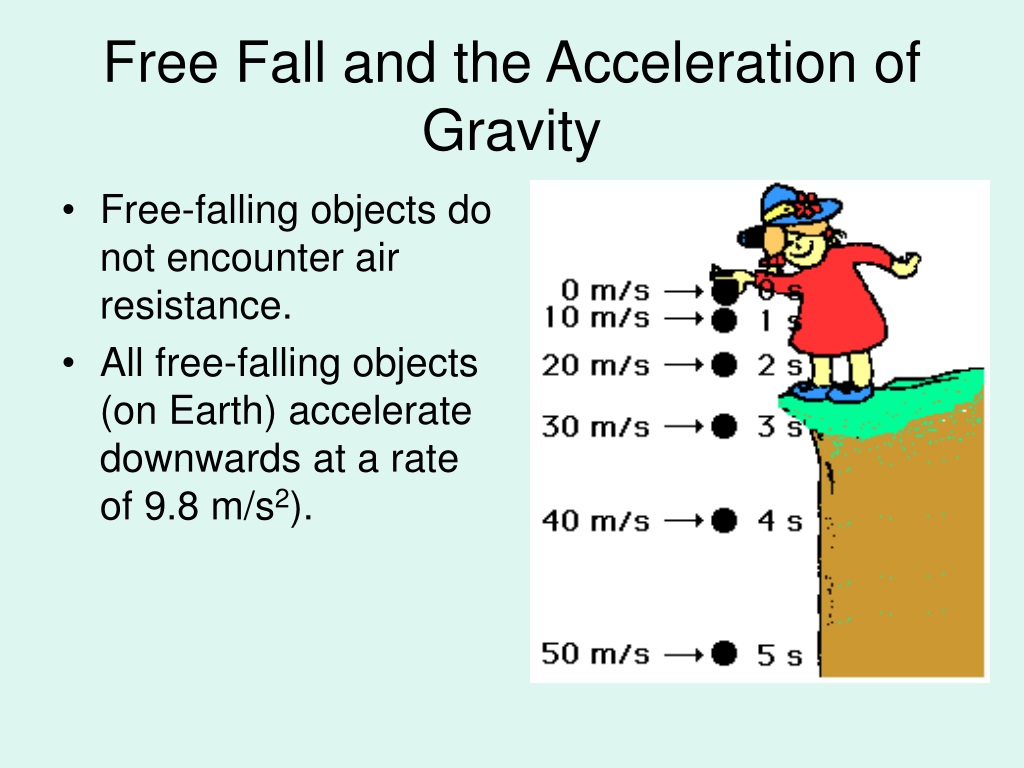
Earth's gravitational acceleration, commonly represented as g, is the constant rate at which objects accelerate toward the planet's center in a vacuum. Valued at approximately 9.8 m/s², this figure means that for every second an object falls, its velocity increases by about 9.8 meters per second, assuming no air resistance.
Gravity is the fundamental force that dictates everything from the orbit of the Moon to the weight of a person on a scale. While "9.8" is the standard value used in textbooks and most engineering calculations, the reality of Earth's gravity is far more complex and dynamic. As of 2026, our ability to map and utilize these variations has reached unprecedented levels of precision, impacting fields as diverse as climate science, civil engineering, and deep-space navigation.
The Physical Derivation of 9.8 m/s²
To understand where the value of 9.8 m/s² comes from, we must look at the intersection of Sir Isaac Newton’s Second Law of Motion and his Law of Universal Gravitation. Newton's Second Law states that force equals mass times acceleration ($F = ma$). Meanwhile, the Law of Universal Gravitation states that the force of gravity ($F$) between two masses is proportional to the product of their masses and inversely proportional to the square of the distance between their centers.
The formula for gravitational force is: $$F = G \frac{M \cdot m}{r^2}$$
In this equation:
- G is the gravitational constant ($6.674 \times 10^{-11} \text{ N m}^2/\text{kg}^2$).
- M is the mass of the Earth ($\approx 5.972 \times 10^{24} \text{ kg}$).
- m is the mass of the object falling.
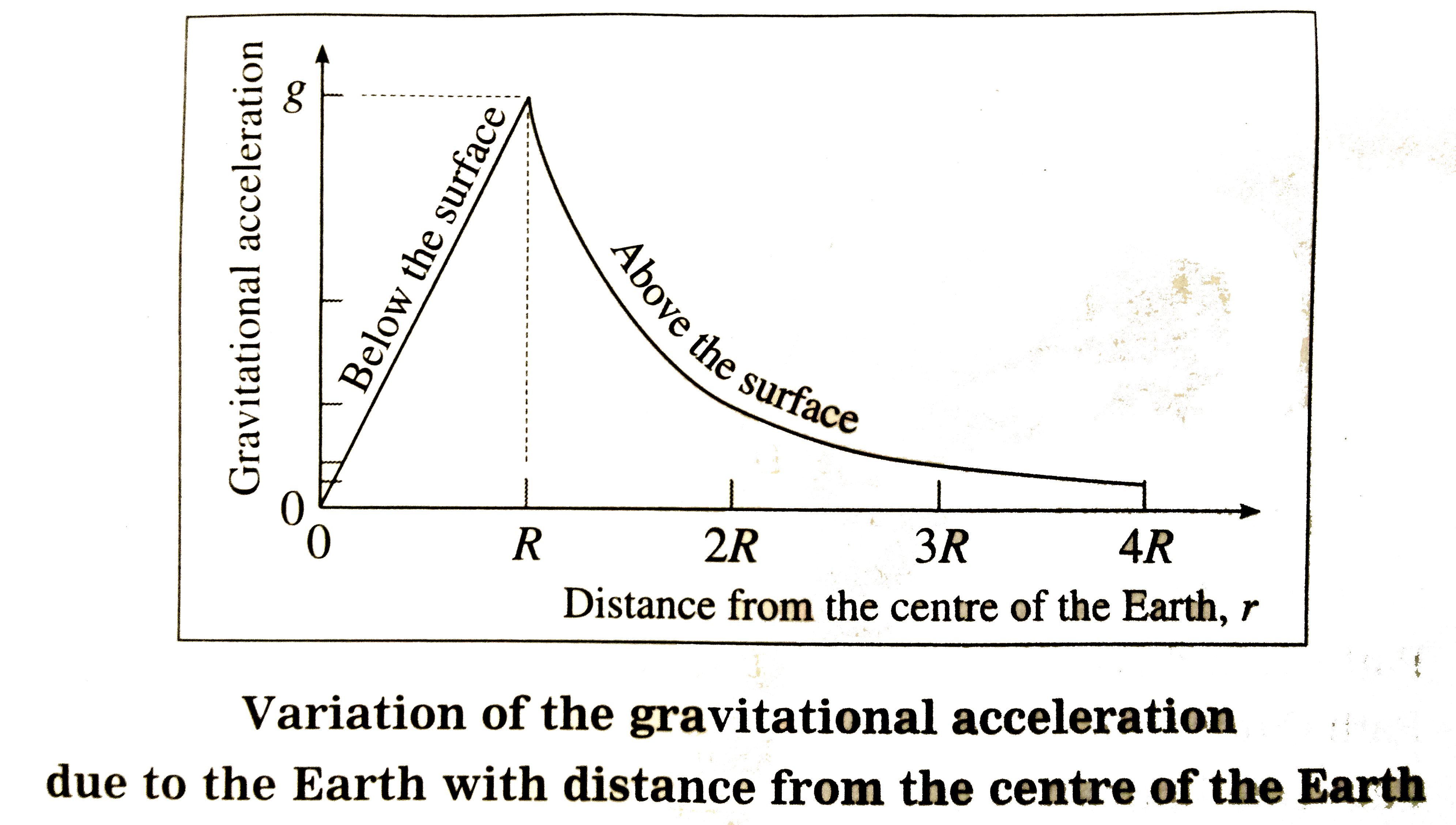
- r is the distance from the center of the Earth to the object (approximately the Earth's radius, $6,371 \text{ km}$).
By setting the two equations for Force equal to each other ($ma = G \frac{Mm}{r^2}$), the mass of the object ($m$) cancels out. This reveals that the acceleration due to gravity ($g$) depends only on the mass of the planet and the distance from its center: $$g = \frac{GM}{r^2}$$
Plugging in the Earth's average mass and radius yields the standard value of approximately 9.80665 m/s². This value was formally adopted by the 3rd General Conference on Weights and Measures in 1901 as the "Standard Gravity."
Why Gravity Isn't the Same Everywhere
Although 9.8 m/s² is the accepted average, the actual acceleration you experience depends heavily on your location on the planet. Earth is not a perfect sphere; it is an oblate spheroid, meaning it bulges at the equator and is flattened at the poles. This physical shape, combined with the Earth's rotation, creates significant variations in local gravity.
Latitude and the Equatorial Bulge
Because the Earth is wider at the equator, a person standing at the equator is further away from the Earth’s center of mass than someone standing at the North Pole. According to the inverse-square law ($1/r^2$), as distance increases, the gravitational pull decreases.
Furthermore, the Earth's rotation creates a centrifugal force that acts outward, partially counteracting the inward pull of gravity. This effect is strongest at the equator and non-existent at the poles. Consequently, gravity is lower at the equator (approximately 9.780 m/s²) and higher at the poles (approximately 9.832 m/s²).
Altitude and Elevation
The higher you go, the further you are from the Earth's center of mass. This is why gravitational acceleration is slightly lower on top of Mount Everest than at sea level. However, the decrease is relatively small: for every kilometer of altitude gained, $g$ decreases by about 0.003 m/s². For most human activities, including commercial flight, this difference is negligible, but for high-precision satellite orbits, it is a critical factor.
Local Geology and Crustal Density
The Earth's crust is not uniform. Some areas are dense with heavy metals or volcanic rock, while others consist of lighter sedimentary layers or hollow caverns. These variations in density, known as gravity anomalies, cause subtle shifts in the local gravitational field. Geologists use highly sensitive instruments called gravimeters to map these anomalies, which can help locate oil reserves, mineral deposits, or underground aquifers.
Measuring Earth's Gravity: Tools and Techniques
The measurement of $g$ has evolved from simple pendulum experiments to laser-interferometry and satellite-based mapping. Accurate measurements are essential for synchronizing GPS systems, managing water resources, and understanding sea-level rise.
- Pendulum Experiments: Historically, the time it takes for a pendulum to swing (its period) was used to calculate $g$. If you know the length of the string and the time of the swing, the acceleration of gravity is the only unknown variable.
- Absolute Gravimeters: These modern devices drop a mirror in a vacuum and use a laser interferometer to measure its acceleration with extreme precision. These are often used as "base stations" for gravity networks.
- Superconducting Gravimeters: These instruments measure the force required to levitate a superconducting sphere in a magnetic field. They are sensitive enough to detect the gravitational pull of the moon or the shifting of tectonic plates.
- Satellite Missions (GRACE-FO): In 2026, data from missions like the Gravity Recovery and Climate Experiment Follow-On (GRACE-FO) continues to be vital. By tracking the distance between two satellites as they orbit the Earth, scientists can map changes in Earth's gravity field caused by moving water, melting ice sheets, and shifting magma.
| Location | Latitude | Altitude (m) | Gravitational Acceleration ($g$) |
|---|---|---|---|
| Standard Gravity | N/A | Sea Level | 9.80665 m/s² |
| Equator | 0° | Sea Level | 9.78033 m/s² |
| North Pole | 90° N | Sea Level | 9.83219 m/s² |
| Mount Everest | 28° N | 8,848 | 9.776 m/s² |
| Mexico City | 19° N | 2,240 | 9.779 m/s² |
| London | 51° N | 11 | 9.812 m/s² |
Practical Applications of the 9.8 m/s² Constant
While it might seem like a dry scientific constant, $g$ is a fundamental pillar of modern civilization. In 2026, as we push further into space and deeper into infrastructure automation, understanding this value remains paramount.
Civil Engineering and Structural Safety
Architects and engineers must account for gravity when designing buildings, bridges, and dams. The weight of a structure (Load) is determined by its mass multiplied by $g$. If the value of $g$ were ignored or incorrectly calculated, structural integrity could be compromised. In 2026, building codes in high-precision environments—such as skyscrapers built on uneven terrain—incorporate local $g$ values to ensure long-term stability and seismic resilience.
Ballistics and Aerospace
Whether it is a commercial drone delivering a package or a rocket launching a satellite, the trajectory is dictated by $g$. To reach orbit, a rocket must generate enough thrust to overcome the acceleration of 9.8 m/s². Furthermore, the "g-force" experienced by pilots and astronauts is a multiple of this constant. Sustained high g-forces can cause blood to drain from the brain, leading to loss of consciousness, which is why flight suits and training are calibrated to this specific 9.8 m/s² threshold.
Hydrology and Climate Monitoring
Small changes in gravity over time are one of the most accurate ways to measure water loss. In 2026, hydrologists use gravity maps to track the depletion of underground aquifers in regions like California's Central Valley or the North China Plain. Because water has mass, the disappearance of water reduces the local gravitational pull. This "gravity-based weighing" of the Earth's water is the gold standard for climate monitoring.
The Mass vs. Weight Distinction
One of the most common points of confusion in physics is the difference between mass and weight. Mass is the amount of matter in an object and is measured in kilograms (kg); it does not change regardless of where you are in the universe. Weight is a force measured in Newtons (N), and it is the product of mass and gravitational acceleration ($W = m \times g$). On Earth, a 70 kg person weighs about 686 Newtons. On the Moon, where $g$ is only 1.6 m/s², that same person still has a mass of 70 kg but weighs only about 112 Newtons.
The History of the 9.8 m/s² Discovery
The road to understanding gravitational acceleration was paved by centuries of observation. Before the 16th century, the Aristotelian view dominated, suggesting that heavier objects fall faster than lighter ones.
In the late 1500s, Galileo Galilei challenged this notion. According to historical accounts, he dropped spheres of different masses from the Leaning Tower of Pisa and observed that they hit the ground at the same time. While the "Pisa" story may be apocryphal, Galileo's experiments with inclined planes were rigorous and proved that acceleration in a vacuum is independent of mass.
Isaac Newton later codified these observations into the Law of Universal Gravitation in 1687. In the 20th century, Albert Einstein provided the next major leap with General Relativity, explaining that gravity isn't just a force but a curvature of spacetime caused by mass. Even with Einstein's advanced theories, Newton's 9.8 m/s² remains the standard tool for almost all practical, non-relativistic calculations on Earth.
Frequently Asked Questions
Is 9.8 m/s² exactly the same in every country?
No. While 9.8 m/s² is a standard average, local gravity varies based on latitude, altitude, and geological density. For example, you would weigh slightly more in Helsinki, Finland (higher latitude) than in Quito, Ecuador (equator and high altitude). Most commercial scales are calibrated to the local gravity of the region where they are sold to ensure accuracy.
Does air resistance change the value of g?
Air resistance does not change the value of $g$ itself, but it does change the net acceleration of a falling object. As an object falls through the atmosphere, air molecules push back against it. Eventually, this upward force of air resistance equals the downward force of gravity, and the object stops accelerating, reaching a constant speed known as terminal velocity. The 9.8 m/s² value describes acceleration in a vacuum where no air resistance exists.
Why do some textbooks use 9.81 or 10 m/s² instead of 9.8?
The choice of value depends on the required precision. In introductory physics classes, 10 m/s² is often used for "mental math" to simplify calculations. 9.81 m/s² is a more accurate representation of the average gravity in temperate latitudes (like Europe or North America). 9.80665 m/s² is the precise "standard gravity" used for international weights and measures.
How does Earth's gravity compare to other planets?
Earth’s gravity is considered the baseline ($1g$). For comparison, the Moon’s gravity is about $0.16g$ (1.6 m/s²), and Mars is about $0.38g$ (3.7 m/s²). Jupiter, being much more massive, has a gravitational acceleration of about $2.5g$ (24.8 m/s²). Understanding these differences is vital for 2026-era space exploration missions planning to land humans on different celestial bodies.
Can gravity be blocked or shielded?
In classical physics, there is no known way to block or "shield" gravity. Unlike electromagnetism, where you can use a Faraday cage to block electric fields, gravity permeates all known matter. Every object with mass exerts a gravitational pull that cannot be turned off. This is why "anti-gravity" remains a staple of science fiction rather than a reality in 2026 physics.
Next Steps for Students and Professionals
If you are calculating force or motion for a project, using 9.8 m/s² is generally sufficient for most applications. However, if you are working in fields like geophysics, high-altitude ballistics, or precision manufacturing, you should consult a local gravity database or the International Gravity Formula to find the specific value for your coordinates.
For those interested in the practical observation of gravity, many science centers and universities offer pendulum-based "Foucault Pendulum" demonstrations. These not only prove the rotation of the Earth but provide a visual representation of the constant, invisible force that keeps us grounded.