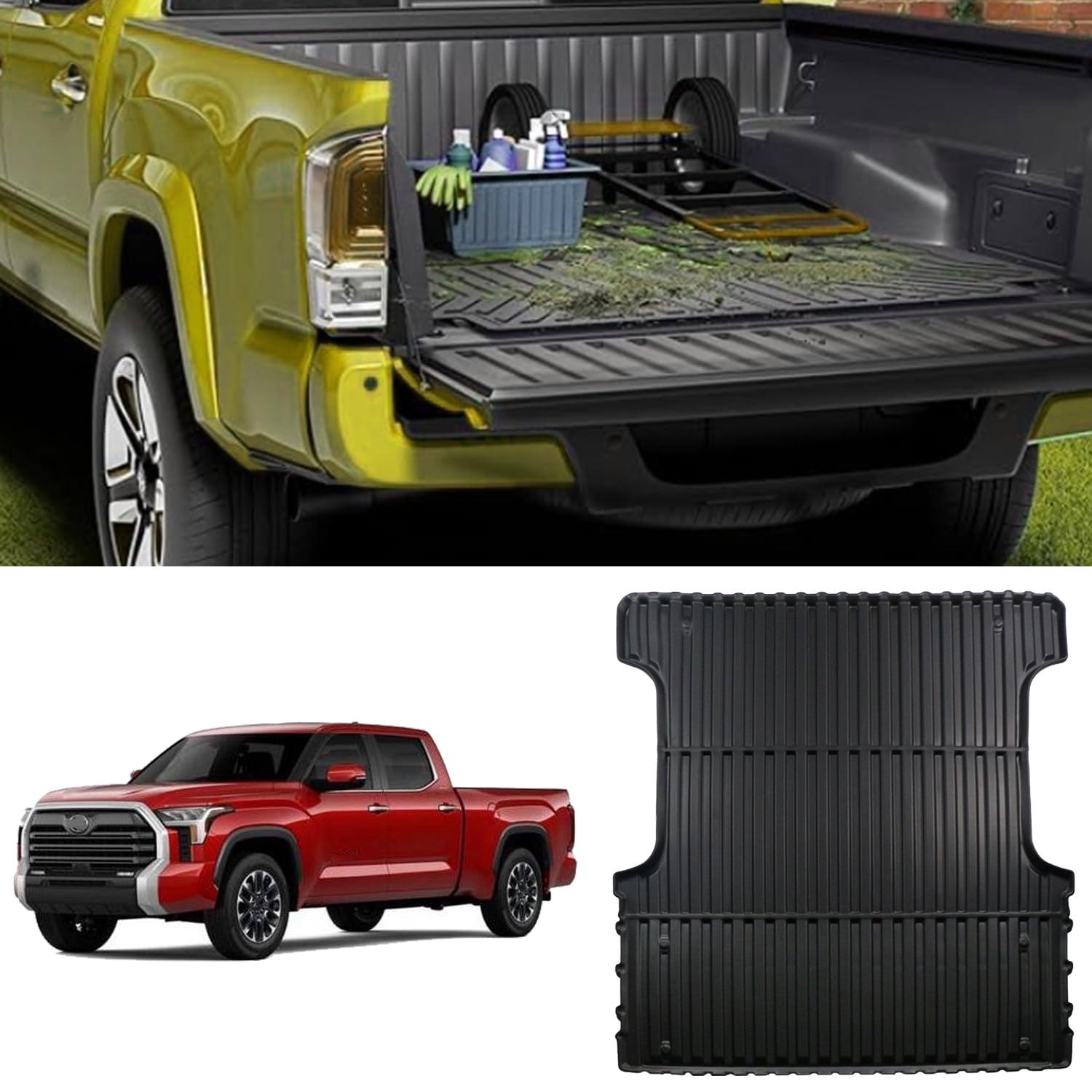
The 8-foot Toyota Tundra bed, technically measuring 96.5 inches in length, is the longest cargo configuration available for Toyota’s full-size pickup. Exclusively paired with the Double Cab chassis, this "Long Bed" setup provides the necessary floor space to transport 4x8-foot materials flat with the tailgate closed, making it a premier choice for commercial and heavy-duty utility.
Understanding the Toyota Tundra 8-Foot Bed Dimensions
When discussing the "8-foot" Tundra bed, it is essential to look at the precise engineering specifications. In the 2026 Toyota Tundra lineup, the Long Bed is officially listed as the 8.1-foot configuration. This distinction is important for owners purchasing aftermarket accessories like tonneau covers or bed liners, where a fraction of an inch determines a proper seal.
The interior length of the bed at the floor level is approximately 96.5 inches. The width between the wheel wells is a critical 48.7 inches. This specific width is engineered to accommodate standard North American building materials. A standard 4x8-foot sheet of plywood or drywall measures 48 inches wide, meaning it can slide directly between the wheel wells and rest flat on the floor. This eliminates the need for "propping" materials over the wheel arches, which can lead to warping or damage during transit.
Beyond the length and width, the depth of the Tundra bed is approximately 20.9 inches. This depth provides a significant volumetric capacity, allowing for the hauling of loose materials like mulch, gravel, or soil while maintaining a relatively low center of gravity. The total cargo volume for the 8.1-foot bed exceeds 77 cubic feet, offering nearly 50% more volume than the 5.5-foot "Short Bed" found on many CrewMax models.
Cab Configuration and Chassis Constraints
A common point of confusion for truck buyers in 2026 is which cab style can be paired with the 8-foot bed. Toyota has streamlined its production to ensure structural integrity and manageable wheelbase lengths.
As of the current 2026 model year, the 8.1-foot Long Bed is exclusively available on the Double Cab configuration. It is not offered on the larger CrewMax cab. The reasoning is primarily related to the overall length of the vehicle. A CrewMax paired with an 8-foot bed would result in a wheelbase and total vehicle length that exceeds standard residential garage dimensions and creates significant challenges for turning radii in urban environments.
The Double Cab with the 8.1-foot bed sits on a 164.6-inch wheelbase. This is the longest wheelbase available for the Tundra. Because the Double Cab utilizes smaller rear-hinged or forward-opening doors (compared to the full-size doors of the CrewMax), the extra frame length is dedicated to the cargo area rather than the passenger cabin. This makes the 8-foot Tundra a specialized tool: it prioritizes "work" and "cargo" over "passenger comfort," though the Double Cab still provides seating for up to five adults.
Material Construction: The Composite Bed Advantage
Since the introduction of the third-generation Tundra, Toyota has moved away from traditional steel bed floors in favor of an Aluminum-Reinforced Composite (SMC) bed. This transition is particularly beneficial for the 8-foot configuration.
The Sheet Molded Compound (SMC) construction offers three primary advantages for long-bed users:
- Corrosion Resistance: Unlike steel beds, the composite material cannot rust. For users in the "salt belt" or those hauling wet materials like salt, manure, or wet lumber, this ensures the bed remains structurally sound for the life of the vehicle.
- Impact Durability: The composite material is designed to absorb impacts without denting. When tossing heavy tools or masonry into an 8-foot expanse, the risk of "high-spotting" or denting the floor is significantly reduced.
- Weight Savings: By using composite materials, Toyota offsets the additional weight of the longer frame and bed. This allows the 2026 Tundra to maintain a competitive payload capacity, often ranging between 1,500 and 1,800 pounds depending on the specific trim and drivetrain.
Practical Uses for the 8-Foot Tundra Bed
The 8-foot Tundra is a niche vehicle designed for specific operational requirements. While the 5.5-foot and 6.5-foot beds are popular for general lifestyle use, the 8.1-foot bed serves distinct professional and recreational sectors.
Construction and Trade Services
For contractors, the ability to close the tailgate while hauling 8-foot lumber or plumbing pipes is a safety and security priority. When the tailgate is closed, the load is fully contained, reducing the risk of items sliding out and eliminating the need for "red flagging" oversized loads. Furthermore, many specialized toolboxes are designed to sit behind the cab; in an 8-foot bed, you can install a 24-inch deep crossover toolbox and still have over 6 feet of usable bed floor remaining.
Overlanding and Truck Camping
The 8-foot bed is a favorite among the "truck camper" community. Slide-in campers are often designed in 8-foot footprints. Using an 8-foot bed allows the camper's weight to stay forward of the rear axle, which is crucial for vehicle stability and handling. Additionally, for those who sleep in the bed of the truck (using a topper or shell), the 96.5-inch length allows even the tallest individuals to stretch out fully with room for gear at their feet.
Agricultural and Rural Utility
Hauling hay bales, ATV/UTVs, or farm equipment often requires the extra two feet of length provided by this configuration. A standard full-size ATV typically has a length of 82 to 90 inches. In a 6.5-foot bed, the tailgate must remain down, exposing it to rock chips and increasing the vehicle's footprint. In the 8.1-foot bed, most ATVs fit with the tailgate securely closed.
Comparison of Tundra Bed Sizes
To help visualize the utility of the 8-foot bed, the following table compares the three primary bed lengths available for the 2026 Toyota Tundra.
| Feature | 5.5-Foot Short Bed | 6.5-Foot Standard Bed | 8.1-Foot Long Bed |
|---|---|---|---|
| Interior Length | 65.6 inches | 77.6 inches | 96.5 inches |
| Max Interior Width | 58.7 inches | 58.7 inches | 58.7 inches |
| Width (Between Wells) | 48.7 inches | 48.7 inches | 48.7 inches |
| Cargo Volume | 42.5 cu. ft. | 50.5 cu. ft. | 77.1 cu. ft. |
| Available Cabs | CrewMax | Double Cab / CrewMax | Double Cab |
| Primary Use Case | Daily Driving / Family | General Utility / Towing | Commercial / Camping |
Technical Fitment: Accessories and Modifications
Selecting an 8-foot Tundra significantly impacts your choices in the aftermarket. Because the vast majority of Tundras sold are Short or Standard beds, 8-foot accessories can sometimes be more difficult to find in stock.
Tonneau Covers and Toppers
When ordering a bed cover, you must specify the 8.1-foot length. A common mistake is assuming "Long Bed" refers to the 6.5-foot version (which is the "long" option for the CrewMax). For the Double Cab, the 8.1-foot bed is the true Long Bed. Toppers (canopies) for the 8-foot bed are significantly heavier and often require reinforced suspension components if the topper is outfitted with internal racks or heavy glass.
Bed Liners and Mats
While the Tundra features a composite bed, many owners still opt for a rubber bed mat to prevent cargo from sliding. The composite surface can be slick when wet. An 8-foot rubber mat adds significant weight (approx. 50-70 lbs), which helps dampen road vibration when the bed is empty. Ensure the mat is trimmed specifically for the 2022-2026 Gen 3 wheel well geometry, as it differs from earlier models.
Fifth-Wheel and Gooseneck Towing
The 8-foot bed is the ideal configuration for fifth-wheel or gooseneck towing. In shorter beds, the "swing clearance" of the trailer nose can strike the cab of the truck during tight turns, necessitating a heavy and expensive "sliding hitch." With the 8.1-foot bed, there is ample clearance between the hitch pin (located just over or slightly forward of the rear axle) and the cab, allowing for standard fixed hitches and a full 90-degree turning radius.
Maneuverability and Driving Considerations
Operating an 8-foot bed Tundra requires a shift in driving habits. The increased wheelbase (164.6 inches) results in a wider turning circle—approximately 48.6 feet compared to the 44.3 feet of the standard bed models.
Parking: In most standard parking lots, an 8-foot Tundra will overhang the stall. Drivers often need to "back in" to spots to allow the rear overhang to sit over a curb or landscape island, ensuring the nose of the truck does not protrude into the driving lane.
Off-Roading: The "breakover angle" is lower on the 8-foot configuration. This means that when crossing a peak or a ridge, the center of the truck is more likely to "high-center" or scrape. If you plan on technical off-roading, a lift kit and high-quality rock sliders are highly recommended to protect the elongated frame rails.
Pros and Cons of the 8-Foot Configuration
Choosing the largest bed involves a clear trade-off between utility and daily convenience.
Pros:
- Maximized Utility: The only way to haul 8-foot materials securely and flat.
- Towing Stability: The longer wheelbase provides a more stable towing platform, reducing "trailer sway" at highway speeds.
- Resale Value for Trades: Used 8-foot Tundras are highly sought after by fleet buyers and contractors, often holding their value better than "lifestyle" trims.
Cons:
- Garage Fitment: Many standard 20-foot deep residential garages cannot accommodate the nearly 21-foot total length of the Long Bed Tundra.
- Trim Limitations: In 2026, the 8-foot bed is typically restricted to SR and SR5 trims. If you want a luxury "1794 Edition" or "Capstone" interior, you generally cannot get it with an 8-foot bed.
- Fuel Economy: The additional weight and aerodynamic drag of the longer chassis can result in a 1-2 mpg penalty compared to the shortest configurations.
Frequently Asked Questions
Can I fit a 4x8 sheet of plywood in a Tundra 8-foot bed with the tailgate closed?
Yes. The interior length of the bed is 96.5 inches (8.04 feet), and the width between the wheel wells is 48.7 inches. This allows standard 4x8-foot sheets to lie completely flat on the bed floor with the tailgate fully latched, providing total weather protection and security for your materials.
Is the 8-foot bed available on the Tundra Hybrid (i-FORCE MAX)?
Availability for the i-FORCE MAX hybrid powertrain with the 8-foot bed is limited by trim level. While technically possible in the 2026 SR5 Double Cab configuration, many 8-foot beds are ordered with the standard i-FORCE twin-turbo V6 to maximize payload capacity. The hybrid battery adds weight that can slightly reduce the available payload for cargo.
Does the 8-foot bed Tundra require special tires?
While the 8-foot bed uses the same bolt pattern and wheel sizes as other Tundras, it is often used for heavier hauling. It is recommended to use "Load Range E" tires if you frequently utilize the full payload capacity. These tires have stiffer sidewalls that handle the lateral stresses of a long-wheelbase vehicle more effectively when fully loaded.
Why can't I get the 8-foot bed with the CrewMax cab?
The combination of a full CrewMax cab and an 8-foot bed would result in a total vehicle length approaching 20 feet, making it nearly impossible to navigate standard parking lots, drive-thrus, or residential streets. For users who need both a massive cab and a massive bed, Toyota recommends looking at the heavy-duty segments, though the Tundra Double Cab remains the largest "light-duty" option available for Toyota enthusiasts.
Are 8-foot bed Tundras harder to find on dealer lots?
Yes. Most dealerships stock the CrewMax with the 5.5-foot or 6.5-foot bed as they appeal to the broadest consumer base. The 8-foot Long Bed is often a "special order" or "fleet order" item. If you are looking for one in 2026, you may need to search regional inventories or work with a fleet manager to secure a build slot.
Final Recommendation
The 8-foot Toyota Tundra bed is the definitive choice for those who view their truck primarily as a tool rather than a commuter vehicle. If your work involves hauling standard-sized building materials, or if you plan to mount a full-sized slide-in camper, the 8.1-foot bed is indispensable. However, before purchasing, verify your parking constraints and be prepared for the limited availability of high-end luxury trims in this configuration. For most professional applications, the SR5 Double Cab with the 8.1-foot bed offers the best balance of power, utility, and long-term durability.