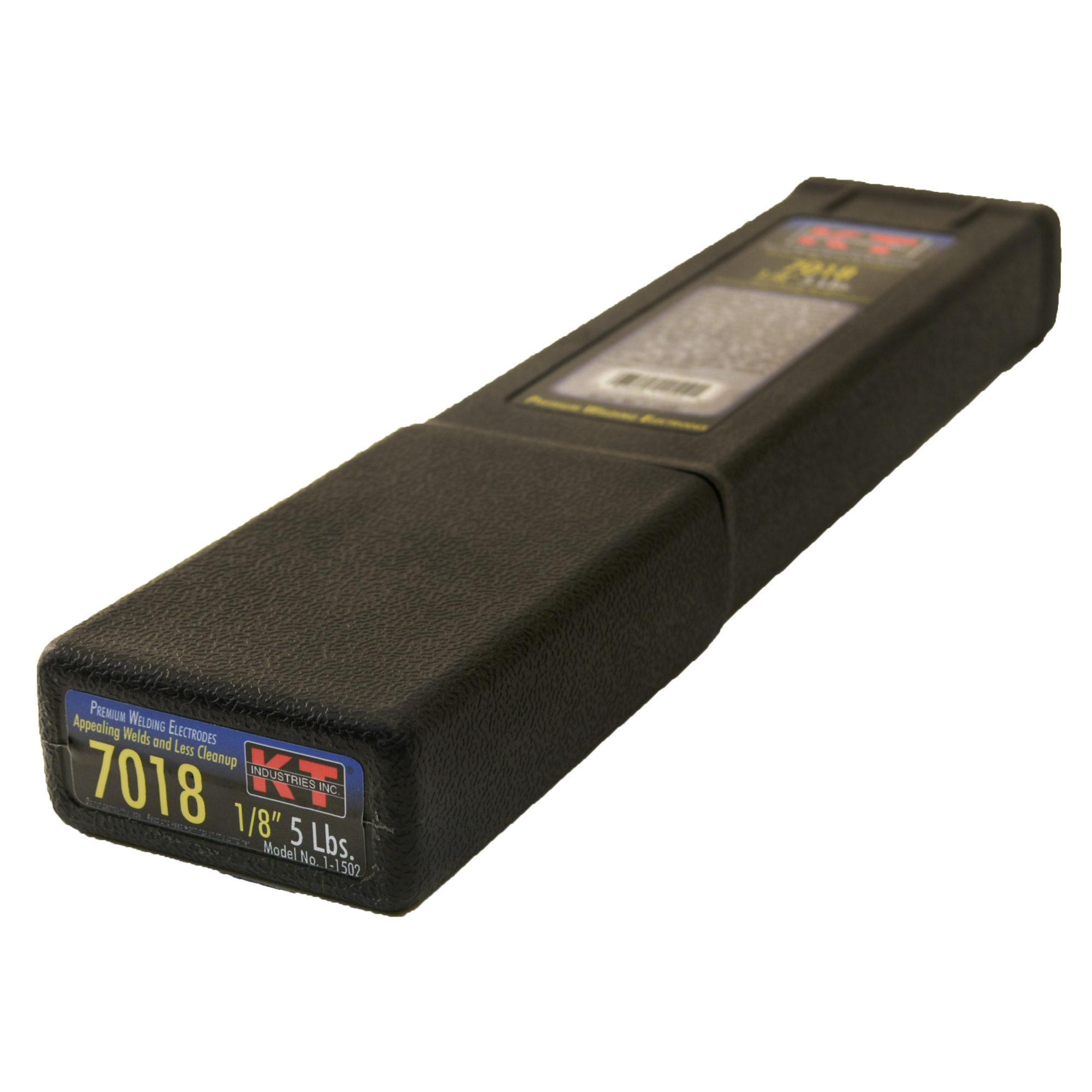
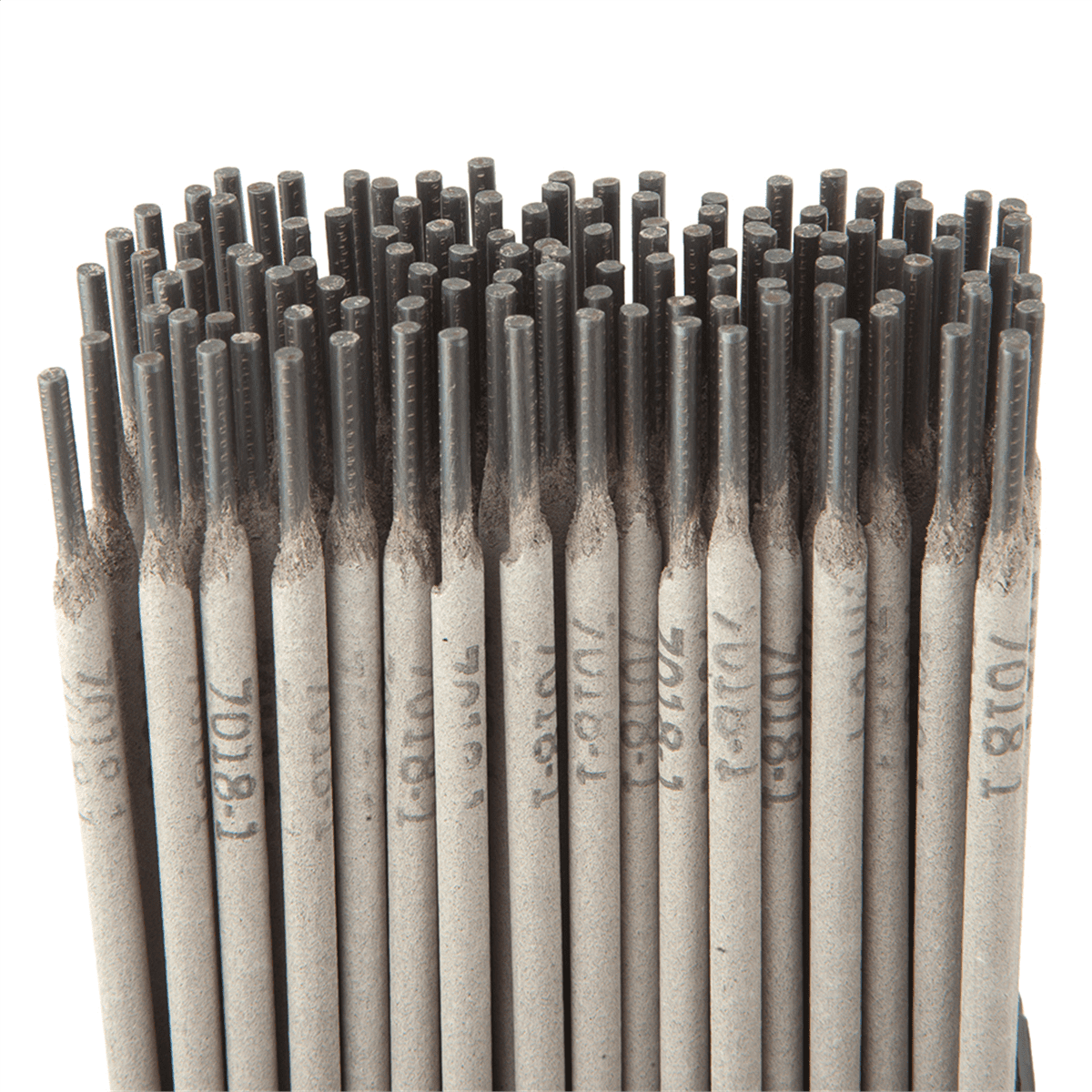
The 7018 electrode is designed to be used with Direct Current Electrode Positive (DCEP), also commonly referred to as reverse polarity. In this configuration, the electrode is connected to the positive terminal of the welding machine, while the work clamp is connected to the negative terminal, ensuring deep penetration and a stable, high-quality arc.
In the world of Shielded Metal Arc Welding (SMAW), often called stick welding, the 7018 electrode is widely considered the "gold standard" for structural applications. As of 2026, despite advancements in automated welding and wire-feed systems, the manual 7018 remains indispensable for field construction, bridge building, and pressure vessel fabrication due to its exceptional mechanical properties and ductility. However, achieving these results depends entirely on selecting the correct polarity. Using the wrong setting can lead to poor penetration, excessive spatter, and metallurgical defects that compromise the integrity of the joint.
Understanding the E7018 Classification
To understand why DCEP is the preferred polarity, one must first decode what a 7018 electrode actually is. The American Welding Society (AWS) classification system provides a roadmap for its performance:
- 70: This indicates a minimum tensile strength of 70,000 pounds per square inch (psi). This high strength makes it suitable for structural steel.
- 1: This digit signifies the welding position. A "1" means the electrode is capable of welding in all positions: flat, horizontal, vertical (upward), and overhead.
- 8: This final digit is the most critical for our discussion on polarity. It describes the coating type and the required current. The "8" identifies a low-hydrogen, iron-powder coating.
The iron powder in the flux coating increases the deposition rate—meaning more metal is melted into the joint in less time. The low-hydrogen nature of the coating is a safety feature for the steel; it prevents hydrogen-induced cracking, which is a common failure mode in high-strength steel welds.
Why DCEP (Reverse Polarity) is the Standard for 7018
In Direct Current Electrode Positive (DCEP) welding, the flow of electrons moves from the workpiece toward the electrode. This may seem counterintuitive, but in the physics of a welding arc, approximately two-thirds of the heat is generated at the cathode (the negative side) and one-third at the anode (the positive side).
However, when welding with a 7018 electrode, we prioritize the stability of the arc and the cleaning action of the current. DCEP provides a smoother, more consistent arc that allows the heavy, viscous puddle of a 7018 to flow properly. It also provides the "digging" action required to achieve full penetration in thick structural plates.
Can 7018 Run on DCEN?
While it is technically possible to strike an arc with a 7018 electrode on Direct Current Electrode Negative (DCEN), it is generally discouraged for structural work. DCEN (straight polarity) puts more heat into the electrode and less into the base metal. For a 7018, this often results in:
- Shallow Penetration: The weld sits on top of the metal rather than fusing deeply into it.
- Increased Spatter: The arc becomes unstable, causing molten droplets to fly out of the puddle.
- Slag Inclusions: Because the puddle is not as fluid or hot, the heavy slag produced by the 7018 coating may become trapped inside the weld bead.
The AC Exception (7018-AC)
Standard 7018 electrodes are often difficult to run on Alternating Current (AC) because the arc tends to extinguish every time the current crosses the zero-point in the sine wave. However, manufacturers produce a specific variant called 7018-AC. This version contains special ionizing agents in the flux coating that help the arc stay lit during the rapid polarity shifts of AC welding. If your welding machine is a simple "buzz box" that only outputs AC, you must ensure you are purchasing electrodes specifically labeled as 7018-AC.
Technical Specifications and Operating Ranges
The performance of a 7018 electrode is not just a matter of polarity; it also requires precise amperage control. Because the coating contains iron powder, it requires higher amperage than a 6010 or 6011 electrode of the same diameter.
The following table provides the industry-standard operating parameters for 7018 electrodes in the year 2026.
| Electrode Diameter | Amperage Range (DCEP) | Ideal for Material Thickness | Typical Applications |
|---|---|---|---|
| 3/32" (2.4mm) | 70 – 110 Amps | 1/8" to 1/4" | Sheet metal, light frames, tack welding |
| 1/8" (3.2mm) | 110 – 165 Amps | 3/16" to 1/2" | General structural, pipe welding, repairs |
| 5/32" (4.0mm) | 140 – 210 Amps | 3/8" and thicker | Heavy plate, bridge girders, earthmoving equipment |
| 3/16" (4.8mm) | 200 – 300 Amps | 1/2" and thicker | High-deposition industrial fabrication |
Note: Amperage needs vary based on welding position. Vertical and overhead welding typically require the lower end of the amperage range to prevent the puddle from falling out of the joint.
The Importance of Low-Hydrogen Management
A unique aspect of 7018 electrodes is their "Low-Hydrogen" status. For the electrode to maintain its 70,000 psi strength and prevent cracking, the coating must remain bone-dry. The flux is hygroscopic, meaning it actively absorbs moisture from the air.
In 2026, industrial standards (such as those from the AWS and AISC) remain strict: 7018 electrodes must be stored in a rod oven maintained at approximately 250°F to 300°F (120°C to 150°C) once the hermetically sealed container is opened. If the rods are exposed to the atmosphere for more than 4 hours (depending on humidity levels), they may need to be re-baked at higher temperatures to drive out moisture.
Symptoms of Moisture in 7018:
- Porosity: Small pinholes or "swiss cheese" appearance in the weld bead.
- Excessive Smoke: White smoke during welding often indicates water vapor.
- Hard Slag: The slag becomes exceptionally difficult to chip away.
- Underbead Cracking: The most dangerous symptom, where the weld fails internally hours or days after completion.
Welding Technique and Positioning
Using DCEP with a 7018 allows for a specific technique called the "drag" or "contact" method. Because the flux coating is thick, it forms a "cup" at the end of the electrode as it burns. This cup protects the arc and allows the welder to actually rest the tip of the electrode lightly against the metal while dragging it along the joint.
Key Technique Considerations:
- Arc Length: Keep the arc extremely short. If you pull the electrode too far away (long-arcing), you introduce oxygen and nitrogen into the puddle, leading to porosity.
- Travel Angle: Maintain a 5 to 15-degree drag angle. This pushes the slag behind the puddle, preventing it from getting trapped in front of the molten metal.
- Work Angle: For a fillet weld (a T-joint), maintain a 45-degree angle between the two plates to ensure equal heat distribution.
- Restrike Issues: 7018 can be difficult to restart once a rod has been partially used. A hard "glass" of slag often forms over the tip. You must vigorously scratch or tap the tip to expose the core wire before the arc will strike again.
Common Troubleshooting for 7018 Polarity and Setup
Even when set to DCEP, welders may encounter issues. Understanding the "Why" behind these problems is essential for high-code welding.
Arc Blow
Arc blow occurs when the magnetic field generated by the DC current becomes distorted, blowing the arc to one side. This is most common when welding in corners or on very large thick plates.
- The Fix: If arc blow becomes unmanageable on DCEP, you may need to switch to AC (using a 7018-AC rod). Alternatively, moving the work clamp to a different location or wrapping the lead around the workpiece can sometimes neutralize the magnetic field.
Finger-Nailing
This is when the coating burns away faster on one side than the other, making the electrode look like a fingernail.
- The Fix: This is often a sign of a manufacturing defect in the concentricity of the flux or an incorrect travel angle. Ensure your electrode is perpendicular to the joint and that you are using a reputable brand of filler metal.
Cold Lapping
If the amperage is too low for the chosen DCEP setting, the weld metal will fail to fuse to the edges of the joint, simply "lapping" over the cold base metal.
- The Fix: Increase your amperage in 5-amp increments until the edges of the puddle wet out smoothly into the base material.
Frequently Asked Questions
What happens if I weld 7018 on the negative terminal?
If you weld 7018 on Direct Current Electrode Negative (DCEN), the arc will feel "harsh" and unstable. You will likely experience a high, narrow bead profile with very little penetration into the base metal. For non-critical hobbyist repairs, it might hold, but it will never pass a structural X-ray or bend test.
Is 7018 always better than 6010?
Not necessarily; they serve different purposes. 6010 is a "fast-freeze" rod used for root passes on pipe and welding through rust or paint. 7018 is a "fill-and-freeze" rod used for the strength layers of a weld. Most structural welds start with a 6010 root pass (on DCEP) followed by 7018 filler passes (also on DCEP).
Do I need a special machine to run DCEP?
Most modern DC inverter welding machines have a simple switch or labeled terminals (+ and -) to change polarity. Older AC-only "transformer" machines cannot run standard 7018; they require the 7018-AC variant.
Why is 7018 called a "Low-Hydrogen" rod?
The "8" in 7018 denotes a coating that is low in organic materials that contain hydrogen. Hydrogen is the enemy of high-strength steel because it can migrate into the heat-affected zone and cause the metal to become brittle and crack under stress.
Can I use 7018 to weld stainless steel?
No. 7018 is designed for carbon steel. Welding stainless steel with a carbon steel electrode will cause carbon contamination, destroying the corrosion resistance of the stainless steel and likely causing the weld to crack. You should use a stainless-specific electrode like 308L or 309L.
Final Recommendation for 2026 Welding Projects
For any structural, load-bearing, or high-pressure application involving carbon steel, always use 7018 on DCEP (Positive Polarity). Ensure your machine is set correctly by verifying that the lead going to your electrode holder is plugged into the positive (+) port.
Furthermore, prioritize the "Low-Hydrogen" integrity of your rods. If you are working on a project where safety is paramount, such as a vehicle trailer or a structural support beam, use a fresh box of electrodes or rods that have been stored in a dedicated rod oven. The combination of correct polarity, proper amperage, and dry electrodes is the only way to guarantee a weld that is as strong as—or stronger than—the steel it is joining.