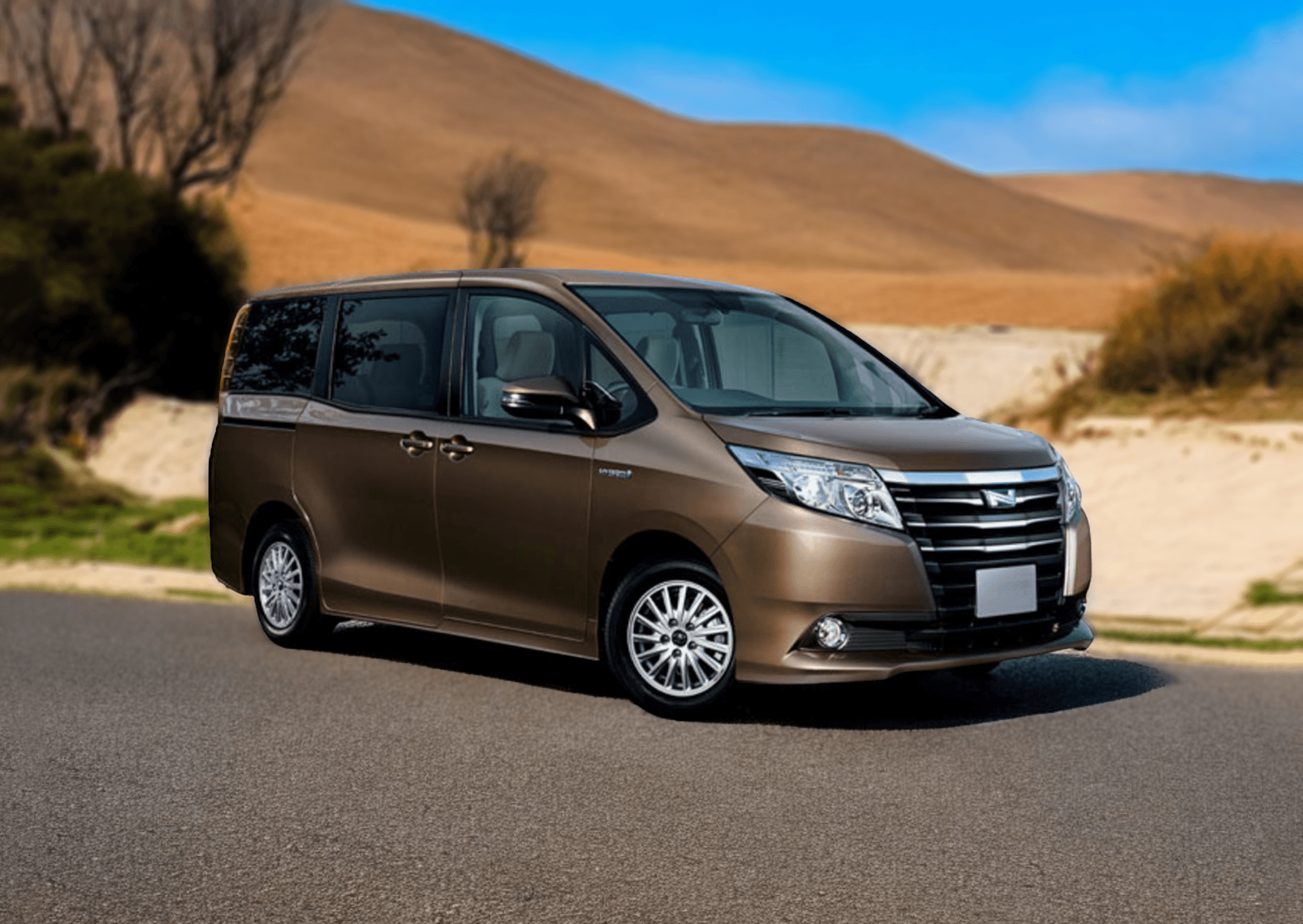
Finding the right seven-seater vehicle requires balancing passenger capacity, cargo flexibility, fuel efficiency, and driving dynamics. Toyota remains a global leader in this segment, offering a diverse lineup that ranges from rugged, off-road-capable SUVs to sophisticated, comfort-oriented minivans. Whether you are navigating dense city traffic, embarking on long-distance road trips, or prioritizing hybrid fuel economy, Toyota’s 2026 fleet provides specific configurations to meet distinct lifestyle requirements.
Understanding the 7-Seater Market Segment
When searching for a seven-seater, the primary distinction lies between the vehicle's platform architecture. You are generally choosing between a unibody crossover, a traditional body-on-frame SUV, or a dedicated minivan. Unibody vehicles provide a smoother, car-like ride and better fuel efficiency, while body-on-frame platforms offer superior towing capacity and durability for rough terrain. Minivans provide the most interior volume and ease of entry but often lack the all-wheel-drive ground clearance found in SUV configurations.
1. Toyota Highlander: The Balanced All-Rounder
The Toyota Highlander has long served as the benchmark for the midsize three-row crossover segment. Built on the TNGA-K platform, it prioritizes ride comfort and interior quality. The 2026 Highlander is designed for families who need a vehicle that is easy to park in urban environments but spacious enough for daily errands and weekend excursions.
The third row in the Highlander is best suited for children or shorter adults, making it an ideal "short-haul" solution for carpools. It features a sophisticated suspension setup that minimizes body roll, ensuring that occupants in all three rows remain comfortable during highway travel. For buyers prioritizing fuel economy, the hybrid powertrain remains a standout, offering efficiency that few competitors can match in this size class.
2. Toyota Grand Highlander: Maximizing Interior Volume
For those who find the standard Highlander’s third row too restrictive, the Grand Highlander offers a meaningful expansion in dimensions. With a stretched wheelbase and a more upright roofline, the Grand Highlander provides genuine adult-sized comfort in the third row, coupled with a generous cargo area even when all seven seats are in use.
This vehicle is intended for larger families or those who frequently transport adults in the rear. The increased glass area provides better outward visibility for third-row passengers, reducing the "claustrophobic" sensation common in smaller three-row crossovers. It acts as the bridge between the midsize Highlander and the full-size Sequoia, effectively resolving the need for more interior space without moving to a truck-based platform.
3. Toyota Sequoia: The Powerhouse for Towing and Adventure
The Toyota Sequoia represents the brand’s flagship body-on-frame SUV. Sharing its DNA with the Tundra, the Sequoia is powered by the i-FORCE MAX hybrid powertrain. This configuration is engineered for users who require high towing capacity—often for boats or travel trailers—and the ruggedness of a traditional truck chassis.
Because it is built on a heavy-duty platform, the Sequoia is naturally more capable off-road than its unibody siblings. However, this comes with a trade-off in fuel efficiency and overall vehicle height. Potential owners should note that the high ride height may necessitate running boards for younger passengers. It is the definitive choice for those whose "need" involves heavy payloads and the ability to traverse challenging terrain.
4. Toyota Sienna: The Efficiency and Utility King
Often overlooked in favor of SUVs, the Toyota Sienna remains the most pragmatic seven-seater in the Toyota stable. Since the current generation transitioned to a standard hybrid-only powertrain, it offers class-leading fuel economy. The sliding doors are a functional advantage in tight parking lots, providing a massive entry point that no swing-out door can match.
The Sienna is designed for high-frequency use. Its interior layout prioritizes storage cubbies, cup holders, and accessibility. While it lacks the high-ground clearance of the Sequoia, it provides a level of interior volume and long-distance comfort that is nearly impossible to replicate in a crossover or SUV chassis.
5. Toyota Land Cruiser: The Heritage Off-Roader
The 2026 Toyota Land Cruiser brings the nameplate back to its roots as a mid-sized, highly capable off-road machine. While many configurations emphasize five seats, certain market-specific trims and accessory packages allow for seven-seat capability. This vehicle is for the niche user who views a seven-seater as a tool for overlanding and remote exploration.
The Land Cruiser is not optimized for daily carpooling; rather, it is optimized for durability and mechanical simplicity. The cabin materials are ruggedized, and the vehicle is engineered to survive environments where other seven-seaters would require significant repairs. Choosing this vehicle means prioritizing off-road performance over the convenience features found in the Sienna or Highlander.
6. Toyota 4Runner: The Compact Third-Row Solution
The 4Runner is a storied name in the off-road community. While it is predominantly a five-seat vehicle, certain trim levels offer a compact, optional third-row seat. This "emergency use" row is small and best reserved for children.
This option is included in this list for specific, narrow use cases: parents who prioritize a vehicle that can handle trails, rocks, and mud, but who need a "just in case" seat for an extra passenger on short trips. It is not designed for daily multi-adult transport. The 4Runner's reliability is legendary, making it a sound long-term investment for those who do not require a massive family hauler but want the capability to occasionally seat seven.
7. Toyota Alphard: The Premium Executive Shuttle
While availability is market-dependent, the Toyota Alphard remains the premier choice for luxury, chauffeur-driven, or high-capacity transport. Its boxy architecture maximizes head and shoulder room, while the "Captain’s Chair" middle-row configurations provide a premium experience that rivals luxury sedans.
The Alphard is the solution for those who prioritize the comfort of the passengers above all else. It is not an SUV, nor is it designed for off-roading. It is an executive-level people mover designed for smooth roads, high-end comfort, and maximum interior space utilization. If your "need" is to transport clients, family members, or guests in a high-status, high-comfort environment, the Alphard is the unrivaled choice.
Comparison Table: Choosing Your Toyota 7-Seater
| Model | Primary Advantage | Best For | Chassis Type |
|---|---|---|---|
| Highlander | Balanced ride/efficiency | Small to medium families | Unibody |
| Grand Highlander | Adult-sized 3rd row | Large families/Road trips | Unibody |
| Sequoia | Towing & Off-road | Heavy hauling/Adventure | Body-on-Frame |
| Sienna | Fuel economy & access | Daily family logistics | Unibody |
| Land Cruiser | Off-road capability | Expedition & Adventure | Body-on-Frame |
| 4Runner | Trail durability | Occasional small riders | Body-on-Frame |
| Alphard | Luxury interior space | Chauffeur/Premium comfort | Unibody |
Frequently Asked Questions
1. Which Toyota 7-seater is the most fuel-efficient? The Toyota Sienna is generally the most fuel-efficient option due to its standard hybrid powertrain and aerodynamic profile. Because it is optimized for highway and city family transport, it achieves higher miles-per-gallon figures than the heavier, truck-based SUV models like the Sequoia or 4Runner.
2. Are all 7-seater Toyotas equipped with All-Wheel Drive (AWD)? No. While many Toyota SUVs like the Highlander, Grand Highlander, and Sequoia offer AWD or 4WD systems, others like the Sienna offer AWD as an option, and the Alphard may be front-wheel-drive depending on the regional configuration. Always verify the drivetrain specification of the specific trim you are considering.
3. Is the third row in the 4Runner comfortable for adults? The third row in the 4Runner is primarily designed for children. It has limited legroom and headroom, making it unsuitable for adults during long trips. It should be viewed as an auxiliary seat rather than a primary seating position.
4. How do I determine which Toyota 7-seater fits my garage? The Sequoia is significantly wider and longer than the Highlander or Sienna. Before purchasing, measure your garage length and width. Ensure you have at least 12–18 inches of clearance on all sides to allow for door opening and safe navigation.
5. Which of these vehicles is best for towing? The Toyota Sequoia is the superior choice for towing. Its heavy-duty frame and high-torque i-FORCE MAX hybrid powertrain are specifically engineered to handle the stresses of towing travel trailers, boats, or utility trailers that would exceed the limits of unibody crossovers.
Next Steps for Choosing Your Vehicle
To finalize your decision, categorize your needs into "must-haves" and "nice-to-haves." If your daily commute involves city driving, prioritize a unibody hybrid like the Sienna or Highlander for better visibility and maneuverability. If your weekend involves mountain trails or towing a trailer, visit a local dealer to test drive the Sequoia or Land Cruiser. Always bring your child safety seats and any bulky gear you regularly carry to the dealership to test how they fit in the third row and cargo area before committing to a purchase.