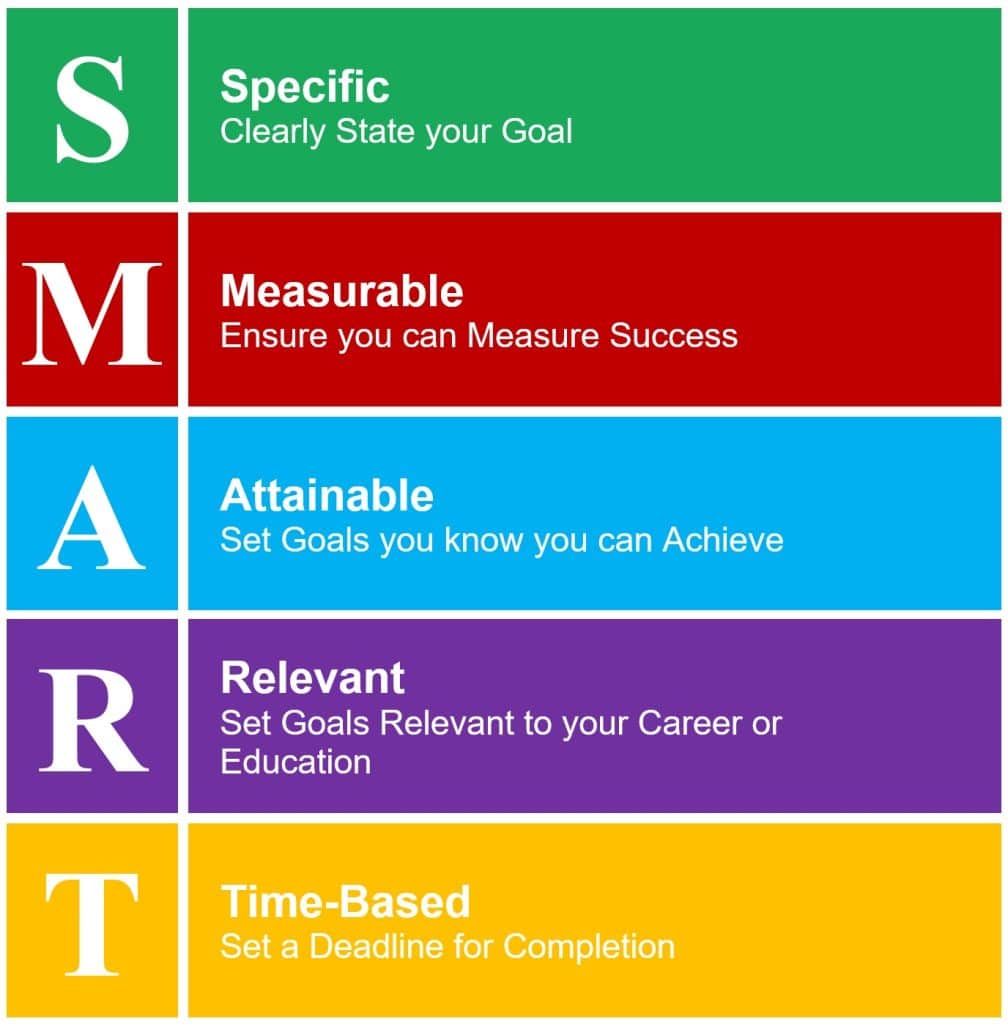
SMART academic goals are structured objectives that utilize Specific, Measurable, Achievable, Relevant, and Time-bound criteria to ensure student success. By transforming vague aspirations—like "studying more"—into actionable targets—such as "dedicating two hours every Tuesday to Calculus"—students create a clear roadmap for improved grades and skill mastery.
Effective goal setting in an educational context requires moving beyond simple desire and into the realm of tactical planning. For the 2026 academic year, the integration of advanced digital tools and evolving pedagogical standards means that students must be more precise than ever. Traditional goal setting often fails because it lacks a tracking mechanism or sets expectations that do not align with a student’s current resources. The SMART framework solves this by forcing the individual to define exactly what success looks like and how it will be reached within a specific timeframe.
The Anatomy of a SMART Academic Goal
Before examining specific examples, it is essential to understand why the SMART framework remains the gold standard for academic achievement. Each component of the acronym serves a distinct psychological and practical function:
- Specific: You must define the goal with as much detail as possible. Instead of "doing better in school," a specific goal identifies the exact subject or skill, such as "improving my grade in Advanced Macroeconomics."
- Measurable: There must be a metric for success. This could be a letter grade, a percentage, a specific number of pages written, or a set number of study hours. If you cannot measure it, you cannot manage it.
- Achievable: The goal must be realistic based on your current standing and available resources. If you are currently failing a course, aiming for a 100% on every remaining assignment might be mathematically impossible, whereas aiming for a consistent 85% is a challenging but reachable target.
- Relevant: The goal must align with your broader educational and career objectives. A goal to master ancient Greek might be interesting, but if your major is Civil Engineering, it may not be the most relevant use of your limited study time.
- Time-bound: Every goal needs a deadline. Without a "by when" date, goals often succumb to the "someday" trap, where they are perpetually delayed in favor of more immediate (but less important) tasks.
1. Improving Course-Specific Performance (GPA Focus)
One of the most common academic goals is the desire to raise a grade in a challenging subject. Vague attempts usually involve "trying harder," which rarely results in a change of habits. A SMART goal for grade improvement targets the specific behaviors that lead to better marks.
The Goal: "I will increase my current grade in Organic Chemistry from a C+ (78%) to a B+ (87%) by the end of the Spring 2026 semester."
The Plan: To achieve this, the student will attend the professor’s office hours every Thursday afternoon to clarify complex reactions and commit to three two-hour study blocks per week dedicated solely to practice problems. By breaking the goal down into weekly office hours and study sessions, the student creates a feedback loop. If they miss a session, they know immediately that they are falling behind on their SMART objective, allowing for instant correction.
2. Mastering Research Documentation and Citation
For undergraduate and graduate students alike, academic integrity and the mechanics of research are significant hurdles. Poor citation habits lead to lost points and potential disciplinary issues. A goal focused on technical proficiency in research can drastically reduce stress during finals week.
The Goal: "I will master the APA 7th Edition citation style and the use of Zotero management software to ensure 0% errors in my bibliography for my Senior Thesis by November 15, 2026."
The Plan: Achieving this involves completing the library’s advanced citation workshop and migrating all 40+ sources into a digital management system. The measurability comes from the "zero errors" check performed by a peer reviewer or the campus writing center. This goal is highly relevant because it prevents the last-minute panic of formatting a 50-page document, a common pitfall for graduating seniors.
3. Reducing Academic Procrastination through Scheduled Blocks
Time management is often the root cause of academic underperformance. Students often overestimate their ability to "cram" for exams. A SMART goal focused on time allocation shifts the focus from the outcome (the grade) to the process (the study time).
The Goal: "For the next eight weeks, I will utilize the Pomodoro technique to complete 15 focused study hours per week outside of class time, as tracked by a digital time-tracking application."
The Plan: The student defines "focused study" as time spent with their phone in "Do Not Disturb" mode and no social media tabs open. By using a tracker, they have a weekly "Measurable" report. If they only hit 12 hours in week three, they can adjust their schedule for week four to compensate. This focus on the process helps build the discipline necessary for more complex long-term projects.
4. Preparing for Post-Graduate Standardized Exams
In 2026, standardized tests like the GRE, LSAT, or MCAT continue to be pivotal for graduate admissions. These exams require months of preparation that cannot be rushed. A SMART goal is the only way to manage such a massive undertaking.
The Goal: "I will improve my baseline LSAT score from 152 to 165 by the October 2026 test date by completing two full-length practice exams per month and reviewing every missed question with a tutor."
The Plan: This goal is "Time-bound" by the test date and "Measurable" by the score increase. It is "Achievable" if the student has a six-month window. The relevance is clear for anyone pursuing a legal career. By focusing on the "reviewing missed questions" part of the plan, the student ensures they aren't just taking tests, but actually learning from their mistakes.
5. Developing Technical Proficiency in Field-Related Software
Modern academia requires more than just reading and writing; it requires technical skill. Whether it is Python for data science, AutoCAD for architecture, or Revit for design, mastering the tools of the trade is a vital academic goal.
The Goal: "By the end of the 2026 winter break, I will earn an intermediate-level certification in Python for Data Analysis from an accredited online provider to prepare for my Advanced Statistics course."
The Plan: The student will dedicate five hours every Saturday morning to the certification course. The "Achievable" aspect is verified by checking the course prerequisites. This goal bridges the gap between general academic knowledge and the specific technical demands of high-level coursework, making the subsequent semester much smoother.
6. Enhancing Classroom Engagement and Peer Networking
Academic success is not purely solitary. Building relationships with faculty and peers can lead to research opportunities, letters of recommendation, and a deeper understanding of the material. However, "networking" is a vague term that needs the SMART treatment.
The Goal: "During the Fall 2026 semester, I will contribute at least one relevant question or comment in every session of my Honors Seminar and attend at least two departmental networking mixers to connect with potential faculty mentors."
The Plan: This goal targets social anxiety by making participation a "Specific" requirement of the day. The "Measurable" part is the one question per class. This helps the student stay engaged with the lecture and ensures the professor knows their name and face, which is crucial for future professional requests.
7. Systematic Vocabulary or Language Acquisition
For students in the humanities or those studying a foreign language, the volume of new information can be overwhelming. Rather than trying to "learn Spanish," a student should focus on the building blocks of the language.
The Goal: "I will learn and retain 25 new medical Spanish terms per week using a spaced-repetition flashcard system (like Anki) to achieve a total vocabulary of 400 specialized terms by my clinical rotation start date in May 2026."
The Plan: By using spaced-repetition software, the "Measurable" and "Achievable" parts of the goal are automated. The software tracks retention rates. The "Relevance" is tied directly to the student’s upcoming clinical rotations, where communication with patients is critical.
Comparison of Vague vs. SMART Academic Objectives
The following table illustrates the difference between common student aspirations and the SMART goals required to actually achieve them.
| Category | Vague Aspiration | SMART Academic Goal |
|---|---|---|
| Grades | I want to get better grades this year. | Achieve a 3.8 GPA this semester by completing all assignments 24 hours before the deadline. |
| Writing | I need to finish my dissertation. | Write 500 words of the methodology chapter every morning from 8:00 AM to 9:00 AM until March 1st. |
| Math/Science | I'll study more for the final. | Solve 50 practice problems from chapters 5-10 every week for the three weeks leading up to the exam. |
| Attendance | I should stop skipping class. | Maintain 100% attendance in all 8:00 AM lectures for the Fall 2026 semester. |
| Skills | I want to learn how to code. | Complete the "Introduction to Java" module on Coursera by spending 4 hours weekly, ending July 15th. |
| Reading | I need to keep up with the readings. | Read and summarize one assigned journal article every Monday and Wednesday evening at the library. |
Implementation Strategies for 2026
Setting a goal is only the first step; maintaining the momentum requires a system of accountability. In 2026, students have access to a variety of tools that make this easier.
Visual Tracking and Dashboards
Use a visual habit tracker or a dedicated academic dashboard. Seeing a "streak" of days where you met your study goal can be a powerful psychological motivator. Applications like Notion or specialized academic planners allow you to link your SMART goals directly to your daily to-do lists.
The Power of "Micro-Goals"
If a semester-long goal feels too daunting, break it into "micro-SMART" goals. If your goal is to write a 20-page research paper by December, your micro-goal for this week might be: "Identify and summarize five peer-reviewed sources for the literature review by Friday at 5:00 PM." These small wins build the self-efficacy needed to tackle the larger objective.
Accountability Partners
Share your SMART goals with a friend or a mentor. When you tell someone, "I am going to study for 10 hours this week," you create a social cost for failure. In academic settings, study groups can serve as built-in accountability partners, provided the group stays focused on the SMART objectives rather than just social interaction.
Common Challenges and Troubleshooting
Even with the best SMART goals, obstacles will arise. Recognizing these early allows for adjustments without abandoning the goal entirely.
- Over-ambition: The most common mistake is setting an "Achievable" goal that is actually impossible. If you haven't exercised in a year, setting a goal to run a marathon while taking 18 credits is likely a recipe for burnout. The Fix: Audit your calendar and be honest about how many hours are actually available in a week.
- Rigidity: Sometimes life happens—illness, family emergencies, or unexpected shifts in course requirements. The Fix: Review your goals every two weeks. If a goal is no longer relevant or achievable due to external factors, pivot the goal. This is not "failing"; it is strategic adjustment.
- Lack of Specificity in "Measurability": If your goal is to "understand the material better," how do you know when you've reached it? The Fix: Tie "understanding" to an output, such as being able to explain the concept to a peer without looking at your notes or scoring above 85% on a practice quiz.
For further guidance on academic goal setting and time management, resources such as the Harvard Academic Resource Center provide evidence-based strategies for student success. Additionally, for those focusing on writing-specific goals, the Purdue Online Writing Lab (OWL) offers comprehensive guides on mastering the technical aspects of research.
FAQs
What if I fail to meet my SMART goal deadline?
Failure to meet a deadline is an opportunity for data collection. Analyze why the deadline was missed. Was the goal too broad? Did you underestimate the time required? Adjust the timeframe or break the goal into smaller pieces and try again. The SMART framework is a tool for growth, not a reason for self-criticism.
Can SMART goals be used for non-academic parts of student life?
Absolutely. The SMART framework is highly effective for fitness, financial budgeting, and personal hobbies. For example, "I will save $500 for spring break by setting aside $50 from every paycheck for the next 10 pay periods" is a perfect application of the system outside of the classroom.
How many SMART goals should a student have at once?
To avoid cognitive overload, it is best to focus on 3 to 5 major SMART goals per semester. Attempting to track a dozen different goals simultaneously often leads to "goal fatigue," where the student becomes so overwhelmed by the tracking process that they stop making progress on the actual tasks.
Does the SMART method work for creative subjects like Art or Creative Writing?
Yes, though the "Measurable" part changes. For an art student, a SMART goal might be "Complete three charcoal portraits focusing on light and shadow by the end of October." For a writer, it might be "Draft two short stories of at least 2,000 words each by mid-semester." The focus shifts to output and technical milestones.
How often should I review my goals?
A weekly review is ideal. Take 15 minutes every Sunday to look at your SMART goals and evaluate your progress. This allows you to plan your upcoming week in a way that prioritizes the actions necessary to meet your deadlines.
Next Actions for Academic Success
To begin, select one area of your studies where you feel most frustrated or stagnant. Use the SMART template to write out a single goal for that area. Ensure it has a clear metric and a deadline within the next 30 days. Once you experience the success of hitting a well-defined SMART goal, you can expand the framework to the rest of your academic workload. Consistency in the process of goal setting is often more important than the magnitude of the goals themselves.